
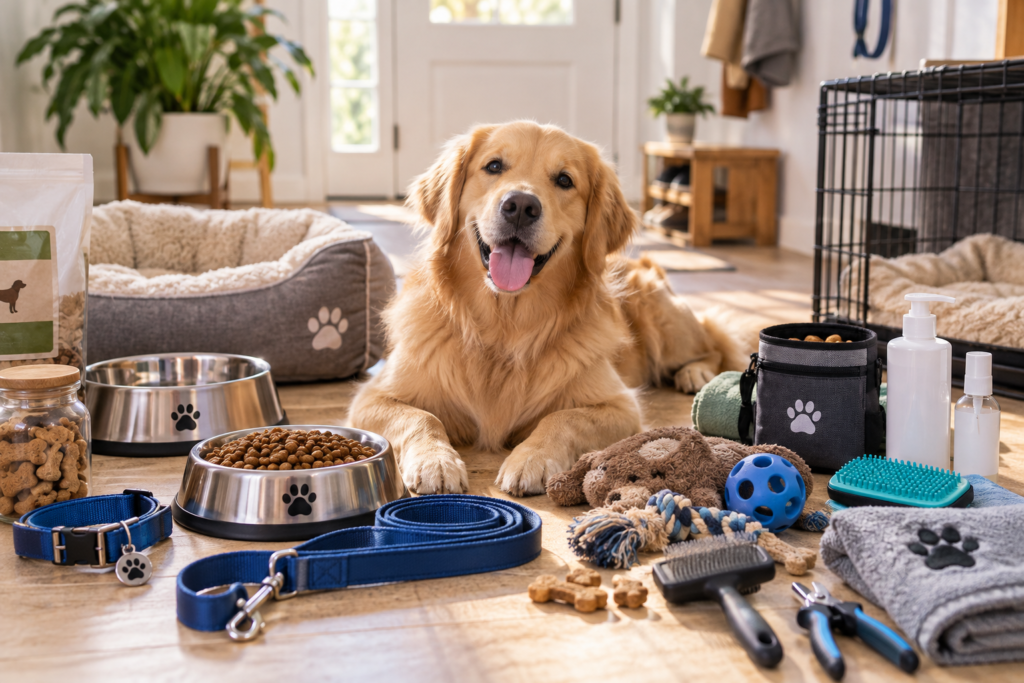
Bringing home a new dog is exciting, but it can also feel overwhelming. With so many pet products available, it’s easy to wonder what you actually need before your dog arrives — and what can wait.
The good news is that you don’t need to buy everything at once. A comfortable place to sleep, food and water bowls, a properly fitted collar and ID tag, a reliable leash, a few toys, basic grooming supplies, and training treats will cover most of the essentials.
Whether you’re welcoming a puppy or adopting an adult dog, having these basics ready can make the first few days calmer and more comfortable for both of you. Here are the essential items every new dog owner needs, plus a few practical tips for choosing the right ones.
A Comfortable Dog Bed
Every dog needs a comfortable place where they can relax and sleep. Giving your new dog their own bed can also help them settle into an unfamiliar home and learn where they can go when they want some quiet time.
Choose a bed that matches your dog’s size and sleeping style. Your dog should be able to stretch out comfortably without hanging over the edges. Puppies and dogs that like to curl up may prefer a bed with raised sides, while larger dogs or dogs that stretch out often do better with a flat or mattress-style bed.
Look for a removable, washable cover whenever possible. New dogs can bring in dirt, shed hair, have accidents, or simply make their bed smell surprisingly quickly, so easy cleaning is worth considering.
For senior dogs or dogs with mobility issues, thicker padding or an orthopedic-style bed may provide additional comfort and support.
Tip: Place the bed somewhere relatively quiet but still close enough to the family that your new dog doesn’t feel isolated.
Food and Water Bowls
Food and water bowls are obvious essentials, but choosing the right ones can make everyday feeding easier and more comfortable for your dog.
Stainless steel bowls are a practical choice for many dogs because they are durable, easy to clean, and don’t absorb odors. Ceramic bowls can also work well, especially for dogs that tend to push lightweight bowls around, but check them regularly for cracks or chips.
Choose a bowl size that suits your dog. A Chihuahua and a Great Dane obviously don’t need the same size bowl, and your dog should be able to comfortably reach their food and water without struggling.
Fresh water should always be easily accessible. Wash both food and water bowls regularly rather than simply topping them up throughout the day.
What If Your Dog Eats Too Fast?
Some dogs finish their meals in seconds. In that case, a slow feeder can make mealtime last longer by creating small obstacles that your dog has to eat around.
If you’re wondering whether your dog actually needs one, read our guide Does My Dog Need a Slow Feeder?
For larger dogs, you may also want to see our guide to the Best Elevated Slow Feeders for Large Dogs in 2026.
A Properly Fitted Collar and ID Tag
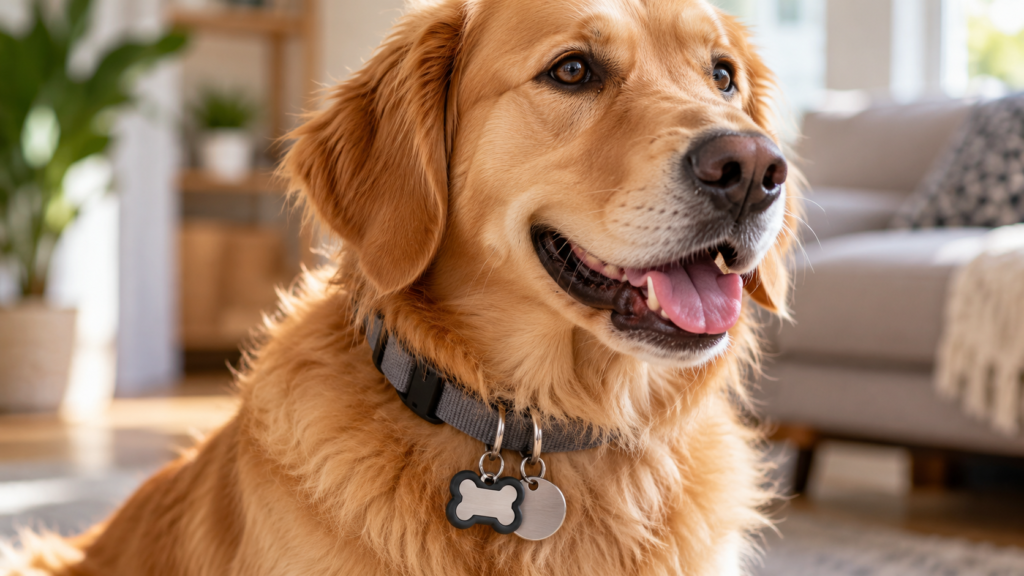
A properly fitted collar is one of the first things your new dog will need. It gives you a secure place to attach identification and makes everyday walks and outings easier.
The collar should fit snugly without being tight. As a general rule, you should be able to comfortably slide two fingers between the collar and your dog’s neck. Check the fit regularly, especially with puppies that can grow surprisingly quickly.
Your dog’s ID tag should include clear, easy-to-read contact information. At minimum, make sure someone who finds your dog has a reliable way to contact you.
Not sure what details belong on the tag? Read our guide What Information Should Be on a Dog ID Tag?
Should Your Dog Wear the Collar All Day?
Many dogs wear collars throughout the day, but there are situations when removing one may be safer or more comfortable, such as during crate time, certain types of play, grooming, or when the collar could become caught on something.
Read Can Dogs Wear Collars All the Time? for a more detailed look at when your dog should — and shouldn’t — wear one.
Collars also need regular inspection. Frayed material, damaged stitching, a worn buckle, or a loose D-ring can eventually become a safety issue.
Our guide How Often Should You Replace a Dog Collar? explains the signs that it may be time for a new one.
A Durable Leash
A reliable leash is essential from the very first day with your new dog. You’ll need it for daily walks, bathroom breaks, vet visits, training, and anytime you take your dog away from home.
For everyday use, a standard fixed-length leash is often the simplest choice. Look for one that feels comfortable in your hand and has a secure clip that matches your dog’s size and strength.
The leash should give your dog enough freedom to explore without making it difficult for you to maintain control. Very long or retractable leashes can be useful in certain situations, but they may not be the easiest option when you’re still getting to know a new dog’s walking habits.
Before every walk, take a quick look at the leash and check the clip, stitching, handle, and material for signs of wear. This is especially important if your dog pulls strongly or likes to chew on the leash.
If you’re still deciding which type of leash will work best for your new dog, see our guide to the 9 Best Dog Leashes in 2026 for everyday, training, hands-free, reflective, and other walking options.
Collar or Harness for Walking?
Some dogs walk comfortably on a collar, while others may do better with a properly fitted harness. Your dog’s size, behavior, training, and individual needs can all affect which option works best.
Whichever you choose, the fit should be secure enough that your dog cannot easily slip out while still allowing comfortable movement.
Tip: During the first few weeks, keep walks relatively predictable while you learn how your new dog reacts to traffic, other dogs, people, and unfamiliar surroundings.
Dog Toys
Toys are more than just something to keep your new dog busy. The right toys can provide mental stimulation, encourage appropriate chewing, help burn off energy, and make it easier for your dog to settle into a new home.
It’s a good idea to have several different types of toys available rather than relying on just one. Useful options include:
- Chew toys – give dogs an appropriate outlet for natural chewing behavior
- Puzzle toys – encourage problem-solving and mental stimulation
- Fetch toys – useful for interactive play and exercise
- Rope toys – can be used for supervised tug and interactive play
- Enrichment toys – help keep dogs occupied by turning treats or food into an activity
Your dog’s size, chewing style, age, and personality all matter when choosing toys. A gentle chewer may be perfectly happy with softer toys, while a dog that quickly destroys toys will need something more durable. Always choose toys that are appropriately sized for your dog and regularly check them for loose or damaged pieces.
If your new dog seems determined to chew furniture, shoes, or anything else within reach, read our guide Why Does My Dog Chew Everything? for common reasons behind the behavior and ways to redirect it.
For dogs that need more mental stimulation, see our Best Dog Enrichment Toys in 2026 and Best Interactive Puzzle Toys in 2026 guides for more ideas.
Rotating a few toys instead of leaving everything available all the time can also help keep familiar toys interesting.
Grooming Supplies
Basic grooming supplies are worth having ready from the beginning, even if your new dog won’t need frequent professional grooming. Regular brushing, nail care, bathing when needed, and basic dental care can help keep your dog comfortable and also give you a chance to notice changes in their skin, coat, paws, ears, or teeth.
Your basic grooming kit may include:
- A brush or comb suited to your dog’s coat type
- Dog shampoo formulated specifically for dogs
- Nail clippers or a nail grinder
- Towels for baths, wet walks, and muddy paws
- Dog toothbrush and toothpaste for regular dental care
- Ear-cleaning supplies if recommended for your dog
The exact grooming routine will depend on your dog’s breed, coat, age, and lifestyle. Long-haired dogs may need frequent brushing to prevent tangles and mats, while short-haired dogs usually need less coat maintenance.
It’s also helpful to introduce grooming gradually, especially with puppies or newly adopted dogs. Short, calm sessions can make brushing, paw handling, and nail care feel like a normal part of everyday life rather than something stressful.
If you’re putting together a grooming setup for your new dog, see our Best Dog Grooming Kits in 2026 for at-home grooming tools and complete kit options.
Treats for Training
Training treats are one of the most useful things to have ready when bringing home a new dog. Small rewards can help reinforce the behaviors you want and make early training sessions more enjoyable for both you and your dog.
Treats can be especially useful when working on:
- Basic commands such as sit, stay, and down
- Recall training
- House training
- Leash manners
- Crate training
- Socialization and new experiences
For training, choose small, easy-to-chew treats that your dog can eat quickly without interrupting the session. Using tiny pieces also makes it easier to reward your dog frequently without giving too many extra calories.
Some dogs are highly motivated by food, while others respond better to praise, toys, or play. Pay attention to what motivates your dog and keep training sessions short and positive.
Because treats add calories to your dog’s daily intake, they should be given in moderation and shouldn’t replace a complete, balanced diet.
If your new dog struggles with pulling, lunging, barking, or staying calm around triggers, the right equipment can make training sessions easier to manage. See our guide to Best Training Tools for Reactive Dogs in 2026 for helpful gear designed for safer, calmer walks.
A Secure Crate or Safe Space
Every new dog needs a quiet place where they can relax and feel secure, especially during the first few days in a new home. For some dogs, this may be a crate, while others may prefer a dog bed or a quiet corner of the house.
A crate can be useful for:
- House training
- Travel
- Bedtime routines
- Creating a calm resting space
- Keeping your dog safely contained for short periods when needed
Choose a crate that gives your dog enough room to stand up, turn around, and lie down comfortably. Add comfortable bedding if appropriate, and introduce the crate gradually rather than using it as punishment.
Some dogs adjust quickly, while others need more time. The goal is for the crate or designated resting area to become a place where your dog can settle and relax voluntarily.
Important: Remove collars, harnesses, and anything that could become caught on the crate when your dog is left inside unsupervised.
Not sure when your dog should wear a collar and when it may be safer to remove it? Read our guide Can Dogs Wear Collars All The Time?
Quick Checklist
Before bringing your new dog home, make sure you have:
✓ A comfortable dog bed
✓ Food and water bowls
✓ Appropriate dog food
✓ A properly fitted collar and ID tag
✓ A reliable leash
✓ A few safe toys
✓ Basic grooming supplies
✓ Training treats
✓ A crate or quiet sleeping area
You don’t need to buy everything at once. Start with the essentials, then add products as you learn more about your dog’s size, personality, habits, and preferences.
Not sure what information should be on your dog’s ID tag? Read our guide: What Information Should Be on a Dog ID Tag?
Looking for thoughtful gifts for dog lovers? Browse our Gift Guides for more ideas.
Final Thoughts
Bringing home a new dog is exciting, but you don’t need a house full of supplies on day one. A comfortable place to sleep, food and water, proper identification, a reliable leash, a few suitable toys, and basic grooming and training supplies are enough to get started.
As you get to know your dog, you’ll quickly discover what they actually use and enjoy. Choosing products based on your individual dog rather than buying everything immediately can save money and help you build a setup that genuinely works for both of you.
If you’re still shopping for your new companion, take a look at our Best Gifts for New Dog Owners in 2026 for more useful and thoughtful ideas.
Disclaimer: This article is for informational purposes only and is not a substitute for professional veterinary or dog-training advice. Always choose products appropriate for your dog’s size, age, health, and individual needs.
Pingback: Why Does My Dog Follow Me Everywhere? - Dog Gift Ideas Hub