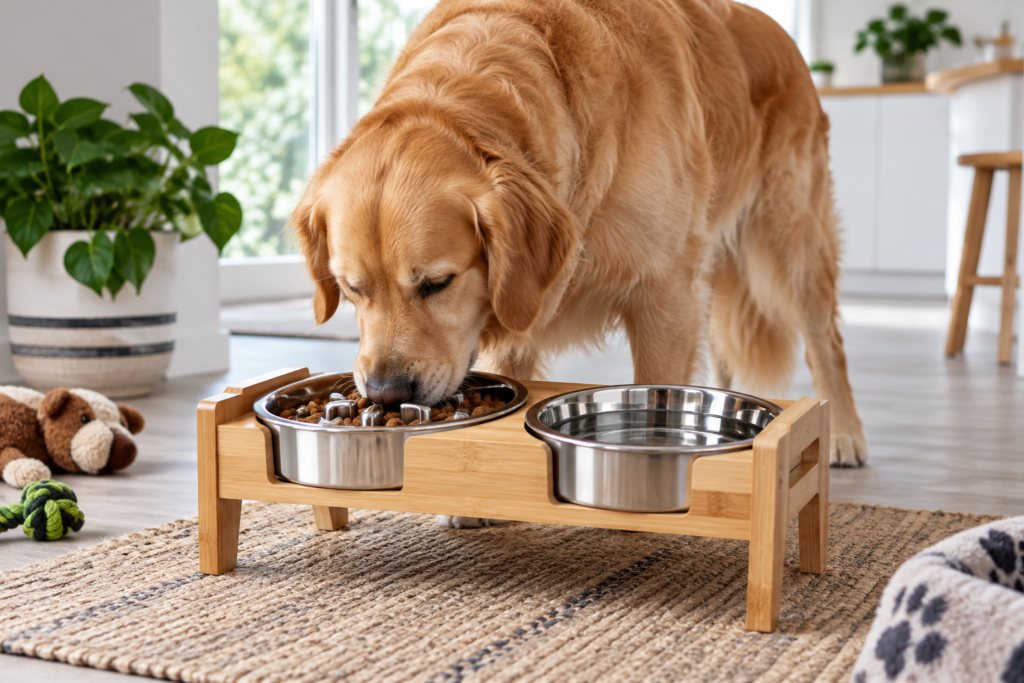
If you have a large dog that can finish dinner before you’ve even put the food bag away, a slow feeder may be worth considering.
Slow-feeder bowls use ridges, grooves, or inserts to make it harder for dogs to grab large mouthfuls at once. For large dogs, however, finding the right setup can be a little more complicated. You need enough capacity for a larger meal, a stable base that won’t slide across the floor, and a slow-feeding design that isn’t too small for a bigger muzzle.
Some owners also prefer an elevated feeding station because it keeps bowls contained in one area and can make the feeding setup more convenient. But elevated bowls aren’t necessary for every large dog, and they shouldn’t be viewed as a way to prevent bloat.
If you’re still deciding whether slowing down meals is necessary for your dog, start with our guide Does My Dog Need a Slow Feeder? Signs It Might Help.
Below are 10 of the best elevated slow feeders for large dogs to consider in 2026, including adjustable stands, ceramic bowls, stainless-steel sets, spill-control designs, and options for extra-large breeds.
As an Amazon Associate, we earn from qualifying purchases. This does not affect which products we include in our guides.
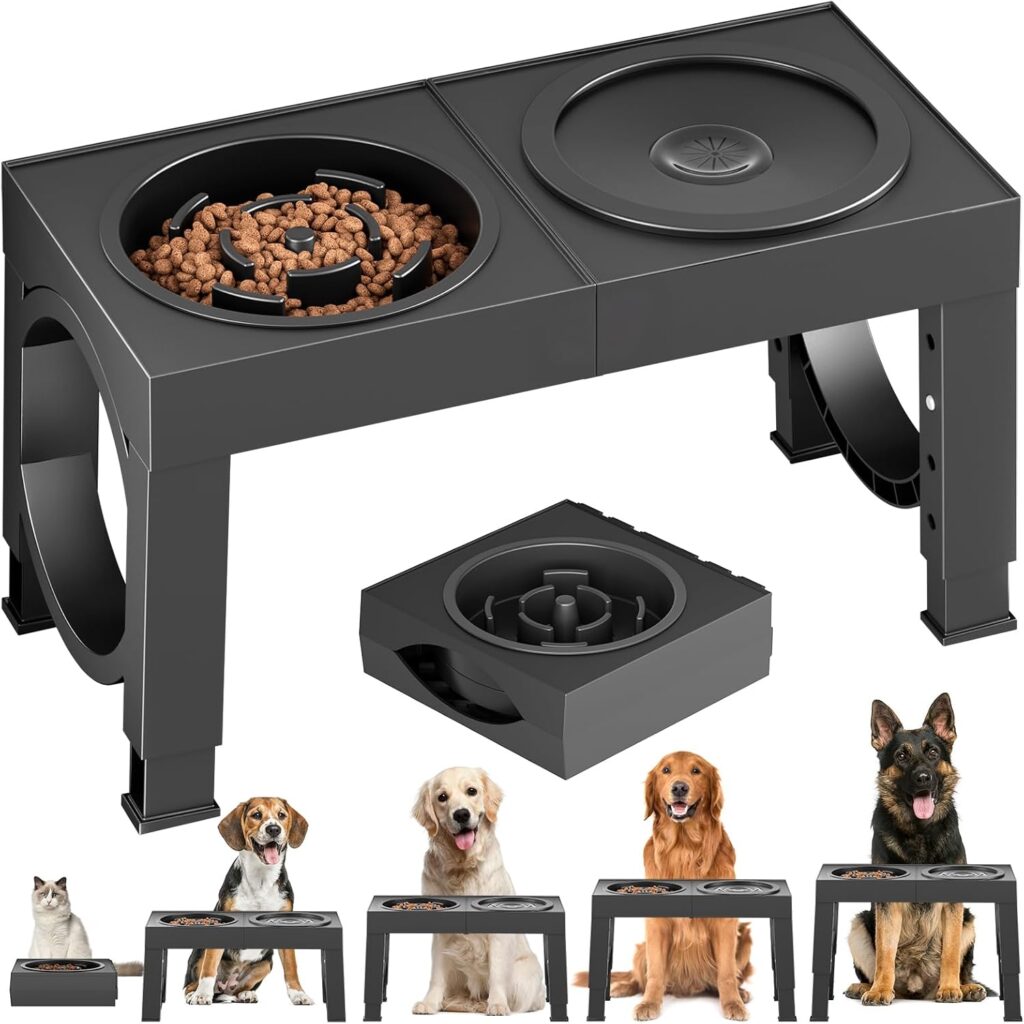
1. XIAZ Elevated Dog Bowls — Best Overall
For large-dog owners looking for an adjustable feeding station that already includes a slow-feeding option, the XIAZ Elevated Dog Bowls are one of the most versatile choices on this list.
The stand offers five adjustable heights, making it easier to adapt the setup to medium and large dogs of different sizes. It includes separate food and water areas, while the slow-feeder design helps prevent a fast eater from simply taking huge mouthfuls from an open bowl.
The adjustable design is also useful if you have more than one dog or want a feeding station that offers more flexibility than a fixed-height stand.
Why we like it:
- Five adjustable height settings
- Slow-feeder bowl included
- Separate food and water setup
- Suitable for medium and large dogs
- Versatile everyday feeding station
Keep in mind:
Make sure the selected height and bowl capacity are appropriate for your individual dog rather than automatically using the highest position.
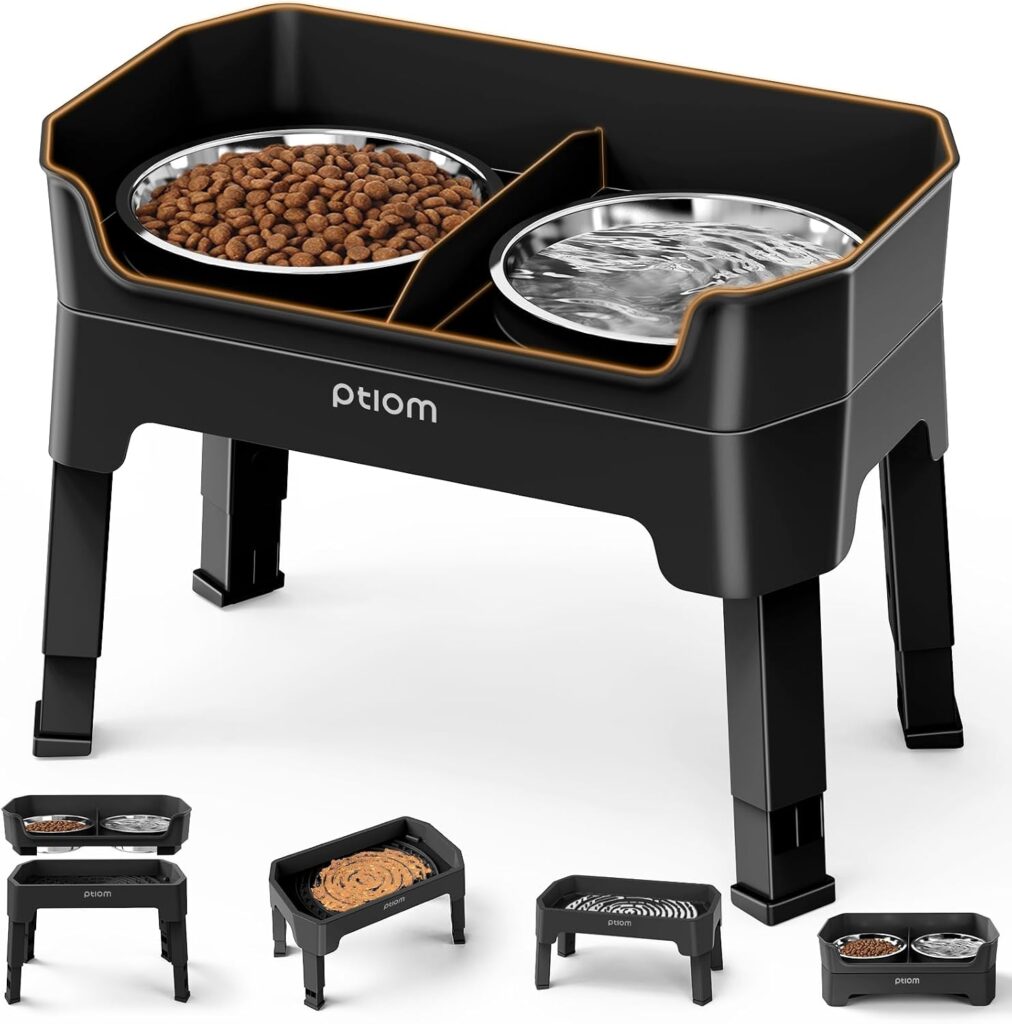
2. KPWACD 3-in-1 Elevated Dog Bowls — Best Adjustable Feeding Set
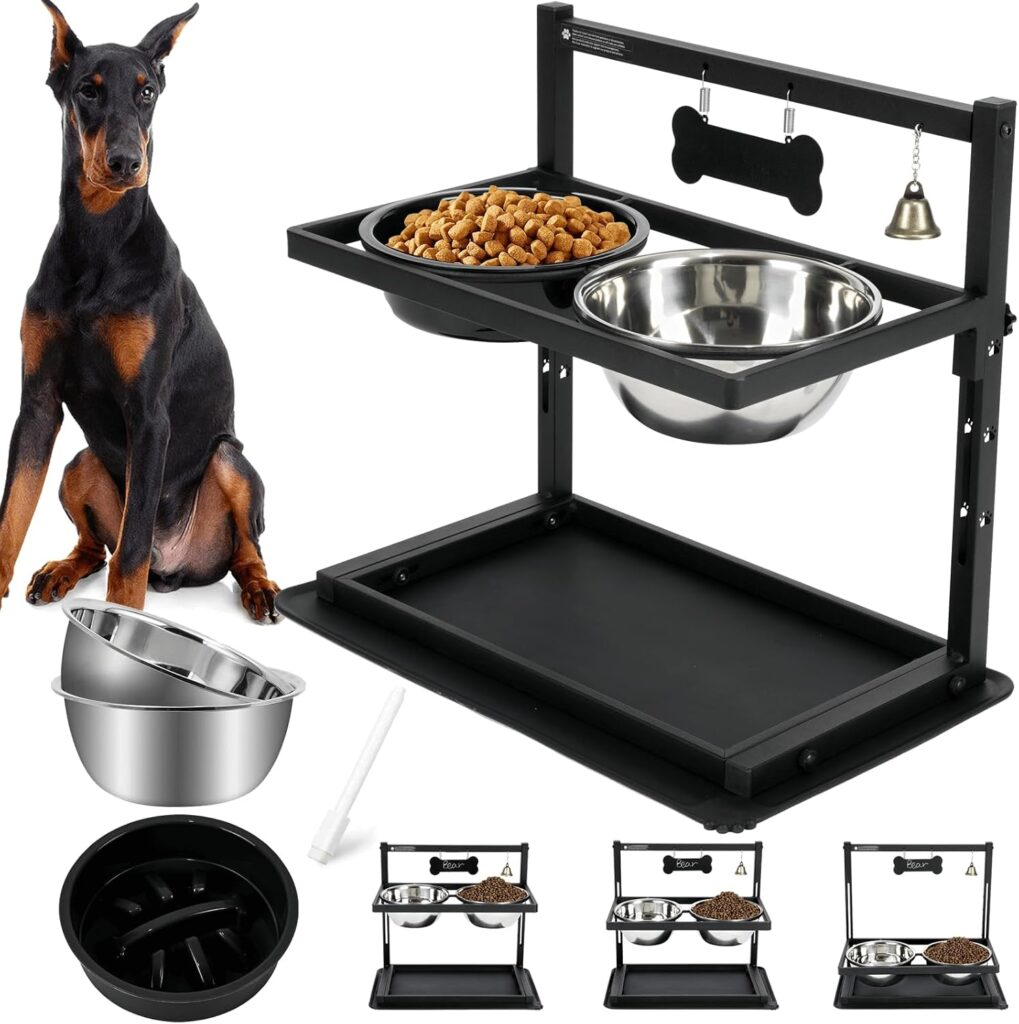
The KPWACD 3-in-1 Elevated Dog Bowls combine a slow feeder with two stainless-steel bowls and an adjustable stand.
There are four height settings, so the feeding station can be adapted for different medium and large dogs. The combination of a slow-feeding option and regular stainless-steel bowls also gives you more flexibility than a single-purpose feeder.
Another useful feature is the surrounding platform, which can help contain some of the kibble and water that inevitably ends up outside the bowl when enthusiastic dogs eat or drink.
Why we like it:
- Four adjustable heights
- Slow-feeder option
- Two stainless-steel bowls
- Raised edges around the feeding area
- Good all-in-one setup
Keep in mind:
A multi-piece feeding station requires more cleaning than a simple bowl, particularly around the stand and slow-feeder sections.
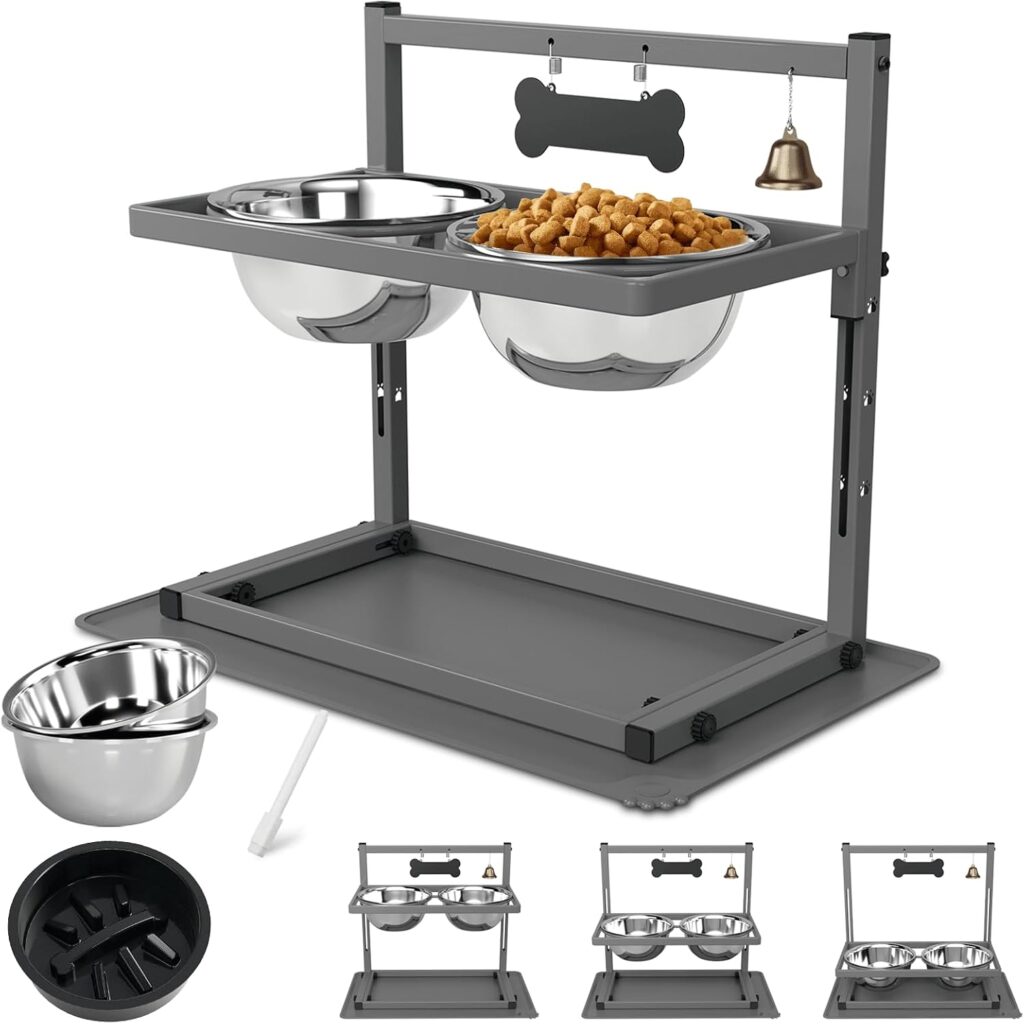
3. SHAINFUN Grey Raised Dog Bowl Stand — Best Large-Capacity Stainless Steel Set
Large dogs need more than height — bowl capacity matters too.
The SHAINFUN Grey Raised Dog Bowl Stand includes two large 1700 ml stainless-steel bowls along with a slow-feeding component. Its adjustable stand makes it more flexible than a fixed raised feeder, while the larger bowls are better suited to bigger dogs than many compact slow feeders.
The open-frame design also looks quite different from the bulkier plastic feeding stations.
Why we like it:
- Two 1700 ml stainless-steel bowls
- Slow-feeding option
- Adjustable stand
- Larger capacity
- Suitable for bigger dogs
Keep in mind:
Measure your dog and check the dimensions before ordering. “Large dog” covers everything from a Labrador to a much taller giant breed.
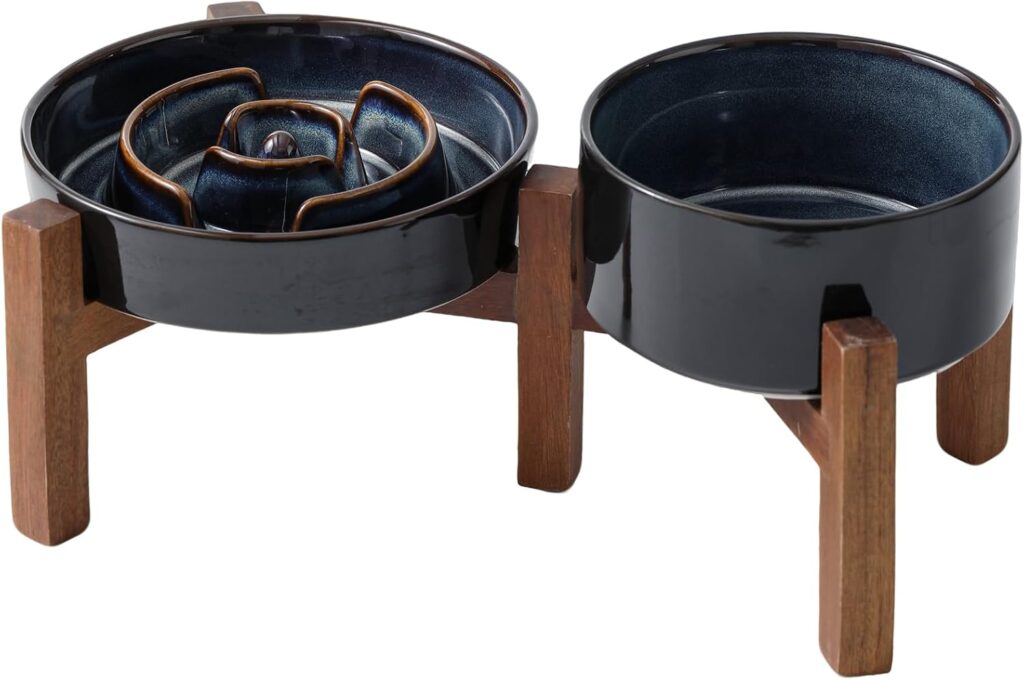
4. Haviniva Raised Ceramic Slow Feeder Set — Best Ceramic Set
Not everyone wants plastic or stainless steel.
The Haviniva Raised Ceramic Slow Feeder Set combines a ceramic slow-feeder bowl with a second ceramic bowl and an acacia-wood stand, giving it a much more furniture-like appearance than most feeding stations.
Ceramic also has some practical appeal because it has enough weight to feel substantial and is less likely to be pushed around by an enthusiastic eater.
The product comes in different sizes, which is important here. The version you choose needs enough capacity and width for your particular dog.
Why we like it:
- Ceramic slow-feeder bowl
- Separate ceramic bowl
- Acacia-wood stand
- Heavier bowl construction
- Attractive design for indoor feeding areas
Keep in mind:
Check the size carefully. Smaller versions of this set may not provide enough capacity for a large dog.
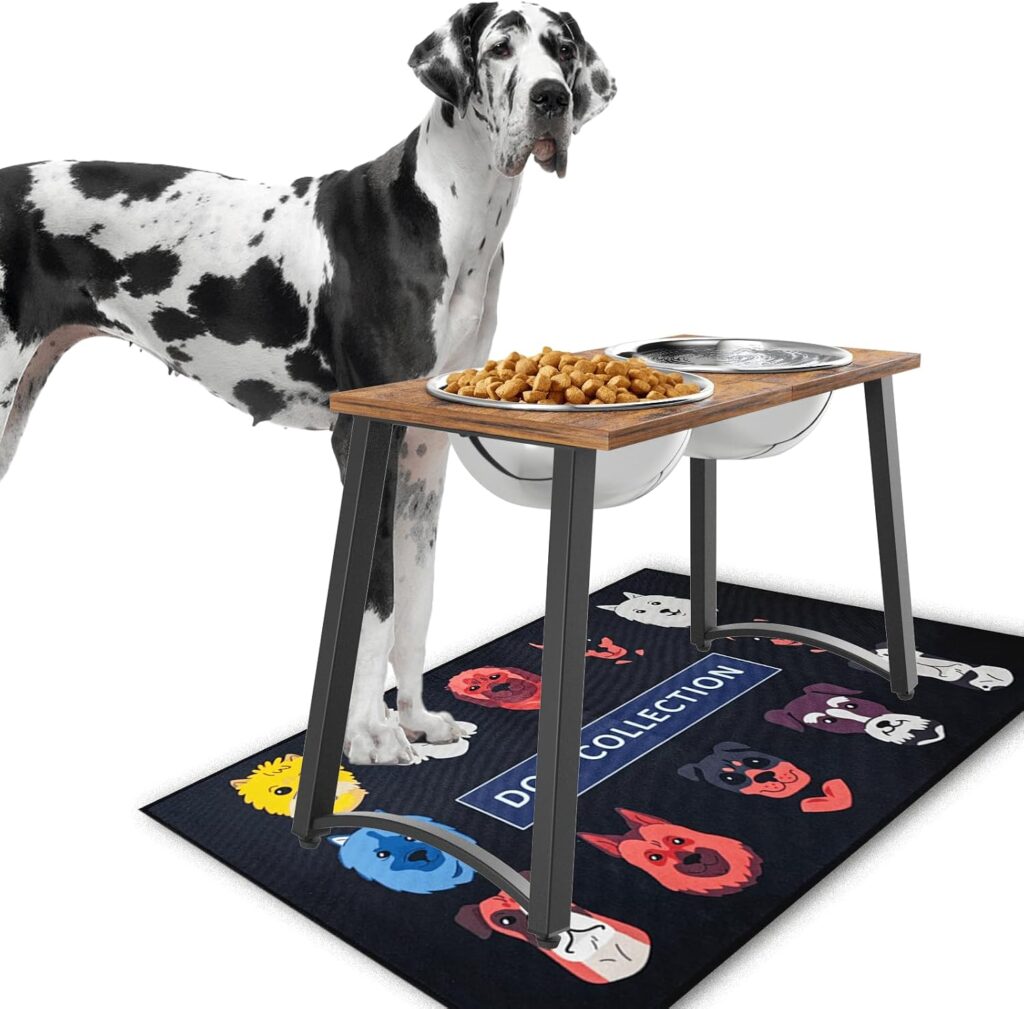
5. TIDANT Elevated Dog Bowls for X-Large Dogs — Best Alternative for Extra-Large Breeds
This one needs an important clarification: the TIDANT Elevated Dog Bowls are not a traditional slow feeder.
We included the set as an alternative because many products marketed as slow feeders simply aren’t large enough for extra-large breeds.
The TIDANT feeding station is designed specifically for X-large dogs and includes two generous 3000 ml stainless-steel bowls, a tall 16.5-inch stand, and a large mat to help contain spills.
If slowing your dog’s eating is the main goal, choose one of the actual slow feeders in this guide instead. But if your biggest problem is finding a feeding station with enough capacity for a very large dog, this option is worth knowing about.
Why we like it:
- Designed for extra-large dogs
- Two 3000 ml stainless-steel bowls
- 16.5-inch stand
- Large spill-control mat
- Much larger capacity than typical feeders
Keep in mind:
This is an elevated feeder, not a slow feeder. It will not physically slow eating the way a maze-style bowl or slow-feeder insert does.
6. ZPirates Elevated Slow Feeder for Large Dogs — Best Bamboo Stand
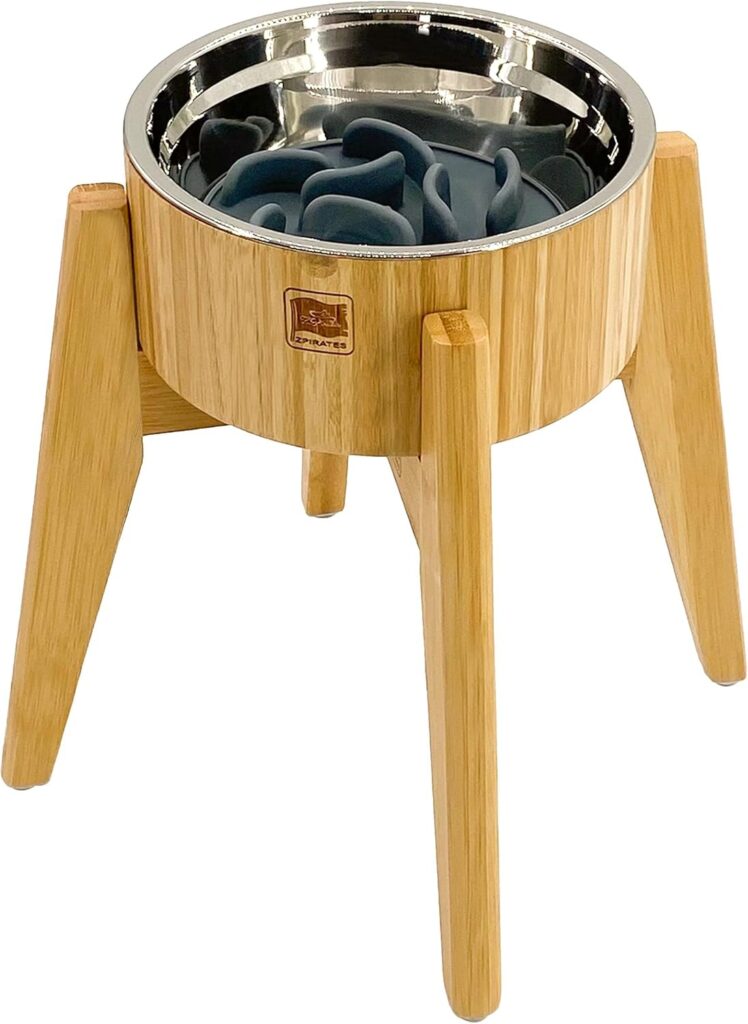
The ZPirates Elevated Slow Feeder is a good choice for owners who prefer a simpler, more natural-looking feeding station.
It uses a 12-inch bamboo stand and combines a stainless-steel bowl with a removable slow-feeder insert. That removable design is particularly practical because you aren’t locked into using the slow-feeding configuration for every meal.
It also gives this product a cleaner appearance than some of the larger adjustable plastic stations.
Why we like it:
- 12-inch elevated stand
- Bamboo construction
- Stainless-steel bowl
- Removable slow-feeder insert
- Simple design
Keep in mind:
Unlike multi-height stands, the fixed height gives you less flexibility, so check the measurements before buying.
7. SHAINFUN Elevated Dog Bowls with Slow Feeder & Spill-Proof Mat — Best for Messy Eaters
Some large dogs don’t just eat quickly. They somehow manage to spread water and kibble across half the kitchen.
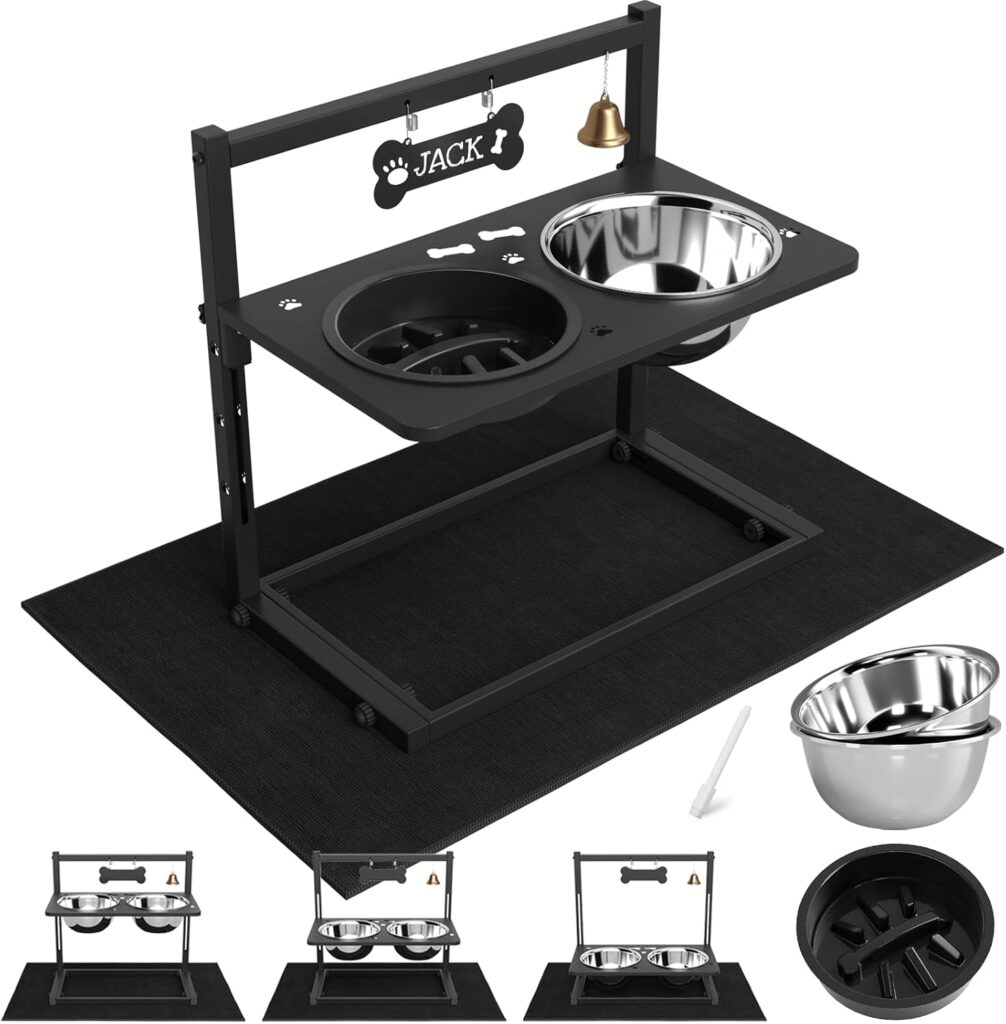
This SHAINFUN Elevated Dog Bowl Set combines an adjustable stand, slow-feeding section, stainless-steel bowl, and a large spill-control mat.
The height adjusts from approximately 4.3 to 11.8 inches, providing more flexibility than a fixed stand.
The mat is the feature that really distinguishes this option. It creates a larger area around the bowls to catch some of the mess from enthusiastic eating and drinking.
Why we like it:
- Adjustable height
- Slow-feeder option
- Stainless-steel bowl
- Large spill-proof mat
- Useful for messy eaters and drinkers
Keep in mind:
The larger footprint takes up more floor space than a basic elevated bowl.
8. YWYI Elevated Ceramic Slow Feeder Dog Bowl — Best Simple Ceramic Option
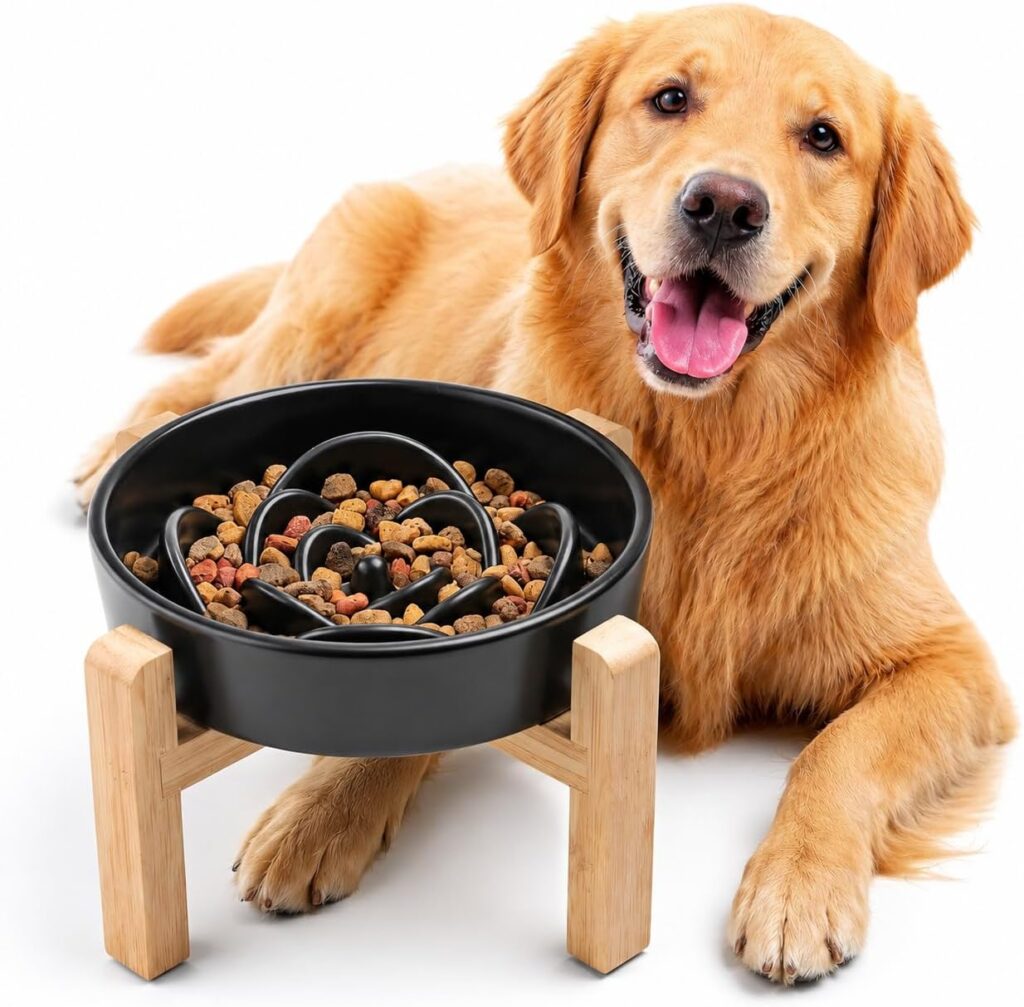
If you like ceramic but don’t need an entire two-bowl feeding station, the YWYI Elevated Ceramic Slow Feeder is a simpler alternative.
The 8.66-inch ceramic bowl sits on a raised wooden stand and uses a patterned interior to make food less accessible in large mouthfuls.
It’s marketed for medium and large dogs and offers a much cleaner, more minimal appearance than adjustable plastic stands.
Why we like it:
- Ceramic slow-feeder bowl
- Raised wooden stand
- Heavy, stable construction
- Suitable for medium and large dogs
- Simple design
Keep in mind:
Always check the actual capacity against your dog’s normal meal portion. Large dogs can vary dramatically in size and food requirements.
9. SHAINFUN Elevated Dog Bowls with Slow Feeder for Large Dogs — Best for Spill Control
This SHAINFUN Elevated Slow Feeder is another strong option for households where keeping the feeding area tidy matters.
It combines a slow-feeder bowl with a stainless-steel bowl, an adjustable raised stand, and a broad mat underneath the entire feeding station.
That makes it useful for dogs that eat quickly and tend to splash water or push kibble out of their bowls.
Why we like it:
- Designed for large dogs
- Slow-feeder bowl included
- Stainless-steel bowl
- Adjustable raised stand
- Large mat underneath
Keep in mind:
Because it has several separate parts, expect to clean the mat and feeding station as well as the bowls themselves.
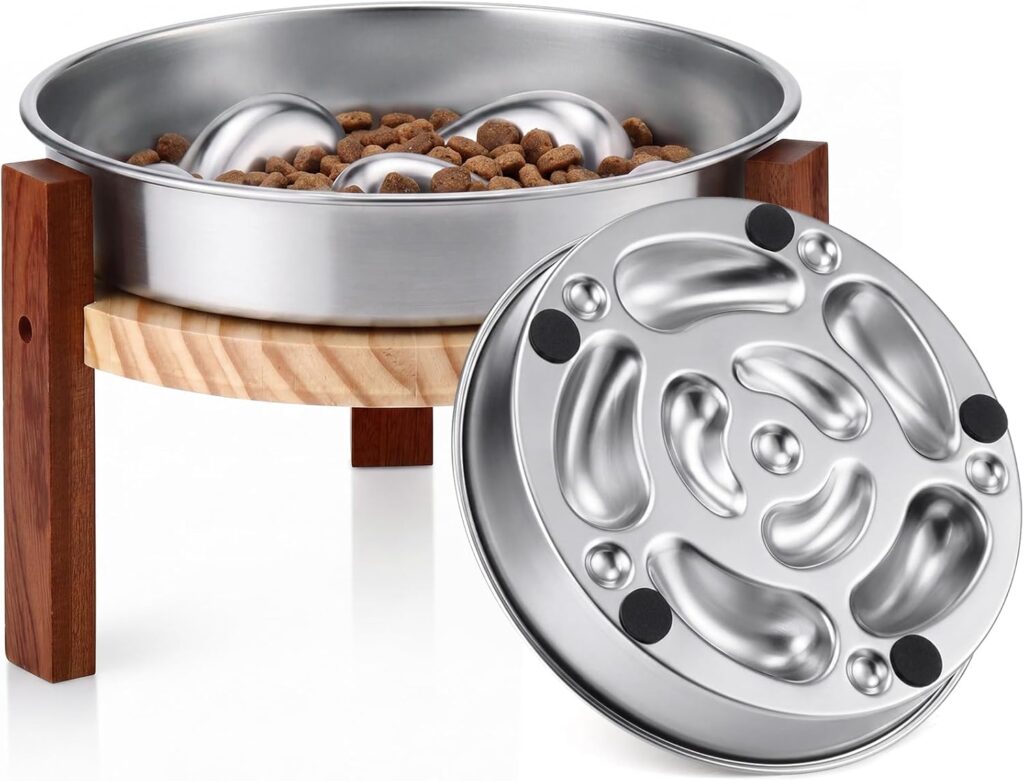
10. Purpeak Elevated Slow Feeder Dog Bowl Set – Best Wooden Stand Option
If you prefer a more natural look, the Purpeak Elevated Slow Feeder Dog Bowl Set combines a solid hardwood stand with stainless steel bowls. The set includes a regular bowl and a maze-style slow feeder bowl designed to encourage slower eating.
The 6-inch raised stand can be a nice option for medium and larger dogs, while the removable stainless steel bowls make everyday cleaning easier. Unlike some of the adjustable feeders on this list, the height is fixed, so it’s worth checking the dimensions before buying.
Why we like it:
- Solid hardwood elevated stand
- Includes two stainless steel bowls
- Maze-style slow feeder insert
- Removable bowls for easier cleaning
- Simple, attractive design
Keep in mind: The stand is not height-adjustable, so make sure the 6-inch height suits your dog.
Do Large Dogs Really Need a Slow Feeder?
Not every large dog needs one.
If your dog already eats calmly and comfortably, there may be little reason to complicate mealtime.
Slow feeders are primarily useful for dogs that gulp their food or finish meals extremely quickly. The obstacles inside the bowl limit how much food a dog can grab at once, which can extend mealtime and add a small amount of mental engagement. American Kennel Club
If you’re unsure whether your dog’s eating speed is actually a problem, read Does My Dog Need a Slow Feeder? Signs It Might Help before choosing a bowl.
Are Elevated Slow Feeders Better for Large Dogs?
This is where we need to separate convenience from health claims.
Some owners like elevated feeders because they keep bowls together, reduce the need to place dishes directly on the floor, or simply work better in their home.
But an elevated bowl should not be purchased on the assumption that it prevents GDV or bloat.
Large and deep-chested dogs are among those at greater risk of GDV, and rapid eating is one associated risk factor. VCA specifically lists elevated feeding among factors associated with increased GDV risk and recommends discussing feeding practices with your veterinarian for large and giant breeds. Vca
If your dog has a medical or mobility condition and you think an elevated bowl would make eating easier, ask your veterinarian what feeding height is appropriate.
How to Choose an Elevated Slow Feeder for a Large Dog
Check the Bowl Capacity
This is one of the easiest details to overlook.
A bowl can be advertised for “large dogs” and still be too small for your dog’s normal portion.
Check the capacity rather than relying solely on the size label.
Look at the Slow-Feeder Pattern
More complicated isn’t necessarily better.
The goal is to make your dog eat more slowly — not make dinner so difficult that they become frustrated.
Dogs with large muzzles may struggle with extremely narrow channels designed for smaller breeds.
Consider Stability
A determined large dog can move a lightweight feeding station surprisingly easily.
Look for non-slip feet, a wider base, heavier materials, or a mat underneath if your dog tends to push bowls around the room.
Think About Cleaning
Slow feeders have more corners and grooves than ordinary bowls.
If you feed wet food, those areas need particularly thorough cleaning.
Removable bowls and inserts can make daily maintenance considerably easier.
Measure Instead of Guessing
Don’t choose a stand simply because the manufacturer calls it “large.”
Measure your dog and compare those measurements with the product dimensions.
Slow Feeder vs. Automatic Feeder: Which Is Better?
They solve different problems.
A slow feeder controls how easily your dog can access food during the meal.
An automatic feeder controls when food is dispensed and often how much is released at a time.
If your main problem is a dog inhaling an entire bowl in seconds, start with a slow feeder.
If scheduling or portion timing is more important, see our Best Automatic Dog Feeders in 2026 guide.
Some households may benefit from both approaches, but don’t add gadgets simply because they’re available. Choose the feeding setup that addresses the actual problem you’re trying to solve.
Can a Slow Feeder Help an Overweight Dog?
A slow feeder doesn’t reduce calories by itself.
If you put exactly the same amount of food into a maze bowl, your dog ultimately consumes exactly the same meal.
What it can do is extend mealtime and make eating more engaging.
For weight management, however, portion size and total calorie intake still matter much more.
If you’re unsure whether your dog is carrying excess weight, see How to Tell If Your Dog Is Overweight and discuss appropriate portions with your veterinarian.
Don’t Forget About Water
Large dogs also need easy access to fresh drinking water.
A feeding station with separate food and water bowls can be convenient, but don’t restrict normal water access simply because you’re trying to slow food intake.
If you’re unsure what’s normal for your dog, our guide How Much Water Should a Dog Drink Per Day? explains typical water needs and signs that a change in drinking habits may deserve attention.
Frequently Asked Questions
Are slow feeders good for large dogs?
They can be useful for large dogs that eat very quickly. Slow-feeder ridges or obstacles make it more difficult to take large mouthfuls at once and can extend the time spent eating.
Should a large dog’s food bowl be elevated?
Not automatically. Elevated bowls can be convenient in some situations, but they aren’t necessary for every large dog and shouldn’t be used as a GDV-prevention strategy. If your dog has a medical reason that might make elevated feeding useful, discuss the appropriate setup with your veterinarian.
Can elevated slow feeders prevent bloat?
No feeding bowl should be presented as a way to prevent GDV. GDV is a potentially life-threatening emergency with multiple associated risk factors. Large and deep-chested dogs can be at greater risk, and rapid eating is one factor associated with the condition.
Are ceramic or stainless-steel slow feeders better?
Both can work well. Stainless steel is typically lightweight and practical to clean, while ceramic bowls tend to be heavier and can provide additional stability. The design, size, condition, and ease of cleaning matter more than choosing one material solely because it’s considered “better.”
How do I know what size slow feeder my large dog needs?
Check both the physical dimensions and food capacity. Your dog’s normal portion should fit comfortably without overfilling the bowl, and their muzzle should be able to reach between the slow-feeder obstacles without excessive frustration.
What if my dog refuses to use a slow feeder?
Try an easier pattern first. Some slow feeders are simply too complicated for a particular dog. The goal is controlled eating, not making your dog struggle to get food.
Final Thoughts
The best elevated slow feeder for a large dog isn’t necessarily the tallest stand or the bowl with the most complicated maze.
For most dogs, capacity, stability, an appropriate slow-feeding pattern, easy cleaning, and a design that fits the individual dog matter more.
The XIAZ and KPWACD sets offer versatile adjustable setups, while the Haviniva, YWYI, and YWIY options are worth considering if you prefer ceramic. For especially messy eaters, the SHAINFUN models with larger mats offer another practical approach, while the TIDANT is included specifically as a high-capacity alternative for extra-large dogs rather than as a true slow feeder.
Most importantly, don’t use an elevated feeder as a substitute for veterinary advice about bloat, swallowing problems, repeated vomiting, weight changes, or other feeding concerns.
This article is for informational purposes only and is not a substitute for professional veterinary advice. Product suitability depends on your dog’s size, health, eating habits, and individual needs.