
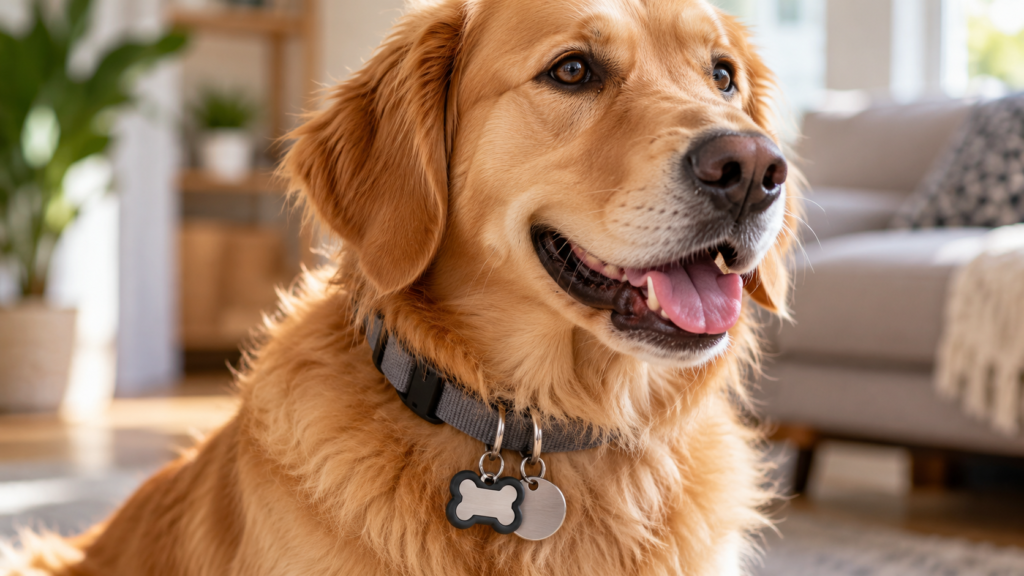
Wondering how to stop dog tags from jingling without removing your dog’s identification? You’re not alone. Those little metal tags can sound like a tiny wind chime every time your dog moves, especially in the middle of the night.
Maybe you’ve noticed the noise when your dog shakes their head, walks across a quiet room, or leans over a food bowl. Sometimes, even the smallest movement is enough to make several tags clatter together.
Taking the tags off might seem like the easiest solution. But your dog’s identification is far too important to sacrifice for a little peace and quiet.
The good news? You can make dog tags significantly quieter without giving up identification.
Some solutions cost just a few dollars, while others involve switching to personalized ID tags or collars designed to eliminate dangling metal pieces.
Here are seven practical ways to reduce the noise, including a few fixes you can try without buying anything.
Why Do Dog Tags Jingle So Much?
The main reason is simple: metal hitting metal.
Your dog’s collar might have an identification tag, a rabies tag, a license tag, and several metal attachment rings.
Every time your dog moves, these pieces can bump into each other.
You might notice the jingling most when your dog:
- Shakes their head after waking up
- Walks around the house at night
- Scratches near their collar
- Drinks from a metal water bowl
- Runs or plays outside
- Rolls around on the floor
Even a single metal ID tag can make noise when it hits the collar’s D-ring or buckle.
Before buying anything, take a moment to identify exactly which pieces are making the sound.
Sometimes, a small adjustment is all you need.
1. Add a Silicone Dog Tag Silencer
Best for: Keeping your dog’s existing metal ID tag.
If you’re looking for a quick and inexpensive solution, a silicone dog tag silencer is a great place to start.
These flexible silicone covers fit around the edges of traditional metal ID tags.
Instead of allowing two metal surfaces to collide directly, the silicone creates a soft barrier that reduces the clinking sound.
You don’t need to replace your dog’s identification or buy a completely new collar.
Why It Works
Silicone helps cushion the impact when tags bump against each other.
This can noticeably reduce the noise, especially if your dog wears multiple metal tags.
Pros
- Affordable and easy to install
- Lightweight and flexible
- Keeps your existing ID tag
- Available in different sizes and colors
- Suitable for many everyday collars
Things to Consider
Not every silencer fits every tag.
Some are designed for round tags, while others accommodate different shapes.
A loose cover might slip off, and one that’s too large could partially hide your contact information.
My tip: Measure your dog’s tag before ordering and make sure the engraving remains completely readable.
Recommended Product: GoTags Bone Dog Tag Silencers
These flexible silicone silencers help reduce the jingling of metal ID tags while keeping your dog’s existing identification in place. They also glow in the dark, adding a useful extra feature for nighttime visibility.
Designed primarily for compatible GoTags ID tags, they’re available in different shapes. Be sure to check the size and shape of your dog’s tag before ordering, as they may not fit tags from other brands.
2. Switch to a Personalized Slide-On Dog ID Tag
Best for: Active dogs and owners who want a long-term, nearly silent solution.
If your dog’s tags are constantly swinging and hitting the collar hardware, a slide-on ID tag might be the answer.
Unlike traditional hanging tags, slide-on identification tags attach directly to the collar strap.
They sit flat against the collar instead of dangling from a metal ring.
Because the tag doesn’t swing freely, it can eliminate most of the jingling associated with traditional ID tags.
Why It’s Worth Considering
Slide-on tags are particularly practical for dogs that enjoy running, hiking, and outdoor adventures.
Many can be personalized with your dog’s name and phone number, providing identification without an additional hanging accessory.
Pros
- No dangling ID tag
- Minimal noise
- Personalized engraving
- Low-profile design
- Suitable for everyday activities
Things to Consider
Collar compatibility matters.
A tag designed for a narrow collar might not fit a wider one.
Some designs also require collars with removable buckles or open ends.
My tip: Check your collar’s width and buckle design before purchasing. A secure fit is just as important as reducing noise.
Recommended Product: GoTags Slide-On Pet ID Tag
The GoTags Slide-On Pet ID Tag is a practical alternative to traditional hanging tags. Made from stainless steel, it attaches directly to a compatible collar, keeping your dog’s identification in place without the constant jingling.
Available in four sizes, it can be personalized with up to four lines of engraved text, including your dog’s name and contact information.
Before ordering, check your collar’s width and design to make sure the tag will fit securely.
If your dog loves outdoor adventures, choosing comfortable walking gear matters just as much as keeping identification secure. Explore our guide to the best dog hiking harnesses in 2026 for more ideas.
Planning longer adventures with your dog? Our guide to the best dog gear for long hikes in 2026 covers practical essentials for outdoor trips.
3. Try a Personalized Embroidered Dog Collar
Best for: Owners who prefer identification without a separate hanging tag.
What if your dog’s identification was already part of their collar?
That’s exactly what personalized embroidered dog collars offer.
Instead of attaching a traditional ID tag, your dog’s name and contact phone number are stitched directly into the collar material.
This removes the need for a dangling identification tag and can significantly reduce noise.
Why It’s a Practical Option
An embroidered collar combines two everyday essentials: a collar and visible identification.
There’s no separate engraved tag to lose, and your contact information can be easy to spot.
It’s also a nice option if you prefer a simple, uncluttered collar.
Pros
- No separate hanging ID tag
- Personalized contact information
- Available in different colors and styles
- Comfortable fabric options
- Suitable for everyday wear
Things to Consider
Embroidery can become difficult to read as the collar ages.
Dirt, fading, and damaged stitching may affect visibility.
The collar’s metal buckle or D-ring can also make some noise, although you won’t have a hanging ID tag adding to it.
And remember: some locations require dogs to wear specific license or rabies tags.
An embroidered collar doesn’t automatically replace legally required identification.
Recommended Product: RUNPULF Personalized Embroidered Dog Collar
The RUNPULF Personalized Dog Collar combines everyday comfort with built-in identification. Your dog’s name and phone number are embroidered directly onto the nylon collar, eliminating the need for a separate hanging ID tag.
It features reflective stitching for improved visibility in low light, soft padding for comfort, and an adjustable design with a metal buckle.
Available in multiple colors, it’s a practical option for owners who want quieter identification without sacrificing everyday functionality.
Be sure to check the sizing guide and review your personalized information carefully before ordering.
4. Replace Metal Tags With a Silent Silicone ID Tag
Best for: Dogs that need lightweight, quieter identification.
If you’d rather keep a traditional hanging tag but reduce the metallic noise, consider switching to a personalized silicone dog ID tag.
Unlike metal tags, silicone is soft and flexible.
When it bumps against the collar or other accessories, it generally produces less noise than metal.
This can be particularly useful for small dogs or owners who prefer lightweight accessories.
Pros
- Lightweight and flexible
- Less metallic noise
- Personalized designs available
- Comfortable for many dogs
- Available in different colors
Things to Consider
Silicone tags aren’t always completely silent.
The metal attachment ring may still hit the collar hardware.
Some printed designs can also fade or wear down over time.
My tip: Look for durable, clearly readable personalization rather than choosing a tag based on appearance alone.
Recommended Product: GoTags Silent Silicone Dog Tag
The GoTags Silent Dog Tag is a personalized silicone ID tag designed to reduce the metallic jingling of traditional dog tags. Its flexible material makes it a lightweight alternative to standard metal identification tags.
Available in bone and hexagonal shapes, it comes in several colors and designs. You can personalize it with up to four lines of engraved text, including your dog’s name and contact information.
The manufacturer describes the engraving as water-resistant and designed for everyday use. As with any hanging tag, check that the attachment is secure and the information remains readable over time.
5. Keep Multiple Tags Together With a Tag Holder
Best for: Dogs that need to wear several identification tags.
Some dogs wear more than one tag.
Along with a personalized ID tag, they might have a rabies vaccination tag or a local dog license.
When several metal tags hang from the same ring, they can create quite a bit of noise.
A dog tag holder or small fabric pouch can help keep them together.
Instead of allowing each tag to swing independently, the holder limits movement and reduces metal-on-metal contact.
Pros
- Useful for multiple tags
- Helps reduce jingling
- Allows you to keep existing identification
- Can help organize tags
Things to Consider
Identification should remain easy to access.
If someone finds your lost dog, they shouldn’t have to struggle to locate your phone number.
Choose a holder that attaches securely and allows identification to be retrieved quickly.
Also, check it regularly for moisture, dirt, and signs of wear.
6. Choose a Dog Collar With a Built-In ID Plate
Best for: Durable, low-profile identification without dangling tags.
Another excellent option is a dog collar with an attached identification plate.
Instead of hanging from a ring, the engraved plate sits flat against the collar strap.
Some designs use rivets to secure the plate, while others incorporate it directly into the collar.
Because the identification doesn’t swing freely, this design is usually much quieter than a traditional hanging metal tag.
Why It Works
The plate stays close to the collar rather than moving independently.
That means fewer opportunities for metal pieces to collide.
It’s also a practical choice for owners who prefer a clean, simple collar design.
Pros
- No dangling identification tag
- Personalized engraving
- Durable options available
- Low-profile appearance
- Suitable for many everyday activities
Things to Consider
Check the attachment hardware regularly.
Loose rivets or damaged collar material could cause the plate to detach.
The engraved information should remain clearly readable.
If you have a growing puppy, remember that the collar may need replacing as your dog gets bigger.
7. Try These Simple DIY Fixes Before Buying Anything
Best for: Reducing dog tag noise immediately without spending money.
Before replacing your dog’s tags, take a closer look at the current collar setup.
Sometimes, the problem isn’t the tag itself.
It’s the way everything is attached.
Here are a few simple things worth checking.
Separate Tags That Keep Hitting Each Other
If two tags constantly collide, repositioning them on separate, secure attachment points may help.
However, make sure they can’t swing into other metal hardware.
Remove Outdated or Duplicate Tags
Does your dog still wear an old identification tag with an outdated phone number?
Removing unnecessary duplicates can reduce clutter and noise.
Just make sure you don’t remove any legally required tags.
Inspect the Split Ring
Sometimes, the jingling comes from the attachment hardware.
Check whether the split ring is loose, damaged, or unnecessarily large.
Replace worn hardware with a properly sized, secure attachment.
Avoid Covering Tags With Tape
Wrapping identification tags in tape might seem like an easy solution, but it isn’t ideal.
Tape can hide important information, collect dirt, and trap moisture.
A properly fitted silicone silencer is usually a better long-term choice.
Important: Avoid improvised fasteners or loose accessories that could detach, be swallowed, or create a choking hazard.
Which Dog Tag Solution Is Best?
Not every solution works equally well for every dog.
Here’s a quick comparison to help you decide.
| Solution | Noise Reduction | Keeps Existing ID Tag? | Best For |
|---|---|---|---|
| Silicone tag silencer | Good | Yes | Quick, inexpensive fix |
| Slide-on ID tag | Excellent | No | Active dogs |
| Embroidered collar | Excellent | No | Everyday identification |
| Silicone ID tag | Good | No | Lightweight identification |
| Fabric tag holder | Good | Yes | Multiple tags |
| Collar with ID plate | Excellent | No | Durable, low-profile ID |
| DIY adjustments | Varies | Yes | Immediate troubleshooting |
My Recommendation
If your dog already has a good-quality metal ID tag, start with a silicone tag silencer.
It’s inexpensive, easy to install, and doesn’t require replacing your existing identification.
If you’re buying a new collar anyway, a personalized slide-on tag or a collar with built-in identification may be a better long-term solution.
The best choice depends on your dog’s size, activity level, and collar design.
Are Silent Dog ID Tags Safe?
Yes, silent dog ID tags can be safe when they’re properly designed, securely attached, and easy to read.
However, reducing noise should never make your dog’s identification less accessible.
Before choosing a new tag or collar, check that:
- Your contact information is clearly visible or easily accessible.
- The tag or plate attaches securely.
- There are no sharp or damaged edges.
- Your dog cannot easily chew off and swallow loose components.
- The collar fits comfortably.
- Any legally required identification remains in place.
Remember that identification requirements vary depending on where you live.
Some U.S. jurisdictions require dogs to wear license or rabies tags even when they have personalized collars or microchips.
Always check your local requirements before removing existing identification.
Does Your Dog Still Need an ID Tag If They’re Microchipped?
Yes. A microchip and visible identification work best together.
A microchip provides a permanent form of identification that can help reunite lost dogs with their families.
However, someone who finds your dog generally needs access to a microchip scanner to retrieve the identification number.
A visible ID tag or personalized collar allows that person to contact you much more quickly.
The American Veterinary Medical Association recommends keeping microchip registration information current and using microchips alongside visible identification.
If your dog gets lost, both forms of identification can improve the chances of a successful reunion.
The safest approach is to combine a registered microchip with secure, readable identification on your dog’s collar.
And don’t forget to update your contact information whenever your phone number or address changes.
Can Jingling Dog Tags Bother Dogs?
Some dogs may react to the sound of jingling tags, particularly if they’re sensitive to noise.
Others seem completely unbothered.
There’s no reason to assume that every dog dislikes the sound.
However, if your dog appears uncomfortable wearing a collar, scratches excessively, or frequently shakes their head, don’t automatically blame the tags.
Check the collar fit, skin condition, and attachment hardware.
Persistent head shaking or scratching around the ears could indicate another issue that needs veterinary attention.
The goal is to make your dog’s everyday accessories quieter and more comfortable without overlooking potential health concerns.
Frequently Asked Questions
What is the easiest way to stop dog tags from jingling?
A properly fitted silicone dog tag silencer is one of the easiest solutions. It reduces metal-on-metal contact while allowing your dog to keep their existing identification tag.
Are silicone dog tags completely silent?
Not always. Silicone tags usually make less metallic noise than traditional metal tags, but attachment rings and other collar hardware can still produce sounds.
Do slide-on dog ID tags fit every collar?
No. Slide-on tags must match the collar’s width and design. Always check compatibility before ordering.
Can I put my phone number directly on my dog’s collar?
Yes. Personalized embroidered collars and collars with engraved identification plates can display your contact information without requiring a traditional hanging ID tag. However, you should check local identification requirements before removing other tags.
What if my dog needs multiple tags?
Consider a secure fabric tag holder or pouch designed to keep several tags together. Make sure important information remains accessible and any legally required tags stay in place.
Are silent dog tags suitable for puppies?
They can be, provided they’re lightweight, appropriately sized, and securely attached. Check the collar fit regularly as your puppy grows, and avoid accessories with small detachable parts that could be swallowed.
Should I remove my dog’s ID tag at night?
Removing identification solely to reduce noise isn’t the best solution. A quieter tag or personalized collar allows your dog to retain identification without unnecessary jingling. If you remove the collar for safety in a particular situation, make sure your dog cannot escape and restore identification before outdoor access.
Final Thoughts
Learning how to stop dog tags from jingling doesn’t have to involve expensive accessories or complicated changes.
Sometimes, a simple silicone cover or a small adjustment to your dog’s existing tags is enough to make a noticeable difference.
If you’re looking for a longer-term solution, personalized slide-on ID tags, embroidered collars, and engraved identification plates are all worth considering.
Start by checking which metal pieces are making the noise. Then choose the simplest solution that works for your dog’s size, activity level, and collar.
Whatever you decide, remember that a quiet collar should still be a safe collar.
Keep your dog’s identification secure, readable, and up to date.
Disclaimer: This article provides general pet-care information and is not a substitute for professional veterinary advice. Consult your veterinarian if your dog shows signs of discomfort, irritation, or unusual sensitivity around the collar or ears.