Some dogs eat as if they haven’t seen food in days. You put the bowl down, turn around for a moment, and dinner is already gone.
Eating quickly isn’t always a problem, but for some dogs, slowing mealtime down can make eating calmer, more controlled, and more engaging. That’s where a slow feeder can help.
But does every dog need one? Not necessarily.
Here’s how to tell whether your dog might benefit from a slow feeder, when a regular bowl may be perfectly fine, and what to look for when choosing one.
What Is a Slow Feeder Dog Bowl?
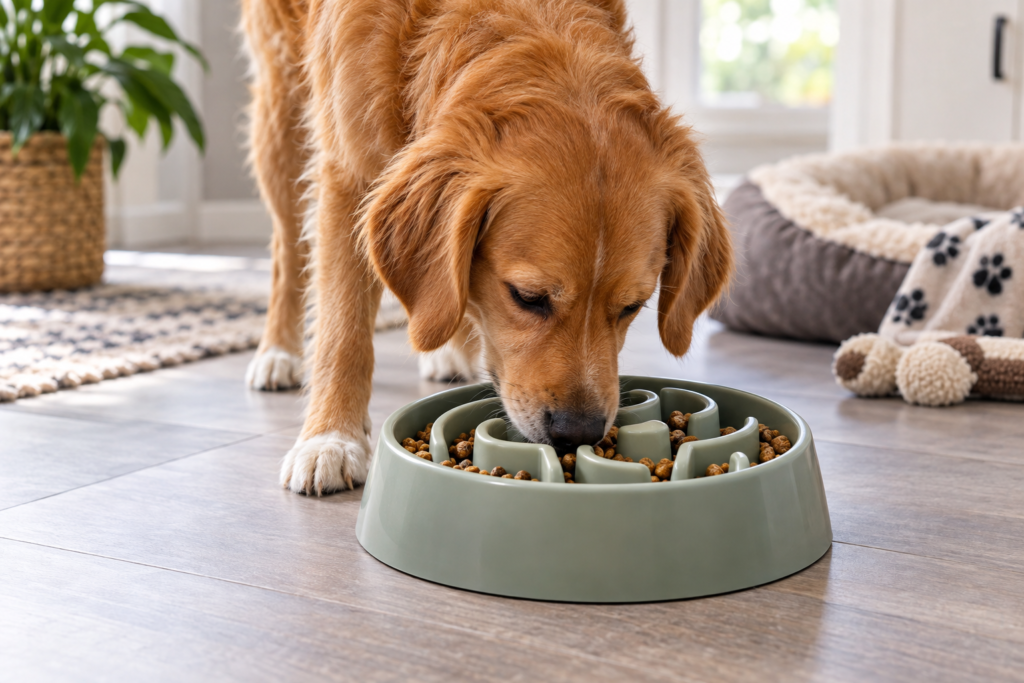
A slow feeder is a food bowl designed with raised sections, ridges, grooves, or other obstacles inside the bowl.
Instead of being able to take large mouthfuls of food from an open bowl, your dog has to eat around these obstacles. This can make it harder to gulp an entire meal in a very short time.
Some designs are simple, while others look almost like puzzles.
The goal isn’t to frustrate your dog. A good slow feeder should simply encourage a more measured eating pace.
How Do I Know If My Dog Eats Too Fast?
You don’t necessarily need a stopwatch.
If your dog regularly finishes a full meal before you’ve even had time to put the food away, they’re probably eating fairly quickly.
Other signs can include:
- Taking very large mouthfuls
- Swallowing food with little apparent chewing
- Coughing or gagging while eating
- Dropping or scattering food while rushing
- Immediately looking for more food after finishing
- Competing with another pet and eating faster because of it
Some dogs are simply enthusiastic eaters. But if rushing through meals happens regularly, a slow feeder may be worth trying.
Why Does My Dog Eat So Fast?
Fast eating can happen for several reasons, and it doesn’t necessarily mean something is wrong.
Some dogs are naturally very food-motivated. Others may have learned to eat quickly earlier in life, especially if they previously lived with other dogs and had to compete for food.
Common reasons dogs rush through meals include:
- Excitement around food
- Competition with other pets
- Long gaps between meals
- A naturally strong appetite
- Learned behavior from puppyhood
- A feeding routine that makes mealtime especially exciting
Sometimes, however, a noticeable change in appetite deserves more attention.
If a dog that normally eats calmly suddenly becomes extremely hungry, starts stealing food, loses weight despite eating normally, or develops other unusual symptoms, don’t simply assume they need a slow feeder. A significant change in appetite can have medical causes and should be discussed with a veterinarian.
A slow feeder can change the mechanics of eating, but it doesn’t address the underlying reason for a sudden increase in hunger.
Signs Your Dog Might Benefit From a Slow Feeder
1. Your Dog Finishes Meals Extremely Quickly
This is the most obvious reason to consider one.
A slow feeder creates physical obstacles between your dog and the food, making it more difficult to grab large amounts at once.
For dogs that seem to inhale their meals, even a modest reduction in eating speed can make mealtime feel much less frantic.
2. Your Dog Gulps Food Without Slowing Down
Some dogs barely seem to pause between mouthfuls.
A slow feeder encourages them to work around different sections of the bowl rather than repeatedly taking food from one large open area.
However, if your dog regularly coughs, chokes, struggles to swallow, or has other problems while eating, don’t assume that eating speed is the only cause. Talk to your veterinarian.
3. Your Dog Seems Hungry Immediately After Eating
A dog begging for food after dinner doesn’t automatically mean they need more food.
Dogs may ask for food because they enjoy eating, because begging has worked before, or because they finished their meal so quickly that mealtime barely registered as an activity.
Slowing the meal can make eating last longer.
If you’re unsure whether your dog is eating an appropriate amount, our guide How to Tell If Your Dog Is Overweight can help you look at body condition rather than relying only on appetite.
4. Your Dog Needs More Mental Stimulation
Slow feeders aren’t only about speed.
Navigating grooves and obstacles adds a small problem-solving element to something your dog already does every day.
It won’t replace walks, play, training, sniffing, or enrichment activities, but it can make an ordinary meal a little more interesting.
5. Your Dog Rushes Because Other Pets Are Nearby
In multi-dog households, some dogs eat quickly because they’re worried another pet will reach their food.
A slow feeder may help with eating speed, but it doesn’t solve competition over food.
If pets are rushing, guarding bowls, or trying to steal from one another, feeding them separately in calm areas is usually more important than changing the bowl.
Are Slow Feeders Good for Dogs?
For many healthy dogs that eat too quickly, a properly sized slow feeder can be a useful feeding tool.
The key is choosing a design appropriate for your dog.
The obstacles shouldn’t make it nearly impossible to reach the food. Your dog should still be able to eat comfortably without repeatedly scraping their face or becoming frustrated.
You should also supervise your dog when introducing a new feeder, particularly if they tend to chew or destroy bowls.
What Are the Benefits of a Slow Feeder?
The most obvious benefit is simply making food harder to gulp in a few large mouthfuls.
But there can be a few additional advantages.
Longer Mealtimes
For a dog that finishes dinner almost instantly, a slow feeder can make the same portion last longer without adding extra calories.
That can be particularly useful for dogs that love food and seem disappointed when mealtime ends after only a few seconds.
More Engagement During Meals
The ridges and patterns inside the bowl require a dog to move around the feeder and work a little harder to reach individual pieces of food.
It’s a simple form of enrichment that can be incorporated into something you already do every day.
Better Portion Awareness for Owners
A slow feeder doesn’t reduce calories on its own, but using a dedicated feeding bowl can encourage owners to measure portions rather than repeatedly topping up a bowl.
That distinction matters.
If your dog is gaining weight, changing the bowl won’t compensate for consistently oversized portions or lots of treats throughout the day.
Can a Slow Feeder Prevent Bloat?
This is where it’s important not to make exaggerated claims.
Slow feeders are often marketed alongside discussions about bloat, but a slow feeder should not be treated as a way to prevent gastric dilatation-volvulus (GDV).
GDV is a serious, potentially life-threatening emergency in which the stomach becomes distended and may twist. Several factors can affect a dog’s risk.
If you have a large or deep-chested breed or are concerned about your dog’s risk of GDV, discuss prevention and feeding practices with your veterinarian rather than relying on a particular bowl.
Can Slow Feeders Be Bad for Dogs?
They can be unsuitable in some situations.
A feeder that is too difficult may frustrate a dog instead of simply slowing them down. Very narrow or deep grooves may also be awkward for some dogs to use.
Watch how your dog behaves.
If they’re aggressively biting the bowl, pawing at it constantly, tipping it over, or giving up on the meal, that particular design may not be a good match.
Dogs with dental problems, facial structure differences, mobility limitations, or medical conditions may also need a different feeding setup.
How to Introduce a Slow Feeder to Your Dog
Don’t assume your dog will immediately understand a complicated new bowl.
For the first meal, choose an easy slow feeder rather than one with extremely narrow or elaborate channels.
Add your dog’s normal food and let them investigate it without rushing them.
Stay nearby and watch what happens.
A good response looks fairly ordinary: your dog sniffs the bowl, figures out how to reach the food, and continues eating.
Signs the feeder may be too difficult include:
- Repeatedly biting the bowl
- Frantically scratching or pawing at it
- Flipping the feeder over
- Walking away despite still being hungry
- Becoming increasingly frustrated
If that happens, try an easier design.
The objective is to slow eating down — not to make your dog fight for dinner.
You can also introduce the feeder with a small portion first instead of immediately serving an entire meal in it.
Once your dog understands how it works and eats comfortably, you can decide whether you want to use it for every meal or only when it’s useful.
What Type of Slow Feeder Should I Choose?
The best slow feeder depends on your dog’s size, eating style, and the type of food you use.
Look for:
- An appropriate bowl size
- Grooves your dog can comfortably reach
- A stable or non-slip base
- Food-safe materials
- A design that is easy to wash
- Enough capacity for your dog’s normal portion
Large dogs may also benefit from a wider, more stable feeding setup rather than trying to eat from a small bowl that slides across the floor.
That’s something we’ll look at more closely in our upcoming guide to the Best Elevated Slow Feeders for Large Dogs in 2026.
Slow Feeder Bowl vs. Puzzle Feeder
They can look similar, but they don’t always serve exactly the same purpose.
A traditional slow feeder is still basically a food bowl. Its ridges and grooves make it harder for a dog to take large mouthfuls quickly.
A puzzle feeder usually requires more deliberate problem-solving, such as moving pieces, opening compartments, or manipulating parts to access food.
For a dog whose main problem is simply eating too quickly, a basic slow feeder may be enough.
For a dog that needs additional mental stimulation, food puzzles can provide a more challenging activity.
You don’t necessarily have to choose one forever. Some owners rotate different feeding methods to add variety.
What About Automatic Dog Feeders?
A slow feeder and an automatic feeder solve different problems.
Slow feeders primarily change how quickly a dog can access food during a meal. Automatic feeders are designed to control when and how much food is dispensed.
Depending on your routine, one may be more useful than the other.
If portion scheduling is what you’re trying to manage, see our guide to the Best Automatic Dog Feeders in 2026.
How Long Should It Take a Dog to Eat?
There isn’t one ideal number of minutes that applies to every dog.
Meal duration depends on the dog’s size, food type, portion, age, and individual eating habits.
Instead of trying to hit a specific time, focus on whether your dog is eating calmly and comfortably rather than gulping food frantically.
A slow feeder that turns a very fast meal into a somewhat longer, calmer one may be doing exactly what you need.
Does a Slow Feeder Help With Weight Loss?
A slow feeder does not cause weight loss by itself.
Your dog is still eating the same calories unless you change the amount of food.
For weight management, total calorie intake, treats, activity level, body condition, and your veterinarian’s recommendations matter much more than how complicated the food bowl is.
If weight is a concern, start with How to Tell If Your Dog Is Overweight and discuss an appropriate feeding plan with your veterinarian.
What About Water?
Don’t use a slow feeder as a reason to unnecessarily restrict your dog’s access to fresh water.
Changes in thirst can also tell you something very different from changes in appetite or eating speed.
If your dog suddenly starts drinking noticeably more or less than usual, our guide How Much Water Should a Dog Drink Per Day? explains what’s typical and when a change deserves veterinary attention.
How to Keep a Slow Feeder Clean
Slow feeders can require more cleaning than ordinary bowls because food can become trapped around ridges and inside narrow grooves.
That’s especially important when feeding wet or fresh food.
After meals:
- Remove leftover food
- Wash the entire feeding surface
- Pay attention to corners and deep grooves
- Rinse thoroughly
- Allow the bowl to dry completely
Check the manufacturer’s instructions before putting a feeder in the dishwasher.
You should also inspect the bowl periodically for cracks, sharp edges, or areas your dog has chewed.
A damaged plastic feeder should be replaced rather than continuing to use it.
FAQ
Do puppies need slow feeders?
Some puppies that eat extremely quickly may benefit from an appropriately sized slow feeder. Choose a simple design that isn’t frustrating and supervise them so they don’t turn the bowl into a chew toy.
Can I put wet food in a slow feeder?
Many slow feeders can be used with wet food, but it depends on the design and material. Make sure you can thoroughly clean all grooves after each meal.
Can I use a slow feeder for every meal?
Many dogs can use one regularly if they eat comfortably from it. There’s no need to make every meal difficult, though. The purpose is controlled eating, not creating a challenge your dog struggles to complete.
What if my dog flips the slow feeder over?
Try a heavier bowl, a non-slip base, or a design with better stability. If your dog is flipping it because the puzzle is too frustrating, choose an easier pattern.
Do dogs that eat normally need slow feeders?
Usually not. If your dog already eats at a comfortable pace and has no problem with a regular bowl, there may be little reason to change it.
Final Thoughts
A slow feeder can be useful for dogs that gulp their food, finish meals extremely quickly, or could benefit from a little extra engagement at mealtime.
But it isn’t something every dog needs.
Choose a bowl that slows your dog without making eating frustrating, use the correct portion regardless of the bowl type, and pay attention to any sudden changes in appetite, swallowing, weight, or thirst.
For dogs that need both a slower eating setup and a more comfortable feeding height, our next guide will look at the Best Elevated Slow Feeders for Large Dogs in 2026.
This article is for informational purposes only and is not a substitute for professional veterinary advice. If your dog has difficulty eating or swallowing, repeated vomiting or regurgitation, sudden appetite changes, or other concerning symptoms, contact your veterinarian.