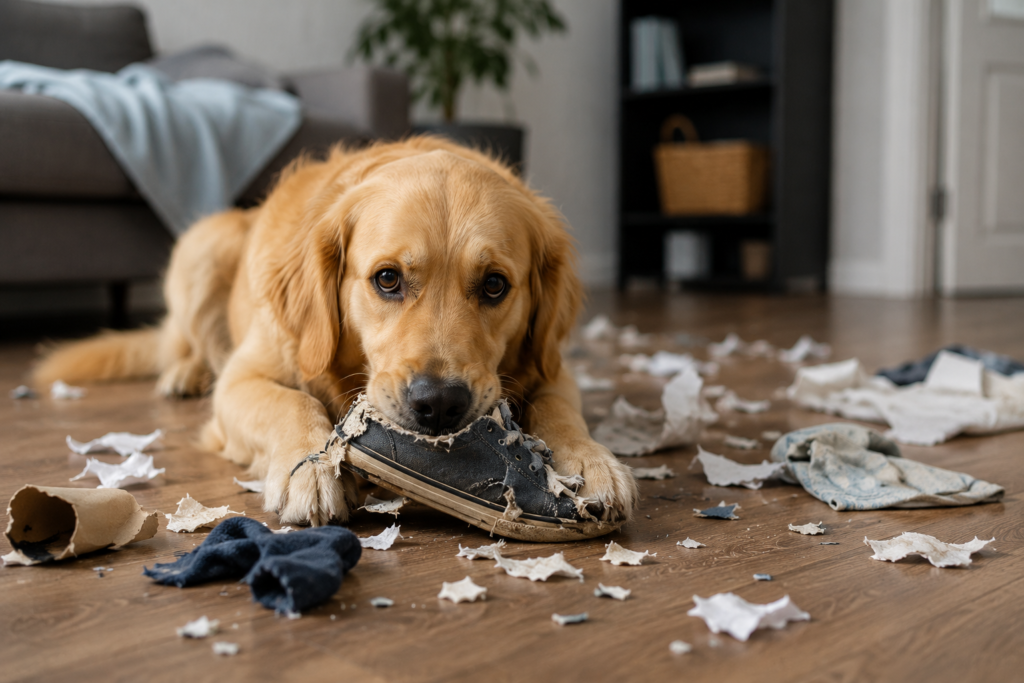
If your dog seems determined to chew everything in sight — shoes, furniture, blankets, toys, or even things they definitely shouldn’t have — you’re not alone.
Chewing is a completely natural behavior for dogs. It can help them explore their environment, relieve boredom, entertain themselves, and satisfy the natural urge to use their mouths.
But when chewing becomes excessive or destructive, there is usually a reason behind it.
Understanding why your dog chews everything is the first step toward protecting your belongings while still giving your dog a safe way to satisfy their need to chew.
Why Does My Dog Chew Everything?
Dogs don’t usually chew your belongings because they are being “bad.”
For many dogs, chewing is simply enjoyable. Puppies use their mouths to explore the world, while adult dogs may chew for entertainment, stimulation, comfort, or stress relief.
The important question is not whether your dog likes to chew, but why the chewing has become excessive or destructive.
Here are some of the most common explanations.
1. Chewing Is a Natural Dog Behavior
Dogs are naturally inclined to investigate objects with their mouths.
Even a well-exercised and well-trained dog may enjoy spending time chewing an appropriate toy.
The goal, therefore, usually isn’t to eliminate chewing completely. Instead, you want to teach your dog what they are allowed to chew and make those options more appealing than your shoes or furniture.
2. Your Puppy May Be Teething
If you have a puppy that suddenly wants to chew everything, teething could be a major reason.
As adult teeth begin to replace puppy teeth, chewing may help relieve some of the discomfort associated with the process.
Providing appropriate puppy-safe chew toys can give your puppy an acceptable outlet while protecting household items.
Because puppies can get into trouble surprisingly quickly, keep tempting or potentially dangerous objects out of reach whenever possible.
3. Your Dog May Be Bored
Boredom is one of the most common reasons dogs find their own entertainment.
And unfortunately, your furniture can become part of that entertainment.
Dogs that spend long periods without enough physical exercise, interaction, play, or mental stimulation may start chewing simply because there is nothing more interesting to do.
Other signs of boredom can include excessive barking, digging, pacing, attention-seeking behavior, or repeatedly getting into things around the house.
If you suspect boredom is contributing to the problem, adding more walks, sniffing opportunities, short training sessions, interactive toys, and enrichment activities can make a big difference.
4. Stress or Anxiety Can Trigger Chewing
Some dogs chew as a way of coping with stress.
You may notice destructive chewing during thunderstorms, changes in routine, unfamiliar situations, or periods when your dog is left alone.
In these cases, simply removing the object your dog is chewing may not solve the underlying problem.
Try to identify when the behavior happens.
Does your dog mainly chew when nobody is home? After a change in routine? During loud noises? When visitors arrive?
Patterns like these can help you understand what may be triggering the behavior.
If the chewing is severe, sudden, or accompanied by significant distress, consider discussing the behavior with your veterinarian or a qualified canine behavior professional.
5. Your Dog May Need More Exercise
A dog with plenty of unused energy will often find a way to release it.
For some dogs, that means running around the house.
For others, it means chewing.
The amount of exercise a dog needs varies depending on age, breed, health, temperament, and individual energy level. A short walk may be plenty for one dog and nowhere near enough stimulation for another.
Physical exercise can help, but don’t forget mental exercise.
Sniffing walks, food puzzles, training games, hide-and-seek activities, and other enrichment can sometimes tire a dog surprisingly effectively.
6. Chewing May Get Your Attention
Imagine your dog grabs your shoe.
You immediately look at them, walk toward them, start talking, and perhaps even chase them around the room.
From your dog’s perspective, grabbing the shoe just created a very entertaining interaction.
If chewing forbidden objects consistently produces attention, some dogs may learn to repeat the behavior.
Rather than turning it into a game, calmly redirect your dog toward an appropriate toy and reward them for choosing it.
7. Some Objects Are Simply More Interesting
Dogs don’t understand the difference between an expensive shoe and an old chew toy.
Your belongings can also smell strongly like you, which may make them especially interesting.
Soft fabrics, leather, wood, plastic, cushions, and other textures can all be appealing to different dogs.
This is why management matters.
Keeping tempting objects out of reach while providing suitable alternatives makes it much easier for your dog to make the right choice.
How to Stop Your Dog From Chewing Everything
Stopping destructive chewing usually requires a combination of management, training, exercise, and appropriate alternatives.
Start by limiting access to objects your dog repeatedly targets. Put shoes away, keep laundry off the floor, secure trash cans, and block access to problem areas when you cannot supervise.
Then make appropriate toys readily available.
When you see your dog choosing their own toy instead of a household item, reinforce that choice with praise, attention, play, or another reward they enjoy.
If you catch your dog chewing something inappropriate, avoid turning the situation into an exciting chase. Calmly interrupt the behavior and redirect them toward something they are allowed to chew.
Consistency matters much more than punishment.
Give Your Dog Appropriate Things to Chew
One of the easiest ways to manage a dog that loves chewing is to provide acceptable alternatives.
Look for toys that are appropriate for your dog’s size and chewing style. Some dogs are relatively gentle with toys, while others can destroy ordinary toys very quickly.
For powerful chewers, durability becomes especially important.
If that sounds like your dog, we put together a guide to the Best Indestructible Dog Toys for Aggressive Chewers in 2026, including tougher options designed for dogs that quickly destroy standard toys.
Remember that no dog toy should be considered completely indestructible. Choose an appropriate size, supervise play, inspect toys regularly, and replace anything that becomes damaged or develops pieces that could be swallowed.
What If Your Dog Destroys Every Toy?
Some dogs aren’t satisfied with simply chewing toys — their goal seems to be taking them apart.
They may find a weak point, tear at seams, remove stuffing, or keep working until pieces begin coming off.
This can be frustrating, but it can also tell you something about your dog’s preferred style of play.
If this sounds familiar, read Why Does My Dog Destroy Toys? Common Reasons Explained to understand why some dogs seem determined to dismantle every toy they receive.
For these dogs, tougher toys may last longer, but supervision is still essential. Even products marketed for aggressive or powerful chewers can eventually become damaged.
When Should You Be Concerned About Chewing?
Most chewing behavior can be managed with training, supervision, enrichment, and appropriate toys.
However, there are situations where it deserves additional attention.
Contact your veterinarian if your dog suddenly develops unusual or excessive chewing behavior, repeatedly chews or eats non-food objects, injures their mouth while chewing, swallows pieces of toys or household objects, or shows other concerning behavioral or physical changes.
Swallowing objects can potentially cause gastrointestinal obstruction and should not be ignored.
If you know or suspect your dog has swallowed something dangerous, contact your veterinarian promptly.
Frequently Asked Questions
Why is my dog suddenly chewing everything?
Sudden chewing can be caused by boredom, stress, changes in routine, increased energy, or other behavioral factors. If the behavior appears suddenly or is accompanied by other unusual symptoms, talk to your veterinarian.
How do I get my dog to stop chewing everything in the house?
Limit access to tempting objects, provide appropriate chew toys, increase physical and mental stimulation, and consistently redirect your dog when they choose something they shouldn’t chew.
Do dogs chew things because they are bored?
Yes. Dogs that don’t receive enough exercise, interaction, or mental stimulation may chew household objects as a way to entertain themselves. If you suspect boredom, check out our Signs Your Dog Is Bored guide.
What can I give my dog that loves to chew?
Choose chew toys appropriate for your dog’s size and chewing strength. Powerful chewers may need tougher toys designed to withstand more intense chewing. See our Best Indestructible Dog Toys for Aggressive Chewers in 2026 for our top picks.
Why does my dog chew things when left alone?
Some dogs chew because they are bored when alone, while others may chew in response to stress or separation-related distress. Pay attention to other behaviors that occur when you leave, as they can help identify the cause.
It’s also important to consider how much time your dog spends alone, as age, routine, exercise, and individual needs can all affect how well they cope. If you’re unsure what’s reasonable, read our guide How Long Can Dogs Stay Home Alone? for practical guidelines and tips. At what age do dogs stop chewing everything?
Puppy chewing often decreases as teething ends and dogs mature, but adult dogs still have a natural need to chew. Providing appropriate chew toys and teaching good habits remains important throughout a dog’s life.
Final Thoughts
Chewing is a normal part of being a dog, so the goal isn’t necessarily to stop it altogether.
Instead, try to determine why your dog is chewing everything and give them safer, more appropriate ways to satisfy that instinct.
More exercise, mental stimulation, better management of the home environment, training, and suitable chew toys can often dramatically reduce destructive chewing.
And if your dog can turn an ordinary toy into pieces within minutes, choosing toys specifically designed for powerful chewers may save both your belongings and your toy budget.
Disclaimer: This article is for informational purposes only and is not a substitute for professional veterinary advice. Contact your veterinarian if you are concerned about sudden or excessive chewing, ingestion of non-food items, or any other changes in your dog’s health or behavior.