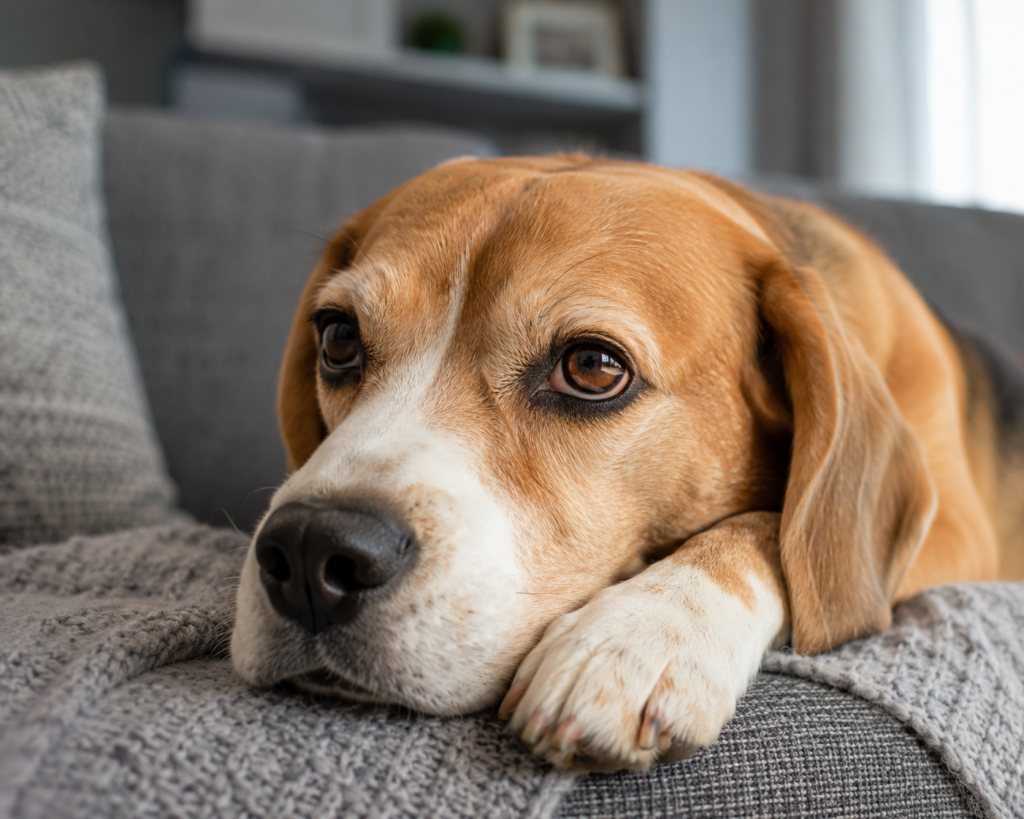
Dogs can sleep with their eyes partially open, and in most cases, it’s completely normal. This can happen during light sleep or REM sleep, when the third eyelid becomes visible, or simply because a dog’s eyelids don’t fully close while resting.
However, if your dog suddenly starts sleeping with one or both eyes open and you notice redness, discharge, swelling, excessive blinking, or signs of discomfort, an eye problem could be involved.
Here’s why dogs sometimes sleep with their eyes open, what’s normal, and when it’s worth contacting your veterinarian.
If your dog also sleeps much more than usual, you may also enjoy reading Why Does My Dog Sleep So Much? What’s Normal and What’s Not?
1. They’re in a Light Sleep
Dogs often nap throughout the day instead of sleeping deeply for long periods.
During light sleep, their eyelids may remain slightly open while they stay aware of what’s happening around them. This allows them to wake quickly if they hear a noise or sense movement.
2. They’re Dreaming
Just like humans, dogs enter REM (Rapid Eye Movement) sleep.
During this stage, you may notice twitching paws, moving whiskers, quiet barking, or eyes moving beneath partially open eyelids. These are all normal signs of dreaming.
Some dogs may also twitch, bark, or suddenly start moving during sleep. You can learn more in Why Does My Dog Get the Zoomies?
3. Their Third Eyelid Is Visible
Dogs have a protective membrane called the third eyelid, or nictitating membrane.
When your dog sleeps, this membrane may partially cover the eye, making it appear as though the eyes are open even though your dog is resting normally.
4. Breed Differences
Some breeds naturally sleep with their eyes slightly open more often than others.
Flat-faced breeds like Pugs, Bulldogs, and Shih Tzus may not fully close their eyelids because of their facial structure.
5. It Could Be a Medical Problem
Occasionally, sleeping with open eyes may be linked to an underlying issue, such as facial nerve damage, an eye injury, or a condition that prevents the eyelids from closing completely.
If your dog also has redness, discharge, excessive blinking, or seems uncomfortable, it’s best to schedule a veterinary examination.
When Should You Be Concerned?
Contact your veterinarian if your dog:
- cannot fully close one or both eyes while awake
- has red or irritated eyes
- develops eye discharge
- frequently rubs their face
- seems painful or unusually tired
How to Help Your Dog Sleep Comfortably
Most dogs don’t need any treatment.
Provide a quiet sleeping area, a comfortable bed, and regular veterinary checkups to help keep your dog’s eyes and overall health in good condition.
Curious about other unusual dog behaviors? Read Why Does My Dog Circle Before Lying Down?
FAQ
Is it normal for dogs to sleep with their eyes open?
Yes. Some dogs occasionally sleep with their eyes partially open, especially during light or REM sleep. If the eyes otherwise look healthy and your dog behaves normally when awake, it is usually nothing to worry about.
Why can I see my dog’s third eyelid while they sleep?
The third eyelid, also called the nictitating membrane, may become more visible when a dog is relaxed or sleeping. It can sometimes make it look as though the dog’s eyes are open even though they are asleep.
Do dogs sleep with their eyes open when dreaming?
They can. During REM sleep, dogs may twitch, move their paws, make small sounds, or move their eyes beneath partially open eyelids.
Should I wake my dog if they are sleeping with their eyes open?
Usually not. If your dog appears relaxed and is breathing normally, there is generally no reason to wake them simply because their eyes are partly open.
When should I worry about my dog sleeping with its eyes open?
Contact your veterinarian if this is a new behavior or if you notice redness, swelling, discharge, excessive blinking, pawing at the face, difficulty closing an eye, or other signs of discomfort.
Final Thoughts
Sleeping with partially open eyes is usually a perfectly normal part of how dogs sleep. In most cases, it’s simply a sign that your dog is in a light sleep or dreaming.
However, if you notice changes in your dog’s eyes or signs of discomfort, it’s always safest to have them checked by your veterinarian.
This article is for informational purposes only and is not a substitute for professional veterinary advice.