Why does my dog keep stretching? In most cases, stretching is completely normal and is simply part of how dogs loosen their muscles, wake up after resting, or get ready to play.
But what if your dog suddenly starts stretching much more than usual?
While frequent stretching can still be harmless, sometimes it may be connected to stiffness, discomfort, digestive problems, or pain. The key is to pay attention to when your dog stretches, how often it happens, and whether you notice any other changes in behavior.
Here are some of the most common reasons your dog may keep stretching.
1. They’re Waking Up
One of the simplest explanations is that your dog has just woken up.
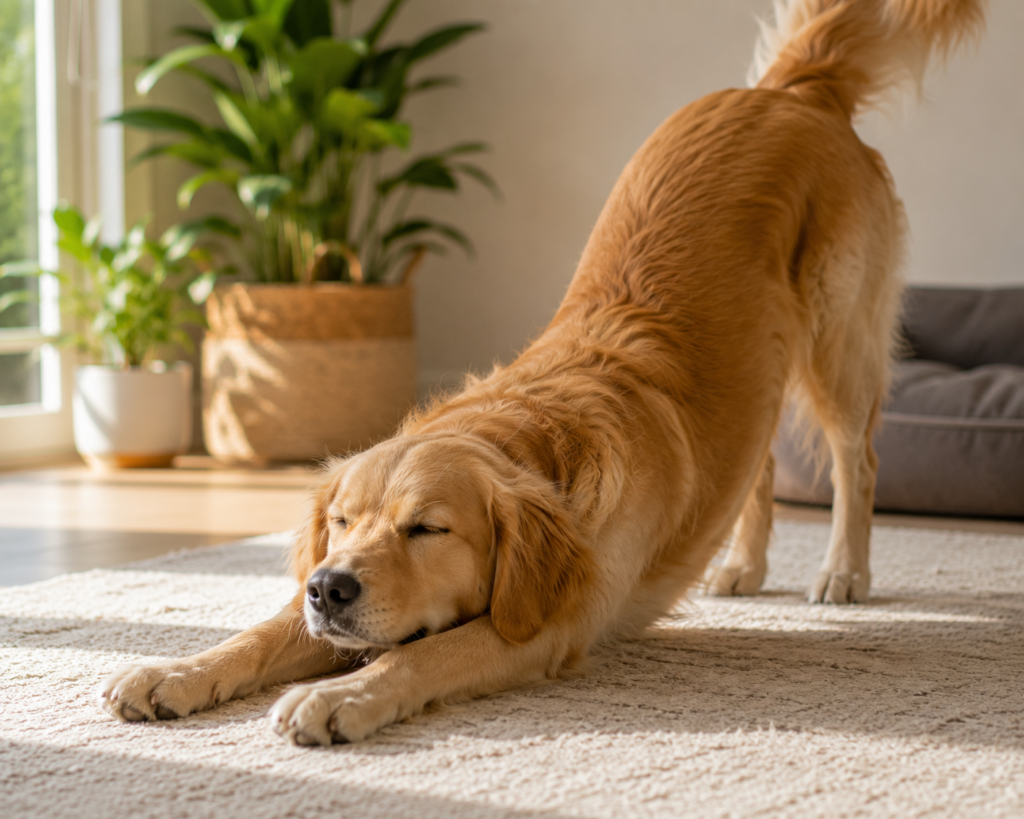
Dogs often stretch their front legs forward, lower their chest, and extend their back after sleeping or resting for a while. This helps loosen muscles and joints before they start moving again.
You may notice this first thing in the morning or after a long afternoon nap.
If your dog stretches once or twice after sleeping and then goes about the day normally, there is usually nothing to worry about.
If you’ve noticed other unusual sleeping habits, you may also want to read Why Does My Dog Sleep With Its Eyes Open?
2. They’re Feeling Relaxed
Dogs don’t only stretch because their muscles need it. Stretching can also happen when a dog feels comfortable and relaxed.
You may see your dog stretch after you come home, while moving from one resting spot to another, or before settling down again.
Some dogs even stretch when greeting their owners. If your dog looks relaxed, has a loose body posture, and behaves normally afterward, the stretching is likely just part of their everyday behavior.
3. They’re Getting Ready to Play
That familiar front-leg stretch isn’t always a stretch at all.
Dogs often lower their front legs and chest while keeping their rear end in the air when they want to play. This is commonly called a play bow.
You may also see a wagging tail, bouncing movements, playful barking, or your dog running off and then coming back.
A play bow is a normal part of canine communication and usually means your dog is excited and ready for some fun.
4. Mild Muscle or Joint Stiffness
Dogs can feel stiff after lying in one position for a long time, just like people can.
You might notice your dog stretching more after:
- a long nap
- vigorous exercise
- a long walk
- an unusually active day
- spending a lot of time in one position
Older dogs may also take a little longer to loosen up after resting.
Occasional stretching followed by normal movement usually isn’t concerning. However, pay closer attention if your dog also seems reluctant to walk, climb stairs, jump, run, or get up.
Persistent stiffness can sometimes be associated with joint or musculoskeletal problems and should be discussed with your veterinarian.
5. Digestive Discomfort
Sometimes repeated stretching can be associated with abdominal discomfort.
A dog experiencing stomach discomfort may repeatedly extend the front legs and lower the chest while keeping the rear end raised. At first glance, this position can look very similar to a normal play bow.
The difference is usually in the rest of the dog’s behavior.
Watch for other symptoms such as:
- vomiting
- diarrhea
- loss of appetite
- excessive drooling
- restlessness
- a swollen or painful abdomen
- difficulty getting comfortable
- unusual tiredness
A single stretch does not mean your dog has a stomach problem. However, repeated stretching combined with digestive symptoms deserves more attention.
If your dog has a swollen abdomen, repeatedly tries to vomit without bringing anything up, appears distressed, weak, or suddenly becomes very unwell, seek veterinary care immediately.
6. Pain or Joint Problems
Frequent stretching can sometimes be your dog’s way of coping with discomfort.
Dogs experiencing pain in their back, hips, legs, or joints may change the way they stand, lie down, or stretch. You might also notice that your dog takes longer to get up after resting.
Other signs of discomfort can include:
- limping
- stiffness
- reluctance to jump
- difficulty climbing stairs
- reduced interest in walks
- changes in posture
- sensitivity when touched
- decreased activity
Older dogs are more likely to develop joint problems, but discomfort can occur at any age.
If stretching is new, frequent, or accompanied by changes in movement, a veterinary examination can help determine what is causing it.
How Can You Tell Normal Stretching From a Problem?
The stretching itself usually doesn’t tell the whole story. What happens before and after the stretch is often more useful.
Normal stretching usually happens after sleep, before activity, during play, or occasionally throughout the day. Your dog should otherwise behave normally.
Stretching may deserve closer attention when it:
- suddenly becomes much more frequent
- happens repeatedly within a short period
- appears uncomfortable or unusual
- is accompanied by limping or stiffness
- occurs along with vomiting or diarrhea
- is accompanied by appetite changes
- happens together with unusual tiredness or restlessness
Knowing what is normal for your own dog makes it much easier to notice meaningful changes.
When Should You Contact Your Veterinarian?
Occasional stretching is usually harmless and does not require treatment.
Contact your veterinarian if your dog keeps stretching and you also notice signs of pain, digestive problems, difficulty moving, loss of appetite, unusual behavior, or any other symptoms that concern you.
You should also arrange a veterinary examination if the stretching is a new behavior that continues without an obvious explanation.
Sudden severe symptoms—particularly a swollen abdomen, repeated unproductive attempts to vomit, collapse, severe pain, or difficulty breathing—require urgent veterinary attention.
How to Help Your Dog Stay Comfortable
You usually don’t need to stop your dog from stretching. Instead, focus on keeping your dog comfortable and watching for changes.
A few simple things can help:
- provide regular age-appropriate exercise
- maintain a healthy body weight
- provide a comfortable place to sleep
- avoid suddenly increasing strenuous activity
- watch for changes in walking or posture
- keep up with regular veterinary checkups
If your dog is older or already has mobility problems, your veterinarian can recommend appropriate exercise and other ways to support joint comfort.
FAQ
Why does my dog stretch every time they get up?
Stretching after sleep or rest is usually completely normal. It helps your dog loosen their muscles before moving around.
Why does my dog keep doing the downward-dog stretch?
If it happens occasionally, your dog may simply be stretching or performing a play bow. Repeated stretching accompanied by discomfort, vomiting, appetite changes, or other symptoms may indicate that something else is going on.
Why does my dog stretch when they see me?
Some dogs stretch when greeting someone they feel comfortable with. If your dog looks relaxed and happy, this is generally normal behavior.
Can frequent stretching mean my dog is in pain?
Sometimes. Stretching alone does not necessarily indicate pain, but frequent stretching combined with limping, stiffness, difficulty moving, or behavioral changes should be evaluated by a veterinarian.
Should I worry if my older dog stretches a lot?
Older dogs may stretch more because they feel stiff after resting. If the stretching is increasing or your dog has difficulty standing, walking, jumping, or climbing stairs, speak with your veterinarian.
Final Thoughts
So, why does my dog keep stretching? Most of the time, the answer is simple: your dog is waking up, relaxing, loosening their muscles, or getting ready to play.
What matters most is whether anything else has changed.
If your dog is eating, playing, walking, and behaving normally, occasional stretching is usually nothing to worry about. But repeated or sudden stretching combined with pain, digestive symptoms, mobility problems, or changes in behavior is worth discussing with your veterinarian.
Disclaimer: This article is for general informational purposes only and is not a substitute for professional veterinary advice. If you are concerned about your dog’s health or notice sudden or persistent symptoms, contact your veterinarian.