Finding dog hair on your clothes, furniture, and floors is part of life with many dogs. While shedding is completely normal, excessive hair loss can leave owners wondering whether something is wrong.
The good news is that most shedding is natural. However, understanding what affects your dog’s coat can help you recognize when it’s normal and when a veterinary visit may be necessary.
1. Seasonal Shedding
Many dogs naturally shed more during spring and fall as they adjust their coats for changing temperatures.
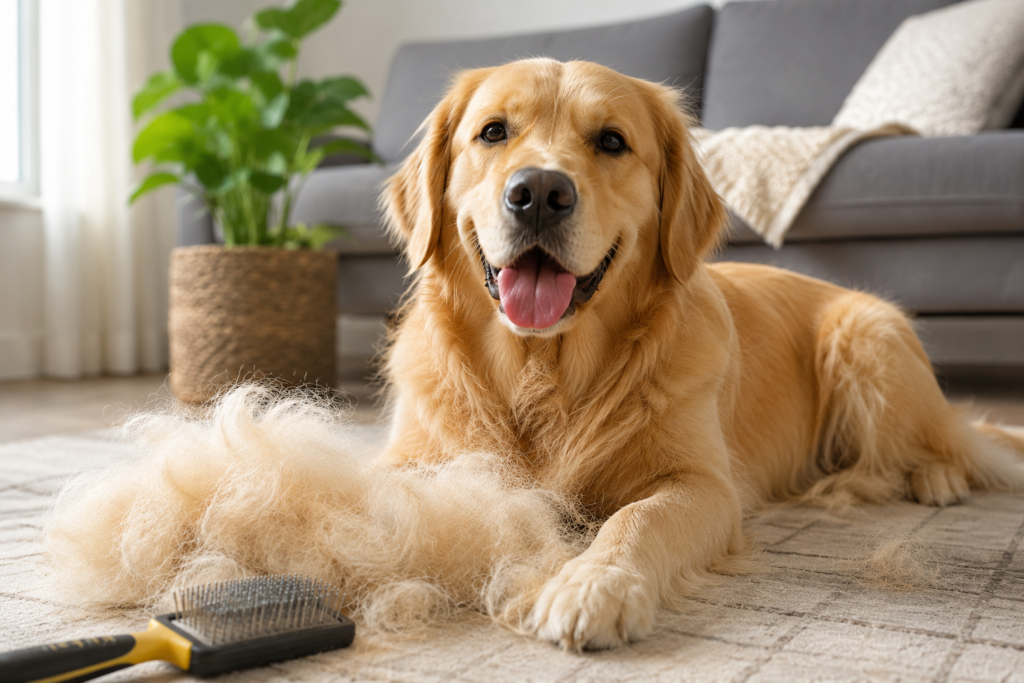
Double-coated breeds such as Golden Retrievers, Huskies, and German Shepherds often lose large amounts of fur during these seasons.
2. Breed and Coat Type
Some breeds shed heavily throughout the year, while others shed very little.
Dogs with thick double coats usually require more frequent brushing than short-haired breeds.
3. Poor Nutrition
A healthy coat starts with proper nutrition.
Dogs that don’t receive enough essential nutrients may develop dry skin, dull coats, or increased shedding. Feeding a balanced, high-quality diet helps support healthy skin and fur.
4. Stress or Anxiety
Stress can temporarily increase shedding in some dogs.
Changes in routine, moving to a new home, loud noises, or separation anxiety may all contribute to extra hair loss.
Some anxious dogs may also show other unusual behaviors, such as digging at their bed before lying down.
5. Skin Allergies or Parasites
Fleas, mites, allergies, or skin infections often cause itching along with excessive shedding.
If your dog is constantly scratching, licking, or develops red or irritated skin, it’s time for a veterinary examination.
6. Medical Conditions
Occasionally, increased shedding may be linked to health problems such as:
- hormonal disorders
- thyroid disease
- skin infections
- certain medications
If your dog’s coat suddenly changes or hair falls out in patches, consult your veterinarian.
When Should You Be Concerned?
Normal shedding usually happens evenly across the body.
Seek veterinary advice if your dog:
- develops bald spots
- scratches constantly
- has red or inflamed skin
- loses large clumps of fur
- seems uncomfortable or unwell
How to Reduce Shedding
Although shedding can’t be eliminated completely, you can reduce loose hair by:
- brushing your dog regularly using the right grooming tools for your dog’s coat type.
- feeding a nutritious diet
- bathing with an appropriate dog shampoo
- keeping your dog hydrated
- treating skin problems promptly
- scheduling regular veterinary checkups
Consistent grooming is one of the best ways to keep your dog’s coat healthy while reducing loose fur around your home.
Final Thoughts
Shedding is a natural part of a dog’s life, but excessive hair loss may sometimes indicate an underlying problem.
By understanding what’s normal for your dog’s breed and coat type, you’ll be better prepared to recognize when shedding deserves a closer look.