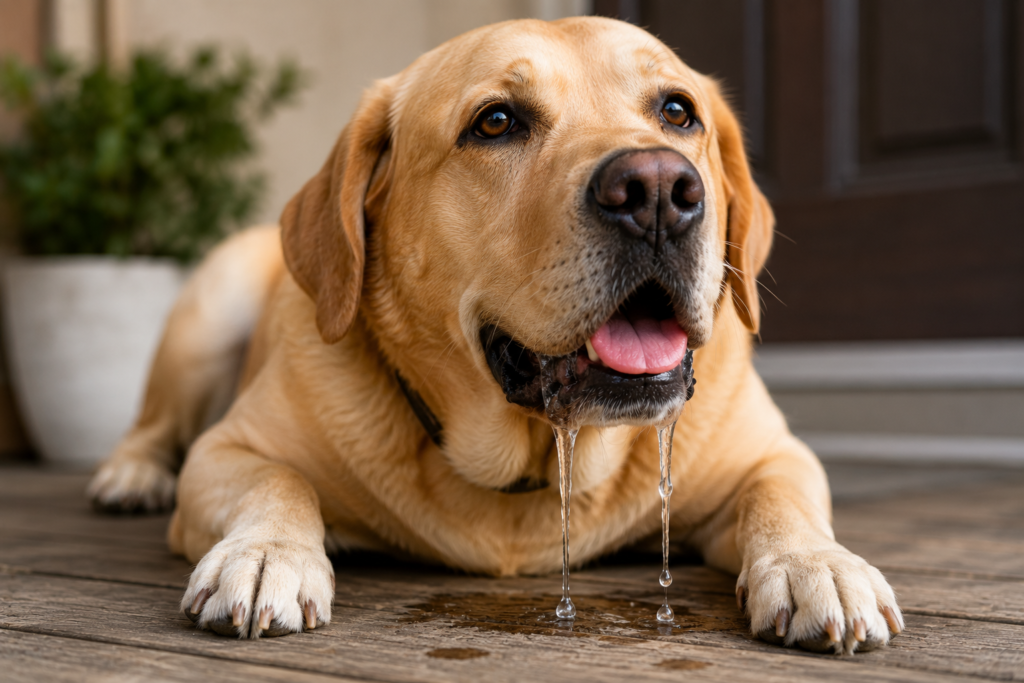
Drooling is completely normal for many dogs, especially after eating, exercising, or getting excited. Some breeds naturally produce more saliva than others, but sudden or excessive drooling can sometimes signal an underlying health problem.
Here’s what you should know about why dogs drool and when you should be concerned.
Normal Drooling
Some dogs naturally drool more than others. Breeds with loose lips, such as Saint Bernards, Bloodhounds, Mastiffs, and Bulldogs, often drool throughout the day.
Even dogs that don’t usually drool may produce extra saliva when they:
- smell food
- anticipate a treat
- exercise
- become excited
- feel nervous
If your dog’s drooling is occasional and they seem otherwise healthy, it’s usually nothing to worry about.
Dental Problems
One of the most common causes of excessive drooling is dental disease.
Problems such as:
- broken teeth
- infected teeth
- gum disease
- mouth injuries
can make swallowing uncomfortable and increase saliva production.
You may also notice:
- bad breath
- difficulty chewing
- dropping food
- pawing at the mouth
Healthy teeth play an important role in your dog’s overall well-being. Learn How Often Should You Brush Your Dog’s Teeth?
Persistent bad breath may also point to dental disease. Read Why Does My Dog Have Bad Breath?
Something Stuck in the Mouth
Dogs love exploring with their mouths.
A stick, bone fragment, grass seed, or other object may become lodged between the teeth or inside the mouth.
Signs include:
- sudden drooling
- pawing at the face
- difficulty eating
- discomfort
If you suspect something is stuck, avoid forcing your dog’s mouth open and contact your veterinarian.
Heat and Overheating
Dogs often drool more when they’re hot.
Heavy panting combined with excessive drooling may be an early sign of overheating or heatstroke.
Move your dog to a cool area immediately if they also show:
- weakness
- bright red gums
- vomiting
- confusion
Heatstroke is a medical emergency.
If your dog is also breathing heavily, read Why Is My Dog Panting?
Motion Sickness
Some dogs drool during car rides because they feel nauseous.
Other signs include:
- whining
- lip licking
- yawning
- vomiting
- restlessness
Many dogs improve with gradual car training or medication recommended by a veterinarian.
Keeping fresh water available during trips can help many dogs stay comfortable. Best Dog Travel Water Bottles in 2026.
Poisoning
Sudden excessive drooling can be a sign that your dog has eaten something toxic.
Possible toxins include:
- household cleaners
- certain plants
- chocolate
- xylitol
- medications
If poisoning is suspected, contact your veterinarian immediately.
Nausea
Just like people, dogs often drool before vomiting.
If your dog suddenly begins drooling and seems quiet or refuses food, nausea may be the cause.
When Should You Call Your Vet?
Contact your veterinarian if your dog:
- suddenly starts drooling much more than usual
- has trouble swallowing
- refuses food
- has blood in the saliva
- has facial swelling
- appears weak or confused
- has been exposed to something toxic
Prompt treatment is especially important if excessive drooling begins suddenly.
Can Excessive Drooling Be Prevented?
While some drooling is completely normal, you can reduce the risk of certain problems by:
- brushing your dog’s teeth regularly
- providing fresh water
- avoiding dangerous chew items
- preventing overheating
- keeping toxic foods and chemicals out of reach
- scheduling regular veterinary checkups
Final Thoughts
A little drooling is perfectly normal for many dogs, especially around mealtime or after exercise. However, sudden or excessive drooling may indicate dental problems, nausea, overheating, poisoning, or another health issue.
If your dog’s drooling is accompanied by other symptoms or seems unusual, it’s always safest to seek veterinary advice.
Disclaimer: This article is intended for informational purposes only and is not a substitute for professional veterinary advice. If your dog is showing persistent or severe symptoms, consult your veterinarian for proper diagnosis and treatment.