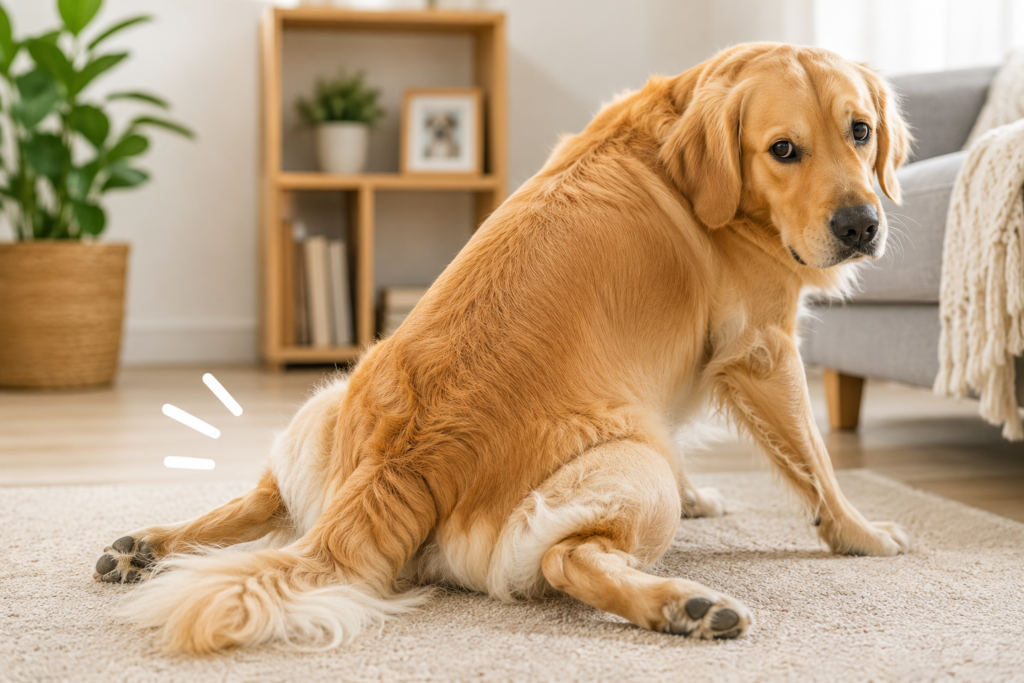
If you’ve ever seen your dog dragging its bottom across the floor, you’re not alone. This behavior, known as scooting, may look funny, but it’s usually your dog’s way of telling you that something is irritating the area around its rear end.
Occasional scooting isn’t always a cause for concern, but frequent episodes shouldn’t be ignored. Here’s what might be causing it.
What Is Scooting?
Scooting happens when a dog sits on its bottom and drags itself across the floor using its front legs.
Dogs do this to relieve itching, discomfort, or irritation around the anus.
Full or Impacted Anal Glands
The most common reason dogs scoot is because their anal glands are full or blocked.
These small glands sit on either side of the anus and normally empty during bowel movements.
If they become clogged, your dog may experience:
- frequent scooting
- excessive licking under the tail
- a strong fishy odor
- discomfort while sitting
A veterinarian or professional groomer can safely express the glands if needed.
Allergies
Skin allergies don’t only affect your dog’s paws and ears—they can also irritate the skin around the rear end.
Dogs with allergies may also have:
- itchy skin
- red skin
- recurring ear infections
- excessive licking
If your dog seems itchy all over, read our guide on Why Is My Dog Itching So Much?
Worms
Certain intestinal parasites, especially tapeworms, can cause irritation around the anus.
You may notice:
- scooting
- licking the area
- small white, rice-like segments near the tail or in your dog’s bedding
If you suspect worms, your veterinarian can perform a simple test and recommend treatment.
Dirty or Matted Fur
Dogs with long coats sometimes develop feces stuck in the fur around the rear end.
This can cause irritation and make your dog scoot across the carpet.
Regular grooming helps prevent this problem.
Skin Irritation
Small cuts, insect bites, or contact with irritating plants may also make your dog scoot.
Check for:
- redness
- swelling
- rashes
- signs of injury
If symptoms don’t improve within a day or two, contact your veterinarian.
Constipation
Difficulty passing stool may leave your dog feeling uncomfortable.
Signs include:
- straining to poop
- hard stools
- reduced appetite
- repeated scooting
Providing fresh water, appropriate exercise, and a balanced diet often helps, but persistent constipation should be evaluated by a vet.
Keeping your dog properly hydrated also supports healthy digestion. If you’ve noticed your dog drinking much more water than usual, read Why Is My Dog Drinking So Much Water?
When Should You Call Your Vet?
Contact your veterinarian if your dog:
- scoots frequently
- has bleeding
- has swelling around the anus
- cries while sitting
- has a strong odor
- has diarrhea or constipation
- loses appetite
Early treatment can prevent more serious problems such as infected anal glands.
Can Scooting Be Prevented?
While not every case can be prevented, these habits may reduce the risk:
- keep your dog at a healthy weight
- feed a balanced diet
- provide enough fiber if recommended by your veterinarian
- keep the rear area clean
- groom long-haired dogs regularly
- keep up with routine parasite prevention
Good hygiene and regular veterinary checkups are the best way to reduce recurring problems.
Regular grooming also helps prevent irritation caused by dirty or matted fur. Learn How Often Should You Bathe Your Dog?
Final Thoughts
Scooting may seem like a harmless or even funny behavior, but it’s often a sign that something is irritating your dog’s rear end. Whether the cause is full anal glands, allergies, worms, or skin irritation, identifying the problem early can help your dog feel comfortable again.
If the scooting continues or is accompanied by other symptoms, it’s always safest to consult your veterinarian.
Disclaimer: This article is intended for informational purposes only and is not a substitute for professional veterinary advice. If your dog is showing persistent or severe symptoms, consult your veterinarian for proper diagnosis and treatment.