
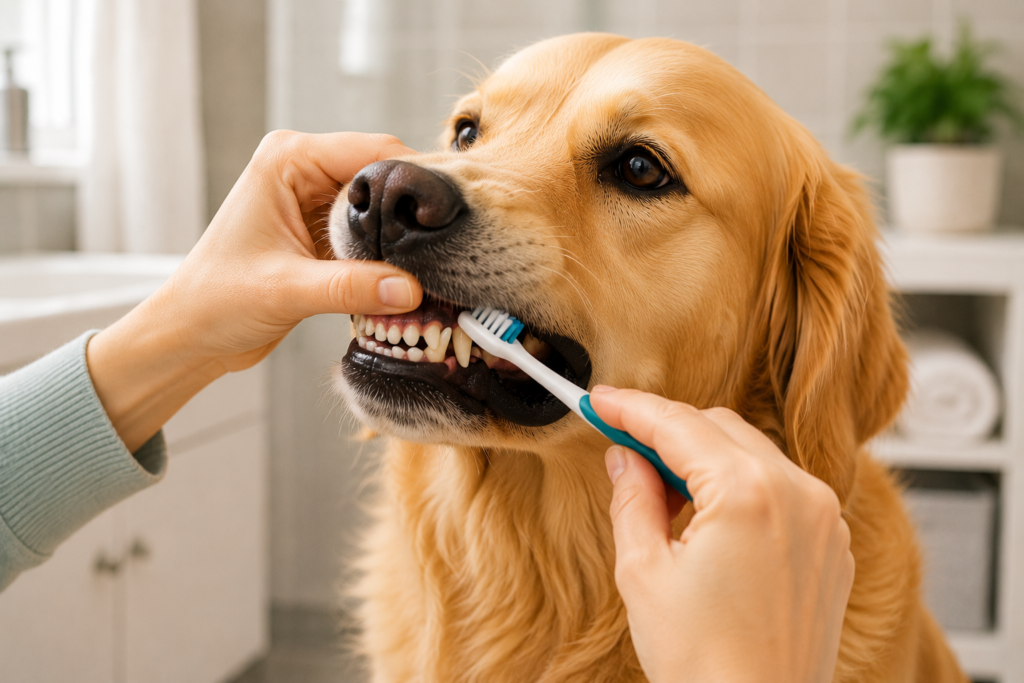
Most dog owners know they should brush their dog’s teeth, but many aren’t sure how often it’s actually necessary.
The truth is that dental health plays a much bigger role in your dog’s overall well-being than many people realize. Poor oral hygiene can lead to bad breath, gum disease, tooth loss, and even more serious health problems over time. So how often should you brush your dog’s teeth?
The Ideal Answer
Most veterinarians recommend brushing your dog’s teeth every day.
Daily brushing helps remove plaque before it hardens into tartar. Once tartar forms, it usually requires professional cleaning by a veterinarian.
While daily brushing is ideal, don’t worry if that sounds unrealistic.
What If You Can’t Brush Every Day?
Life gets busy, and many dog owners struggle to brush their dog’s teeth every single day.
If daily brushing isn’t possible, aim for at least three to four times per week.
Even brushing a few times each week can make a significant difference compared to not brushing at all.
Why Dental Care Matters
Dental disease is one of the most common health issues in dogs.
Without regular dental care, bacteria can build up around the gums and teeth.
Signs of dental problems may include:
- Bad breath
- Red or swollen gums
- Yellow or brown tartar buildup
- Difficulty chewing
- Excessive drooling
Catching these issues early can help prevent more serious problems later.
Bad breath is often one of the first things owners notice when dental care has been neglected. While occasional doggy breath is normal, persistent or unusually strong odor can be a sign of plaque buildup, gum disease, or another problem. If this sounds familiar, read our guide on [Why Does My Dog Have Bad Breath?]
Use Toothpaste Made for Dogs
One of the biggest mistakes dog owners make is using human toothpaste.
Many human toothpastes contain ingredients that can be harmful to dogs if swallowed.
Always choose a toothpaste specifically designed for dogs.
Many dog toothpastes come in flavors such as chicken, peanut butter, or beef, making brushing much easier.
Start Slowly
If your dog has never had their teeth brushed before, don’t expect them to love it immediately.
Start by gently touching their mouth and rewarding calm behavior.
Once your dog becomes comfortable, gradually introduce the toothbrush and toothpaste.
Short, positive sessions usually work best.
How Long Should You Brush Your Dog’s Teeth?
Once your dog is comfortable with the toothbrush, you don’t need a long brushing session. Focus on gently brushing the outer surfaces of the teeth, especially around the gumline where plaque tends to accumulate.
A short, consistent routine is usually more useful than an occasional long brushing session. If your dog becomes stressed, stop and try again later rather than forcing the process.
Other Ways To Support Dental Health
Brushing is the most effective option, but it isn’t the only one.
You can also support your dog’s oral health with:
- Dental chews
- Chew toys
- Dental treats
- Professional dental cleanings
- Regular veterinary checkups
These should complement brushing rather than replace it.
Looking for the best products to support your dog’s dental routine? Check out our guide to the Best Dog Toothbrushes and Dental Chews in 2026.
Looking for more dog care advice? Read How Often Should You Bathe Your Dog?
Frequently Asked Questions
How often should you brush your dog’s teeth?
Daily brushing is ideal because plaque begins building up again quickly. If daily brushing isn’t realistic, brushing several times a week is still worthwhile and can help support your dog’s dental health.
Is it too late to start brushing an older dog’s teeth?
Not necessarily. Older dogs can still benefit from home dental care, but existing tartar or gum disease may require veterinary treatment first. If your dog already has significant buildup, bleeding gums, loose teeth, or pain, schedule a veterinary dental check before starting a brushing routine.
Can I use human toothpaste on my dog?
No. Dogs should only use toothpaste specifically made for pets. Human toothpaste may contain ingredients that are unsafe for dogs to swallow.
Do dental chews replace brushing?
No. Dental chews and other dental products can complement a good oral-care routine, but they should not be considered a complete replacement for brushing.
What if my dog refuses to let me brush their teeth?
Introduce dental care gradually. Start by getting your dog comfortable with having their mouth and lips touched, then introduce dog toothpaste and eventually a toothbrush. If brushing remains difficult, ask your veterinarian about other appropriate dental-care options.
When should my dog see a veterinarian for dental problems?
Contact your veterinarian if you notice persistent bad breath, bleeding or swollen gums, loose teeth, difficulty eating, excessive drooling, facial swelling, or signs of mouth pain.
Final Thoughts
So, how often should you brush your dog’s teeth? Ideally, brushing should be part of your dog’s daily routine. If that isn’t possible, brushing several times a week is still better than skipping dental care altogether.
Start slowly, use toothpaste made specifically for dogs, and keep each session positive. Combined with regular veterinary dental checks, a consistent home routine can help keep your dog’s teeth and gums healthier over time.
Disclaimer: This article is for general informational purposes only and is not a substitute for professional veterinary advice. If your dog has bad breath, bleeding gums, loose teeth, difficulty eating, or other signs of dental problems, consult your veterinarian.