
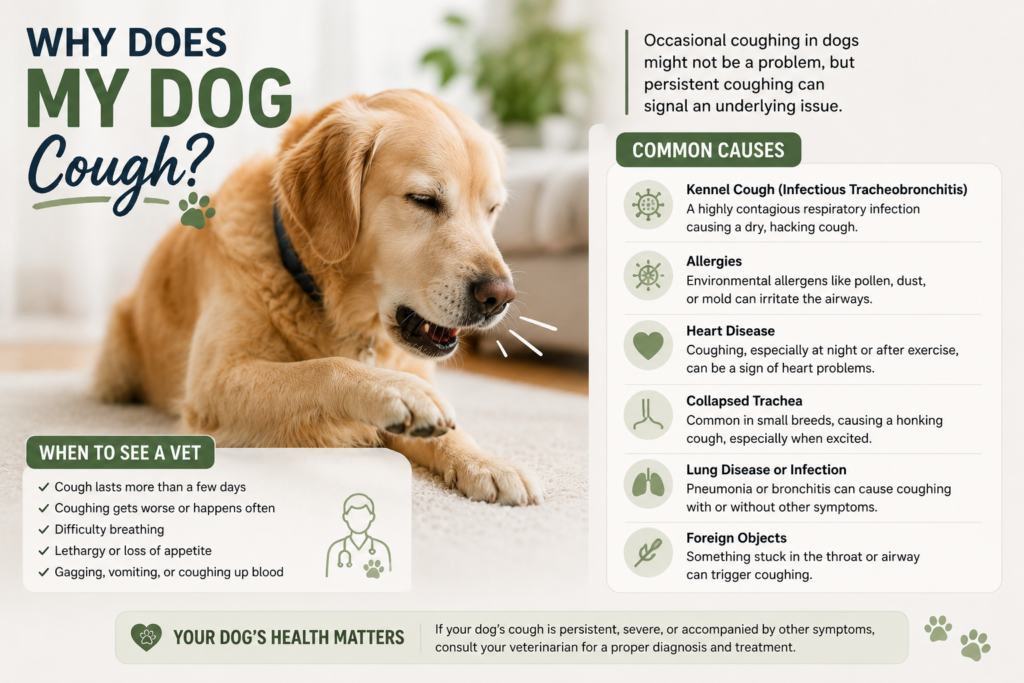
Hearing your dog cough can be worrying, especially if it happens repeatedly. While an occasional cough may simply be caused by minor throat irritation, persistent coughing can sometimes indicate an underlying health problem.
Understanding why your dog is coughing can help you decide whether it’s something to monitor or if it’s time to visit your veterinarian.
If your dog is also sneezing, read our guide Why Does My Dog Sneeze? Common Reasons Explained.
Minor Throat Irritation
Just like people, dogs can occasionally cough after drinking water too quickly, eating too fast, or inhaling dust.
These coughs are usually brief and disappear on their own.
Kennel Cough
One of the most common causes of coughing is kennel cough, a contagious respiratory infection.
Dogs with kennel cough often have:
- A dry, hacking cough
- Gagging after coughing
- Sneezing
- Mild nasal discharge
- Normal appetite and energy in mild cases
Many dogs recover within a few weeks, but veterinary advice is recommended.
Some dogs may also develop noisy breathing while recovering. Learn more in Why Does My Dog Snore? Common Reasons Explained.
Allergies or Irritants
Smoke, dust, strong perfumes, and pollen can irritate your dog’s airways.
If coughing occurs after exposure to these triggers, reducing the irritant may help.
Heart Disease
In older dogs, coughing can sometimes be linked to heart problems.
A cough related to heart disease may:
- Occur more often at night
- Happen after exercise
- Be accompanied by rapid breathing
- Occur alongside fatigue
Your veterinarian can determine whether the heart is involved.
Collapsing Trachea
Small breeds such as Yorkshire Terriers, Pomeranians, and Chihuahuas are more prone to a collapsing trachea.
This condition often causes a distinctive cough that sounds similar to a goose honking.
Foreign Object
Dogs sometimes inhale grass seeds or other small objects.
Signs may include:
- Sudden coughing
- Gagging
- Pawing at the mouth
- Difficulty breathing
This requires immediate veterinary attention.
When Should You Call the Veterinarian?
Seek veterinary care if your dog:
- Coughs for more than a few days
- Has difficulty breathing
- Coughs up blood
- Refuses food
- Appears weak or lethargic
- Develops a fever
Prompt treatment can prevent more serious complications.
How to Help Your Dog
You can help by:
- Keeping your home smoke-free
- Using a harness instead of a collar for walks
- Keeping vaccinations up to date
- Providing fresh water at all times
- Scheduling regular veterinary checkups
Never give your dog human cough medicine unless instructed by your veterinarian.
If your dog is breathing faster than normal without coughing, you may also like Why Is My Dog Panting? Common Causes Explained.
Final Thoughts
An occasional cough isn’t always a reason to panic, but persistent coughing should never be ignored. Paying attention to other symptoms and seeking veterinary advice when needed can help your dog recover quickly and stay healthy.