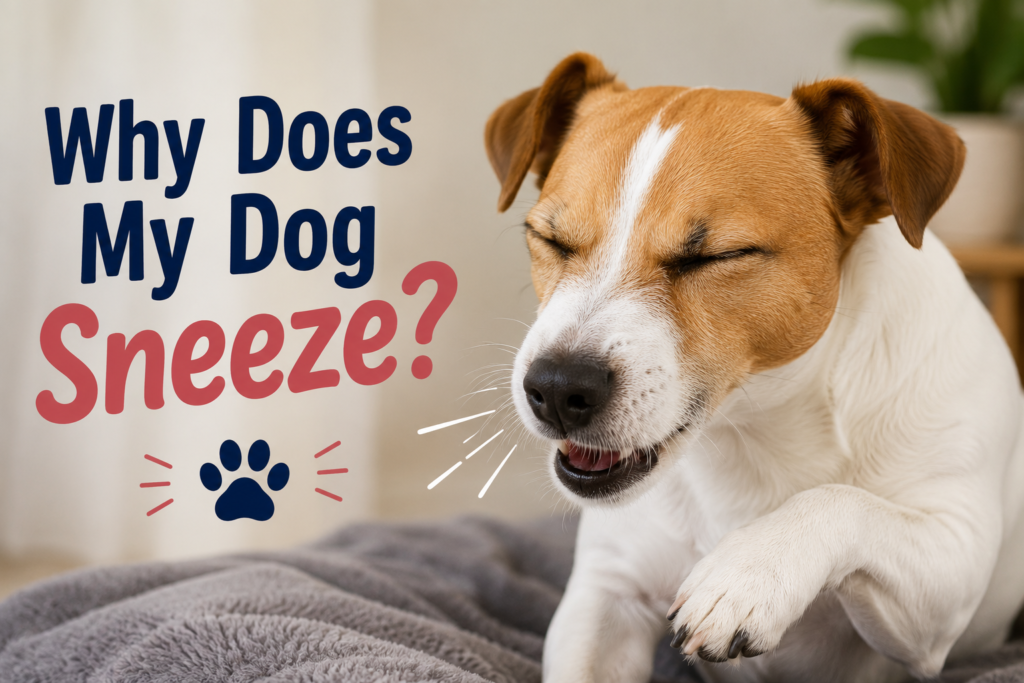
Seeing your dog sneeze once in a while is completely normal. Just like humans, dogs sneeze to clear their noses of dust, pollen, or other small particles.
Most sneezing isn’t a cause for concern, but frequent or persistent sneezing can sometimes indicate an underlying problem.
Dogs communicate in many different ways. You might also like our article Why Does My Dog Snore? Common Reasons Explained.
Normal Sneezing
Occasional sneezing often happens when something briefly irritates your dog’s nose.
Common triggers include:
- Dust
- Grass
- Pollen
- Perfume
- Household cleaning products
After one or two sneezes, most dogs return to normal.
Excitement Sneezing
Some dogs sneeze when they’re excited or playing.
This type of sneezing is especially common during playtime with other dogs and usually isn’t related to illness.
It’s simply another way dogs communicate and release excitement.
Allergies
Environmental allergies can also make dogs sneeze more often.
Possible allergens include:
- Tree pollen
- Mold
- Dust mites
- Smoke
- Freshly cut grass
Dogs with allergies may also scratch more, lick their paws, or have watery eyes.
Something Stuck in the Nose
Dogs explore the world with their noses.
Occasionally, a blade of grass, seed, or other small object may become lodged inside a nostril.
Signs include:
- Repeated sneezing
- Pawing at the nose
- Nasal discharge
- Sneezing from one nostril
A veterinarian should remove any object safely.
Respiratory Infections
Colds and respiratory infections can also cause sneezing.
Other symptoms may include:
- Runny nose
- Coughing
- Watery eyes
- Fever
- Low energy
If your dog seems unwell, schedule a veterinary visit.
If your dog is coughing as well as sneezing, read our guide Why Does My Dog Cough? Common Reasons Explained.
When Should You Worry?
Contact your veterinarian if your dog:
- Sneezes constantly
- Has bloody nasal discharge
- Has trouble breathing
- Stops eating
- Becomes unusually tired
- Has swelling around the nose or face
These symptoms may indicate a more serious condition.
How to Help Your Dog
You can reduce mild irritation by:
- Keeping your home free of dust
- Avoiding cigarette smoke
- Using pet-safe cleaning products
- Keeping your dog’s vaccinations up to date
Never place anything inside your dog’s nose.
If your dog is breathing faster than usual, you may also find our article Why Is My Dog Panting? Common Causes Explained helpful.
Final Thoughts
Most dog sneezes are harmless and happen for the same reasons people sneeze. However, frequent sneezing, nasal discharge, or difficulty breathing should never be ignored.
Knowing the difference between normal sneezing and signs of illness can help you keep your dog healthy.