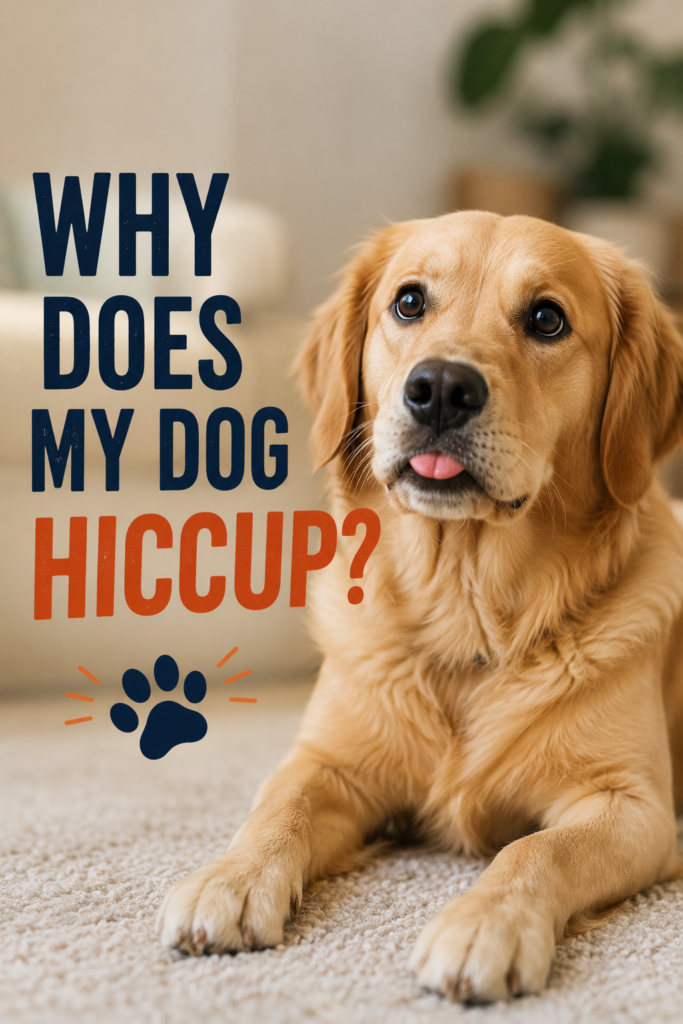
Why does my dog hiccup? If you’ve noticed your dog suddenly making little hiccup sounds, you may be wondering whether something is wrong. The good news is that hiccups are common in dogs, especially in puppies, and most episodes are completely harmless.
Just like humans, dogs can get hiccups when the diaphragm — the muscle involved in breathing — contracts involuntarily. These small spasms are usually temporary and often disappear within a few minutes.
However, if your dog gets hiccups very frequently, they last unusually long, or they appear together with other symptoms, it may be worth paying closer attention.
If your dog is making a sound that seems more like coughing than hiccupping, read our guide Why Does My Dog Cough? Common Reasons Explained.
Why Do Dogs Get Hiccups?
Dog hiccups happen when the diaphragm suddenly contracts and the vocal cords close, creating the familiar “hic” sound.
There isn’t always an obvious reason. In many dogs, hiccups seem to appear after eating, drinking, playing, or becoming excited.
Puppies tend to experience them more often than adult dogs, and occasional short episodes are usually nothing to worry about.
Eating Too Fast
One of the most common situations associated with hiccups is eating too quickly.
When dogs gulp their food, they may swallow extra air along with it. This can contribute to temporary hiccups after a meal.
If your dog regularly finishes meals in seconds, try dividing food into smaller portions or using a slow feeder to encourage slower eating.
Eating more slowly can also make mealtimes calmer and reduce gulping.
Drinking Water Too Quickly
Some dogs rush to the water bowl after exercise, playing, or spending time outside.
Drinking a large amount of water quickly may cause them to swallow additional air, which can sometimes be followed by hiccups.
Make sure your dog always has access to fresh water, but encourage calm drinking when possible.
Excitement and Play
Does your dog get hiccups after zooming around the house or playing enthusiastically?
Excitement can change a dog’s breathing pattern. Rapid breathing during energetic play may occasionally trigger diaphragm spasms and hiccups.
Once your dog calms down and their breathing returns to normal, the hiccups will usually disappear on their own.
Puppies Get Hiccups More Often
Hiccups are particularly common in puppies.
Young dogs tend to eat quickly, play energetically, and become excited easily — all situations that may contribute to hiccups.
Their breathing patterns and developing bodies may also play a role.
Most puppies experience fewer hiccups as they grow older, so frequent short episodes during puppyhood aren’t necessarily a cause for concern.
Stress or Anxiety
Excitement isn’t the only emotional trigger that may affect breathing.
Some dogs may develop hiccups during or after stressful situations such as:
- Traveling
- Visiting the veterinarian
- Meeting unfamiliar people or animals
- Hearing loud noises
- Experiencing changes in their routine
If hiccups seem to appear during stressful situations, helping your dog relax may be enough for them to disappear.
Are Dog Hiccups Dangerous?
In most cases, dog hiccups are harmless.
A short episode that disappears on its own and doesn’t affect your dog’s normal behavior usually isn’t a reason to worry.
Your dog should still be breathing comfortably, eating normally, drinking, playing, and behaving like themselves.
What matters more is whether the hiccups are unusually persistent or accompanied by other symptoms.
Could It Be Something Other Than Hiccups?
Sometimes sounds that owners assume are hiccups may actually be coughing, gagging, reverse sneezing, or another type of unusual breathing noise.
Pay attention to what your dog is doing when the sound occurs.
A short video can also be useful if the episodes keep happening. Showing the recording to your veterinarian may help them understand exactly what you’re seeing and hearing.
When Should You Contact Your Veterinarian?
An occasional hiccup episode usually doesn’t require veterinary care. However, contact your veterinarian if the episodes are unusually prolonged, occur very frequently, or you notice other concerning changes.
Watch for symptoms such as:
- Difficulty breathing
- Persistent coughing or gagging
- Vomiting
- Unusual weakness or lethargy
- Loss of appetite
- Changes in normal breathing
- Blue, gray, or very pale gums
Difficulty breathing or abnormal gum color can be an emergency and requires prompt veterinary attention.
If you’re unsure whether your dog is actually hiccupping or experiencing a breathing problem, it’s safer to contact your veterinarian.
How to Help a Dog With Hiccups
Most hiccups disappear without any treatment, so you usually don’t need to do much.
You can help your dog settle by encouraging calm behavior and allowing their breathing to return to normal.
If hiccups frequently occur after meals, consider:
- Feeding smaller portions
- Encouraging slower eating
- Using a slow-feeder bowl
- Avoiding vigorous play immediately after eating
- Keeping mealtimes calm
Never give your dog human medications or try human hiccup remedies without veterinary guidance.
If your dog is panting heavily rather than hiccupping, our guide Why Is My Dog Panting? Common Causes Explained can help you understand some of the common reasons.
Frequently Asked Questions
Is it normal for dogs to get hiccups?
Yes. Occasional hiccups are common in dogs and are especially common in puppies. Short episodes that disappear on their own are generally harmless.
Why does my dog get hiccups after eating?
Eating quickly can cause a dog to swallow extra air. Some dogs develop temporary hiccups shortly after gulping down a meal.
Why does my puppy hiccup so much?
Puppies tend to eat quickly, become excited easily, and play energetically. Hiccups are therefore more common in puppies and often become less frequent as they mature.
Can dogs get hiccups while sleeping?
Dogs can occasionally hiccup while resting or sleeping. A brief episode isn’t usually concerning if your dog otherwise appears comfortable and breathes normally.
How long do dog hiccups last?
Most ordinary hiccup episodes are brief and stop on their own. If hiccups continue unusually long, repeatedly return, or occur with coughing, vomiting, breathing problems, or other symptoms, contact your veterinarian.
Should I give my dog water to stop hiccups?
There’s usually no need to actively stop hiccups. Allow your dog to settle naturally and keep fresh water available rather than forcing them to drink.
Final Thoughts
So, why does my dog hiccup? In many cases, the explanation is something simple — eating or drinking too quickly, excitement, energetic play, or simply being a puppy.
Most dog hiccups disappear on their own and aren’t a cause for concern.
Instead of focusing on the hiccup itself, pay attention to how long it lasts and whether anything else seems unusual. Persistent episodes or hiccup-like sounds accompanied by coughing, vomiting, weakness, or breathing difficulty deserve veterinary attention.
Disclaimer: This article is for general informational purposes only and is not a substitute for professional veterinary advice. If your dog develops persistent hiccups, difficulty breathing, coughing, vomiting, or other unusual symptoms, contact your veterinarian.