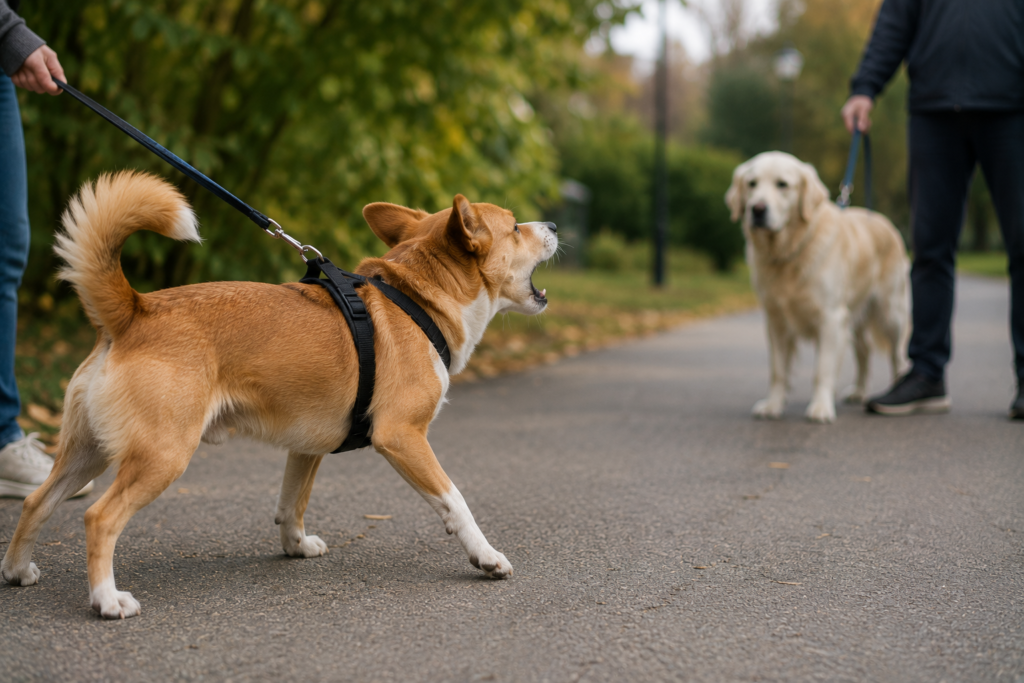
Walking your dog should be enjoyable, but for many owners, it quickly becomes stressful when their dog starts barking at every dog they pass.
The good news is that barking doesn’t always mean your dog is aggressive. Dogs bark for many different reasons, including excitement, fear, frustration, or simply trying to communicate.
Understanding what’s behind the behavior is the first step toward helping your dog feel more relaxed.
1. They’re Excited
Some dogs bark because they’re eager to meet another dog.
Their excitement builds as they get closer, and barking becomes a way of expressing that enthusiasm.
You’ll often notice loose body language, a wagging tail, and playful energy rather than signs of aggression.
2. They’re Feeling Nervous
Not every barking dog is confident.
Some dogs bark because they feel uncertain or overwhelmed.
Barking creates distance and helps them feel safer when another dog gets too close.
A tucked tail, pinned-back ears, or avoiding eye contact may suggest fear rather than aggression.
3. Frustration on the Leash
Many dogs behave differently on a leash than they do when they’re free.
If your dog wants to greet another dog but can’t, frustration may build until they bark.
This is known as leash frustration, and it’s surprisingly common.
4. They’re Protecting You
Some dogs naturally feel responsible for protecting their owner.
When another dog approaches, they may bark simply because they believe they’re doing their job.
This behavior is often seen in loyal breeds that are naturally alert.
5. Lack of Socialization
Dogs that had limited positive experiences with other dogs as puppies may feel unsure around unfamiliar dogs later in life.
That uncertainty can lead to barking whenever another dog appears.
Gradual, positive exposure often helps build confidence over time.
6. They’ve Learned That Barking Works
Dogs are quick learners.
If barking makes another dog move away—even if that dog was already walking past—your dog may think the barking successfully solved the problem.
Over time, the behavior becomes a habit.
When Should You Be Concerned?
Occasional barking is normal.
However, it’s worth seeking professional advice if your dog:
- lunges aggressively at other dogs
- cannot calm down after the other dog has gone
- seems fearful on every walk
- has bitten another dog
- becomes increasingly reactive over time
A qualified trainer or veterinary behaviorist can help identify the cause and develop a training plan.
How to Help Your Dog Stay Calm
Improving this behavior takes patience.
Try to:
- reward your dog for looking at you instead of the other dog
- increase distance from triggers when needed
- avoid forcing greetings with unfamiliar dogs
- provide enough daily exercise before walks
- keep training sessions short and positive
Small improvements made consistently often lead to big changes.
Final Thoughts
Barking at other dogs is one of the most common challenges dog owners face, but it’s also one of the most misunderstood.
In many cases, your dog isn’t trying to be difficult—they’re simply reacting to excitement, fear, or frustration in the only way they know how.
With patience, positive training, and an understanding of the underlying cause, most dogs can learn to stay calmer and more confident around other dogs.