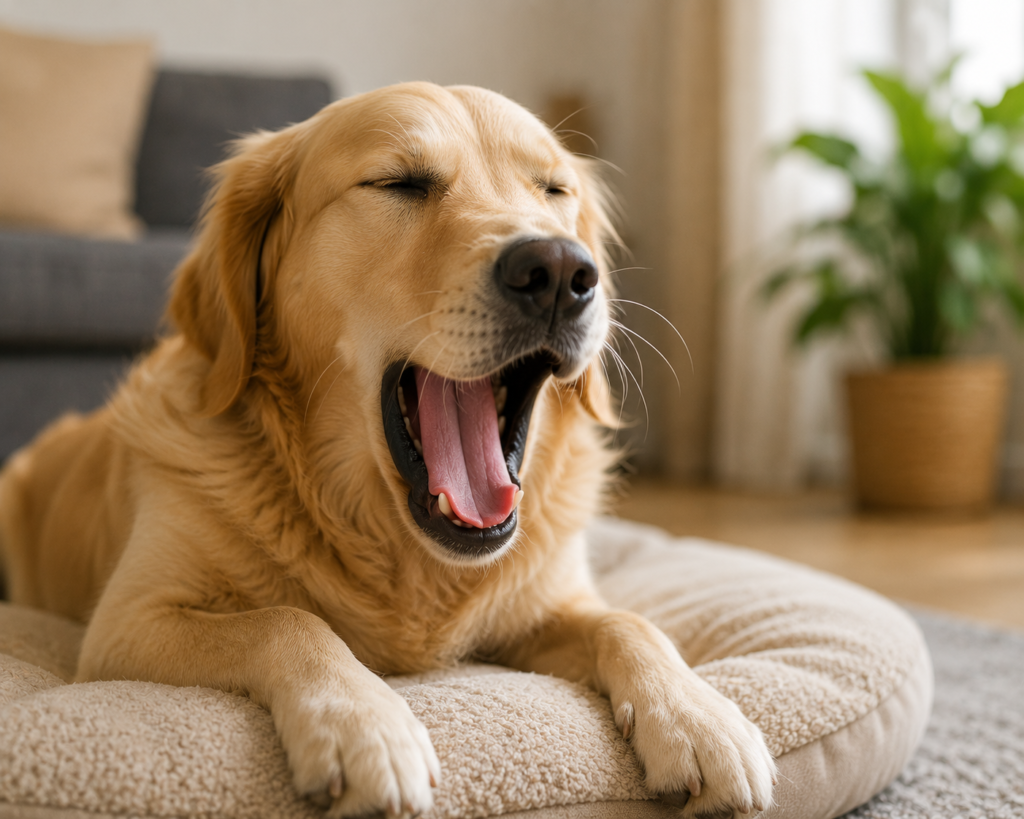
Have you ever noticed your dog yawning repeatedly, even when they don’t seem tired?
While yawning is often associated with sleepiness, dogs yawn for many different reasons. In many cases, it’s completely normal behavior. However, frequent yawning can sometimes tell you something about how your dog is feeling.
Let’s take a closer look at the most common reasons dogs yawn.
Is It Normal for Dogs to Yawn a Lot?
Yes, occasional yawning is completely normal for dogs. Dogs may yawn when they are tired, relaxed, excited, stressed, or trying to calm themselves during an uncomfortable situation.
If your dog suddenly starts yawning much more than usual, however, pay attention to what is happening around them and look for other changes in behavior. Frequent yawning together with lethargy, loss of appetite, breathing problems, or signs of pain may be a reason to contact your veterinarian.
Your Dog May Simply Be Tired
Just like humans, dogs yawn when they’re sleepy.
You may notice yawning:
- Before bedtime
- After waking up
- During a lazy afternoon
If your dog is otherwise healthy and relaxed, occasional yawning is perfectly normal.
Yawning Can Be a Sign of Stress
Dogs often use body language to communicate their emotions.
Yawning can sometimes be a calming signal that helps a dog cope with stress or uncertainty.
You may notice yawning during:
- Vet visits
- Car rides
- Thunderstorms
- Meeting new people
In these situations, yawning can help dogs self-soothe.
Excitement Can Trigger Yawning
Surprisingly, dogs may also yawn when they’re excited.
Some dogs yawn:
- Before a walk
- During training sessions
- When visitors arrive
- Before playtime
This type of yawning is usually harmless and related to emotional arousal.
Dogs Use Yawning to Communicate
Dog behavior experts believe yawning can also serve as a social signal.
Dogs may yawn to communicate:
- They feel uncertain
- They want to avoid conflict
- They are trying to stay calm
This is one reason why dogs sometimes yawn during interactions with other dogs.
Is Your Dog Bored?
A lack of mental stimulation can sometimes contribute to behaviors like yawning, stretching, and restlessness.
If your dog spends long periods without activity, consider providing:
- Interactive toys
- Puzzle feeders
- Training games
- More walks
You may also enjoy our article on Signs Your Dog Is Bored.
Could Frequent Yawning Indicate a Health Problem?
Occasional yawning is normal.
However, contact your veterinarian if excessive yawning is accompanied by:
- Lethargy
- Loss of appetite
- Breathing difficulties
- Unusual behavior
- Signs of pain
Medical causes are less common but should not be ignored.
Other Dog Behaviors You Might Wonder About
If you’re curious about dog body language, check out:
Frequently Asked Questions
Why does my dog keep yawning even when not tired?
Dogs do not only yawn because they are sleepy. Yawning can also occur when a dog feels stressed, excited, uncertain, or is trying to calm down.
Do dogs yawn when they are stressed?
Yes. Some dogs yawn in stressful or unfamiliar situations, such as during vet visits, car rides, thunderstorms, or interactions that make them uncomfortable.
Why does my dog yawn when I pet them?
It can be a sign of relaxation, but context matters. If your dog has a loose body and appears comfortable, the yawn may simply accompany relaxation. If they turn away, tense up, lick their lips, or repeatedly yawn, they may be feeling uncomfortable.
Should I worry if my dog yawns a lot?
Occasional yawning is usually normal. A sudden increase in yawning or yawning accompanied by lethargy, appetite changes, breathing difficulties, pain, or unusual behavior should be discussed with a veterinarian.
Final Thoughts
Most of the time, yawning is a completely normal part of dog behavior. Dogs may yawn when they’re tired, excited, stressed, or simply trying to communicate how they’re feeling.
By paying attention to the situation and your dog’s overall body language, you can better understand what those extra yawns might be telling you.
This article is for informational purposes only and is not a substitute for professional veterinary advice.