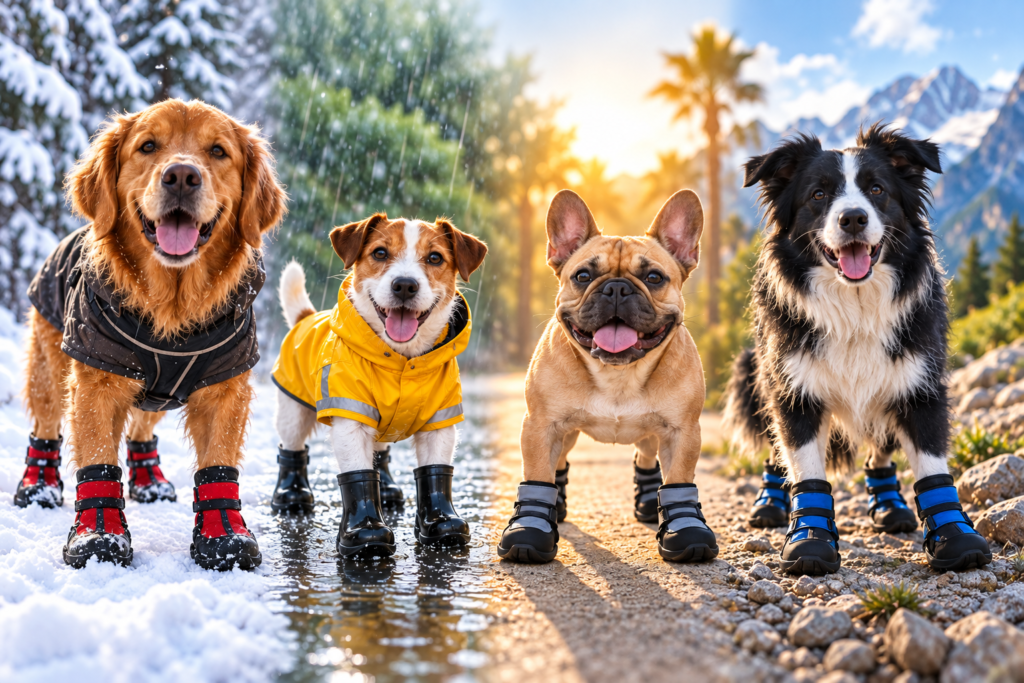
Dog boots might look like a cute accessory, but in the right conditions they can be genuinely useful. Hot pavement, snow, ice, road salt, rain, and rough hiking trails can all be uncomfortable — and sometimes harmful — for a dog’s paws.
The tricky part is that not every pair of dog boots is designed for the same job. A lightweight, breathable boot that makes sense for summer walks may not be the best choice for deep snow, while a heavy winter boot can be unnecessary on warm pavement.
That’s why this guide includes different types of dog boots rather than ten nearly identical options. Whether you need something for winter walks, rainy days, hot sidewalks, hiking, small paws, or a dog that constantly manages to kick its boots off, there should be an option here worth considering.
Affiliate disclosure: This post contains affiliate links. If you purchase through one of these links, I may earn a small commission at no extra cost to you. As an Amazon Associate, I earn from qualifying purchases.
Do Dogs Really Need Boots?
Not every dog needs boots for every walk.
But there are situations where an extra layer between the paw and the ground can be helpful. Properly fitted dog boots can protect paws from very hot surfaces, ice, rough terrain and substances such as road salt and deicers.
Hot pavement deserves particular attention. Asphalt and other surfaces exposed to direct sun can become substantially hotter than the surrounding air. If the pavement feels too hot for your hand, it can also be too hot for your dog’s paws. Boots can add protection, but avoiding the hottest part of the day and choosing grass or shaded routes is still preferable whenever possible.
Winter brings different problems. Snow and ice can collect around the paws, while deicing products can irritate paw pads. Boots create a physical barrier, although paws should still be checked after walks.
So rather than asking whether all dogs need shoes, a better question is:
Does my dog need paw protection for the conditions we’re walking in?
For some dogs the answer will often be no. For others, especially during extreme weather or outdoor adventures, boots can be surprisingly useful.
If you’re still wondering whether footwear is actually beneficial or comfortable for dogs, read our guide on Are Dog Shoes Good for Dogs? to learn when dog shoes can help and when your dog may be better off without them.
10 Best Dog Boots in 2026
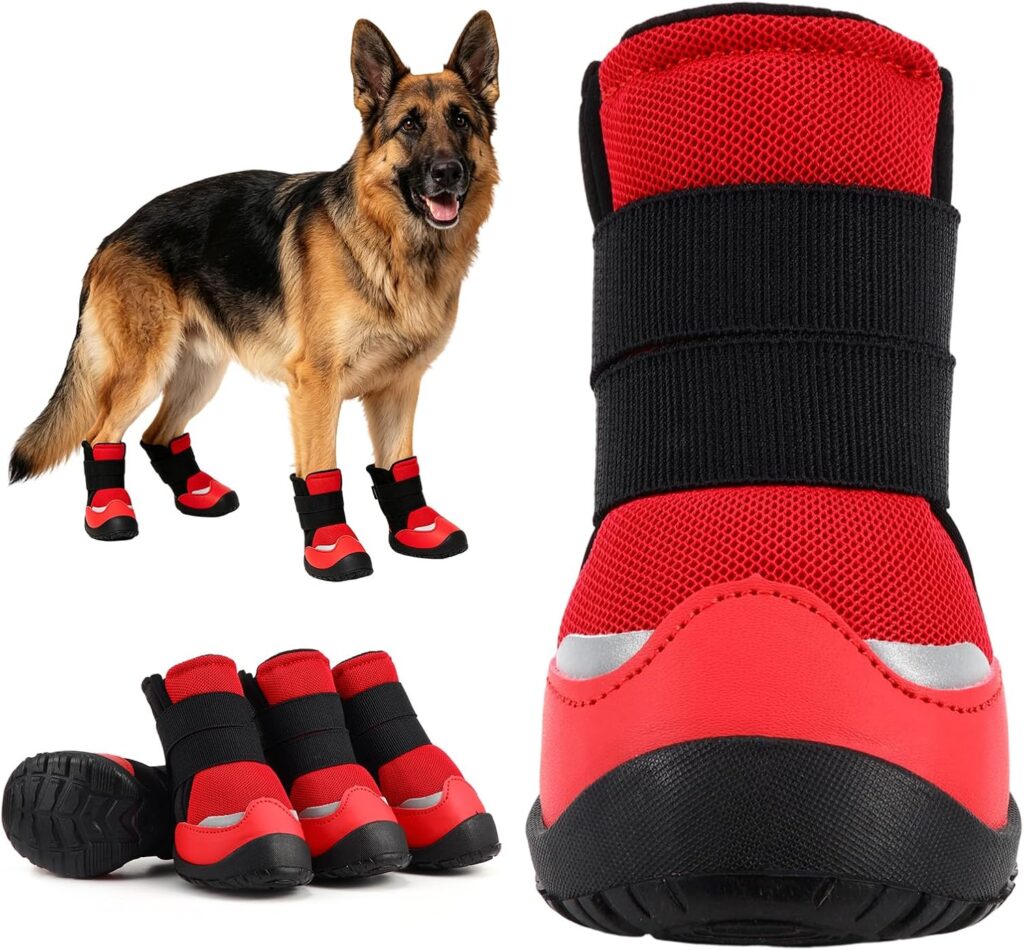
1. Furrtripsy All-Weather Dog Boots — Best Overall
Best for: Everyday walks and owners looking for one versatile pair
Why we picked them: The Furrtripsy boots are the most balanced option in this list for someone who doesn’t want several different pairs for different situations.
Their all-weather design makes them useful for everyday outdoor walks where dogs may encounter wet ground, pavement or changing conditions.
A secure fit is especially important with dog boots because even a good sole isn’t much use if the shoe twists or falls off halfway through the walk. This style offers a more substantial boot design than thin paw covers while remaining practical for regular use.
What we like:
- Versatile all-weather design
- Paw protection for everyday outdoor use
- More substantial than simple dog socks
- Good choice if you only want one general-purpose pair
Keep in mind: No single boot is ideal for every extreme. Owners primarily dealing with deep winter conditions, intense summer heat or demanding hiking may prefer one of the more specialized options below.
Best choice for: The dog owner who wants a solid everyday boot rather than footwear designed for only one season.
2. LUCKYPAW Suspender Dog Boots — Best Stay-On Design
Best for: Dogs that constantly lose ordinary boots
Anyone who has tried dog boots knows one of the biggest problems: you put four boots on the dog and return home with three.
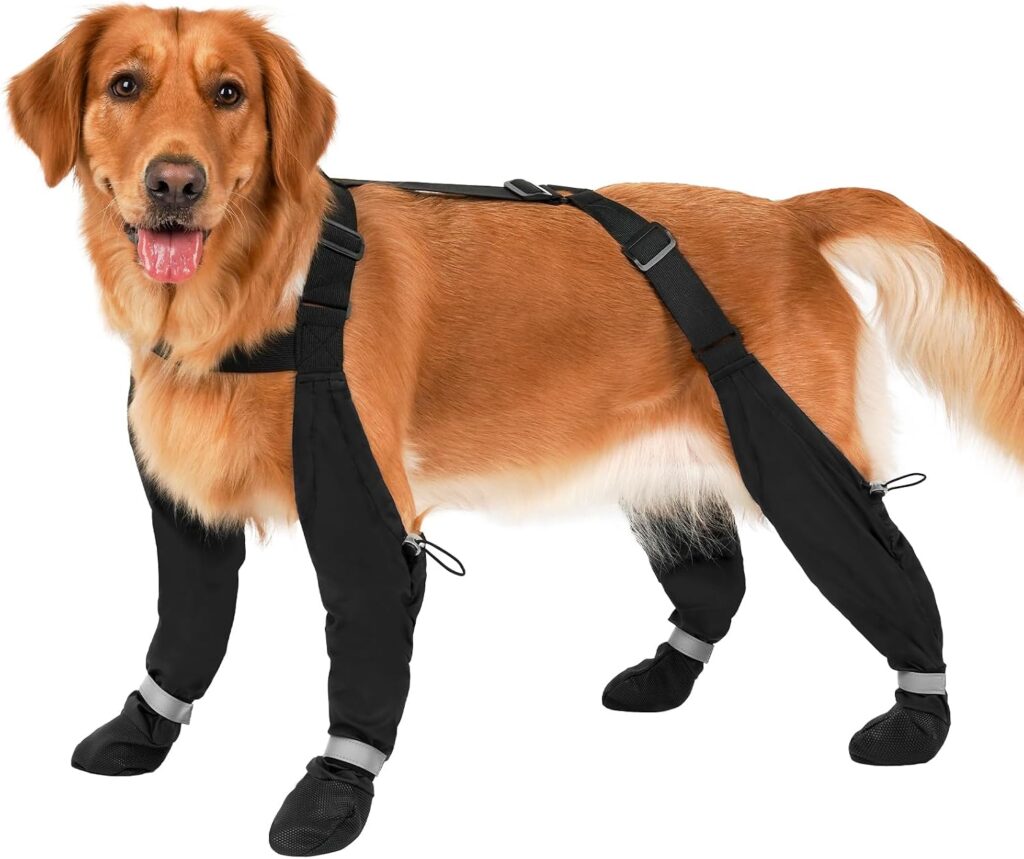
Suspender-style boots approach that problem differently. Instead of relying only on straps around each paw, the connected design helps keep the footwear in position.
That makes the LUCKYPAW model particularly interesting for active dogs and larger dogs that manage to shake or kick standard boots loose.
What we like:
- Stay-on suspender design
- Useful alternative for dogs that lose individual boots
- Covers more of the lower leg
- Suitable for outdoor adventures and changing weather
Potential downside: This is more equipment to put on than four simple booties. Some dogs may also need more time to become comfortable with the suspender-style construction.
Best choice for: Dogs for whom keeping ordinary boots on is the biggest problem.
3. YAODHAOD Winter Dog Boots — Best for Cold & Dry Winter Walks
Best for: Cold-weather walks and winter paw protection
Winter footwear needs to do more than simply cover a paw. Cold surfaces, ice and snow can make outdoor walks uncomfortable, and winter boots provide a barrier between the paws and the ground.
The YAODHAOD model is our pick for regular cold-weather walks when insulation and coverage matter more than maximum ventilation.
What we like:
- Designed with winter use in mind
- Covers the paws against cold surfaces
- Useful for snowy everyday walks
- More winter-oriented than lightweight summer boots
Keep in mind: For persistent rain, slush and very wet snow, we’d choose a more water-focused model such as the LUCKYPAW waterproof option below.
Best choice for: Regular cold and relatively dry winter conditions.
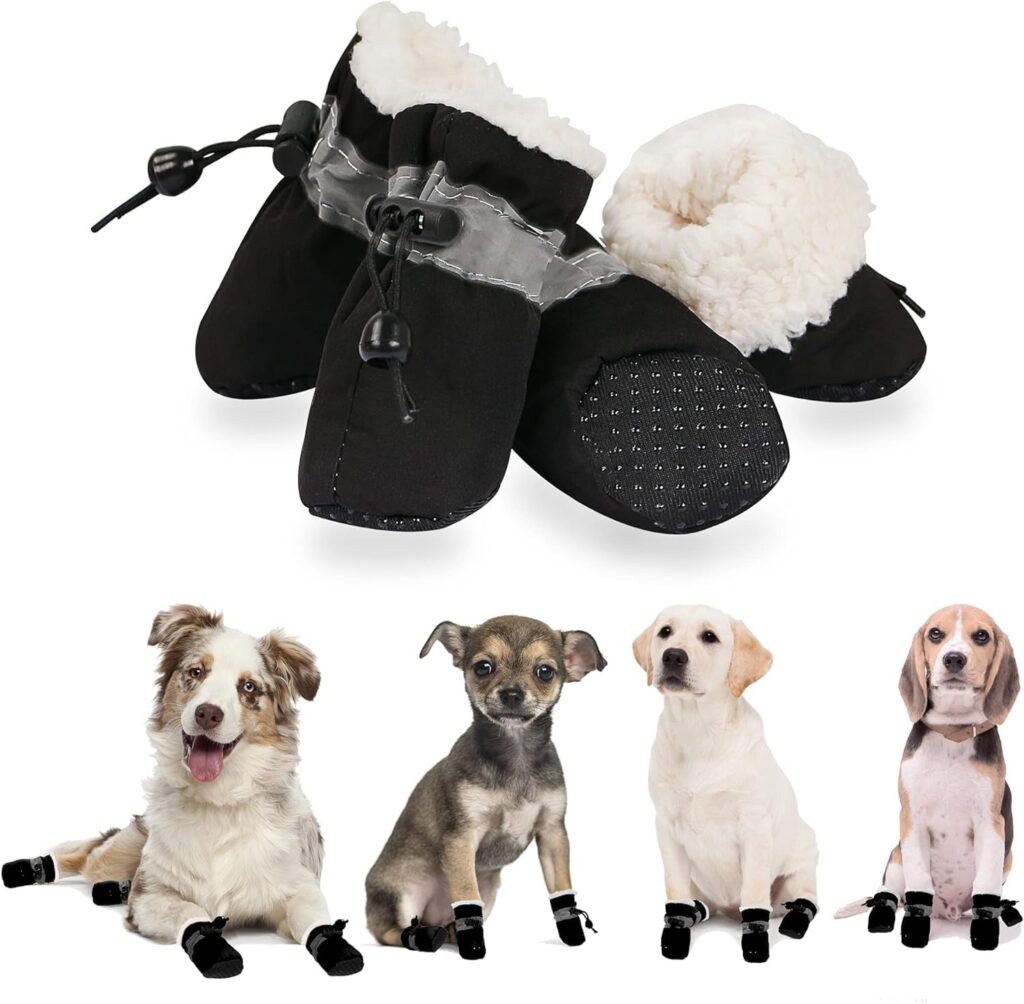
4. LUCKYPAW Waterproof Winter Dog Boots — Best for Wet Snow & Winter Rain
Best for: Slush, wet snow and rainy winter walks
Cold is only half of the winter problem. Wet paws can quickly make a walk unpleasant, particularly when rain, melting snow and slush are involved.
This LUCKYPAW option is the more appropriate choice when keeping moisture away from the paws is a priority.
Water-resistant or waterproof materials can be particularly useful in these conditions, but the fit still matters. A poorly fitted boot can allow water or snow to enter from the top.
What we like:
- Designed for wet winter conditions
- Better suited to slush than a dry-weather winter boot
- Paw coverage against wet and dirty surfaces
- Useful for rain-to-snow weather
Best choice for: Dogs walking through slush, wet snow and cold rain.
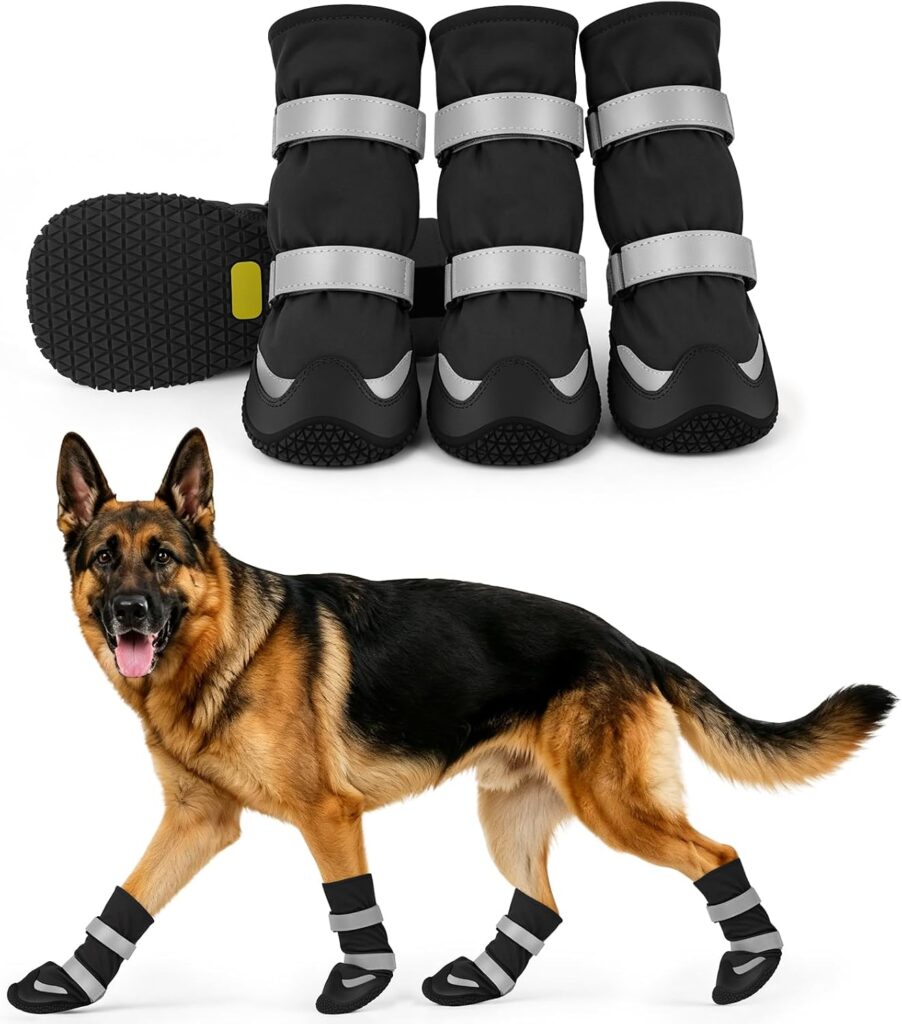
5. Dimicoo Breathable Dog Boots — Best for Hot Pavement & Summer
Best for: Warm-weather walks
Summer dog footwear has almost the opposite requirements of winter footwear.
For hot weather, we want paw protection without unnecessarily trapping heat. The Dimicoo boots use breathable mesh construction with ventilation, a rubber sole and hook-and-loop fastening.
That’s why they earn the summer spot in this guide.
Breathability is particularly useful in warm weather, and AKC specifically recommends considering lightweight, breathable or mesh footwear when choosing boots for hot surfaces.
However, boots shouldn’t be treated as permission to walk a dog on dangerously hot pavement. During very hot weather, early morning or evening walks and cooler surfaces are still the safer option.
What we like:
- Breathable mesh
- Lightweight construction
- Rubber sole
- Hook-and-loop closure
- Better suited to summer than insulated winter boots
Best choice for: Dogs needing paw protection during warmer walks.
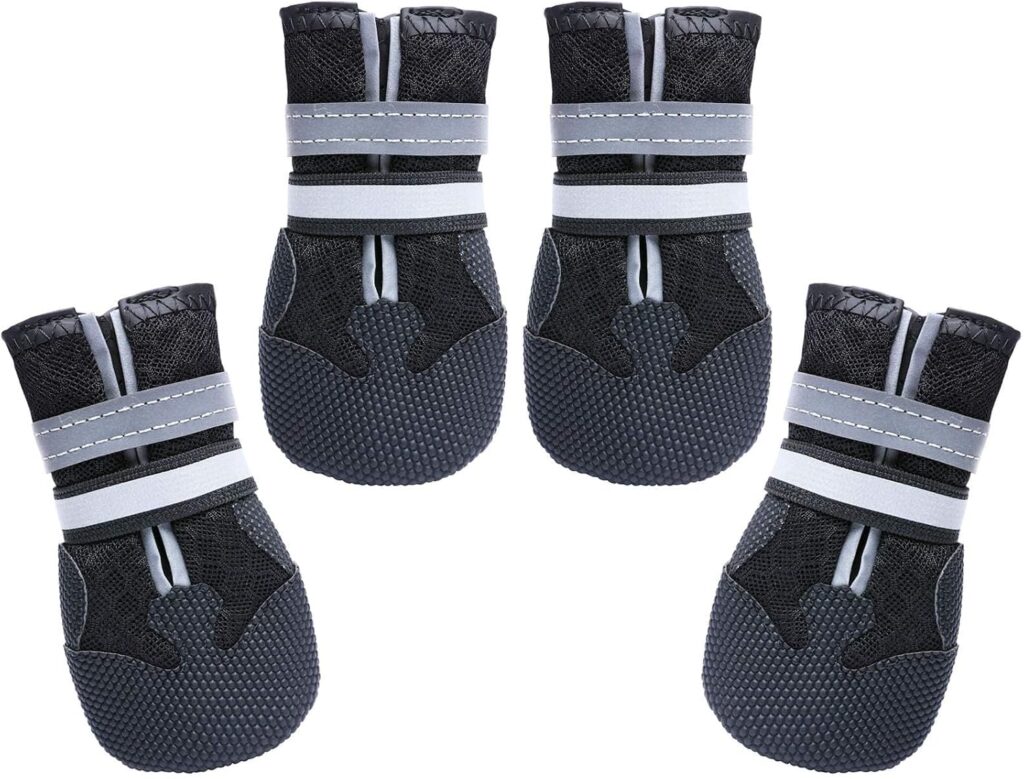
6. Ultra Paws Rugged Dog Boots — Best for Hiking & Rough Terrain
Best for: Hiking, trails and active outdoor dogs
If you’re heading beyond ordinary sidewalks, the priorities change again.
Trail boots need a durable sole and enough grip to deal with rocks, dirt and uneven surfaces. Rugged footwear can also provide a barrier against sharp or abrasive terrain.
The Ultra Paws Rugged model is our outdoor-focused pick.
AKC recommends looking for traction when choosing boots for hiking because grooved soles can improve grip on rocks and uneven ground.
What we like:
- Rugged construction
- Designed for active outdoor use
- Protective sole
- Better suited to trails than lightweight summer shoes
Potential downside: A rugged boot may be more than you need for short neighborhood walks.
Best choice for: Hiking dogs and owners who regularly walk on rough terrain.
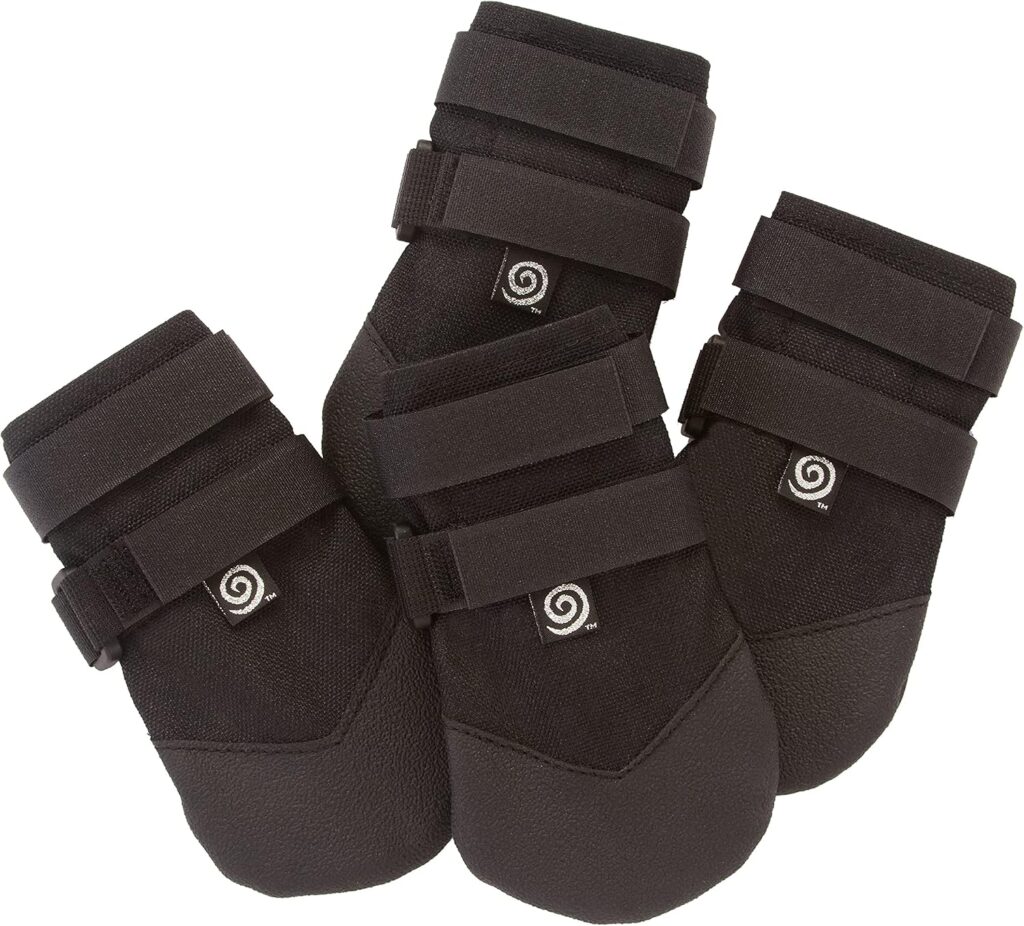
7. CovertSafe Dog Boots — Best Budget Pick
Best for: Trying dog boots without spending too much
Not every dog accepts boots.
That’s worth remembering before investing in an expensive pair, particularly if your dog has never worn footwear before.
CovertSafe provides a more budget-friendly way to introduce boots while still offering features we want for outdoor use, including an anti-slip sole and adjustable fastening.
What we like:
- Affordable option
- Anti-slip sole
- Adjustable straps
- Useful as a first pair
- Available in multiple sizes
Keep in mind: Correct sizing is still more important than price. A cheap boot that fits properly is more useful than an expensive boot that repeatedly slips off.
Best choice for: First-time buyers and occasional use.
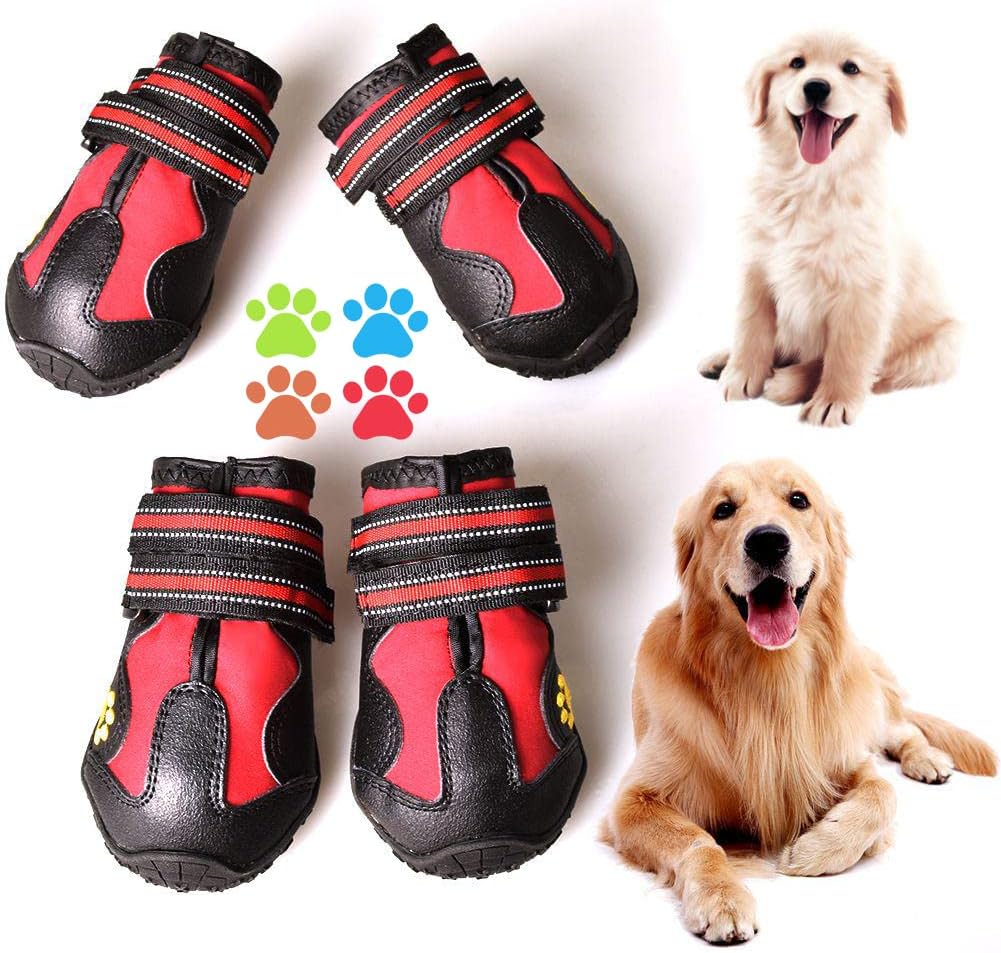
8. Petanims Dog Shoes — Best for Small Dogs
Best for: Small breeds and small paws
A lot of dog footwear is clearly designed around medium and large paws, which can make finding a comfortable option for tiny dogs frustrating.
The Petanims boots give us a dedicated small-dog option rather than expecting owners to simply buy the smallest size of a large-dog design.
They feature an anti-slip rubber sole and double binding straps, with sizing options intended for smaller paws.
What we like:
- Designed with small dogs in mind
- Double straps
- Anti-slip rubber sole
- Useful across several outdoor conditions
- Multiple paw-width sizes
Important: Don’t choose a size based only on breed. Two dogs of the same breed can have different paw measurements.
Best choice for: Chihuahuas, Yorkies and other small dogs when the paw measurements match the manufacturer’s size chart.
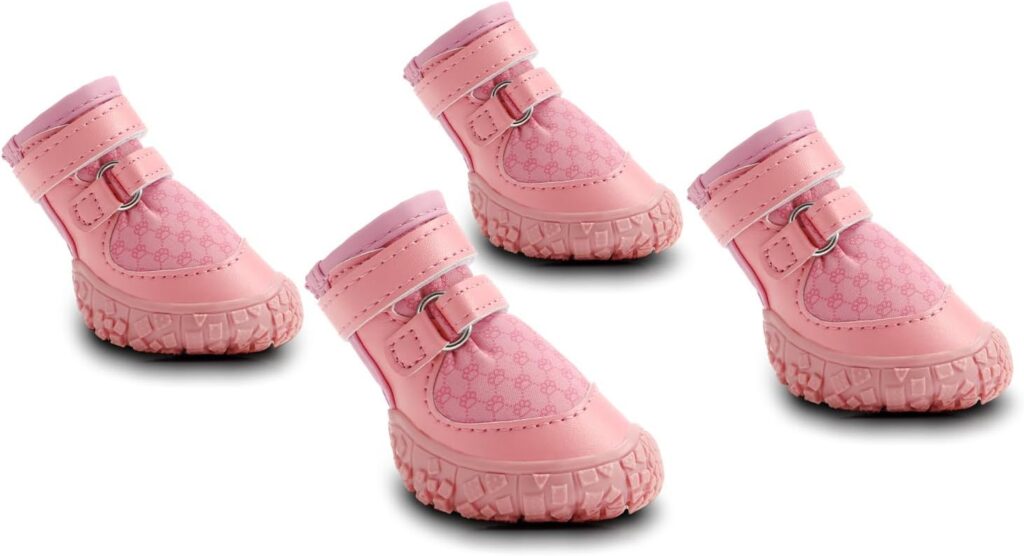
9. Spark Paws Dog Rainboots — Best for Rain & Wet Weather
Best for: Rain, puddles and muddy walks
Some dogs don’t need heavy winter footwear at all — they simply need something for wet days.
Spark Paws Rainboots are the rain-specific choice on our list. The design combines water-resistant materials with a grippy sole and secure Velcro-style fastening.
They’re particularly useful for owners who regularly deal with wet sidewalks, puddles and mud but don’t necessarily need a heavy insulated winter boot.
What we like:
- Designed for rainy conditions
- Grippy sole
- Secure fastening
- Useful for muddy walks
- Several sizes available
Keep in mind: Rain protection and winter insulation aren’t the same thing. Choose according to the conditions your dog actually encounters.
Best choice for: Regular wet-weather walks.
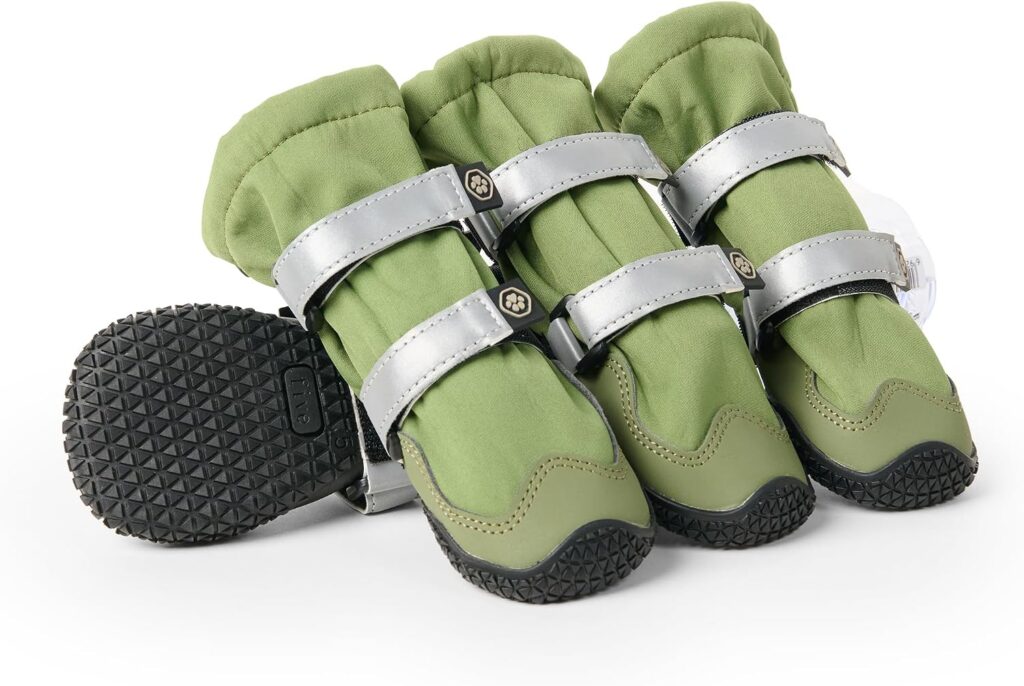
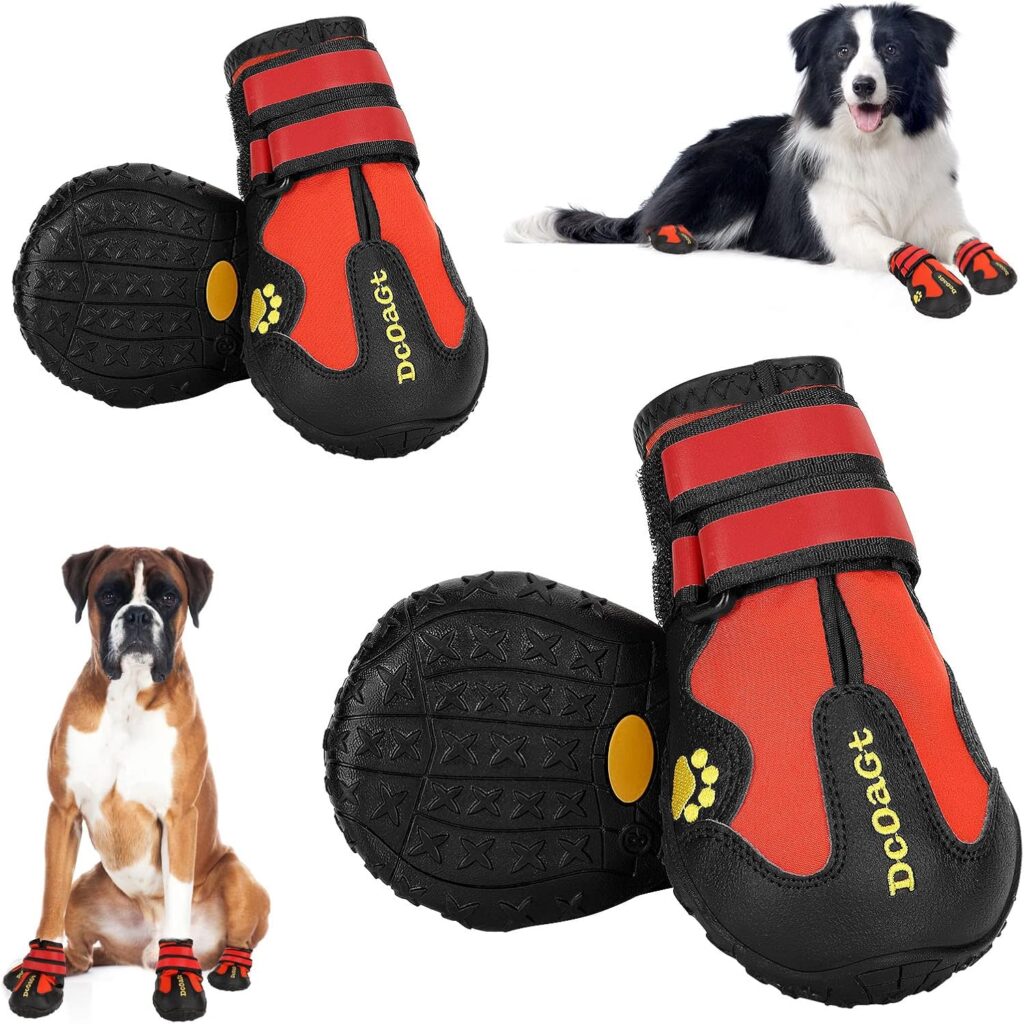
10. DcOaGt Dog Shoes — Best for Extra Traction
Best for: Dogs needing additional grip and larger dogs
The DcOaGt boots round out our list with an anti-slip design aimed at providing additional traction.
The model you selected has a breathable upper, anti-slip sole, adjustable fastening and reflective detailing. It also comes in multiple paw-width sizes.
That combination makes it a useful option for dogs needing more grip while still retaining some breathability.
What we like:
- Anti-slip sole
- Breathable construction
- Reflective detailing
- Multiple sizes
- Suitable for larger paws
Keep in mind: Although extra traction can be helpful for some older dogs, footwear isn’t a treatment for mobility problems. If a dog suddenly starts slipping, limping or struggling to walk, the underlying cause should be discussed with a veterinarian.
Best choice for: Larger dogs and dogs for whom traction is an important consideration.
How to Choose the Right Dog Boots
There isn’t one “best dog boot” for every dog. The best choice depends on where your dog walks and what you’re trying to protect their paws from.
For hot pavement
Look for a protective sole combined with a lightweight, breathable upper. Mesh can be useful because it allows more airflow than heavily insulated winter materials.
But remember: boots don’t make extreme heat harmless. Avoid the hottest part of the day whenever possible.
For winter
Look for secure fastening, sufficient coverage and materials appropriate for snow and cold.
If your sidewalks are treated with road salt or deicer, boots can also reduce direct contact with those substances.
For rain
Prioritize water resistance and grip.
A boot that becomes soaked immediately defeats much of the purpose of wearing it in the first place.
For hiking
Look for:
- Rugged soles
- Good traction
- Secure straps
- Durable construction
- Comfortable fit
A hiking boot should protect the paw without interfering with the dog’s natural movement.
For dogs that lose their boots
Pay particular attention to the closure system.
Double straps or stay-on/suspender designs may be worth considering if conventional boots repeatedly disappear during walks.
How to Measure Your Dog’s Paws for Boots
This is probably more important than the brand you choose.
Don’t assume that a Labrador needs “Large” or a Chihuahua automatically needs “XS.” Always check the sizing chart for the exact product.
A simple way to measure is to place your dog’s paw on a piece of paper while the dog is standing normally. The paw spreads under body weight, which gives you a more realistic measurement.
Mark or trace the widest part of the paw and measure that width. Compare it with the manufacturer’s chart for the particular boot you’re considering. AKC similarly recommends measuring the paw while it is pressed against paper and using the widest point to determine size.
If the manufacturer asks for both width and length, measure both.
And don’t forget the front and back paws may not be exactly the same size.
How Should Dog Boots Fit?
The boot should remain on the paw when your dog walks, but it shouldn’t squeeze the paw or leave obvious pressure marks.
After putting them on, check that:
- The paw sits fully inside the boot.
- The boot doesn’t rotate while walking.
- Your dog isn’t constantly losing one.
- Straps aren’t digging into the leg.
- Toes aren’t compressed.
- There is no rubbing after use.
Test new boots indoors before going on a long walk.
How to Get Your Dog Used to Wearing Boots
And now for the part that produces some very funny first attempts.
Many dogs walk strangely the first time they wear boots. That’s not necessarily a sign that something is wrong; they’re suddenly feeling something unfamiliar on all four feet.
Don’t introduce new boots five minutes before a long hike.
Start indoors.
Let your dog inspect the boots, then introduce them gradually. You might start with one boot, reward calm behavior and slowly progress to all four.
Keep the first sessions short.
Once your dog can comfortably walk around the house, try a short outdoor walk before relying on the boots for a longer trip.
Patience matters here. Dogs often need time to adjust to footwear.
Dog Boots for Hot Pavement: Are They Enough?
No.
This is an important distinction.
Boots can help protect paw pads from hot surfaces, but they don’t protect the dog from overheating.
On hot days, choose cooler times of day, shorten walks when necessary and look for grass or shaded routes.
A useful quick check is to place your hand on the pavement. If you can’t comfortably keep it there for around 10 seconds, consider the surface too hot for bare paws.
And remember that air temperature isn’t the same as pavement temperature. Sun-exposed surfaces can become dramatically hotter than the surrounding air.
Related: When Is It Too Hot to Walk Your Dog?
What About Winter Salt and Ice?
This is another situation where dog boots can be particularly useful.
Snow, ice and deicing chemicals can irritate paws, and ice can accumulate between the toes.
Boots provide a physical barrier, but you should still inspect your dog’s paws after the walk.
If your dog walks without boots on treated sidewalks, rinse or wipe the paws after returning home to remove residue.
Related: How to Protect Dogs From Ticks
Related: How Far Can a Dog Hike?
Frequently Asked Questions
Are dog boots actually good for dogs?
They can be. Properly fitted boots may protect paws from hot pavement, snow, ice, salt and rough terrain. The important words are properly fitted and used when appropriate.
Can dogs wear boots every day?
Some dogs can wear boots regularly when conditions require them, but they shouldn’t simply remain on all day. Remove them after the walk and check the paws for moisture, rubbing or irritation.
How long can a dog wear boots?
There isn’t one time limit that applies to every dog and every boot. Weather, activity, fit and material all matter. Check the paws regularly and remove the boots if you notice rubbing, excessive moisture or discomfort.
Should dogs wear boots on hot pavement?
Boots can provide a protective barrier, but avoiding dangerously hot pavement remains the better solution. Walk earlier or later in the day and choose cooler surfaces whenever possible.
Do dogs need boots in snow?
Not every dog does. However, boots can be helpful in snow, ice and areas where sidewalks are treated with salt or deicing chemicals.
Why does my dog keep losing its boots?
Usually the fit or fastening system is the first thing to check. Boots that are too large can twist and slip off. Measure the paws and follow the specific manufacturer’s chart rather than relying on breed or body weight alone.
Are dog boots good for hiking?
They can be particularly useful on rough, rocky or abrasive trails. For hiking, prioritize a rugged sole, traction and a secure fit.
Can small dogs wear dog boots?
Absolutely, provided the boots fit correctly. Small dogs need appropriately sized footwear rather than loose boots intended for larger paws.
Final Thoughts
The best dog boots aren’t necessarily the most expensive pair or the ones with the most features.
They’re the boots that fit your dog properly and suit the conditions you’re actually dealing with.
For a versatile everyday option, Furrtripsy All-Weather Dog Boots are our overall pick. Dogs that constantly kick off ordinary boots may benefit from the LUCKYPAW Suspender design, while Ultra Paws Rugged Boots make more sense for hiking and rough terrain.
For summer, we’d prioritize something lighter and more breathable like Dimicoo, while Spark Paws Rainboots are the more specialized choice for wet-weather walks.
Whichever pair you choose, measure your dog’s paws first, introduce the boots gradually and check the paws after longer walks.
Sometimes the simplest piece of dog gear can make an uncomfortable walk much more enjoyable.
Pet-care disclaimer: This article is for general informational purposes only and isn’t a substitute for veterinary advice. If your dog has injured paw pads, persistent limping, pain, swelling or mobility problems, contact your veterinarian.