Dog shoes seem to be everywhere lately.
Some dogs wear tiny sneakers on city walks, others wear protective boots in winter, and social media is full of dogs walking rather awkwardly the first time someone puts shoes on their paws.
They can look cute—but are dog shoes actually good for dogs?
Yes, dog shoes can be useful in certain situations, but most healthy dogs don’t need to wear them for every walk. Their main purpose should be protecting your dog’s paws, not simply completing an outfit.
Here’s when dog shoes can help, when they’re probably unnecessary, and what to consider before buying a pair.
Do Dogs Really Need Shoes?
Most dogs are perfectly capable of walking barefoot under normal conditions.
Their paw pads are naturally designed to provide protection and traction while walking on different surfaces.
But that doesn’t mean they’re indestructible.
Extreme temperatures, rough terrain, ice, salt, chemicals, injuries, and certain medical conditions can make additional paw protection useful.
The key is deciding whether your dog actually needs shoes for the environment you’re walking in.
Are Dog Shoes Good for Hot Pavement?
This is probably one of the best reasons to consider dog shoes.
On hot summer days, asphalt and pavement exposed to direct sunlight can become extremely hot.
Your dog can’t simply tell you that their paws are uncomfortable, so watch for signs such as:
- Suddenly stopping during a walk
- Trying to move toward grass
- Lifting individual paws
- Walking unusually quickly
- Licking the paws after returning home
- Visible redness or irritation
Before walking, place the back of your hand against the pavement for several seconds. If it’s uncomfortable for you, it’s safer to choose grass, wait until the surface cools, or use suitable paw protection.
Hot weather itself can also put dogs at risk. Read our guide Can Dogs Get Heatstroke? for signs of overheating and summer safety tips.
What About Dog Shoes in Winter?
Winter is another situation where dog boots can be genuinely useful.
Snow and ice may irritate sensitive paws, but another common problem is road salt and de-icing chemicals.
These substances can become trapped between the toes or stick to paw pads.
Dogs may then lick their paws and ingest some of the residue.
Boots create a physical barrier between the paws and the ground.
If your dog doesn’t tolerate boots, washing and drying their paws after winter walks is another useful habit.
Can Dog Shoes Protect Injured Paws?
Sometimes.
A protective boot may prevent dirt from reaching an injured paw or stop a dog from repeatedly licking the area.
However, an injured paw shouldn’t simply be covered without knowing what’s wrong.
If your dog is limping, bleeding, has a damaged nail, or has a wound that isn’t healing, speak with your veterinarian.
They can tell you whether covering the paw is appropriate and what type of protection should be used.
Are Dog Shoes Bad for Dogs?
Dog shoes aren’t inherently bad.
Problems usually happen when the shoes don’t fit properly or are worn unnecessarily for long periods.
Poorly fitting shoes can:
- Rub against the skin
- Cause irritation
- Restrict natural movement
- Fall off during walks
- Make walking uncomfortable
- Reduce traction rather than improve it
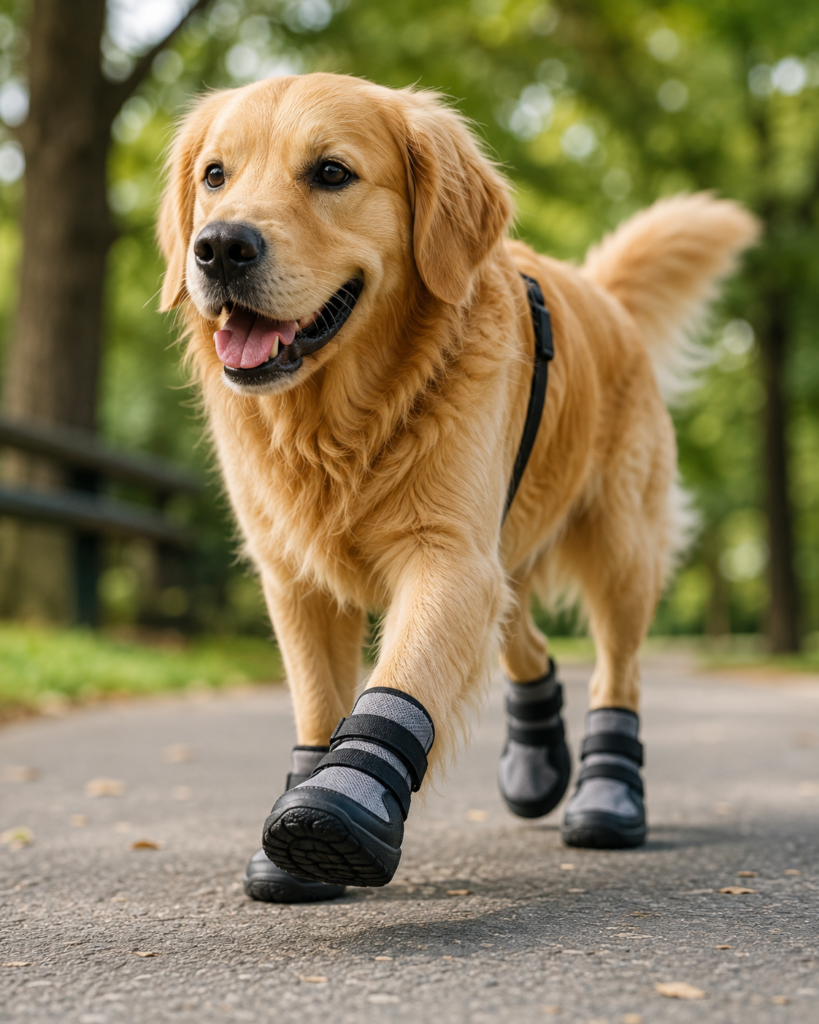
A dog should still be able to walk naturally while wearing them.
Why Do Dogs Walk Funny in Shoes?
You’ve probably seen it—the exaggerated high steps when a dog tries shoes for the first time.
That’s usually because dogs rely heavily on sensory information from their paws.
Suddenly covering their feet changes how the ground feels, and they need time to adjust.
Most dogs improve once they realize they can walk normally.
Start indoors for just a few minutes and reward calm walking before trying the shoes outside.
How Should Dog Shoes Fit?
Fit matters more than appearance.
Dog shoes should be snug enough that they don’t rotate or fall off but not so tight that they restrict circulation or rub against the paw.
Measure your dog’s paws according to the manufacturer’s sizing instructions rather than choosing a size based only on breed or weight.
And remember that front and back paws aren’t always exactly the same size.
Check your dog’s paws after the first few walks for redness or rubbing.
When Are Dog Shoes Worth Using?
Dog shoes can be particularly useful for:
- Very hot pavement
- Snow and ice
- Salted winter sidewalks
- Rocky or rough hiking trails
- Dogs with sensitive paws
- Certain paw injuries when recommended by a veterinarian
- Dogs that need additional traction on slippery surfaces
If your dog does need paw protection, choosing the right pair depends on where and when you’ll use them. See our guide to the [10 Best Dog Boots in 2026] for options for hot pavement, rain, winter weather, hiking, small dogs, and more.
For an ordinary walk on comfortable grass or pavement in mild weather, most healthy dogs don’t need them.
Shoes Aren’t a Substitute for Safe Walking
Putting shoes on your dog doesn’t mean it’s safe to take a long walk during extreme heat.
Dog boots may protect the paws from hot pavement, but they don’t protect your dog from overheating or heatstroke.
During very hot weather, walking early in the morning or later in the evening is still the safer choice.
And if you’re wondering how much exercise your dog actually needs, see How Long Should Dog Walks Be?
Final Thoughts
Dog shoes aren’t something every dog needs, but they’re far more than a cute accessory.
In the right circumstances, they can protect paws from hot pavement, winter salt, ice, rough terrain, and certain injuries.
The most important things are choosing the right size, introducing them gradually, and watching how your dog walks in them.
If your dog is comfortable barefoot and the ground conditions are safe, there’s usually no reason to make shoes part of every walk.
But when the pavement is scorching or winter sidewalks are covered in salt, a good pair of dog boots can be a very practical addition to your walking gear.
This article is for informational purposes only and is not a substitute for professional veterinary advice. If your dog has an injured, painful, or irritated paw, consult your veterinarian.