
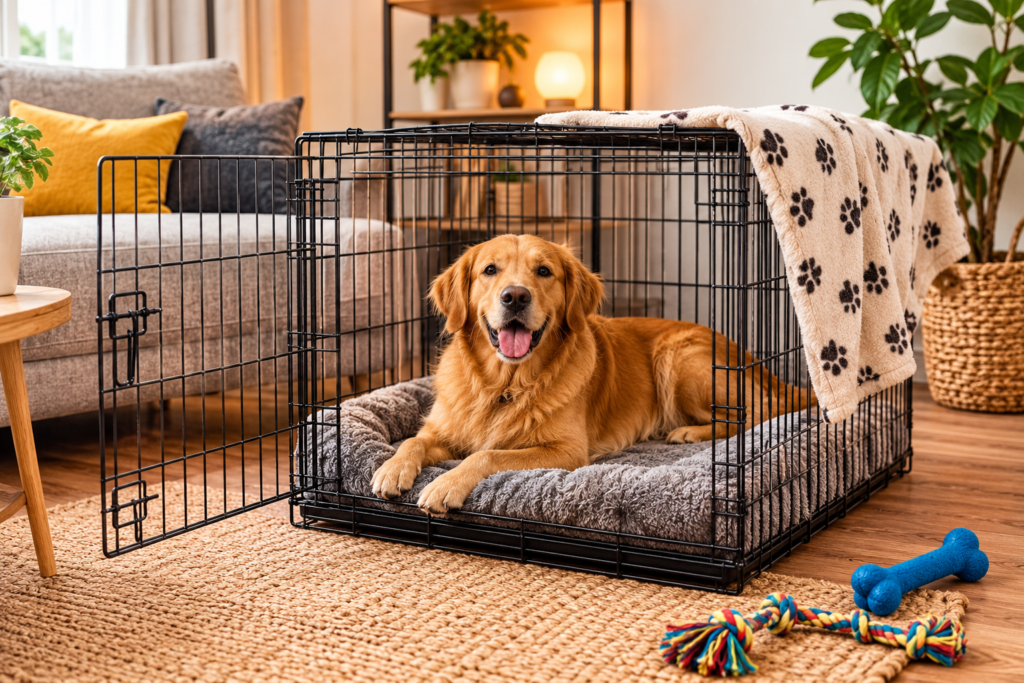
A good dog crate can be much more than a place to keep your dog contained. When introduced properly, it can become a comfortable spot for sleeping, relaxing, or simply getting away from household activity.
But choosing one isn’t always easy.
Wire crates, plastic kennels, furniture-style crates, soft-sided models, and heavy-duty options all serve slightly different purposes.
To make choosing easier, here are 8 dog crates for home use in 2026, with options for different dogs, homes, and budgets.
As an Amazon Associate, I earn from qualifying purchases.
1. Amazon Basics Portable Metal Wire Dog Crate
Best Overall
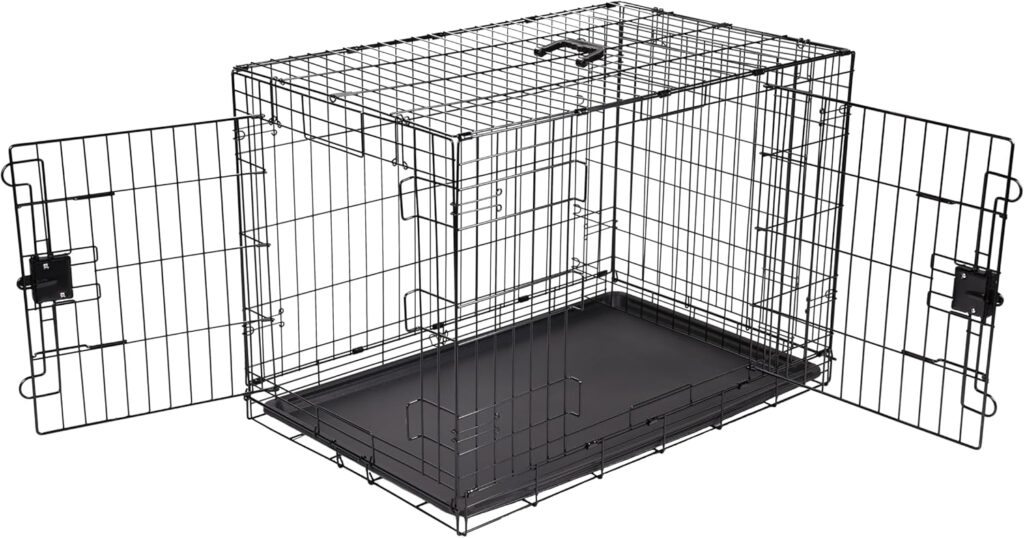
If you want a simple crate for everyday home use without spending a fortune, the Amazon Basics metal wire crate is a practical place to start.
Its straightforward wire construction provides plenty of ventilation and visibility, while the removable plastic tray makes everyday cleaning easier. The foldable design is also convenient if you occasionally need to store or move the crate.
It comes in multiple sizes, making it suitable for many different breeds.
Best for: Dog owners looking for an affordable everyday wire crate.
Why we like it:
- Foldable design
- Removable tray
- Good ventilation
- Multiple sizes available
- Straightforward design for everyday use
Keep in mind: Wire crates are very open, so dogs that prefer a more enclosed sleeping area may benefit from an appropriate crate cover.
2. MidWest 30-Inch Single Door iCrate
Best Classic Wire Crate
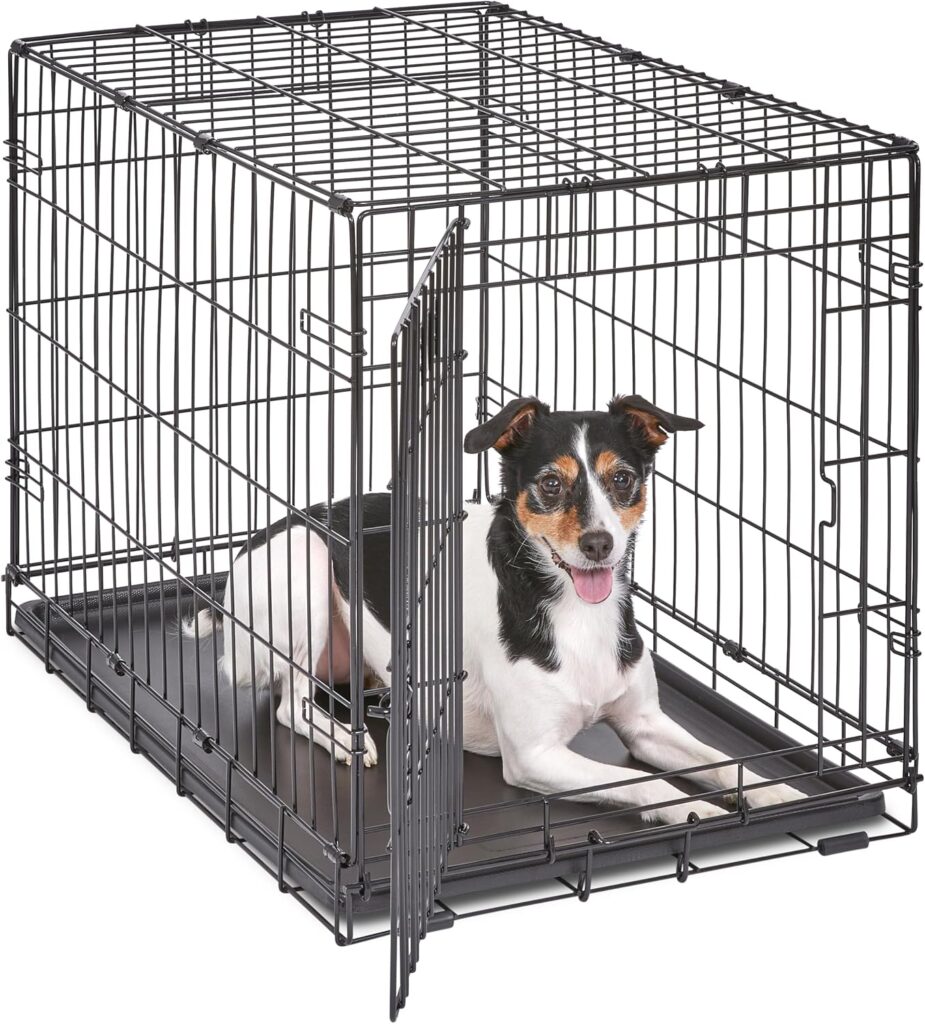
MidWest’s iCrate is another traditional wire crate designed for everyday use at home.
The open wire construction allows your dog to see what’s happening around them while providing good airflow. Its folding construction also makes it easier to store when the crate isn’t needed.
This type of crate can work particularly well for puppies and adult dogs that are already comfortable spending time in a crate.
Best for: Owners who want a traditional, no-fuss dog crate.
Why we like it:
- Simple wire construction
- Folds for storage
- Good visibility and airflow
- Easy to incorporate into most homes
- Available in different sizes
Keep in mind: Always select the crate according to your dog’s measurements rather than breed alone.
3. Petmate Vari Dog Kennel
Best Plastic Crate
Not every dog loves the openness of a wire crate.
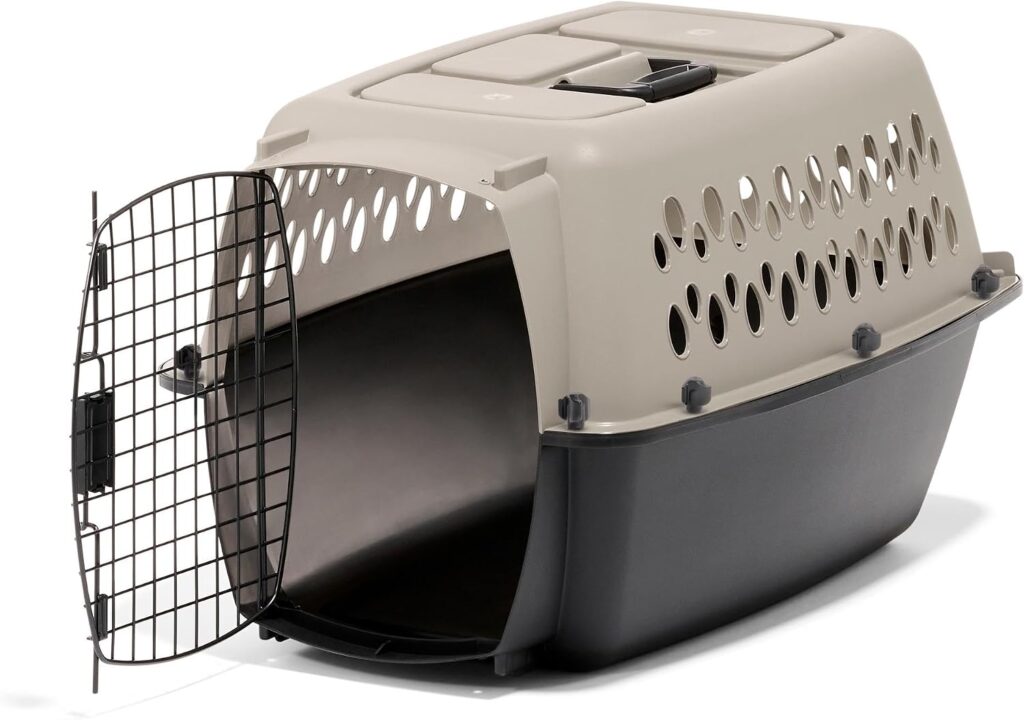
The Petmate Vari Kennel has more enclosed sides, which can create a quieter, den-like environment for dogs that prefer a little more privacy.
Ventilation openings provide airflow, while the plastic construction is relatively easy to wipe clean.
It’s also a useful option for owners who prefer a kennel that can serve more than one purpose around the home and during appropriate forms of transportation.
Best for: Dogs that feel more comfortable in an enclosed crate.
Why we like it:
- More private than a wire crate
- Durable plastic construction
- Easy-to-clean interior
- Ventilation around the kennel
- Cozy, den-like feel
Keep in mind: Check the exact model’s transportation requirements before using any crate for air travel.
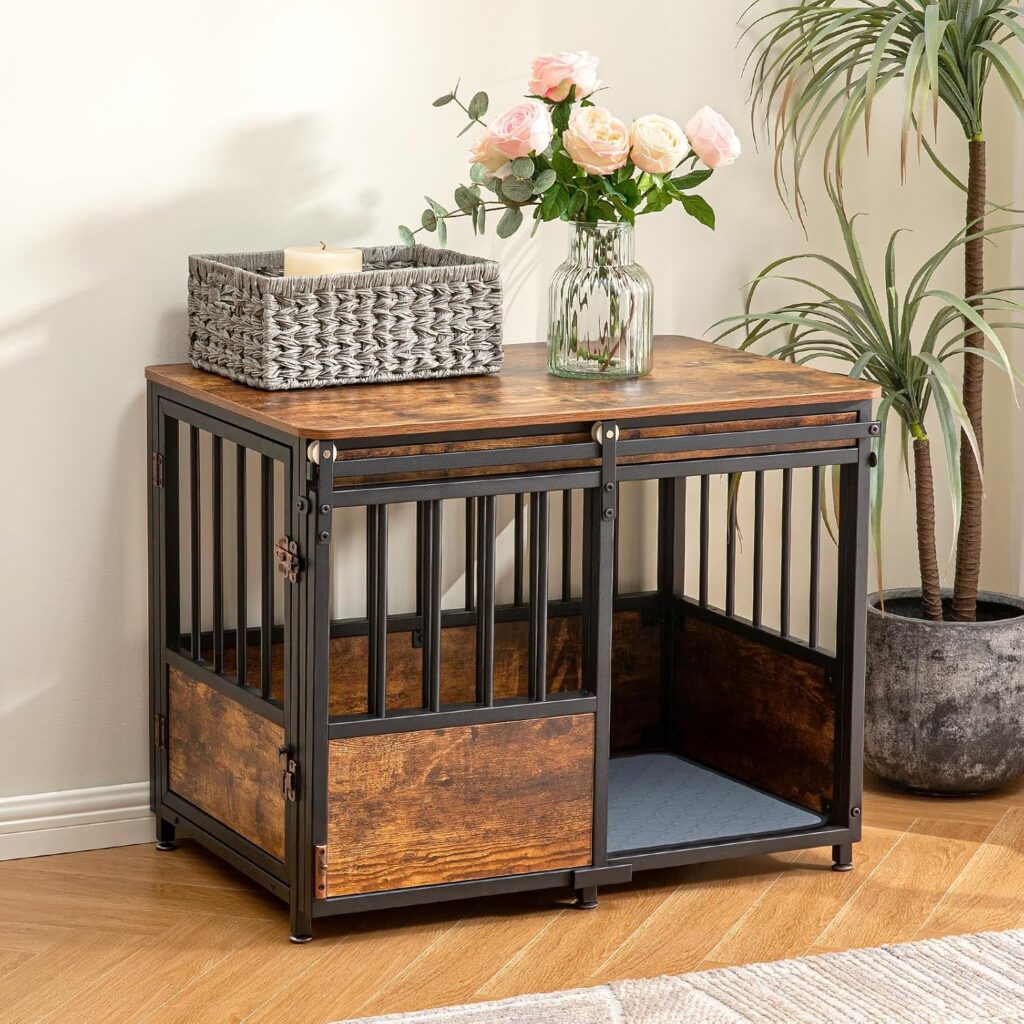
4. KOOPRO 32″ Dog Crate Furniture with Cushion
Best Furniture-Style Crate
A traditional metal crate isn’t always the nicest thing to have sitting in the middle of a living room.
That’s where furniture-style crates become interesting.
The KOOPRO crate combines an enclosed dog space with a tabletop, allowing it to blend into a living room or bedroom more naturally than a standard wire crate.
The included cushion also creates a comfortable resting area.
Best for: Dog owners who want a crate that fits their home décor.
Why we like it:
- Furniture-style appearance
- Useful tabletop
- Included cushion
- More attractive for living spaces
- Functions as both furniture and a dog resting area
Keep in mind: Furniture-style crates are generally better suited to crate-trained dogs that aren’t likely to chew or aggressively try to escape.
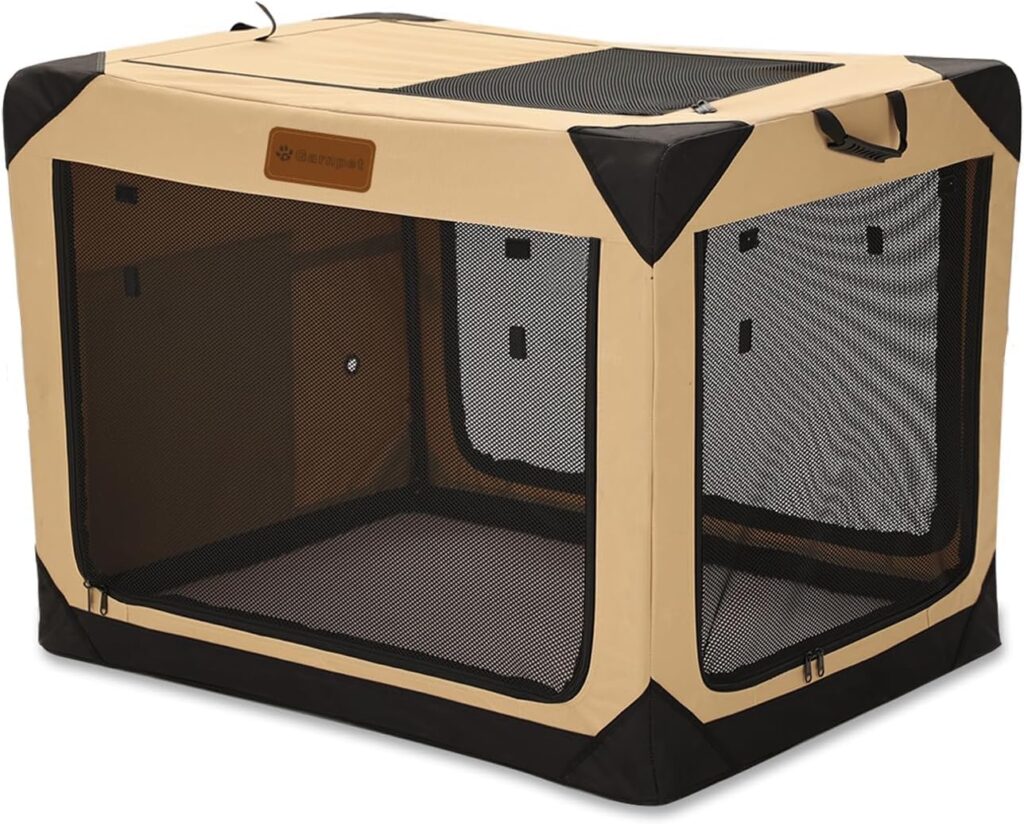
5. Garnpet 36-Inch Collapsible Soft Dog Crate
Best Soft Crate
Soft-sided crates can be convenient when you don’t want a permanent heavy crate taking up space.
The Garnpet collapsible crate uses mesh panels for ventilation and visibility while its lightweight construction makes it easier to move around the home.
It can also be folded when it isn’t being used.
Best for: Calm, crate-trained dogs and owners who want something lightweight.
Why we like it:
- Lightweight
- Collapsible
- Mesh ventilation
- Easy to move
- Less industrial-looking than a wire crate
Keep in mind: Soft crates aren’t ideal for dogs that chew, scratch heavily, or try to escape their crate.
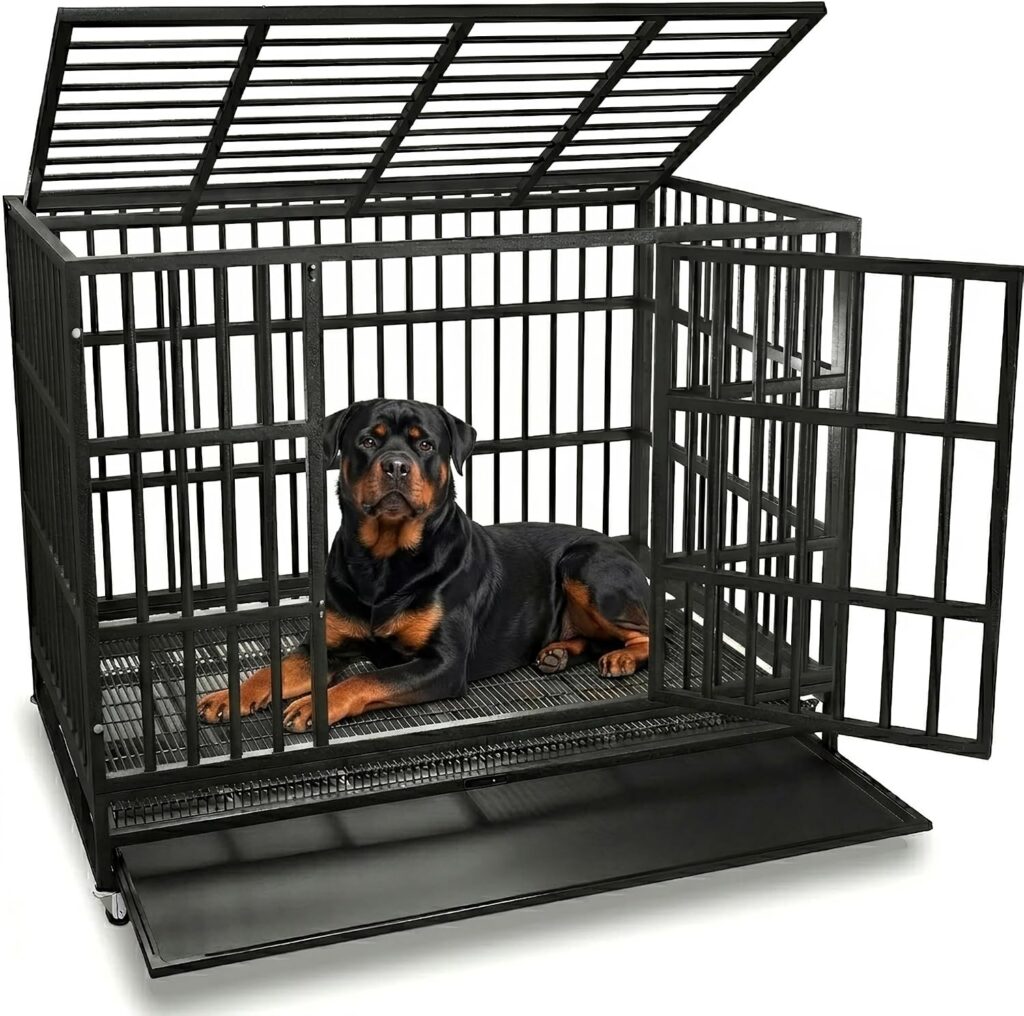
6. Oranland 38-Inch Heavy Duty Dog Crate
Best Heavy-Duty Crate
Some dogs need something considerably stronger than a standard wire crate.
The Oranland heavy-duty crate uses a much more substantial frame and is designed for owners looking for extra durability.
Its raised construction and wheels can also make cleaning and repositioning a large crate easier.
Best for: Strong dogs that require a more robust crate.
Why we like it:
- Heavy-duty construction
- Stronger than standard wire crates
- Wheels for easier movement
- Designed for larger or powerful dogs
- Practical removable bottom area for cleaning
Keep in mind: It’s considerably heavier, bulkier, and more expensive than a basic wire crate, so most dogs simply won’t need this level of construction.
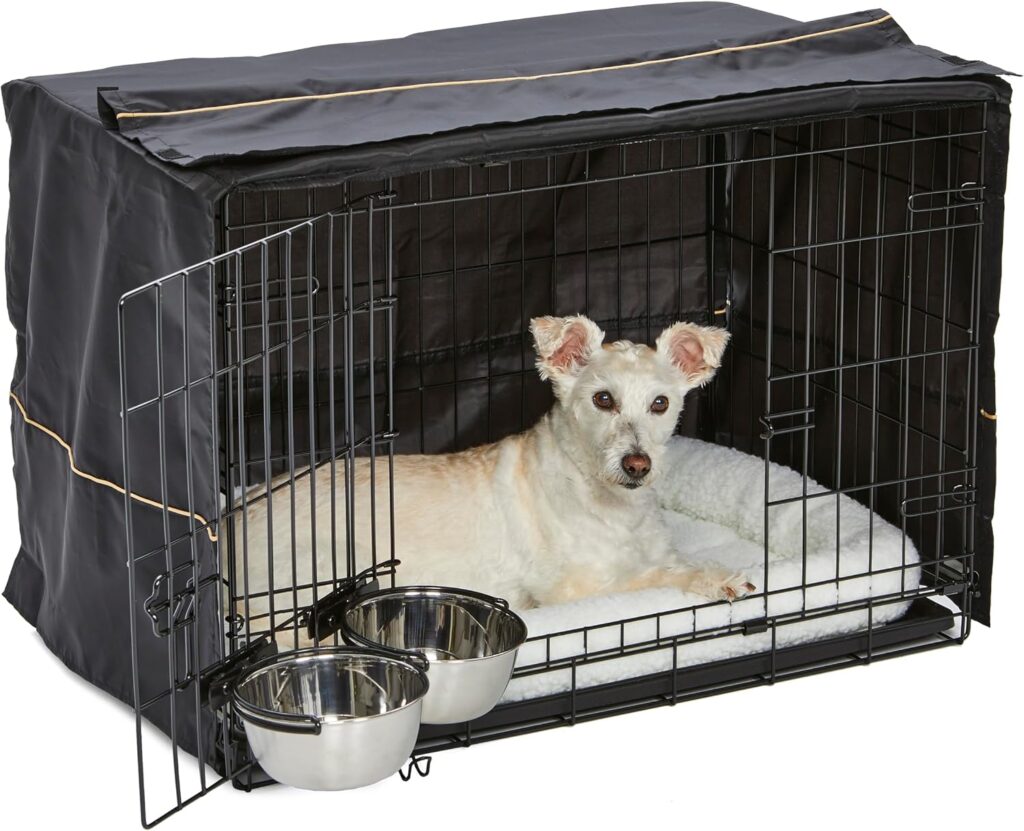
7. MidWest Homes for Pets Double Door iCrate Starter Kit
Best Starter Kit
Buying your first crate often means buying several other things immediately afterward.
This MidWest starter kit makes the process easier by combining a double-door wire crate with useful accessories.
That makes it particularly convenient for new dog owners who don’t already have crate supplies at home.
The double-door configuration can also give you more flexibility when deciding where to position the crate.
Best for: New dog owners who want an all-in-one starting setup.
Why we like it:
- Double-door access
- Convenient starter bundle
- Traditional wire crate design
- Flexible placement around the home
- Useful for first-time crate owners
Keep in mind: Check exactly which accessories are included with the size you select because package contents can vary.
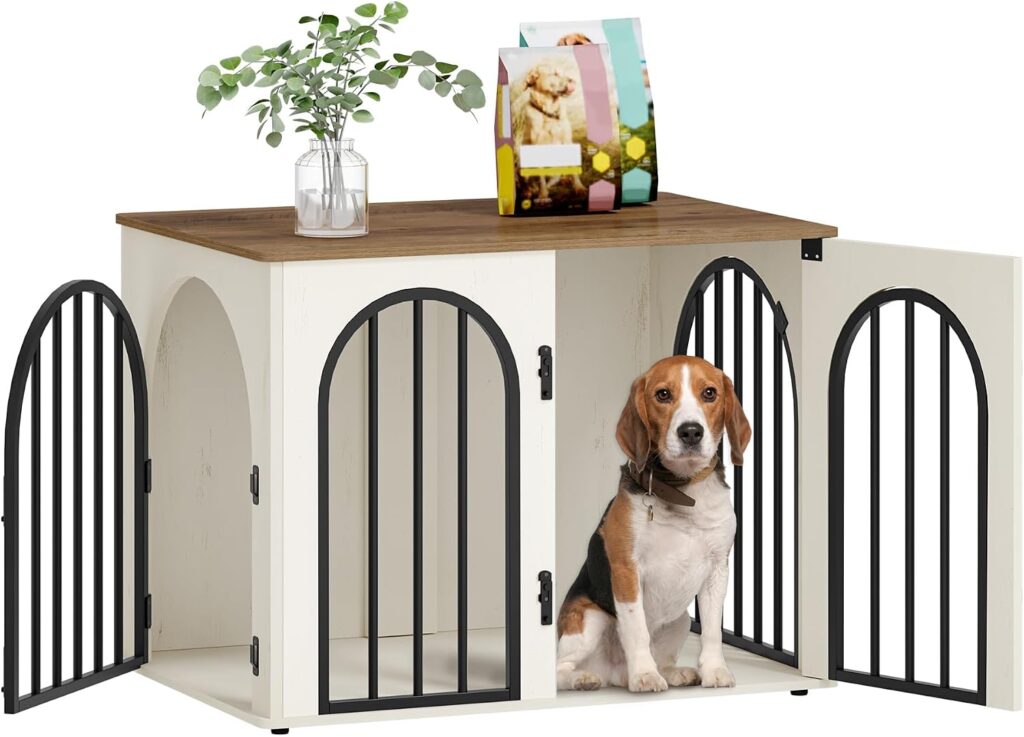
8. Hzaueri 31.5″ Dog Crate Furniture
Best Decorative Indoor Crate
If the appearance of the crate matters almost as much as its function, this furniture-style option offers another alternative to exposed wire crates.
Its enclosed cabinet-style design allows it to work alongside other furniture while still providing ventilation through the barred sides and doors.
The top can also provide additional usable surface space.
Best for: Smaller or medium-sized crate-trained dogs in living rooms or bedrooms.
Why we like it:
- Decorative furniture design
- Useful tabletop
- More discreet than a traditional crate
- Good airflow through the sides
- Designed specifically for indoor living spaces
Keep in mind: As with other furniture crates, this isn’t the best choice for persistent chewers or escape artists.
How to Choose the Right Dog Crate
The most expensive crate isn’t necessarily the best one for your dog.
Start with these factors.
Size
Your dog should have enough room to stand naturally, turn around, lie down, and rest comfortably.
A crate that’s too small will be uncomfortable, while buying an unnecessarily huge crate isn’t always ideal either.
Measure your dog and follow the manufacturer’s sizing chart before ordering.
Material
For most households, a standard wire crate is versatile and affordable.
Plastic crates provide more privacy, soft crates are lightweight and portable, and furniture-style crates work well when appearance matters.
Heavy-duty crates are primarily useful when a standard crate isn’t strong enough for the individual dog.
Your Dog’s Behavior
This matters just as much as size.
A calm, crate-trained dog may do perfectly well in a soft or furniture-style crate.
A dog that scratches, chews, or repeatedly attempts to escape needs a more secure solution—and persistent escape behavior should also prompt you to consider why the dog is distressed rather than simply buying a stronger crate.
Where Should You Put a Dog Crate at Home?
For many dogs, the best location is somewhere quiet but not completely isolated.
A corner of the living room, bedroom, or another area where your dog can rest while still feeling part of the household often works well.
Avoid areas with:
- Direct sunlight for long periods
- Extreme heat or cold
- Constant heavy foot traffic
- Dangerous cords or objects within reach
- Poor ventilation
The goal is to make the crate feel like a comfortable resting place rather than somewhere the dog is sent as punishment.
Should You Put a Bed Inside a Dog Crate?
For many dogs, yes.
A properly sized crate mat or washable bed can make the space more comfortable.
However, puppies and dogs that destroy or eat bedding may initially need a simpler setup until that behavior improves.
Always consider the individual dog rather than assuming every crate needs the same accessories.
How Long Can a Dog Stay in a Crate?
A crate shouldn’t become a place where a dog spends most of the day.
Dogs still need regular bathroom breaks, exercise, interaction, play, and mental stimulation.
Puppies generally require much more frequent breaks than healthy adult dogs.
If your dog regularly spends time alone while you’re working, you may also want to read How Long Can Dogs Stay Home Alone?
Wire vs. Plastic vs. Furniture Dog Crates
For most people, I’d choose based on this:
Wire crate: Best all-around choice for home use
Plastic crate: Best for dogs that prefer more privacy
Soft crate: Best for calm, crate-trained dogs when portability matters
Furniture crate: Best when you don’t want a traditional crate dominating the room
Heavy-duty crate: Best when extra strength is genuinely necessary
There isn’t one style that’s automatically best for every dog.
Final Thoughts
For most households, a simple, properly sized wire crate such as the Amazon Basics Portable Metal Wire Dog Crate or MidWest iCrate is likely all that’s necessary.
But the best choice ultimately depends on your dog’s size, behavior, crate experience, and where you plan to keep it.
If appearance is important, a furniture-style crate can blend much more naturally into your home. For a calm dog and occasional use, a soft crate may be enough. And dogs that require substantially more security may need a heavy-duty model.
Whichever you choose, introduce the crate gradually and make it a comfortable, positive place for your dog to rest.
This article contains affiliate links. As an Amazon Associate, I earn from qualifying purchases at no additional cost to you.
This content is for informational purposes only and is not a substitute for professional veterinary or behavioral advice.