Teaching your dog to come when called is one of the most important skills you can work on.
A reliable recall can make everyday walks easier, give your dog more freedom in safe environments, and, in some situations, even help keep them out of danger.
But there’s one thing many dog owners quickly discover: getting your dog to come when you’re standing in the kitchen holding a treat is very different from getting them to come when they’re outside and something much more interesting has caught their attention.
The good news is that recall can be improved with consistent, positive training.
Here’s how to start.
What Is Recall Training?
Recall simply means teaching your dog to return to you when you call them.
Most people use a cue such as:
- Come
- Here
- Your dog’s name followed by “come”
The exact word isn’t particularly important. What matters is that you use the same cue consistently and teach your dog that coming back to you leads to something positive.
1. Start Somewhere Quiet
Don’t begin recall training in a busy park full of dogs, people, smells, and squirrels.
Start somewhere boring.
Your living room, hallway, or fenced backyard can be ideal.
Stand a short distance from your dog, say their name followed by your recall cue, and encourage them to move toward you.
When they reach you, reward them immediately.
At first, you’re simply building an association:
Coming to you = something good happens.
Once your dog understands the basic idea, you can gradually increase the distance.
2. Use High-Value Rewards
Recall is competing against everything your dog finds interesting.
A piece of ordinary kibble may work perfectly indoors but suddenly become much less exciting when there’s another dog running across the park.
Experiment with rewards your dog really values.
Depending on your dog, that might be:
- Small pieces of a favorite treat
- A favorite toy
- A quick game of tug
- Enthusiastic praise
- Permission to return to exploring
Save especially valuable rewards for difficult recalls.
You want your dog to think that running back to you is worth it.
3. Make Yourself More Interesting
If you call your dog and then stand completely still staring at them, you may not be particularly exciting.
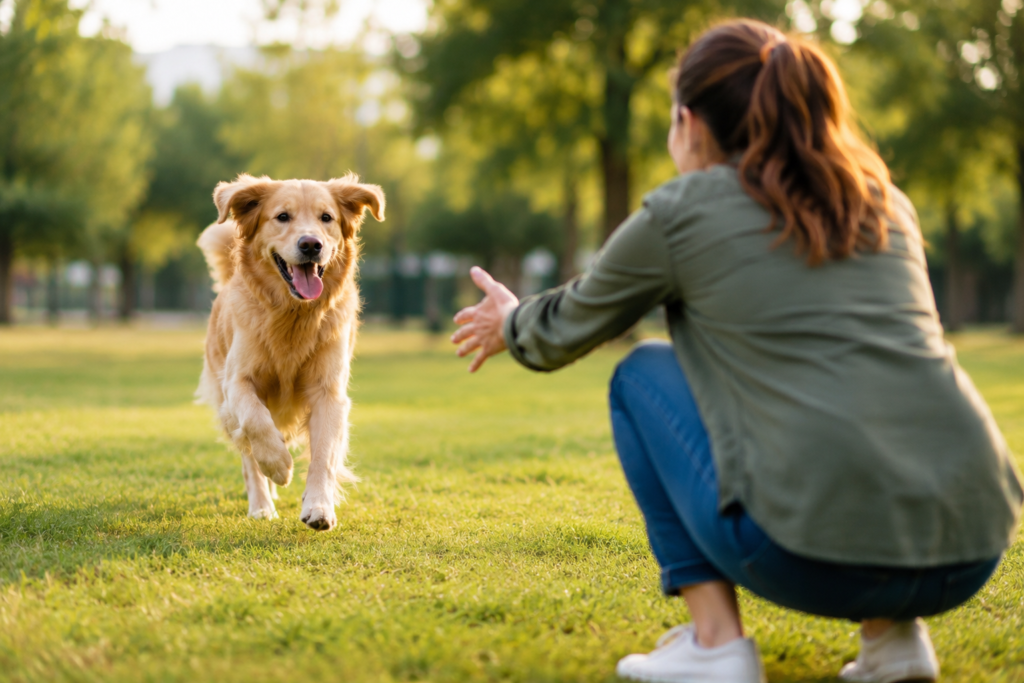
Try moving backward while encouraging your dog toward you.
You can also crouch down, use an upbeat voice, or turn the recall into a short game.
Avoid chasing your dog when they won’t come.
For many dogs, being chased is incredibly fun—and you may accidentally teach them that running away starts a great game.
4. Reward Your Dog Every Time They Come
During the early stages of training, reward successful recalls generously.
This is especially important when your dog comes despite a distraction.
If your dog leaves something interesting and chooses you instead, make that decision worthwhile.
You won’t necessarily need treats forever, but don’t rush to stop rewarding recall.
Even dogs with excellent recall benefit from occasional high-value rewards.
5. Never Punish Your Dog for Coming Back
Imagine calling your dog repeatedly.
They ignore you for two minutes.
Finally, they come.
You’re frustrated, so you scold them.
From your perspective, you’re correcting them for ignoring you.
From your dog’s perspective, they came to you—and something unpleasant happened.
That can make them less likely to return quickly next time.
Even when your dog takes longer than you’d like, reward the fact that they eventually came back.
Then make the next training situation easier.
6. Don’t Use Recall Only to End the Fun
This is an easy mistake to make.
You call your dog when:
the walk is over,
it’s time to leave the dog park,
playtime is finished,
they need a bath,
or you’re about to put them inside.
Eventually, “come” can start predicting the end of everything enjoyable.
Instead, practice calling your dog during fun activities, reward them, and then sometimes release them to continue playing or exploring.
For example:
Come → treat → go play again.
Now returning to you doesn’t always mean the fun is over.
7. Gradually Add Distractions
Once your dog reliably comes indoors, make training slightly harder.
You might progress from:
Living room → backyard → quiet outdoor area → mildly distracting area → more challenging environment.
Don’t jump directly from your kitchen to a crowded dog park.
If your dog suddenly stops responding, the environment may simply be too difficult for their current training level.
Move farther away from the distraction or return to an easier environment.
8. Use a Long Training Lead Outdoors
A long training lead can be extremely useful while you’re building recall outdoors.
It allows your dog more freedom to explore while still giving you physical control if they don’t respond.
Let your dog move away from you, call them once, and reward them enthusiastically when they return.
Avoid repeatedly pulling your dog toward you with the lead. The goal is still for them to choose to return when they hear the cue.
And don’t attach a long line to equipment that isn’t designed to safely handle the pressure it may create.
9. Avoid Repeating the Recall Cue
You’ve probably heard this:
“Come. Come! COME! Come here! COME!”
The problem is that your dog may learn that the first cue doesn’t really matter.
Try saying your recall cue once.
If your dog doesn’t respond, don’t simply repeat it louder and louder.
Instead, reduce the difficulty, move closer, become more interesting, or use your long line to safely manage the situation.
Then practice again under easier conditions.
10. Practice Short Sessions Often
You don’t need a 30-minute recall training session.
A few successful repetitions throughout the day can be more useful than one long session where your dog eventually becomes bored.
Try practicing during normal daily activities.
Call your dog from another room.
Reward them.
Later, call them from across the backyard.
Reward them again.
Small repetitions add up.
Turn Recall Into a Game
Recall training doesn’t have to feel like formal training.
One simple game requires two people.
Stand several meters apart and take turns calling the dog.
Every time the dog reaches the correct person, reward them.
You can gradually increase the distance or move into different rooms.
Another option is hide-and-seek.
Hide somewhere easy and call your dog. When they find you, celebrate and reward them.
Games can help make returning to you genuinely enjoyable.
What If My Dog Ignores Me?
First, don’t assume your dog is being stubborn.
Ask yourself why they didn’t respond.
Was the distraction too difficult?
Was your reward valuable enough?
Have you practiced enough in easier environments?
Did you call them when you had almost no chance of success?
Recall training works best when difficulty increases gradually.
If your dog succeeds nine times out of ten indoors but almost never outdoors, that’s useful information: they need more practice between those two difficulty levels.
Can You Ever Trust a Dog 100% Off-Leash?
No training can guarantee that a dog will respond perfectly in every possible situation.
Dogs aren’t robots.
Wildlife, traffic, fear, excitement, unfamiliar dogs, or an unexpected event can influence behavior.
Follow local leash rules and only allow off-leash freedom in places where it’s legal and reasonably safe.
A strong recall is an important safety skill, but it shouldn’t replace sensible management.
Common Recall Training Mistakes
Several habits can make recall harder than it needs to be:
- Calling repeatedly when your dog is unlikely to respond
- Punishing them when they eventually return
- Practicing only indoors
- Increasing distractions too quickly
- Using low-value rewards in difficult environments
- Calling only when fun is about to end
- Chasing your dog when they run away
- Expecting reliable recall before enough practice
Fixing even one or two of these can make training noticeably easier.
FAQ
How long does it take to teach a dog recall?
There’s no exact timeline. Some dogs understand the basic cue quickly, while reliable recall around distractions can take weeks or months of consistent practice.
What is the best word for dog recall?
“Come” and “here” are common choices, but almost any short, consistent cue can work. Choose one and make sure everyone in the household uses it consistently.
What should I do if my dog won’t come when called?
Reduce the difficulty. Practice closer to your dog or somewhere with fewer distractions and use a reward they value highly. Build reliability gradually before attempting more challenging situations.
Should I let my dog off-leash while teaching recall?
Use a secure fenced area or an appropriate long training lead while recall is still developing. Don’t rely on an unproven recall in an unsafe open environment.
Can an older dog learn recall?
Yes. Recall isn’t only for puppies. Adult and older dogs can learn or improve recall through consistent reward-based training.
Final Thoughts
A reliable recall isn’t created by repeatedly shouting “come.”
It’s built through hundreds of small experiences that teach your dog one important lesson:
Coming back to you is always worth it.
Start somewhere easy, use rewards your dog genuinely values, gradually introduce distractions, and don’t punish your dog when they return.
The goal isn’t perfection overnight.
It’s to make choosing you increasingly rewarding—even when the rest of the world looks much more interesting.
This article is for informational purposes only and is not a substitute for professional veterinary or dog-training advice. If you’re experiencing serious behavioral problems or safety concerns, consult a qualified professional.