Dogs typically sleep 12–14 hours per day, although the exact amount varies by age, breed, activity level, and overall health. Puppies and senior dogs often sleep much longer—sometimes 18–20 hours a day.
If your dog seems to spend half the day curled up on the couch, that doesn’t necessarily mean something is wrong. Dogs naturally sleep more than humans, and their sleep is often spread throughout the day and night. Below, we’ll look at how much sleep puppies, adult dogs, and senior dogs need—and when a change in sleeping habits may be worth paying attention to.
How Many Hours a Day Do Dogs Sleep?
There isn’t one exact number that applies to every dog, but these are useful general guidelines:
- Puppies: around 18–20 hours per day
- Adult dogs: around 12–14 hours per day
- Senior dogs: around 14–18 hours per day
Your dog probably won’t get all of that sleep at once.
Unlike people, dogs tend to sleep in several periods throughout the day and night. They may sleep overnight, take a long afternoon nap, wake up to investigate what’s happening in the kitchen, and then fall asleep again shortly afterward.
Why Do Dogs Sleep So Much?
Dogs naturally have different sleep patterns from humans.
While we usually organize most of our sleep into one long nighttime period, dogs are much more flexible. They’ll often sleep whenever there’s nothing particularly interesting happening.
That’s why a dog may happily snooze while you’re working, wake up instantly when they hear the treat cupboard open, and then go right back to sleep afterward.
Sleep also gives their bodies and brains time to recover from physical activity, learning, play, and everyday stimulation.
If your dog seems sleepy even after getting plenty of rest, you may also want to read our guide on Why Does My Dog Yawn So Much?
How Much Sleep Do Puppies Need?
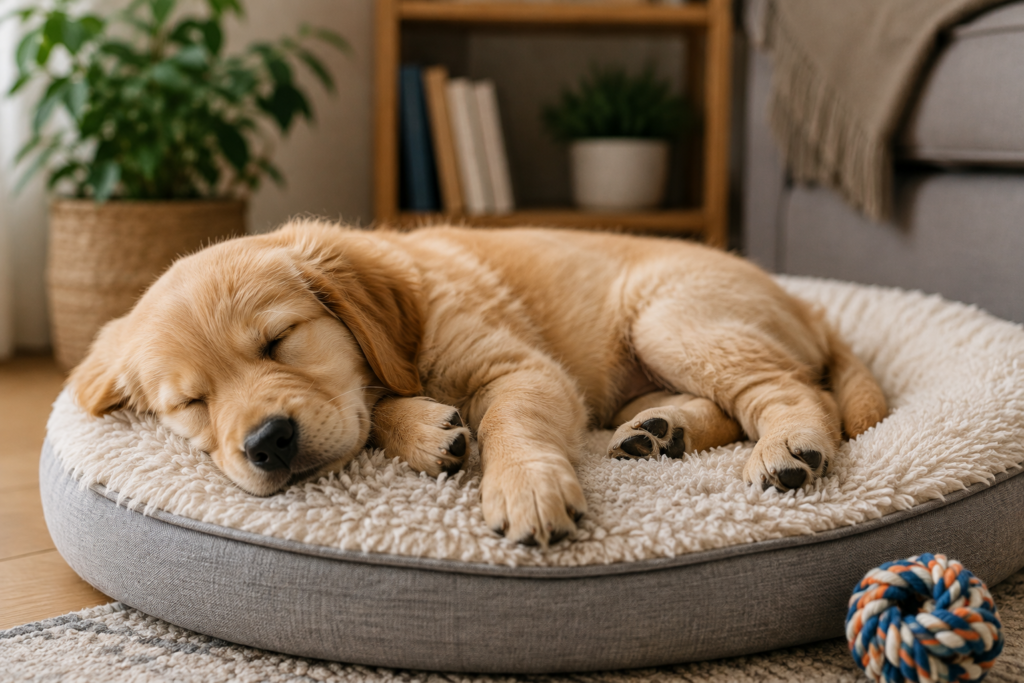
Puppies are the champions of sleep.
It’s normal for a young puppy to sleep 18–20 hours in a 24-hour period.
Growing takes a lot of energy. Puppies are also constantly processing new experiences—new people, smells, sounds, training, environments, and social interactions.
A puppy might spend 20 minutes racing around the house and then suddenly fall asleep as if someone switched them off.
That’s usually nothing to worry about.
In fact, overtired puppies can sometimes become more energetic, bitey, or difficult to settle. Providing a quiet place for regular naps can help.
How Much Sleep Do Adult Dogs Need?
Most healthy adult dogs sleep roughly 12–14 hours each day, including nighttime sleep and daytime naps.
However, there’s plenty of individual variation.
A highly active dog that spends several hours walking, training, playing, or working may need more recovery time.
On the other hand, a dog that spends much of the day at home may sleep simply because there isn’t much else happening.
If your dog sleeps frequently while you’re away, that’s also common. In our guide How Long Can Dogs Stay Home Alone?, we explain how to tell whether your dog is comfortable with alone time or may need more stimulation during the day.
Do Dogs Sleep All Night?
Most adult dogs can sleep through the night, although their sleep pattern isn’t exactly the same as ours. Dogs tend to sleep in shorter cycles and may briefly wake up, change position, check what’s happening around them, and then fall asleep again.
A healthy adult dog may sleep around 8–10 hours at night, with additional naps during the day. Puppies may need nighttime bathroom breaks, while senior dogs may wake more often because they need to go outside or simply because their sleep patterns change with age.
If your dog suddenly starts waking frequently at night when they previously slept through, it’s worth paying attention to other changes in their behavior or health.
Do Senior Dogs Sleep More?
Yes, many senior dogs gradually start sleeping more as they age.
Older dogs often have lower energy levels and may need longer periods to recover after exercise.
You may notice your senior dog:
- Taking more daytime naps
- Going to bed earlier
- Sleeping longer after walks
- Preferring quiet resting areas
- Being less interested in prolonged play
A gradual increase in sleep can be a normal part of aging.
However, a sudden or dramatic change in sleeping habits deserves more attention, particularly if it’s accompanied by changes in appetite, movement, behavior, or bathroom habits.
Do Large Dogs Sleep More Than Small Dogs?
Sometimes.
Large and giant breeds often spend more time sleeping and resting than smaller, energetic breeds. Dogs such as Great Danes, Mastiffs, and Saint Bernards are famous for their impressive ability to nap.
But breed isn’t everything.
Activity level, age, personality, health, and lifestyle can have an even bigger influence on how much an individual dog sleeps.
Does Exercise Affect How Much Dogs Sleep?
Absolutely.
After a long walk, hiking trip, energetic play session, or training class, your dog may sleep more than usual.
That’s generally normal.
Physical activity isn’t the only thing that makes dogs tired, either. Mental stimulation can be surprisingly exhausting.
Sniffing during walks, learning new commands, solving food puzzles, and exploring unfamiliar places all require mental effort.
If you’re wondering how much daily activity your dog might need, see How Often Should You Walk Your Dog?
Do Bored Dogs Sleep More?
Sometimes dogs sleep because they’re tired.
Sometimes they sleep because there’s simply nothing else to do.
If your dog spends most of the day sleeping but suddenly becomes extremely energetic whenever something interesting happens, boredom could be contributing to all those naps.
Other signs may include destructive chewing, attention-seeking, excessive barking, pacing, or constantly bringing you toys.
Our guide Signs Your Dog Is Bored covers the most common clues and ways to add more enrichment to your dog’s routine.
Why Does My Dog Sleep All Day and Stay Awake at Night?
Occasional changes in sleep schedules aren’t necessarily a problem.
Your dog may have slept more during the day because the house was quiet, because they had an unusually active previous day, or simply because their routine changed.
However, regularly being restless at night—especially in an older dog—can sometimes indicate discomfort, anxiety, a need to go outside, or age-related changes.
If the behavior is new or persistent, talk with your veterinarian.
How Can You Help Your Dog Sleep Better?
Most dogs don’t need much help falling asleep, but a comfortable routine can improve the quality of their rest.
Make sure your dog has:
- A comfortable place to sleep
- A quiet resting area
- Regular exercise appropriate for their age and health
- Opportunities for mental stimulation
- A predictable daily routine
- Access to bathroom breaks before bedtime
- A comfortable room temperature
Some dogs prefer sleeping close to their family, while others actively seek out the quietest corner of the house.
Both can be perfectly normal.
When Should You Worry About Your Dog Sleeping Too Much?
The total number of hours isn’t always the most important thing.
What matters more is whether your dog’s sleeping pattern has changed significantly.
Contact your veterinarian if your dog suddenly starts sleeping much more than usual, especially if you also notice:
- Loss of appetite
- Weakness or unusual tiredness
- Difficulty waking
- Reluctance to walk or play
- Vomiting or diarrhea
- Changes in drinking or urination
- Difficulty breathing
- Unusual behavior
You know your dog’s normal routine better than anyone. A noticeable change from that routine can sometimes tell you more than a specific number of sleeping hours.
FAQ
Is it normal for a dog to sleep all day?
Dogs naturally sleep and nap throughout the day, so seeing your dog asleep frequently isn’t necessarily concerning. Most adult dogs accumulate around 12–14 hours of sleep over 24 hours.
Is 16 hours of sleep too much for a dog?
Not necessarily. Puppies, senior dogs, large breeds, and particularly active dogs may sleep 16 hours or more. Consider your dog’s normal habits, age, activity level, and overall behavior.
Should I wake my dog if they sleep too much?
Generally, there’s no reason to wake a healthy dog simply because they’re napping. However, if your dog suddenly becomes unusually sleepy or difficult to wake, contact your veterinarian.
Do dogs sleep through the night?
Many adult dogs can sleep through most of the night, although they may briefly wake, change positions, drink water, or check what’s happening around them.
Final Thoughts
So, how much sleep do dogs need?
For most adult dogs, around 12–14 hours per day is completely normal. Puppies may need as much as 18–20 hours, while senior dogs often sleep more as they get older.
Instead of worrying about an exact number, pay attention to what’s normal for your individual dog.
If they’re eating normally, enjoying walks and play, interacting with you, and waking up alert and interested in what’s happening, those long naps are probably just part of being a dog.
Disclaimer: This article is for informational purposes only and is not a substitute for professional veterinary advice.