If you’ve ever watched your dog sleeping and suddenly noticed their paws twitching, eyes moving beneath their eyelids, or heard a tiny bark or whimper, you’ve probably wondered: do dogs dream?
The answer is very likely yes.
Dogs experience different stages of sleep, including REM sleep, the stage strongly associated with dreaming in humans. During REM sleep, a dog’s brain remains active even though the body is resting.
While we can’t ask dogs what they dreamed about when they wake up, research into canine sleep gives us some fascinating clues about what may be happening inside their heads.
Do Dogs Really Dream?
Evidence strongly suggests that dogs dream.
Like humans, dogs cycle through different stages of sleep. One of those stages is rapid eye movement, better known as REM sleep.
During REM sleep, brain activity increases and the eyes may move rapidly beneath the eyelids. This is also the stage during which vivid dreaming commonly occurs in humans.
Dogs show similar patterns.
You might notice your sleeping dog:
- Twitching their paws
- Moving their legs
- Flicking their ears
- Moving their eyes beneath closed eyelids
- Making quiet whining or barking sounds
- Moving their mouth
- Breathing irregularly for short periods
These behaviors can occur during normal sleep and may accompany dreaming.
What Do Dogs Dream About?
Unfortunately, your dog can’t wake up and tell you.
But researchers generally believe that animal dreams may involve experiences from everyday life.
For a dog, that could potentially include things such as:
- Running
- Playing
- Exploring
- Eating
- Interacting with people
- Playing with other dogs
- Chasing something interesting
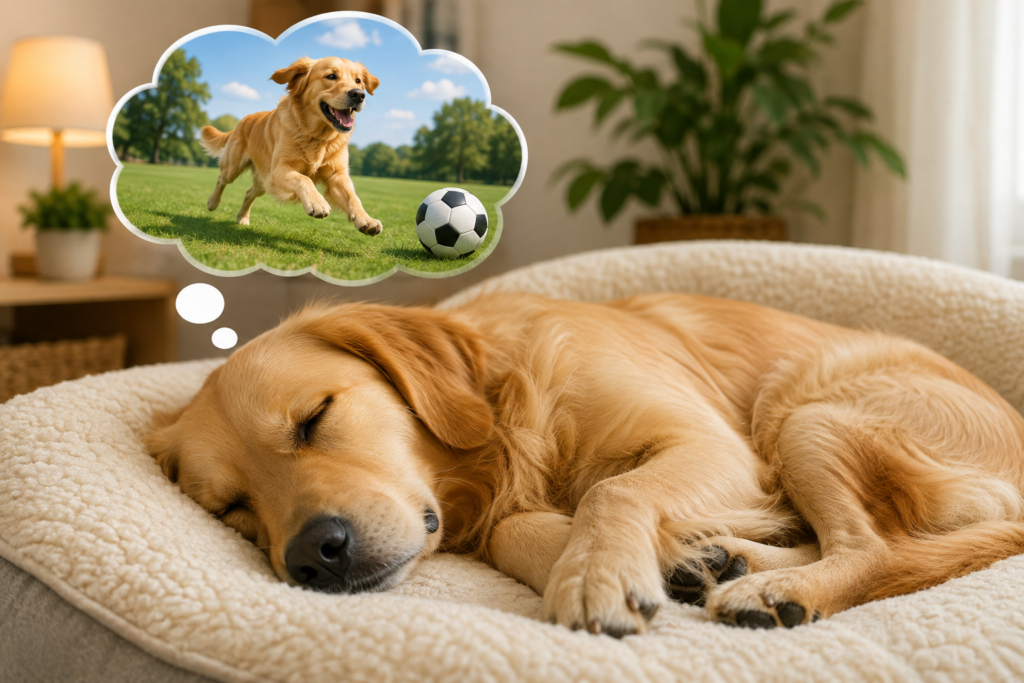
So when your dog’s paws start moving while they’re asleep, it’s tempting to imagine them running through a field or chasing their favorite ball.
We can’t know the exact content of an individual dog’s dreams, though, so claims about precisely what a dog is dreaming should be treated as speculation.
Why Do Dogs Twitch in Their Sleep?
Small movements during sleep are common.
When dogs enter REM sleep, the brain can become highly active while mechanisms in the nervous system normally reduce major muscle movement.
That helps prevent the body from physically acting out everything happening during sleep.
However, the suppression isn’t necessarily complete. Small movements can still occur, which may explain those adorable paw twitches, ear flicks and little facial movements.
Puppies may appear particularly active while sleeping because their nervous systems are still developing.
Why Does My Dog Bark or Whimper While Sleeping?
A sleeping dog may occasionally make surprisingly expressive sounds.
Small barks, whimpers, grunts or other noises can occur during sleep and don’t automatically mean something is wrong.
If your dog is otherwise sleeping comfortably, there’s usually no need to wake them simply because they’re making a little noise.
Sometimes they’ll settle again within seconds.
Should You Wake a Dog That’s Dreaming?
Usually, no.
If your dog is twitching, softly barking or moving their paws while remaining asleep, it’s generally better to let them sleep.
Waking a dog suddenly from deep sleep can startle them.
A startled dog may react before fully realizing what’s happening, particularly if you touch them unexpectedly.
If you genuinely need to wake a sleeping dog, calling their name softly from a short distance is generally preferable to suddenly grabbing or shaking them.
Do Dogs Have Nightmares?
It’s possible.
If dogs can dream about experiences, it’s reasonable that not every dream would necessarily be pleasant.
A dog may sometimes whimper, growl or appear restless while sleeping.
But it’s impossible to know from movement alone exactly what the dog is experiencing.
For that reason, seeing your dog’s paws twitch doesn’t mean they’re having a nightmare.
Most of the time, it’s simply part of normal sleep.
How Much Do Dogs Sleep?
Dogs spend a substantial part of their lives asleep.
The amount varies according to factors such as:
- Age
- Activity level
- Breed and size
- Daily routine
- Environment
- Individual dog
Puppies and senior dogs often sleep more than healthy young adult dogs.
If your dog seems to spend most of the day napping, that doesn’t necessarily mean something is wrong. Learn more about how much sleep dogs need and what can influence their daily sleep schedule.
Do Puppies Dream More Than Adult Dogs?
Puppies certainly spend a lot of time sleeping, and you may notice frequent twitching and movement while they’re asleep.
Their brains are processing enormous amounts of new information every day — new people, smells, sounds, environments and experiences.
However, it’s difficult to know exactly how frequently puppies dream compared with individual adult dogs.
What we can say is that plenty of sleep is extremely important during puppy development.
Do Senior Dogs Dream?
Senior dogs continue to experience sleep cycles and can show the same twitching, paw movements and quiet vocalizations seen in younger dogs.
Older dogs may also spend more time sleeping overall.
But significant changes in an older dog’s sleeping behavior shouldn’t automatically be dismissed as aging.
If your dog suddenly begins sleeping much more or less than usual, seems confused when waking, becomes unusually restless at night, or shows other behavioral changes, discuss it with your veterinarian.
Can Dogs Dream About Their Owners?
This is one of those questions we’d all love to answer with certainty.
Dogs form memories and strong associations with the people and animals in their lives, so it’s certainly possible that familiar individuals appear in their dreams.
But there is currently no way to look at a sleeping dog and determine exactly who or what they’re dreaming about.
So yes, your dog might be dreaming about you — but we can’t prove it.
Does Watching TV Affect a Dog’s Dreams?
We don’t know whether something a dog watches on television later becomes part of a dream.
Dogs can see and react to television, particularly animals, movement and certain sounds.
If you’ve ever noticed your dog staring at another dog on screen, read our guide Can Dogs Watch TV? to learn what dogs actually see when they’re watching television.
When Is Movement During Sleep a Concern?
Occasional twitching and small movements during sleep are generally normal.
However, not every unusual movement that happens while a dog appears to be sleeping is necessarily dreaming.
Contact your veterinarian if you notice episodes that concern you, particularly if they involve violent or prolonged movements, unusual stiffness, loss of bladder or bowel control, difficulty waking, confusion afterward, or other abnormal behavior.
If you’re unsure whether an episode is normal sleep behavior, recording a video can be useful to show your veterinarian.
FAQ
Do dogs dream every night?
Dogs experience REM sleep regularly, but we can’t determine exactly how often an individual dog dreams or remembers those dreams.
Why does my dog run in their sleep?
Small leg and paw movements can happen during REM sleep. It may look as though your dog is running, although we can’t know exactly what they’re dreaming about.
Should I wake my dog if they’re having a nightmare?
Usually it’s better not to suddenly touch or shake a sleeping dog. If you need to wake them, use your voice from a short distance to avoid startling them.
Why does my dog cry in their sleep?
Quiet whining or other vocalizations can occur during normal sleep. Frequent or unusual episodes accompanied by other concerning symptoms should be discussed with a veterinarian.
Can dogs remember their dreams?
We don’t currently know whether dogs remember their dreams after waking.
Final Thoughts
So, do dogs dream?
The evidence strongly suggests that they do.
Dogs experience REM sleep and show many of the same sleep behaviors associated with dreaming in humans, from rapid eye movements to twitching paws and little vocalizations.
What happens inside those dreams remains a mystery.
Maybe your dog is chasing squirrels, exploring their favorite walking trail, playing with another dog — or perhaps dreaming about the person sleeping in the next room.
Whatever is happening, those occasional twitches and tiny sleepy barks are usually just another fascinating part of canine sleep.
Disclaimer: This article is for informational purposes only and is not a substitute for professional veterinary advice. If you’re concerned about unusual movements or changes in your dog’s sleep, consult your veterinarian.