Watching your dog grow older can be bittersweet. They may still follow you from room to room, wait for their favorite treat, and get excited when you reach for the leash — but everyday things that once seemed effortless can slowly become more difficult.
Jumping onto the couch may take a few attempts. Hardwood floors can suddenly feel slippery. Stairs may become intimidating, and getting comfortable at night can take longer than it used to.
The good news is that you don’t need to completely redesign your home to make life easier for an aging dog.
A few thoughtful changes can help your senior dog move around more safely, rest more comfortably, and continue enjoying the routines and places they love.
Here are some of the most useful ways to create a more comfortable, senior-friendly home.
Why Older Dogs May Need Changes Around the Home
Aging affects every dog differently.
Some dogs remain surprisingly active well into their senior years, while others gradually experience stiffness, reduced strength, poorer balance, vision or hearing changes, or difficulty getting up and down.
Arthritis and other mobility problems are also common in older pets. Senior dogs may show discomfort subtly rather than obviously crying or whining. Changes such as hesitating before jumping, moving more slowly, avoiding stairs, struggling to rise or changing normal routines can therefore be worth paying attention to.
The goal isn’t necessarily to stop your dog from doing things.
Instead, try to make those everyday activities easier, safer and less physically demanding.
1. Make Slippery Floors Easier to Walk On
One of the simplest home changes can also make one of the biggest differences.
Hardwood, laminate and tile floors can become difficult for senior dogs to navigate, especially when their legs are weaker or their joints are stiff.
You might notice your dog:
- walking cautiously across the floor
- spreading their legs for balance
- slipping when standing up
- avoiding certain rooms
- hesitating before turning
- struggling around food and water bowls
VCA notes that slippery flooring can make walking, turning and getting up more difficult for dogs with mobility problems. Secure rugs, runners or yoga mats can provide better traction.
You don’t necessarily need to cover the entire house.
Focus first on the routes your dog uses most often, such as:
bed → water bowl → door → favorite resting place.
Place non-slip runners or rugs along these paths and make sure their edges don’t curl upward and create another tripping hazard.
Don’t forget the area around food and water bowls. A dog that has trouble keeping their feet underneath them may find eating on a slippery floor surprisingly difficult.
2. Give Your Senior Dog a Supportive Place to Sleep
Older dogs often spend more time resting, so their sleeping area becomes increasingly important.
A thin blanket on a hard floor may no longer provide enough cushioning for aging joints.
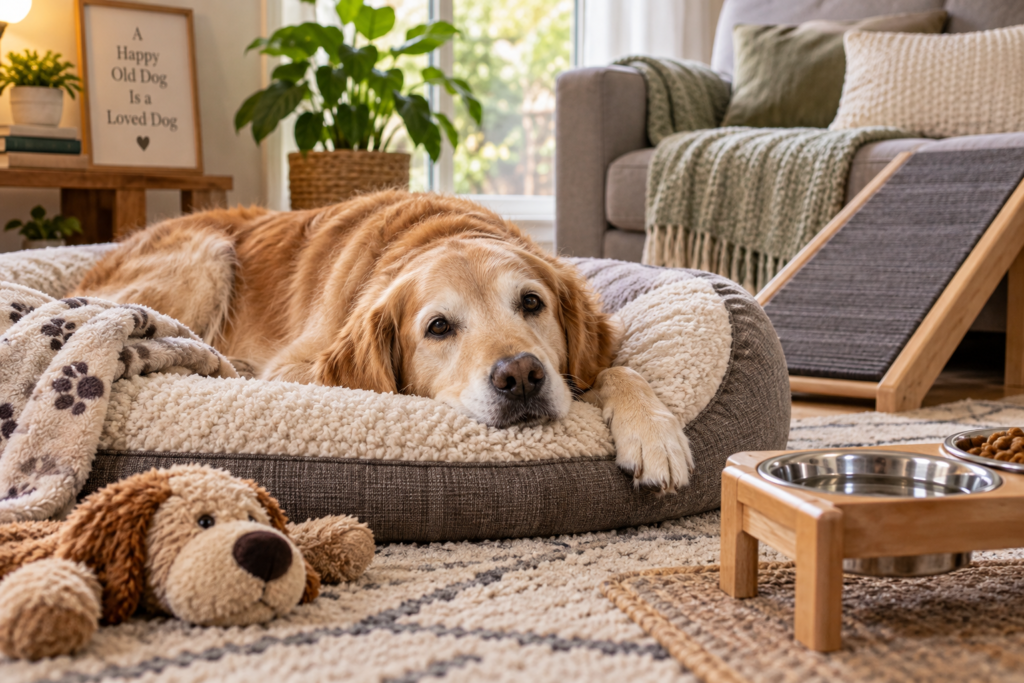
A supportive orthopedic or memory-foam style bed can provide a softer resting surface and reduce pressure on sore areas. Veterinary guidance commonly includes appropriately padded or orthopedic bedding among home modifications for senior pets.
When choosing a bed for an older dog, look for:
- supportive cushioning
- a low entrance
- enough room to stretch out
- a washable cover
- a non-slip bottom
- easy access without climbing or jumping
Where you place the bed matters too.
Keep it somewhere warm, quiet and familiar, but ideally not isolated from the family.
Many senior dogs still want to be close to their people even if they spend more time sleeping.
If your dog regularly moves between different rooms, having more than one comfortable resting spot can prevent them from repeatedly walking long distances just to lie near you.
👉 Related: Best Orthopedic Dog Beds in 2026
3. Reduce Unnecessary Jumping
A dog that has jumped onto the couch or bed thousands of times may continue trying even when it has become uncomfortable.
That’s where ramps or pet steps can help.
They can make it easier to reach:
- beds
- couches
- porches
- decks
- cars
- other favorite elevated places
For dogs that have difficulty with stairs, a ramp with a gentle incline and secure, non-slip surface may be easier to use. Dogs that still have relatively good balance may manage appropriately sized pet steps.
The important thing is stability.
A ramp that slides when your dog steps onto it can quickly make them afraid to use it again.
Choose something sturdy enough for your dog’s weight and introduce it slowly. Treats and praise can help your dog learn that the new route is safe.
👉 Related: Best Dog Ramps for Cars and Beds in 2026
4. Make Stairs Safer — or Avoid Them Altogether
Stairs can become one of the most difficult parts of a home for an older dog.
Going down can be particularly challenging because it requires balance and controlled movement.
If your dog is becoming unstable on stairs, don’t simply assume they will adapt.
Consider adding:
- non-slip stair treads
- carpet runners
- secure gates
- a ramp where practical
- a supportive mobility harness when appropriate
In some cases, the safest solution is simply reducing how often your dog needs to use stairs.
Veterinary guidance recommends restricting unnecessary stair access for some mobility-impaired dogs and using gates where needed to prevent falls.
If possible, arrange your dog’s essential things on one floor:
bed, food, water and access to the yard.
That small change can remove dozens of unnecessary stair trips every week.
5. Make Food and Water Easy to Reach
Eating and drinking shouldn’t require an obstacle course.
Keep bowls somewhere your dog can reach without climbing stairs or walking across particularly slippery flooring.
For some dogs with mobility or neck and back problems, an appropriately positioned raised bowl may also be more comfortable. AAHA and VCA include bowl positioning among environmental changes that can be considered for mobility-compromised pets.
However, there isn’t one ideal bowl height for every dog or every medical condition, so ask your veterinarian whether an elevated feeding station is appropriate for your dog.
Most importantly, make fresh water easy to access.
If your home is large or has multiple floors, consider providing more than one water station so your senior dog doesn’t have to travel far whenever they’re thirsty.
If your senior dog is also a large dog, choosing the right feeding setup can make mealtimes more comfortable. Take a look at our guide to [Best Elevated Slow Feeders for Large Dogs in 2026] for options that combine an elevated design with slower feeding.
6. Keep Nails and Paw Fur Under Control
This is easy to overlook.
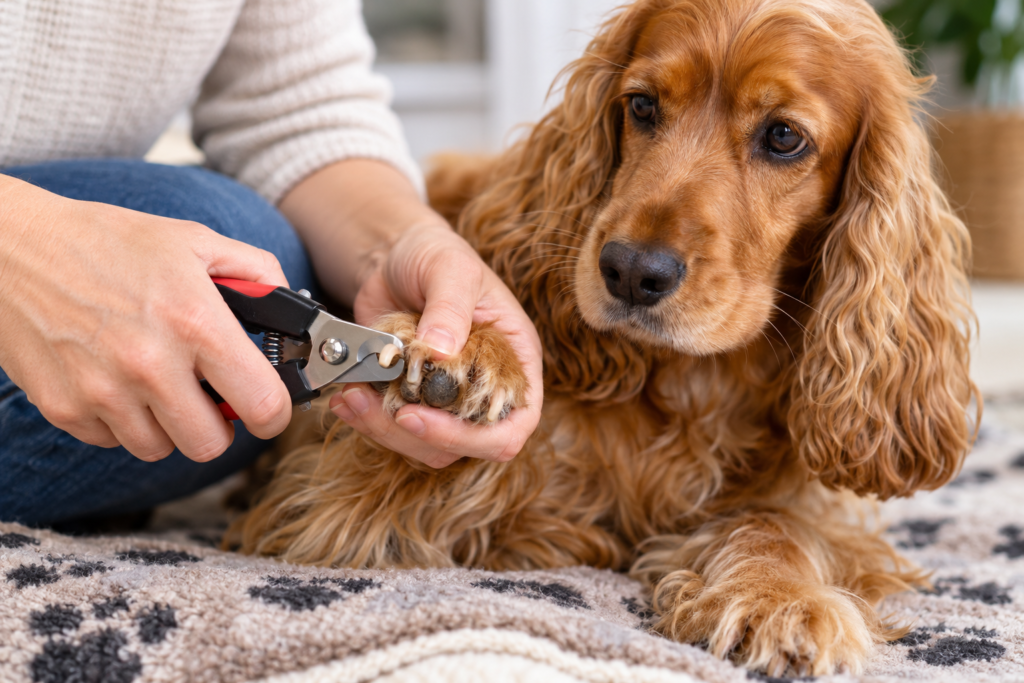
Long nails can affect how securely a dog places their paws on the floor, while excess fur between the paw pads may make slippery surfaces even harder to navigate.
VCA specifically recommends keeping nails appropriately trimmed and excess fur between the toes managed to help improve traction in dogs with mobility problems.
If your dog hates nail trimming, don’t turn it into a wrestling match.
A groomer or veterinary team can help, especially if standing for long periods or having the paws handled is uncomfortable.
👉 Related: How Often Should You Trim Dog Nails?
7. Keep Everyday Essentials Close
Think about how much unnecessary movement your dog’s normal routine requires.
A senior dog shouldn’t need to cross the entire house every time they want water or climb stairs every time they need to go outside.
Try creating a small senior dog comfort zone containing:
a comfortable bed
water
favorite toys
easy access to you
a clear path to the door
This doesn’t mean confining your dog.
It simply means arranging the home so everything important is easier to reach.
8. Keep Your Dog Warm and Comfortable
Some older dogs seem to seek warm sleeping places more often than they did when they were younger.
Keep their resting area away from cold drafts and damp spaces and provide comfortable bedding appropriate for the temperature.
VCA recommends keeping dogs with osteoarthritis warm and dry because cold and damp conditions may contribute to stiffness and discomfort.
Just be careful with heating products.
Anything electrically heated should be specifically designed for pets and used according to its safety instructions, particularly if your dog has difficulty moving away from the heat.
Sometimes the simplest solution — a well-padded bed in a warm part of the house — is enough.
9. Make Getting Outside Easier
Bathroom trips may become more urgent or physically demanding as dogs age.
If possible, give your senior dog a short, obstacle-free route from their resting area to the yard.
For dogs that must navigate steps to get outside, a secure ramp may help.
Outdoor surfaces matter too.
Wet decking, ice, smooth tiles and muddy ground can all increase the risk of slipping.
And don’t rush your dog.
A bathroom trip that once took two minutes may take five now.
That’s okay.
10. Adjust Walks Instead of Automatically Eliminating Them
Slowing down doesn’t necessarily mean your dog should stop moving.
Appropriate regular activity can help maintain muscle strength, mobility and mental engagement in senior dogs. AAHA recommends adjusting exercise to the individual dog’s mobility and energy rather than assuming older pets should simply become inactive.
For many senior dogs, that may mean replacing one demanding walk with shorter, gentler outings.
Let your dog sniff.
Take breaks.
Avoid forcing them to maintain the pace they had several years ago.
The right amount and type of exercise depends on your dog’s health, so dogs with arthritis, heart disease or significant mobility problems should have an activity plan discussed with their veterinarian.
11. Help Your Dog Without Taking Away Their Independence
It can be tempting to immediately carry an older dog everywhere.
Sometimes assistance is necessary, but whenever possible, a safe environment that allows your dog to continue doing manageable activities independently can be valuable.
Instead of lifting them onto the couch every time, a ramp may allow them to choose when they want to join you.
Instead of carrying them across every slippery floor, a runner may allow them to walk confidently.
The goal is not simply convenience.
It’s giving your dog safe choices.
12. Consider a Support Harness for Difficult Moments
Some dogs eventually need a little help standing up, getting into a vehicle or navigating unavoidable steps.
A properly fitted mobility or lifting harness can give you a safer way to provide support than pulling on a collar or trying to lift a large dog awkwardly.
AAHA includes fitted, padded harnesses among the tools that can help mobility-compromised senior pets.
For dogs with significant weakness or neurological problems, ask a veterinarian or canine rehabilitation professional which type of support is appropriate.
13. Don’t Forget Mental Comfort
Comfort isn’t only physical.
Older dogs still need interesting things to smell, explore and interact with.
If long walks are becoming difficult, enrichment can happen at home through:
- gentle play
- sniffing games
- food puzzles
- easy training exercises
- treat searches
- time outdoors simply watching and smelling what’s happening
Keep activities appropriate for your dog’s physical abilities.
A senior dog doesn’t need an exhausting adventure every day to have an interesting life.
Sometimes ten minutes sniffing around the yard is the highlight of their afternoon.
14. Keep the Layout of Your Home Predictable
This becomes especially important if your dog is also experiencing changes in vision or cognition.
Try not to constantly move beds, bowls and furniture.
Keep walking routes open and remove clutter from areas your dog regularly uses.
Senior dogs may experience changes in vision, hearing and cognition, and AAHA recommends considering these changes when modifying the home environment.
A familiar, predictable home can be much easier to navigate.
15. Watch for Small Signs That Your Dog Is Struggling
One of the most important things you can do is simply observe.
Mobility problems don’t always begin with obvious limping.
Watch for changes such as:
- hesitating before stairs
- refusing to jump into the car
- repeatedly changing sleeping positions
- difficulty standing after sleeping
- walking more slowly
- slipping more frequently
- avoiding certain floors
- becoming reluctant to go for walks
- lagging behind
- licking or chewing around joints
- suddenly avoiding activities they previously enjoyed
Behavioral changes can sometimes be signs of pain rather than simply “getting old.”
If something changes noticeably, mention it to your veterinarian.
When Should You Talk to Your Veterinarian?
Home modifications can make everyday life easier, but they shouldn’t replace veterinary care.
Contact your veterinarian if your dog develops new or worsening mobility problems, including persistent limping, difficulty standing, repeated falls, reluctance to move, obvious pain or a sudden change in normal behavior.
Mobility problems can have many causes, and arthritis isn’t the only possibility.
A veterinarian can determine what is causing the problem and discuss appropriate pain management, weight management, rehabilitation, medication or other treatment when needed. AAHA’s senior-care guidance emphasizes individualized and often multimodal management of chronic pain and mobility problems.
Simple Senior Dog Home Checklist
Walk through your home and ask:
- ✓ Can my dog walk without slipping?
- ✓ Can they reach water easily?
- ✓ Can they get outside without difficult stairs?
- ✓ Do they have a supportive place to sleep?
- ✓ Are their nails an appropriate length?
- ✓ Can they reach their favorite places without jumping?
- ✓ Are stairs secured if they’re unsafe?
- ✓ Are everyday walking paths free from clutter?
- ✓ Do they still get safe physical activity?
- ✓ Do they have opportunities for mental stimulation?
- ✓ Have I noticed any new signs of pain or difficulty moving?
You don’t have to change everything at once.
Start with whatever seems hardest for your dog today.
Frequently Asked Questions
How can I make my old dog more comfortable at home?
Start with the basics: provide supportive bedding, improve traction on slippery floors, make food and water easy to reach, reduce unnecessary jumping and stairs, and keep frequently used areas accessible. If your dog is showing signs of pain or declining mobility, talk with your veterinarian.
Are orthopedic beds good for senior dogs?
A well-padded, supportive bed can make resting more comfortable for an older dog, particularly one that is stiff or has sore joints. Orthopedic or memory-foam beds are commonly recommended as part of environmental modifications for senior dogs with mobility problems.
Should senior dogs use ramps or stairs?
It depends on the dog. Dogs with relatively good balance may manage pet steps, while dogs that struggle with stairs may find a stable ramp with a gentle incline easier. Your dog’s size, strength, balance and medical condition should guide the choice.
Is it normal for an old dog to have trouble getting up?
Older dogs may become slower, but difficulty rising can also be associated with pain, arthritis or other health problems. Don’t automatically assume a significant mobility change is simply normal aging. Discuss new or worsening difficulties with your veterinarian.
How can I stop my senior dog from slipping on hardwood floors?
Non-slip rugs, carpet runners or yoga mats can create secure walking paths across slippery floors. Keeping nails appropriately trimmed and managing excess fur around the paw pads may also improve traction.
Should an old dog still go for walks?
Many senior dogs benefit from appropriate regular movement, but the intensity and duration may need to change. Shorter, slower walks with plenty of sniffing and rest breaks may suit an older dog better than strenuous exercise. Ask your veterinarian about appropriate activity if your dog has a medical or mobility condition.
Final Thoughts
Growing older doesn’t mean your dog has to stop enjoying the home and routines they’ve loved for years.
Sometimes the biggest improvements come from surprisingly small changes: a runner across a slippery hallway, a supportive bed beside the couch, a ramp instead of a jump, or simply moving the water bowl a little closer.
Pay attention to the things your dog is beginning to find difficult and adjust the environment around them.
The goal isn’t to make your senior dog’s world smaller.
It’s to make that world easier to navigate, safer and more comfortable for as long as possible.
And if your dog is beginning to struggle with mobility, there are several practical products that may make everyday life easier.
👉 Next: Best Gifts for Senior Dogs With Mobility Problems in 2026
👉 You may also like: Best Gifts for Senior Dogs in 2026
👉 You may also like: Best Orthopedic Dog Beds in 2026
👉 You may also like: Best Dog Ramps for Cars and Beds in 2026
Disclaimer: This article is for general informational purposes only and is not a substitute for professional veterinary advice, diagnosis, or treatment. If your dog is showing signs of pain, weakness, sudden mobility changes, or other concerning symptoms, contact your veterinarian.