Finding clumps of hair around your home is usually nothing to worry about. Most dogs naturally shed throughout the year, with heavier shedding during seasonal changes.
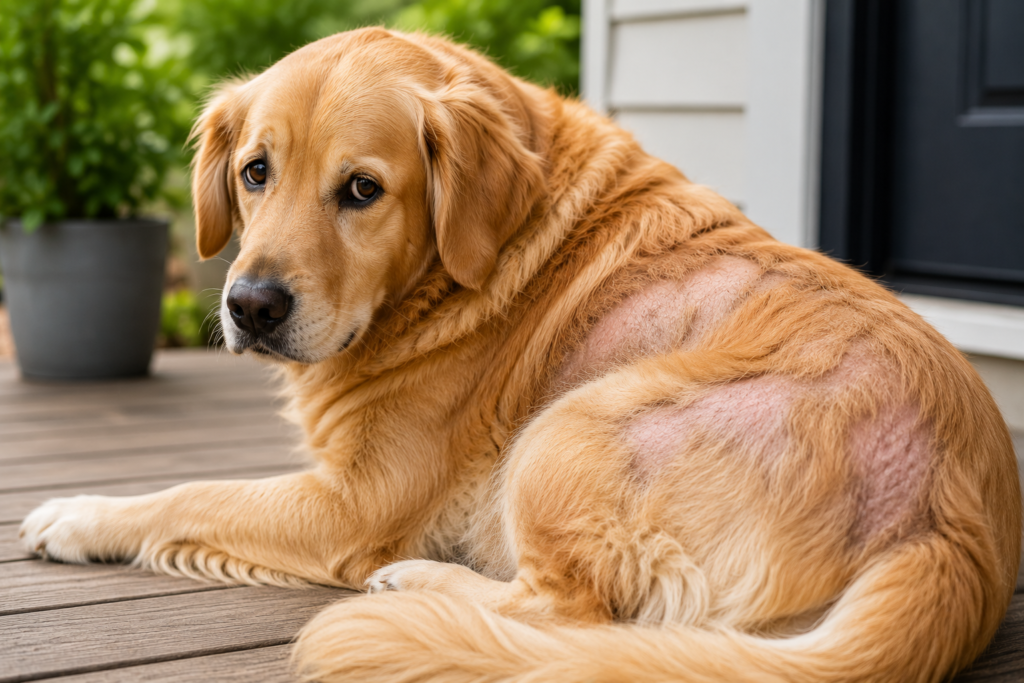
However, if your dog develops bald patches, thinning fur, or noticeable hair loss in certain areas, there may be an underlying health issue that needs attention.
Let’s look at the most common reasons dogs lose hair.
Normal Shedding vs. Hair Loss
It’s important to know the difference.
Normal shedding:
- hair falls out evenly
- new hair grows back
- no bald spots
- healthy-looking skin
Hair loss (alopecia):
- bald patches
- thinning coat
- irritated skin
- excessive scratching
- hair that doesn’t grow back
If your dog’s coat suddenly changes, it’s worth investigating the cause.
If you’re simply noticing more loose hair around the house, read Why Does My Dog Shed So Much?
Allergies
Allergies are one of the leading causes of hair loss in dogs.
Common triggers include:
- pollen
- dust mites
- mold
- certain foods
- flea bites
Dogs with allergies often scratch, chew, or lick themselves excessively, causing hair to fall out over time.
Allergies often cause persistent scratching as well. Learn more in Why Is My Dog Itching So Much?
Fleas and Other Parasites
Even a few flea bites can make some dogs extremely itchy.
Other parasites, including mites, can also lead to:
- bald patches
- red skin
- scabs
- excessive scratching
Regular parasite prevention is one of the easiest ways to protect your dog’s skin.
Skin Infections
Bacterial and fungal infections may damage hair follicles and cause patches of missing fur.
Signs include:
- redness
- flaky skin
- unpleasant odor
- crusty areas
- itching
Veterinary treatment is often needed to clear the infection.
Hormonal Conditions
Certain medical conditions can affect hair growth.
Examples include:
- hypothyroidism
- Cushing’s disease
- hormone imbalances
Hair loss caused by hormonal problems is often symmetrical and may not be very itchy.
Stress and Anxiety
Just like people, dogs can lose hair during periods of stress.
Moving house, changes in routine, or separation anxiety may contribute to excessive licking and hair loss.
Poor Nutrition
Healthy skin and a shiny coat depend on a balanced diet.
Dogs that don’t receive enough essential nutrients may develop:
- dull fur
- dry skin
- brittle hair
- increased shedding
Always feed a complete, high-quality diet appropriate for your dog’s age and size.
If your dog has also stopped eating normally, read Why Does My Dog Refuse to Eat? (ovaj ćemo napisati kasnije)
When Should You Call Your Vet?
Contact your veterinarian if your dog:
- develops bald patches
- scratches constantly
- has sores or scabs
- has a bad smell from the skin
- loses hair suddenly
- seems uncomfortable
Early diagnosis often makes treatment much easier.
Can Hair Loss Be Prevented?
You can’t prevent every cause of hair loss, but you can reduce the risk by:
- feeding a balanced diet
- using year-round flea prevention
- brushing your dog regularly
- bathing only when needed
- checking your dog’s skin during grooming
- scheduling regular veterinary checkups
Final Thoughts
While seasonal shedding is completely normal, bald patches or excessive hair loss are not. Allergies, parasites, infections, hormonal disorders, and poor nutrition are among the most common causes.
If your dog’s hair loss is persistent or accompanied by itching, redness, or sores, a veterinary examination is the best way to identify the underlying cause and begin appropriate treatment.
Disclaimer: This article is intended for informational purposes only and is not a substitute for professional veterinary advice. If your dog is showing persistent or severe symptoms, consult your veterinarian for proper diagnosis and treatment.