
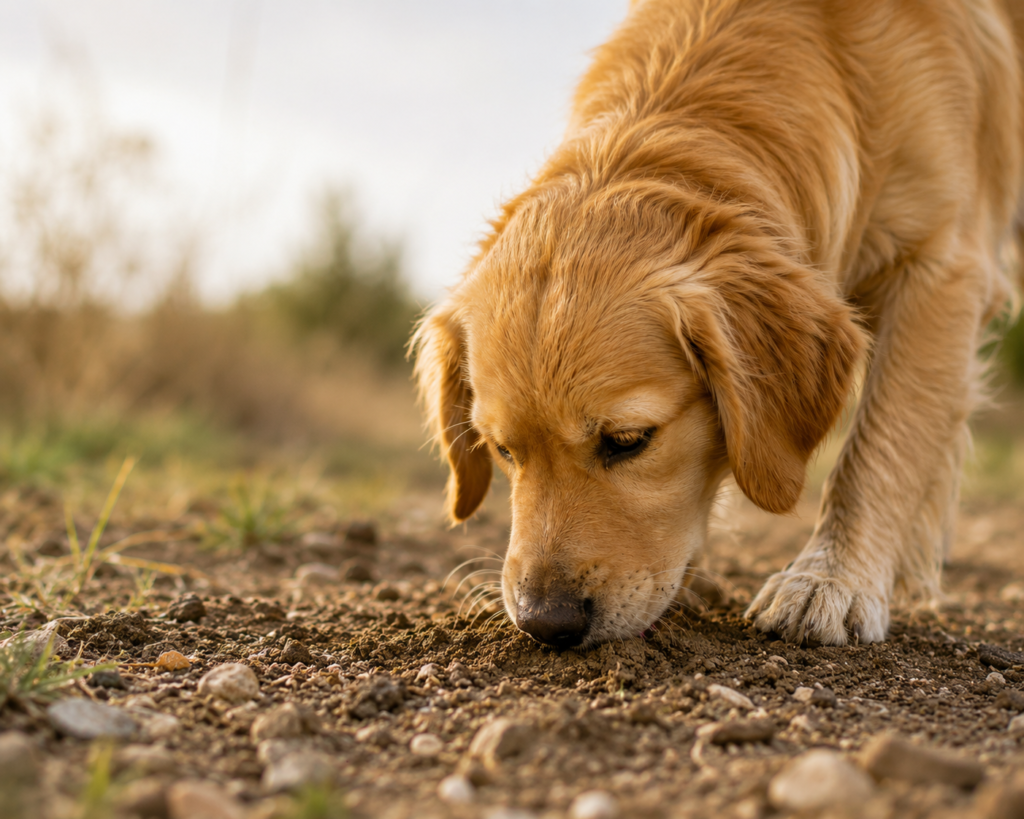
Most dogs love exploring the world with their noses, but some take it a step further by eating dirt. While it might seem strange—or even a little alarming—this behavior is more common than many dog owners realize.
In some cases, eating dirt is simply curiosity. In others, it may point to boredom, nutritional deficiencies, or an underlying health issue.
Here’s what could be causing your dog to snack on soil.
1. Curiosity
Puppies are especially curious about everything around them.
As they explore the world, they often investigate different textures, smells, and tastes—including dirt.
Most puppies grow out of this habit as they mature.
2. Boredom
A dog with too little mental or physical stimulation may look for ways to entertain themselves.
Digging, chewing, and even eating dirt can become habits when dogs don’t have enough enrichment.
Regular exercise and interactive toys can often reduce boredom-related behaviors. If your dog seems restless throughout the day, read our guide on Signs Your Dog Is Bored.
3. They’re Attracted to a Smell
Soil can contain interesting scents from insects, animals, fertilizer, or decomposing plants.
Your dog may not actually be interested in the dirt itself—they may simply be investigating something hidden beneath the surface.
4. Nutritional Deficiencies
Although less common with complete commercial diets, some experts believe dogs may occasionally eat dirt if they’re lacking certain minerals or nutrients.
If the behavior is frequent, it’s worth discussing your dog’s diet with your veterinarian.
5. Upset Stomach
Some dogs eat grass or dirt when they have mild digestive discomfort.
Although the exact reason isn’t fully understood, many owners notice this behavior before vomiting or during episodes of stomach upset.
Some dogs may also eat unusual things, including stool, when dealing with digestive or behavioral issues. Learn more in Why Does My Dog Eat Poop?
6. An Underlying Medical Condition
Occasionally, eating dirt may be linked to medical issues such as:
- anemia
- digestive disorders
- ntestinal parasites
- nutritional absorption problems
If your dog suddenly begins eating dirt frequently, especially alongside other symptoms, a veterinary examination is recommended.
When Should You Be Concerned?
Occasional curiosity usually isn’t a problem.
However, contact your veterinarian if your dog:
- eats dirt every day
- vomits after eating soil
- loses weight
- seems unusually tired
- has diarrhea or other digestive problems
Eating dirt may also expose dogs to pesticides, fertilizers, or parasites, so it’s important not to ignore persistent behavior.
How to Stop Your Dog From Eating Dirt
You can often reduce the behavior by:
- providing more daily exercise
- offering puzzle toys and enrichment
- supervising your dog in the yard
- rewarding them for ignoring dirt
- feeding a balanced diet
- scheduling a veterinary visit if the behavior continues
Consistency is usually the key to breaking the habit.
Final Thoughts
Most dogs eat dirt at least once out of curiosity, and it doesn’t necessarily mean something is wrong.
However, if the behavior becomes frequent or is accompanied by other symptoms, it’s worth investigating the underlying cause. Paying attention early can help prevent bigger health problems later on.