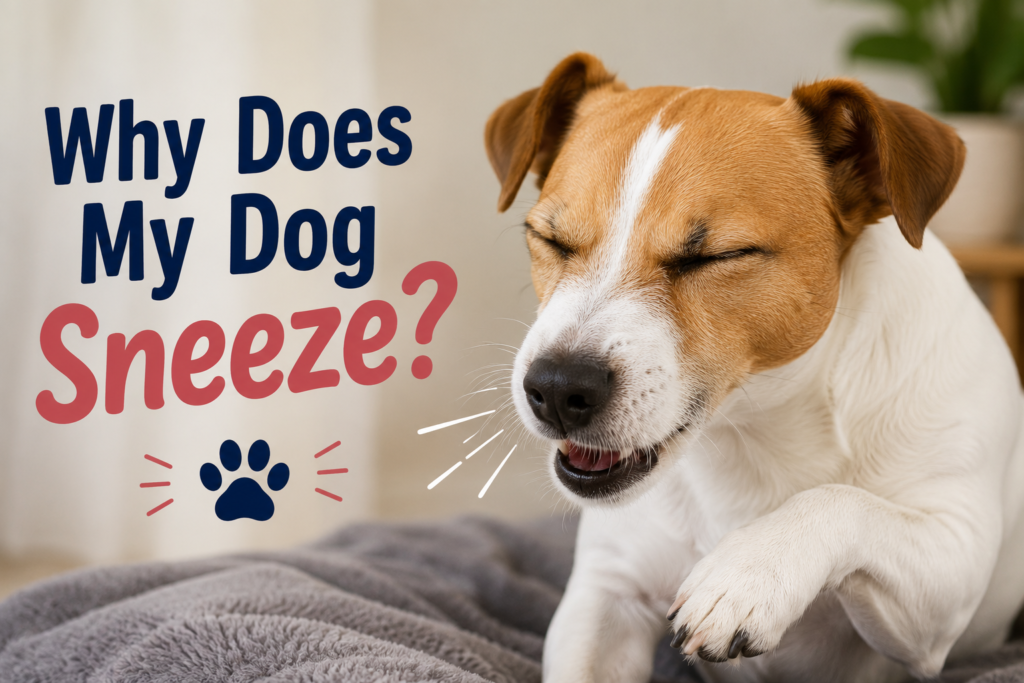
Why does my dog sneeze? If you’ve noticed your dog sneezing occasionally or suddenly sneezing more than usual, there are several possible reasons.
But if your dog suddenly starts sneezing repeatedly, develops nasal discharge, or shows other symptoms, there may be another reason behind it.
So, why does my dog sneeze? Here are some of the most common explanations and signs that it may be time to contact your veterinarian.
1. Normal Everyday Sneezing
An occasional sneeze is completely normal for most dogs. Sneezing is one of the body’s natural ways of clearing irritants from the nasal passages.
Common triggers can include:
- Dust
- Pollen
- Grass
- Dirt
- Perfume
- Household cleaning products
- Other airborne particles
If your dog sneezes once or twice and then goes back to eating, playing, and behaving normally, there is usually little reason for concern.
2. Excitement or Play Sneezing
Some dogs sneeze when they are excited or playing.
You may notice your dog sneezing during a game of tug-of-war, while playing with another dog, or when you arrive home. These short sneezes are often called play sneezes.
Dogs may use them as part of their body language during playful interactions. If the sneezing only happens during excitement and your dog otherwise seems healthy, it is generally not a problem.
Dogs communicate in many interesting ways. You may also enjoy reading Why Does My Dog Snore? Common Reasons Explained.
3. Allergies and Environmental Irritants
Environmental allergies and irritants can sometimes make dogs sneeze more frequently.
Possible triggers include:
- Tree, grass, or weed pollen
- Mold
- Dust mites
- Smoke
- Strong fragrances
- Cleaning sprays
Dogs with environmental allergies may also have itchy skin, lick or chew their paws, rub their face, or develop watery eyes.
Frequent sneezing combined with other allergy symptoms is worth discussing with your veterinarian, especially if it continues or becomes worse during certain seasons.
4. Something May Be Stuck in Your Dog’s Nose
Dogs investigate the world with their noses, so small objects can occasionally become lodged inside a nostril.
Grass seeds, plant material, dirt, or other debris may irritate the nasal passages and cause sudden, repeated sneezing.
Other signs can include:
- Pawing at the nose or face
- Repeated or violent sneezing
- Nasal discharge
- Discharge from only one nostril
- Nosebleeds
- Sudden discomfort
Do not try to reach deep inside your dog’s nose to remove an object yourself. A veterinarian can examine the nasal passages and safely remove foreign material if necessary.
5. Respiratory Infections
Sneezing can sometimes occur with an upper respiratory infection.
Depending on the cause, your dog may also develop:
- Runny nose
- Coughing
- Watery eyes
- Reduced appetite
- Fever
- Low energy
If sneezing is accompanied by coughing or your dog appears unwell, contact your veterinarian.
If coughing is the main symptom, read Why Does My Dog Cough? Common Reasons Explained for more information about possible causes.
6. Dental Problems Can Sometimes Cause Sneezing
It may seem surprising, but problems with a dog’s teeth can sometimes affect the nasal area.
The roots of some upper teeth are located close to the nasal passages. A severe dental infection or abscess can therefore sometimes contribute to nasal discharge or sneezing.
Other signs of dental problems can include bad breath, difficulty chewing, swollen gums, drooling, or reluctance to eat.
Regular dental care and veterinary dental examinations can help identify problems before they become more serious.
7. What Is Reverse Sneezing?
Reverse sneezing often worries dog owners because it can look and sound dramatic.
Instead of forcefully pushing air out through the nose, a dog experiencing a reverse sneeze rapidly pulls air inward through the nose. The dog may stand still, extend the neck, and make repeated snorting or honking sounds.
An episode often lasts only a few seconds to a minute and then stops.
Occasional reverse sneezing can occur in otherwise healthy dogs and may be triggered by irritation, excitement, eating or drinking quickly, or pressure around the throat.
However, frequent episodes, breathing difficulty, collapse, or other unusual symptoms should be evaluated by a veterinarian.
When Should You Worry About Dog Sneezing?
An occasional sneeze usually does not require treatment. The situation is different when sneezing becomes frequent, severe, or appears together with other symptoms.
Contact your veterinarian if your dog:
- Sneezes repeatedly or excessively
- Has bloody nasal discharge
- Has thick, yellow, or green nasal discharge
- Has discharge mainly from one nostril
- Has swelling around the nose or face
- Has trouble breathing
- Stops eating or drinking
- Becomes unusually tired
- Frequently paws at the nose
- Develops coughing, fever, or other signs of illness
Sudden difficulty breathing should be treated as an emergency.
How Can You Help a Sneezing Dog?
If your dog occasionally sneezes but otherwise appears healthy, reducing possible environmental irritants may help.
You can:
- Keep your home as free from dust as reasonably possible
- Avoid cigarette smoke around your dog
- Avoid spraying strong perfumes or aerosols near them
- Use pet-safe household cleaning products
- Keep bedding clean
- Pay attention to when and where the sneezing occurs
Tracking when sneezing happens can also help identify possible triggers.
Never give your dog human allergy, cold, or decongestant medication unless your veterinarian specifically tells you to do so.
If your dog is also breathing faster or panting more than usual, see Why Is My Dog Panting? Common Causes Explained.
Frequently Asked Questions
Is it normal for dogs to sneeze?
Yes. Occasional sneezing is normal and often happens because dust, pollen, grass, or another small particle irritates the dog’s nose.
Why does my dog sneeze when playing?
Some dogs sneeze when they are excited or playing with people or other dogs. This is commonly called play sneezing and is usually harmless when the dog is otherwise healthy.
Why is my dog suddenly sneezing a lot?
Sudden repeated sneezing may be caused by an irritant, allergies, an infection, or something lodged in the nose. If it continues or is accompanied by discharge, bleeding, breathing problems, or other symptoms, contact your veterinarian.
Why does my dog keep sneezing but seem fine?
Occasional sneezing without other symptoms may simply be caused by environmental irritation. However, frequent or persistent sneezing should still be discussed with your veterinarian.
Is reverse sneezing dangerous?
Occasional brief episodes of reverse sneezing are often harmless. Frequent episodes or episodes accompanied by breathing difficulty, weakness, collapse, or other unusual symptoms should be evaluated by a veterinarian.
Can allergies make dogs sneeze?
Yes, environmental allergens such as pollen, dust, and mold can contribute to sneezing in some dogs. Allergic dogs may also experience itchy skin, paw licking, face rubbing, or watery eyes.
Final Thoughts
Most dogs sneeze occasionally, and a few sneezes usually aren’t a reason to worry. Often, something as simple as dust, pollen, excitement, or a temporary nasal irritation is responsible.
What matters most is how often your dog is sneezing and whether anything else has changed. Persistent sneezing, nasal discharge, bleeding, difficulty breathing, or changes in appetite and energy deserve veterinary attention.
Knowing what is normal for your dog makes it easier to recognize when a simple sneeze may be telling you something more.
Disclaimer: This article is for general informational purposes only and is not a substitute for professional veterinary advice. If your dog develops persistent sneezing, nasal bleeding or discharge, difficulty breathing, or other unusual symptoms, contact your veterinarian.