Your dog uses the same food and water bowls every single day, but how often do you actually wash them?
It’s easy to refill a water bowl or pour another serving of kibble into a bowl that looks clean. The problem is that a dog bowl doesn’t have to look dirty to contain bacteria, saliva, food residue, or biofilm.
As a general rule, dog food bowls should be washed after every meal, while water bowls should ideally be washed with soap and fresh water every day.
Here’s why regular cleaning matters—and the easiest way to keep your dog’s bowls clean.
How Often Should You Wash Your Dog’s Food Bowl?
Ideally, you should wash your dog’s food bowl after every meal, especially if you feed wet, fresh, homemade, or raw food.
These foods can leave moisture and residue behind, creating an environment where microorganisms can multiply.
Dry kibble leaves less obvious residue, but your dog’s saliva still enters the bowl every time they eat.
If washing immediately after every dry-food meal isn’t practical, make sure the bowl is thoroughly cleaned at least once a day rather than continually adding fresh kibble to an unwashed bowl.
Think about it the same way you would your own dinner plate—you probably wouldn’t use it for several meals without washing it.
How Often Should You Wash Your Dog’s Water Bowl?
Your dog’s water bowl should generally be washed every day.
Simply dumping out old water and refilling the bowl isn’t the same as washing it.
Over time, you may notice a slippery coating developing inside the bowl. This is often called biofilm, a layer containing microorganisms and organic material that can develop on wet surfaces.
To help prevent buildup:
- Empty the remaining water.
- Wash the bowl with warm water and dish soap.
- Rinse it thoroughly.
- Refill it with fresh water.
If the bowl becomes dirty during the day—perhaps from food, dirt, grass, or lots of drool—wash it sooner.
Why Do Dog Bowls Get Slimy?
Have you ever touched the inside of your dog’s water bowl and noticed that it feels slippery even though the water looks clean?
That slimy layer can be biofilm.
Every time your dog drinks, saliva enters the water. Food particles and environmental debris can also end up in the bowl.
Regular washing helps remove this buildup before it becomes more established.
If your dog suddenly seems to be emptying the water bowl much faster than usual, don’t assume the solution is simply a larger bowl. Persistent increased thirst can sometimes indicate a health issue. Read Why Is My Dog Drinking So Much Water? for more information.
What’s the Best Way to Wash Dog Bowls?
For everyday cleaning, you don’t need anything complicated.
Warm water, dish soap, and thorough rinsing are generally enough.
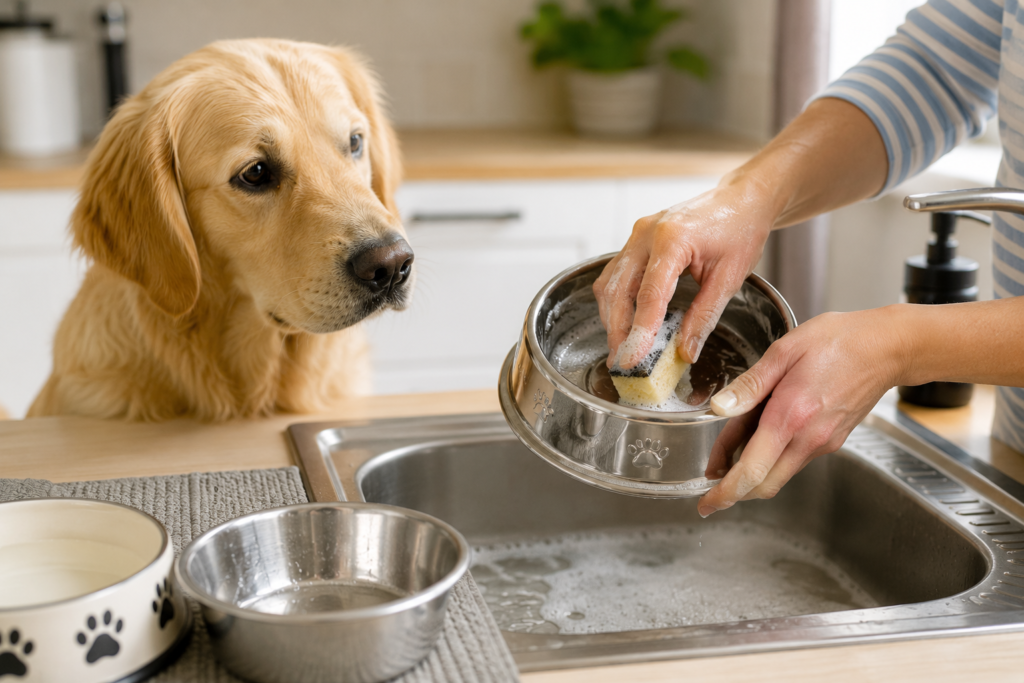
Washing by Hand
Use hot or warm water and dish soap to scrub the inside, outside, rim, and bottom of the bowl.
Pay particular attention to corners or edges where food residue can collect.
Rinse thoroughly so no soap remains.
Using a separate sponge or brush specifically for pet bowls can also be convenient.
Using a Dishwasher
Many stainless steel and ceramic dog bowls are dishwasher-safe, making cleaning particularly easy.
Check the manufacturer’s instructions first.
Plastic bowls may also be dishwasher-safe, but some can warp or deteriorate when exposed to high temperatures.
What Material Is Best for Dog Bowls?
The material of the bowl can affect how easy it is to keep clean.
Stainless Steel
Stainless steel is one of the easiest options to maintain.
It’s durable, nonporous, easy to wash, and many stainless steel bowls can go directly into the dishwasher.
Ceramic
Ceramic bowls can also be a good choice when they’re properly glazed and free from cracks.
Check them regularly for chips or damage because cracks can make thorough cleaning more difficult.
Plastic
Plastic bowls are inexpensive and lightweight, but they can become scratched over time.
Those scratches can make the surface harder to clean effectively.
If a plastic bowl becomes heavily scratched, damaged, or permanently stained, replacing it may be a better option.
Don’t Forget Slow Feeders and Puzzle Bowls
Slow feeders can be fantastic for dogs that inhale their food, but all those grooves and raised sections also create more places for food and saliva to collect.
Wash slow feeders after meals and pay attention to:
- Cortes
- Grooves
- Ridges
- Rubber sections
- Removable pieces
The same applies to food puzzle toys and lick mats.
If food touches it regularly, it needs regular cleaning.
What About Outdoor Dog Bowls?
Outdoor bowls may need cleaning more frequently than indoor bowls.
Leaves, insects, dirt, pollen, and other debris can easily get into them.
Standing water can also attract mosquitoes.
If your dog has an outdoor water bowl, replace the water regularly and wash the bowl rather than continually topping it up.
We recently covered this issue in Can Dogs Get Mosquito Bites?, including why reducing standing water around your home can help limit mosquito breeding areas.
Should You Wash New Dog Bowls Before Using Them?
Yes.
Wash a new food or water bowl before your dog uses it for the first time.
Bowls can collect dust and residue during manufacturing, packaging, shipping, and storage.
A quick wash before first use is an easy precaution.
Can Dirty Dog Bowls Make Dogs Sick?
A dirty bowl doesn’t automatically mean your dog will become ill, but food residue, saliva, and moisture can allow microorganisms to accumulate.
Regular cleaning is particularly important when:
- Feeding raw or fresh food
- Several pets share bowls
- Your dog has a weakened immune system
- Bowls remain outdoors
- Food frequently sits in the bowl for long periods
Good bowl hygiene is a simple part of everyday pet care that takes only a few minutes.
How Often Should You Replace Dog Bowls?
There’s no universal schedule for replacing every dog bowl.
Instead, inspect them regularly.
Consider replacing a bowl if it has:
- Deep scratches
- Cracks
- Chips
- Rust
- Peeling or damaged coatings
- Areas that are difficult to clean
- Persistent odors or stains
A high-quality stainless steel bowl can last for years when properly maintained.
An Easy Dog Bowl Cleaning Routine
You don’t need to overcomplicate it.
A practical routine looks like this:
After meals: Wash the food bowl.
Every day: Wash the water bowl and refill it with fresh water.
Regularly: Clean mats, bowl stands, automatic feeders, and the floor around the feeding area.
Every few weeks: Inspect bowls for cracks, scratches, rust, or other damage.
Once it becomes part of your normal kitchen routine, it takes very little extra time.
FAQ
Is it okay to wash dog bowls with dish soap?
Yes. Dog bowls can generally be washed with regular dish soap as long as they’re thoroughly rinsed afterward.
Can dog bowls go in the dishwasher?
Many stainless steel and ceramic bowls are dishwasher-safe. Always check the manufacturer’s care instructions for your particular bowl.
Why does my dog’s water bowl get slimy so quickly?
Saliva, microorganisms, and organic material can contribute to biofilm formation. Washing the bowl daily rather than simply refilling it helps control the buildup.
Should dogs share food and water bowls?
It’s usually easier to monitor how much each dog eats and drinks when they have their own bowls. Separate food bowls can also help reduce competition between dogs.
How often should I clean an automatic water bowl or fountain?
Follow the manufacturer’s cleaning instructions. In addition to replacing the water, fountains need regular cleaning of reservoirs, pumps, filters, and other components where buildup can occur.
Final Thoughts
So, how often should you wash dog bowls?
A simple rule is food bowls after every meal and water bowls every day.
Dogs eat and drink from these surfaces every day, so keeping them clean is one of the easiest hygiene habits you can add to your routine.
Don’t just refill a bowl because it looks clean. Empty it, wash it properly, rinse it well, and give your dog fresh food or water in a clean bowl.
Disclaimer: This article is for informational purposes only and is not a substitute for professional veterinary advice.