Your dog’s bed is probably one of their favorite places in the house. It’s where they nap after a walk, curl up at night, and sometimes bring toys, treats, dirt, and everything else they’ve collected during the day.
Unfortunately, all of that can make a dog bed dirty much faster than it looks.
So, how often should you wash your dog’s bed?
For most dogs, washing the bed or removable cover about once a week or every two weeks is a good routine. However, some dog beds need cleaning more frequently depending on your dog’s habits, coat, health, and lifestyle.
Here’s how to figure out the right cleaning schedule for your dog.
How Often Should You Wash a Dog Bed?
As a general guideline:
- Every 1–2 weeks: Most household dog beds
- Weekly or more often: Dogs that shed heavily, spend lots of time outdoors, or frequently get dirty
- As soon as needed: After accidents, vomiting, muddy adventures, or noticeable odors
- More frequently: If your dog has fleas, certain skin problems, or other issues where your veterinarian recommends more frequent cleaning
You don’t necessarily need to wash the entire bed every time.
Many dog beds have removable covers that can be washed separately, making regular cleaning much easier.
Why Dog Beds Get Dirty So Quickly
Even a dog that looks perfectly clean can bring plenty of debris into their bed.
Dog beds can collect:
- Loose fur
- Dander
- Dust
- Dirt and mud
- Saliva
- Food crumbs
- Outdoor debris
- Odors
Dogs that spend a lot of time outside can bring even more dirt into the house.
A regular washing routine helps keep the bed fresher and prevents all that buildup from sitting in your dog’s favorite sleeping spot.
Signs Your Dog’s Bed Needs Washing
You don’t always need to follow a strict calendar.
Sometimes the bed will tell you when it’s time.
Wash it sooner if you notice:
A noticeable smell
If you can smell the dog bed when you walk past it, it’s probably overdue for a wash.
Visible dirt or stains
Mud, food stains, drool marks, or other visible messes are good reasons to clean the bed immediately.
A lot of loose hair
Some dogs can cover their beds in fur surprisingly quickly.
Removing loose hair between washes can help keep the bed cleaner.
Your dog has had an accident
Urine, vomit, or feces should be cleaned as soon as possible rather than waiting for the next regular wash.
How to Wash a Dog Bed
Always check the manufacturer’s care label first. Different materials require different cleaning methods.
1. Remove loose hair
Before putting anything in the washing machine, remove as much dog hair as possible.
You can use a vacuum, lint roller, or pet hair remover.
This prevents large amounts of hair from ending up in your washing machine.
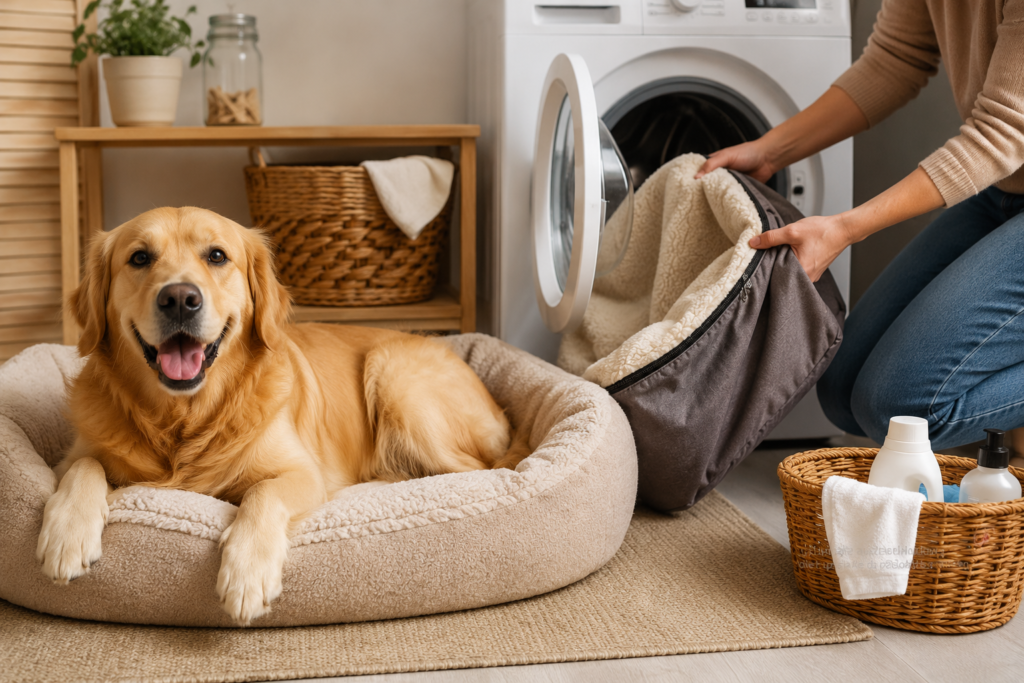
2. Remove the cover
If the bed has a removable cover, unzip it and wash it according to the care instructions.
This is one reason removable covers are such a useful feature when choosing a dog bed.
3. Treat stains
Spot-treat visible stains before washing when appropriate for the fabric.
Avoid using cleaning products that could leave irritating residues on a surface where your dog sleeps.
4. Wash according to the label
Use the temperature and washing cycle recommended by the manufacturer.
Some covers are machine washable while foam inserts or other bed components may require spot cleaning or hand washing.
5. Dry the bed completely
Make sure every part of the bed is completely dry before your dog uses it again.
Moisture trapped inside thick padding or foam can lead to unpleasant odors and other problems.
What About Memory Foam and Orthopedic Dog Beds?
Memory foam and orthopedic beds require a little extra care.
The removable cover may be machine washable, but the foam itself often is not.
Soaking memory foam can make it difficult to dry properly and may damage the material.
Instead, follow the manufacturer’s instructions for spot cleaning the foam.
If you’re shopping for a new bed, a water-resistant liner underneath a washable outer cover can make maintenance considerably easier.
How to Keep a Dog Bed Cleaner Between Washes
You can reduce how often the entire bed needs a deep clean with a few simple habits.
Vacuum loose fur regularly, wipe muddy paws after walks, remove food crumbs, and clean small spills as soon as they happen.
Regular grooming can also reduce the amount of loose hair that ends up in your dog’s sleeping area.
If your dog loves outdoor adventures, keeping a towel near the door for dirty paws can make a surprisingly big difference.
Should You Wash a New Dog Bed Before Using It?
Usually, this isn’t necessary unless the manufacturer recommends it.
However, washing a removable cover before first use can be reasonable if you prefer to remove dust or odors from packaging and shipping.
Always check the care label first.
How Often Should You Replace a Dog Bed?
Cleaning can extend the life of a dog bed, but eventually every bed needs replacing.
Consider replacing it when:
- The padding no longer provides adequate support
- The foam has permanently flattened
- The fabric is badly torn
- Zippers are broken
- Persistent odors remain after proper cleaning
- The bed can no longer be cleaned effectively
For older dogs especially, good support can become more important as they age.
Choosing an Easier-to-Clean Dog Bed
If washing your current dog bed is a constant struggle, cleaning features are worth considering when you eventually replace it.
Look for:
- Removable machine-washable covers
- Replacement covers available separately
- Water-resistant inner liners
- Durable fabrics
- Easy-access zippers
- Materials that can be vacuumed easily
An easy-to-clean bed can save a surprising amount of work over its lifetime. Choosing a bed with a removable, machine-washable cover and a protective inner liner can make regular cleaning much easier.
If your dog also needs extra comfort and support, especially as they get older, check out our Best Orthopedic Dog Beds in 2026 guide for supportive options designed for better rest.
Final Thoughts
For most dogs, washing their bed every one to two weeks is a practical starting point.
But there’s no perfect schedule for every household. A mostly indoor dog that barely sheds may keep a bed clean much longer than a muddy, outdoor-loving dog.
The simplest rule is to combine a regular cleaning routine with common sense: remove hair and debris between washes, deal with accidents immediately, and wash the bed whenever it starts looking or smelling dirty.
A clean bed isn’t just nicer for your dog—it also helps keep the rest of your home fresher.
Disclaimer: This article is for informational purposes only and is not a substitute for professional veterinary advice. If you have concerns about your dog’s health or well-being, consult your veterinarian.