
This post contains affiliate links. We may earn a commission if you make a purchase through these links, at no additional cost to you.
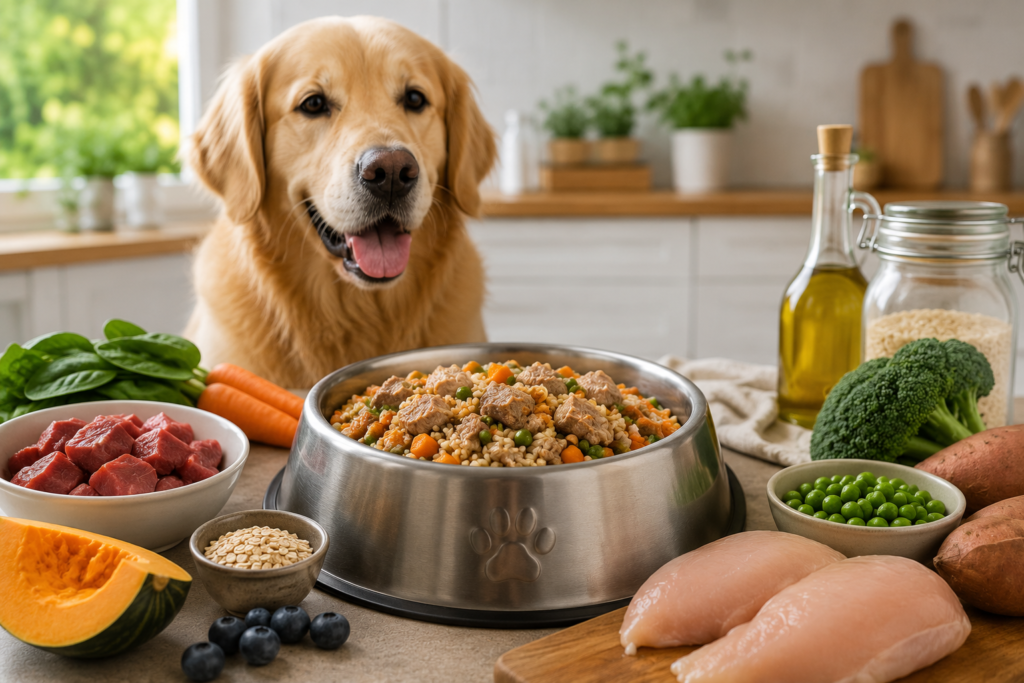
Making homemade food for your dog sounds simple enough. Choose some meat, add vegetables, perhaps include rice or another carbohydrate, cook everything, and fill the bowl.
But there’s an important difference between homemade dog food and a nutritionally complete homemade diet.
Dogs need specific amounts and proportions of protein, fats, vitamins, minerals, and other nutrients. A meal made from wholesome ingredients can still be nutritionally incomplete if those nutrients aren’t provided in the right balance.
That doesn’t mean you can’t prepare food for your dog at home. It simply means homemade feeding requires more planning than combining a few dog-friendly ingredients.
Here’s what you should know before getting started.
Is Homemade Dog Food Healthy?
Homemade dog food can be appropriate when the diet is properly formulated for the individual dog.
One advantage is that you know exactly what you’re putting into the bowl. You choose the ingredients, prepare the food yourself, and can avoid ingredients you don’t want to use.
However, homemade doesn’t automatically mean healthier.
Chicken, rice, carrots, and peas, for example, may sound like a wholesome meal. But feeding a simple combination like this as your dog’s complete diet over the long term may not provide all the nutrients your dog requires.
The nutritional balance of the entire diet matters more than whether individual ingredients sound healthy.
Why Balanced Nutrition Matters for Dogs
Dogs require many different nutrients to maintain normal body functions.
These include:
- Protein
- Essential amino acids
- Fats and essential fatty acids
- Vitamins
- Minerals
- Water
- Appropriate energy intake
And simply including these nutrients isn’t enough. Some need to be present in appropriate amounts and ratios.
Calcium and phosphorus are a good example. Both are important minerals, but their overall amounts and balance within the diet matter.
This is one reason creating a complete homemade diet by guesswork can be risky.
The Most Common Problem With Homemade Dog Food
One of the biggest mistakes is assuming that a meal containing meat, vegetables, and carbohydrates must automatically be balanced.
It isn’t necessarily.
A bowl can look incredibly nutritious to us while still being deficient in nutrients a dog needs over the long term.
Common homemade combinations such as chicken and rice are sometimes recommended temporarily in specific circumstances, but that doesn’t mean they’re designed to serve as a complete everyday diet indefinitely.
If homemade food will make up most or all of your dog’s diet, nutritional formulation becomes much more important.
What Does “Complete and Balanced” Mean?
When you see a commercial dog food described as complete and balanced, it means the diet is intended to provide the nutrients required for a particular life stage when fed according to its directions.
When preparing homemade food, you’re responsible for creating that nutritional balance yourself.
That’s where things become more complicated.
Adding more vegetables isn’t necessarily the answer. Neither is simply increasing the amount of meat.
A properly formulated homemade diet may require carefully calculated ingredients and appropriate supplementation to meet a dog’s nutritional requirements.
Start With Your Individual Dog
There isn’t one homemade recipe that’s perfect for every dog.
Before deciding what to feed, consider factors such as:
- Age
- Weight
- Life stage
- Activity level
- Body condition
- Current health
- Food allergies or intolerances
- Calorie requirements
- Existing medical conditions
A healthy adult dog has different nutritional needs from a growing puppy.
Likewise, a highly active dog may have very different energy requirements from an older dog that spends most of the day relaxing at home.
Dogs with kidney disease, pancreatitis, allergies, gastrointestinal conditions, or other medical issues may require specially formulated diets.
For these dogs especially, homemade diets should be planned with professional veterinary guidance.
Protein Sources in Homemade Dog Food
Protein is an important part of a dog’s diet, and homemade meals can include various animal protein sources.
Depending on the individual recipe, these might include:
- Chicken
- Turkey
- Beef
- Lamb
- Fish
- Eggs
But more meat isn’t automatically better.
The amount and type of protein should fit within the nutritional formulation of the complete diet.
It’s also important to handle and cook animal products safely to reduce food-safety risks.
What About Vegetables?
Many dog-friendly vegetables can be incorporated into appropriately formulated homemade diets.
Examples can include:
- Carrots
- Green beans
- Pumpkin
- Sweet potato
- Broccoli
- Peas
Vegetables can contribute fiber and various nutrients, but they shouldn’t be used as a substitute for properly balancing the entire diet.
And remember that not every food that’s safe for humans is safe for dogs.
Ingredients such as onions, garlic in problematic amounts, grapes, raisins, chocolate, and products containing xylitol can be dangerous to dogs and should not simply be added to homemade meals.
Do Homemade Dog Foods Need Supplements?
This is where homemade feeding can become tricky.
Depending on the recipe, supplements may be necessary to provide nutrients that aren’t supplied in adequate amounts by the food ingredients alone.
Simply buying a general dog multivitamin and adding it to an improvised recipe isn’t necessarily enough.
The supplement and its amount need to fit the recipe.
If you’re planning to feed a homemade diet long term, one of the safest approaches is to use a recipe formulated specifically for your dog by a veterinarian or a board-certified veterinary nutrition specialist.
How Much Homemade Food Should You Feed?
There’s no universal answer such as “two cups per day.”
The correct amount depends on:
- Your dog’s weight
- Calorie needs
- Activity level
- Age
- Body condition
- Ingredients in the recipe
- Calories contained in each portion
Two homemade recipes can look almost identical in the bowl while containing very different numbers of calories.
Monitor your dog’s body condition and weight and adjust portions with appropriate professional guidance.
How to Make Homemade Dog Food Easier
One of the less glamorous parts of homemade feeding is the work involved.
There’s ingredient preparation, weighing, cooking, mixing, portioning, calculating recipes, cleaning up, and storing the finished food.
For someone who enjoys meal preparation, that may not be a problem.
For busy households, however, doing it consistently can become difficult.
This is where specialized dog-food preparation appliances have started appearing.
An Option for Homemade Dog Food Preparation: ChefPaw
ChefPaw is a dog food maker designed specifically to simplify the process of preparing homemade meals for dogs.
Rather than manually cooking and mixing everything using several pieces of kitchen equipment, ChefPaw combines food preparation functions in one appliance.
According to ChefPaw, the machine can cook and mix a batch of dog food in around 40 minutes and can prepare up to approximately 6.4 lb of food per batch.
ChefPaw also provides access to its app, which includes recipes, nutritional information, and tools designed to help owners plan homemade meals.
It’s important to understand what an appliance like this doesn’t do as well.
Owning a dog food maker doesn’t automatically guarantee that every combination of ingredients you put into it will create a nutritionally complete diet.
The recipe still matters.
ChefPaw itself advises owners to consider their individual dog’s needs, particularly when health conditions or special dietary requirements are involved.
→ Explore the ChefPaw Dog Food Maker
Who Might Find ChefPaw Useful?
ChefPaw may be particularly interesting for owners who already want to prepare homemade food but find the cooking and preparation process inconvenient.
Potentially useful situations include owners who:
- Want more control over the ingredients they feed
- Regularly prepare homemade dog food
- Prefer batch preparation
- Want to reduce the number of separate cooking steps
- Have more than one dog
- Want nutritional and recipe tools in one system
On the other hand, it’s probably unnecessary for someone who has no intention of regularly preparing homemade food.
It’s a specialized appliance rather than something every dog owner needs.
Homemade Dog Food vs. Commercial Dog Food
Neither option is automatically better simply because it’s homemade or commercially produced.
A properly formulated commercial diet offers considerable convenience because the nutritional formulation has already been handled for you.
A properly formulated homemade diet gives you greater control over individual ingredients but requires considerably more responsibility.
The key phrase in both cases is properly formulated.
A homemade diet shouldn’t be considered superior merely because the ingredients look fresh, just as the word kibble doesn’t automatically mean a food is poor quality.
The right choice depends on your dog, your lifestyle, your budget, and your ability to provide consistent, appropriate nutrition.
Food Safety Matters Too
Preparing your dog’s food at home means food hygiene becomes your responsibility.
Wash hands, utensils, cutting boards, and preparation surfaces after handling raw animal products.
Store cooked food appropriately and don’t leave perishable food sitting at room temperature for extended periods.
If you’re preparing large batches, divide the food into suitable portions before refrigerating or freezing it.
Follow appropriate storage guidance for the specific ingredients and recipe you’re using.
Signs a Homemade Diet May Need Reassessment
Some nutritional deficiencies or imbalances may not cause obvious symptoms immediately.
That’s one reason you shouldn’t wait for visible problems before thinking about nutritional adequacy.
Changes worth discussing with your veterinarian can include:
- Unexpected weight gain or loss
- Persistent digestive problems
- Changes in coat or skin condition
- Reduced energy
- Changes in appetite
- Poor growth in puppies
- Other unexplained health changes
Regular veterinary checkups remain important regardless of whether your dog eats homemade food or a commercial diet.
Is Making Homemade Dog Food Worth It?
For some owners, absolutely.
Preparing your dog’s meals can give you considerable control over ingredients and can become part of your normal routine.
For others, the additional planning, preparation, nutritional calculations, storage, and expense simply aren’t practical.
If you decide to feed homemade food regularly, don’t rely solely on random recipes from social media or assume that combining several healthy ingredients creates a complete diet.
Start with nutritional balance first.
Convenience tools such as the ChefPaw Dog Food Maker can make preparation easier, but they should complement — rather than replace — a properly formulated recipe.
→ Check the ChefPaw Dog Food Maker
FAQ
Can I Feed My Dog Homemade Food Every Day?
A homemade diet can be fed long term if it is appropriately formulated to meet the dog’s nutritional requirements.
If homemade food will make up your dog’s primary diet, professional guidance from a veterinarian or veterinary nutrition specialist is recommended.
Is Chicken and Rice a Complete Diet for Dogs?
Chicken and rice alone shouldn’t be assumed to provide all the nutrients a dog requires for long-term daily feeding.
If your veterinarian recommends a temporary bland diet for a specific reason, follow their instructions regarding ingredients and duration.
Is Homemade Dog Food Healthier Than Kibble?
Not automatically.
Both homemade and commercial diets can vary enormously in nutritional quality. What matters is whether the complete diet meets the dog’s nutritional requirements.
Do I Need a Dog Food Maker to Prepare Homemade Food?
No.
Homemade dog food can be prepared using ordinary kitchen equipment.
A specialized appliance such as ChefPaw is primarily a convenience tool for owners who plan to make homemade dog food regularly.
Should I Ask My Vet Before Feeding Homemade Dog Food?
It’s a good idea, particularly if homemade food will replace a complete commercial diet.
Professional guidance becomes especially important for puppies, pregnant or nursing dogs, senior dogs, and dogs with medical conditions or special dietary requirements.
Final Thoughts
Homemade dog food gives owners more control over what goes into their dog’s bowl, but that control comes with responsibility.
Fresh meat, vegetables, and other wholesome ingredients don’t automatically create a complete diet.
If you want homemade food to become your dog’s primary diet, start with an appropriately formulated recipe and make nutritional balance the priority.
After that, you can decide how you want to handle the practical side of preparing it.
You can use ordinary kitchen equipment, batch-cook manually, or use a specialized appliance such as the ChefPaw Dog Food Maker to simplify some of the preparation.
Whichever method you choose, your dog’s individual nutritional needs should always come first.
Disclaimer: This article is for informational purposes only and is not a substitute for professional veterinary advice. Always consult your veterinarian or a qualified veterinary nutrition professional before making significant changes to your dog’s diet, particularly if your dog has a medical condition or special nutritional needs.