
This post contains affiliate links. We may earn a commission if you make a purchase through these links, at no additional cost to you.
If you’ve been looking for healthier or less traditionally processed food options for your dog, you may have come across something called cold-pressed dog food.
At first glance, it looks a lot like regular kibble. It’s dry, easy to store, and simple to serve. But the way cold-pressed food is made is different — and that difference is one of the main reasons more dog owners are becoming interested in it.
So, what exactly is cold-pressed dog food? Is it better than traditional kibble? And is it worth trying for your dog?
Here’s what you should know before making the switch.
What Is Cold-Pressed Dog Food?
Cold-pressed dog food is a type of dry dog food made using lower processing temperatures than those typically involved in producing traditional extruded kibble.
The ingredients are combined and pressed into small pieces rather than being cooked and expanded into the familiar crunchy kibble shape.
The idea behind this manufacturing method is to expose the ingredients to less intense heat during processing.
However, the term cold-pressed doesn’t automatically mean that a food is healthier or nutritionally better than kibble. The quality of the ingredients and, more importantly, the nutritional formulation of the complete diet still matter.
For dog owners, cold-pressed food offers another option between conventional kibble and feeding methods that may require more preparation or storage, such as fresh or raw diets.
How Is Cold-Pressed Dog Food Different From Kibble?
The biggest difference is how the food is processed.
Traditional kibble is generally produced through a process called extrusion. Ingredients are mixed and processed using heat and pressure before being shaped and dried.
Cold-pressed food uses a different manufacturing process designed to form the food at comparatively lower temperatures.
From an owner’s perspective, however, the two types of food have plenty in common.
Both can be:
- Dry and easy to store
- Simple to measure and serve
- Convenient for everyday feeding
- Easy to take when traveling
- Available as complete diets when properly formulated
That convenience is one reason cold-pressed food may appeal to owners who want to explore an alternative without completely changing the way they feed their dog.
Is Cold-Pressed Dog Food Better Than Kibble?
Not necessarily.
“Cold-pressed” describes how the food is manufactured, not whether the final product is nutritionally superior.
A high-quality kibble with an appropriate nutritional profile can be a perfectly good choice for many dogs. Likewise, cold-pressed food still needs to provide an appropriate balance of protein, fats, carbohydrates, vitamins, and minerals.
Instead of choosing a dog food based only on the words cold-pressed, look at the complete product.
Consider:
- Whether it is complete and balanced for your dog’s life stage
- The protein and ingredient sources
- Your dog’s individual nutritional needs
- Calorie content and recommended portions
- Any known food sensitivities
- How well your dog tolerates the food
Ultimately, the best dog food is one that meets your dog’s nutritional requirements and works well for your individual dog.
Potential Benefits of Cold-Pressed Dog Food
There are several reasons dog owners may consider trying cold-pressed food.
Less Intensive Processing
One of the biggest attractions of cold-pressed dog food is its manufacturing process.
Cold-pressed foods are produced differently from traditional extruded kibble and generally involve lower processing temperatures.
For owners specifically looking for an alternative type of dry food, this can make cold-pressed products interesting to explore.
Convenient Alternative to Fresh or Raw Food
Fresh and raw diets can require refrigeration or freezer space, careful handling, and additional preparation.
Cold-pressed food offers much of the convenience people expect from dry dog food.
You can measure it into the bowl, store it easily, and take it with you when traveling.
Easy Portion Control
Because cold-pressed food is dry and measured similarly to kibble, portioning is relatively simple.
However, don’t assume that one cup of your dog’s current kibble equals one cup of cold-pressed food.
Different foods can contain very different amounts of calories, so always check the manufacturer’s feeding recommendations and adjust portions based on your dog’s size, activity level, and body condition.
It Can Be Convenient for Training
Depending on the size and texture of the pieces, some cold-pressed foods may also be convenient to use as training rewards.
If you use part of your dog’s regular food during training sessions, remember to include those pieces in their total daily food allowance.
Are There Any Downsides to Cold-Pressed Dog Food?
Cold-pressed food isn’t automatically the right choice for every dog.
One potential downside is availability. Traditional kibble is sold almost everywhere, while cold-pressed brands may be harder to find depending on where you live.
Price can also be higher than some conventional kibble options.
Most importantly, individual dogs respond differently to different foods.
A food that works beautifully for one dog might not agree with another.
When introducing a new diet, watch for persistent changes such as:
- Digestive upset
- Loose stools
- Excessive gas
- Reduced appetite
- Changes in skin or coat
- Unusual changes in energy or behavior
If symptoms are significant or continue after changing food, speak with your veterinarian rather than repeatedly switching diets.
What Should You Look for in Cold-Pressed Dog Food?
Don’t choose a food simply because the package says cold-pressed.
Start by looking at the nutritional information and whether the food is intended to provide complete nutrition for your dog’s appropriate life stage.
You should also consider your dog’s:
- Age
- Size
- Activity level
- Body condition
- Food sensitivities
- Individual health needs
Ingredient preferences can be useful when comparing products, but they shouldn’t replace an assessment of the diet as a whole.
For dogs with medical conditions or special dietary requirements, it’s especially important to discuss major dietary changes with your veterinarian.
Cold-Pressed Dog Food vs. Raw Food
Cold-pressed and raw food are sometimes grouped together as alternatives to conventional kibble, but they are very different.
Raw diets contain uncooked ingredients and require careful storage and handling because of the potential for harmful bacteria.
Cold-pressed dog food, on the other hand, is a processed dry food.
For owners who are curious about alternatives to traditional kibble but don’t want the refrigeration, freezer space, or handling associated with raw feeding, cold-pressed food can be an option worth investigating.
How to Transition Your Dog to Cold-Pressed Food
Whenever you introduce a new dog food, changing gradually is generally easier on your dog’s digestive system.
A simple transition could look like this:
- Days 1–2: 75% old food + 25% new food
- Days 3–4: 50% old food + 50% new food
- Days 5–6: 25% old food + 75% new food
- Day 7: 100% new food
This is only a general example. Some dogs may need a slower transition.
Watch your dog’s appetite, stool, energy level, and overall comfort throughout the process.
If digestive problems appear, slowing down the transition may help. Contact your veterinarian if symptoms are severe, persistent, or you’re concerned about your dog’s health.
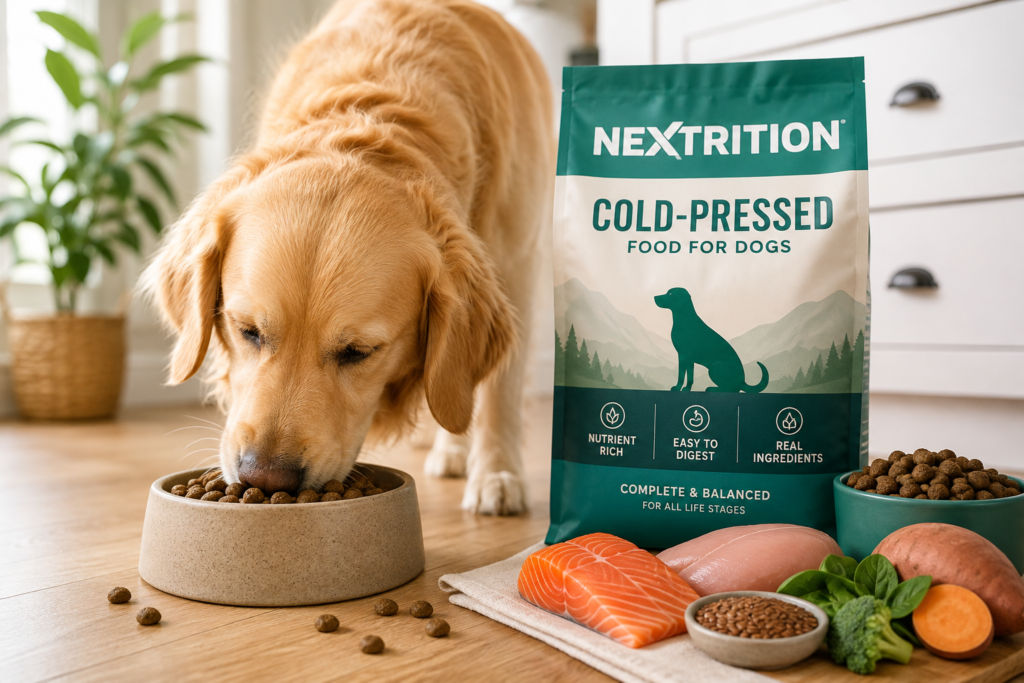
A Cold-Pressed Dog Food Option to Consider: Nextrition Pet
If you’re interested in trying cold-pressed dog food, Nextrition Pet is one option to explore.
Nextrition offers cold-pressed dry dog food designed to provide the everyday convenience many owners like about kibble while using a different manufacturing approach.
One particularly useful option for owners who don’t want to commit to a large amount of new food immediately is the Nextrition Trial Variety Pack.
The Trial Variety Pack includes small portions of multiple recipes, giving your dog the opportunity to try different options before you decide whether you want to purchase a larger amount.
That’s particularly useful with dog food. You don’t want to order a large bag only to discover that your dog turns up their nose at it.
Before ordering, check the current ingredients, nutritional information, feeding recommendations, and available recipes on the Nextrition website to determine whether the food may be suitable for your dog.
Try the Nextrition Pet Trial Variety Pack
FAQ
Can Dogs Eat Cold-Pressed Food Every Day?
Yes, provided the particular food is formulated as a complete and balanced diet appropriate for your dog’s life stage and individual nutritional needs.
Always follow the manufacturer’s feeding recommendations and adjust portions when necessary.
Is Cold-Pressed Food the Same as Freeze-Dried Dog Food?
No.
They are produced using different methods. Freeze-drying removes moisture from frozen ingredients, while cold-pressed dog food is formed using a pressing process at comparatively lower temperatures than conventional extrusion.
Does Cold-Pressed Dog Food Need to Be Refrigerated?
Most dry cold-pressed dog foods are designed to be stored similarly to other dry foods, but storage requirements can vary.
Always follow the instructions printed on the product packaging or provided by the manufacturer.
Can You Mix Cold-Pressed Food With Kibble?
When transitioning to a new food, owners commonly mix increasing amounts of the new food with decreasing amounts of their dog’s existing food.
Just remember that the foods may have different calorie densities, so portions should be adjusted accordingly.
Is Cold-Pressed Dog Food Good for Sensitive Stomachs?
Some dogs with sensitive digestion may do well on a particular cold-pressed food, while others may not.
The fact that a food is cold-pressed doesn’t by itself make it suitable for a sensitive stomach. Ingredients, nutritional formulation, and your dog’s individual sensitivities are more important considerations.
If your dog frequently experiences digestive problems, discuss their diet with your veterinarian.
Final Thoughts
Cold-pressed dog food offers an interesting alternative for owners who want the convenience of dry food while exploring a different manufacturing method from traditional kibble.
But the words cold-pressed shouldn’t be the only reason you choose a particular food.
The overall nutritional quality, ingredients, appropriate life-stage formulation, and — most importantly — how your individual dog responds to the diet are what really matter.
If you’re curious about cold-pressed food but don’t want to purchase a large amount immediately, the Nextrition Pet Trial Variety Pack provides a simple way to let your dog try several recipes first.
Disclaimer: This article is for informational purposes only and is not a substitute for professional veterinary advice. Always consult your veterinarian about significant changes to your dog’s diet, especially if your dog has a medical condition or special nutritional needs.