Leaving your dog home alone is sometimes unavoidable. Whether you’re heading to work, running errands, or spending a few hours away from home, the important question is: what will your dog do while you’re gone?
Some dogs are perfectly happy to nap for much of the day. Others quickly become bored and start looking for their own entertainment — which might include chewing furniture, digging through the trash, barking, or investigating things they normally ignore.
Fortunately, there are plenty of ways to make alone time more interesting.
From enrichment toys and food puzzles to sniffing activities and a comfortable environment, a little preparation can help keep your dog mentally stimulated while you’re away.
How Long Can Your Dog Stay Home Alone?
Before thinking about entertainment, consider how long your dog will actually be alone.
There isn’t one amount of time that works for every dog. Age, health, bathroom needs, temperament, routine, and previous experience with being alone can all make a difference.
Puppies generally need much more frequent attention and bathroom breaks than healthy adult dogs, while senior dogs may also have different needs.
If you’re unsure what is reasonable for your dog, read our How Long Can Dogs Stay Home Alone? guide for a more detailed look at the factors to consider.
1. Give Your Dog an Enrichment Toy
One of the easiest ways to make alone time more interesting is to give your dog something that requires a little thought.
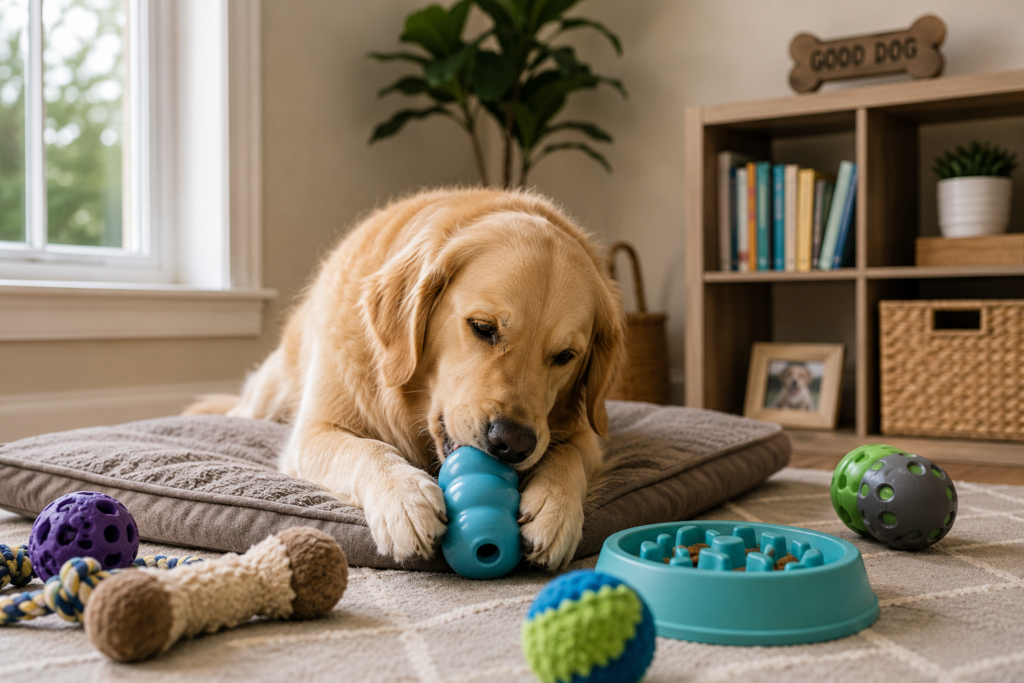
Enrichment toys encourage dogs to sniff, lick, manipulate, or problem-solve to reach food or treats. Instead of receiving a snack immediately, your dog has something to work on.
This can turn part of their time alone into an activity rather than simply waiting for you to return.
If you’re looking for ideas, see our Best Dog Enrichment Toys for Mental Stimulation in 2026 for toys designed to make treat time more engaging.
Whenever you leave your dog with a toy unsupervised, make sure you already know how your dog interacts with it. Avoid leaving anything they are likely to break apart or swallow.
2. Try an Interactive Puzzle Toy
Puzzle toys can add another level of mental stimulation by requiring your dog to figure out how to reach hidden treats or food.
Some involve sliding compartments, moving pieces, or manipulating different sections of the toy.
Start with easier puzzles while you’re home so your dog understands how they work. Once they become confident, you can gradually introduce more challenging options.
Need some ideas? Our Best Interactive Puzzle Toys for Dogs in 2026 guide includes different options for dogs that enjoy working for their rewards.
3. Turn Mealtime Into an Activity
Your dog’s breakfast doesn’t always have to arrive in a regular food bowl.
Depending on your dog and the food they eat, you may be able to use part of their meal in a suitable food-dispensing toy or other enrichment activity.
This gives your dog something productive to do and can make a meal last longer.
You can even rotate different feeding activities throughout the week so the routine doesn’t become completely predictable.
4. Tire Your Dog Out Before You Leave
A dog with pent-up energy is much more likely to start searching for something interesting to do.
Before a longer period alone, give your dog an opportunity for appropriate physical activity.
A walk can help, but don’t focus only on distance. Allowing your dog time to sniff and explore can provide valuable mental stimulation too.
A short training session before you leave can also engage their brain.
The goal isn’t to exhaust your dog completely. It’s simply to meet some of their physical and mental needs before asking them to settle down.
5. Create a Safe, Comfortable Space
Your dog doesn’t necessarily need access to the entire house while you’re gone.
A familiar dog-safe area with a comfortable bed, fresh water, and suitable toys may make it easier for them to relax.
At the same time, remove potential hazards and objects you know your dog likes to steal or chew.
Shoes, electrical cords, trash, medications, food, small objects, and anything else that could be dangerous should be securely out of reach.
6. Rotate Your Dog’s Toys
Leaving every toy available all the time can make them less interesting.
Instead, try rotating some of your dog’s toys.
Put a few away and bring them back several days later. To your dog, a familiar toy that has disappeared for a while may suddenly become interesting again.
You can also offer different types of activities on different days — for example, a food-based enrichment toy one day and another familiar, dog-safe activity the next.
7. Hide Treats for a Simple Sniffing Game
Dogs experience much of the world through their noses, so scent-based activities can be surprisingly engaging.
While you’re still at home, teach your dog a simple “find it” game by hiding treats in easy-to-find locations.
As they understand the game, you can make the hiding places slightly more challenging.
For dogs that safely play this game, setting up a few appropriate hiding spots before leaving can provide a short sniffing activity after you go.
Keep the search area safe and never hide food near anything you don’t want your dog investigating.
8. Consider a Pet Camera
Sometimes the most useful thing you can do is find out what your dog actually does when you leave.
A pet camera can show whether your dog settles down and sleeps, plays with their toys, wanders around the house, barks, or appears uncomfortable.
Some models also include features such as two-way audio or treat dispensing.
If you’re considering one, take a look at our Best Pet Cameras for Dogs in 2026 guide to compare options.
A camera shouldn’t replace appropriate care or interaction, but it can give you useful information about your dog’s behavior when nobody is home.
9. Watch for Signs of Boredom
Not every dog shows boredom in the same way.
Some dogs become destructive, while others bark excessively, dig, pace, steal objects, or constantly seek attention when their owners return.
If you’re wondering whether your dog needs more stimulation, our guide to Signs Your Dog Is Bored explains some behaviors to watch for.
If boredom appears to be the problem, experiment with additional exercise, training, sniffing opportunities, and enrichment rather than simply buying more ordinary toys.
10. Don’t Rely on Entertainment for Separation-Related Distress
There is an important difference between a dog that is bored and a dog that is distressed when left alone.
A bored dog may happily work on a food toy and then settle down.
A dog experiencing significant separation-related distress may show behaviors such as persistent vocalization, frantic attempts to escape, destructive behavior around doors or windows, or other signs of distress.
In these situations, simply providing more toys may not solve the underlying problem.
If your dog appears highly distressed when left alone, speak with your veterinarian or a qualified canine behavior professional.
What Should You Leave With a Dog Home Alone?
Keep it simple.
Fresh water, a comfortable and secure environment, and carefully selected activities are more useful than filling the room with dozens of toys.
Choose activities based on your individual dog. A toy that one dog can safely enjoy alone may not be appropriate for a dog that aggressively tears toys apart.
Before leaving any new toy with your dog, observe how they use it while you’re home.
Frequently Asked Questions
How do I keep my dog entertained while I’m at work?
Try combining appropriate exercise before work with a safe enrichment activity, food puzzle, or other familiar toy. Rotating activities can also help prevent them from becoming repetitive. Always make sure anything left with your dog is appropriate for unsupervised use based on how your dog normally interacts with it.
Do dogs get bored when they are home alone?
They can. Dogs that lack sufficient physical activity, mental stimulation, and interaction may develop boredom-related behaviors such as chewing, barking, digging, or getting into household objects. However, behavior while alone can have other causes too.
What toys can I leave with my dog when I’m not home?
Choose durable, appropriately sized toys that you have already observed your dog using safely. Avoid leaving a new toy unsupervised until you know whether your dog tries to break it apart or swallow pieces.
Are puzzle toys good for dogs home alone?
Puzzle and food-dispensing toys can provide useful mental stimulation for many dogs. Introduce them while you are home first so your dog understands how to use them and you can check that the toy is appropriate for their play style.
Should I leave the TV on for my dog?
Some dogs may find familiar background sounds relaxing, while others pay little attention to them. It can be worth trying, but television shouldn’t replace exercise, enrichment, interaction, or appropriate care.
How can I tell what my dog does when I leave?
A pet camera can be useful for observing your dog’s behavior while you’re away. It can help you see whether your dog mostly sleeps, plays, barks, paces, or shows other behaviors that may need attention.
Final Thoughts
Keeping a dog entertained while home alone doesn’t require turning your house into a doggy amusement park.
A good routine often combines exercise before you leave, a safe place to relax, and one or two activities that encourage your dog to use their brain.
Enrichment and puzzle toys can be particularly useful because they give dogs something to do, rather than simply something to have.
And remember that dogs need more than entertainment. If your dog regularly spends significant periods alone, make sure their physical, social, bathroom, and emotional needs are being met too.
Disclaimer: This article is for informational purposes only and is not a substitute for professional veterinary or behavioral advice. If your dog shows significant distress, destructive behavior, or sudden behavioral changes when left alone, consult your veterinarian or a qualified canine behavior professional.