Some dogs barely notice a thunderstorm. Others start pacing before you’ve even heard the first rumble of thunder.
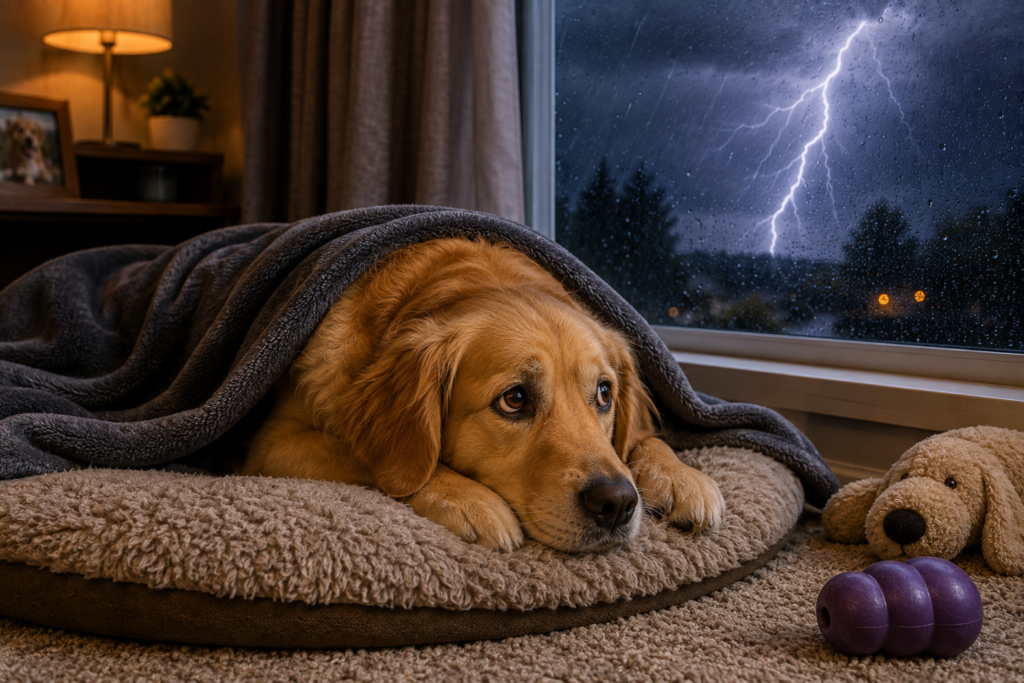
Storm anxiety can range from mild restlessness to intense fear, with dogs hiding, shaking, panting, whining, or desperately trying to escape.
If your dog is afraid of storms, there are several things you can do to help them feel safer and more comfortable.
Why Are Dogs Afraid of Thunderstorms?
Thunder is an obvious trigger, but it may not be the only reason your dog becomes anxious.
Dogs can react to several changes associated with storms, including:
- Loud thunder
- Flashes of lightning
- Strong wind
- Heavy rain
- Changes in air pressure
- Static electricity
- Changes in their owner’s behavior
Dogs also have much more sensitive hearing than humans, so sounds that seem manageable to us may feel far more intense to them.
Some dogs even appear anxious before a storm arrives.
Signs Your Dog Is Anxious During a Storm
Storm anxiety doesn’t look exactly the same in every dog.
Common signs include:
- Panting
- Pacing
- Trembling or shaking
- Whining
- Excessive drooling
- Hiding
- Staying unusually close to you
- Refusing treats
- Trying to escape
- Scratching at doors or windows
- Restlessness
- Barking
Mild anxiety may simply cause your dog to follow you around the house, while severe fear can lead to frantic escape attempts or destructive behavior.
Create a Safe Space
Give your dog somewhere quiet where they can retreat during storms.
This could be:
- A bedroom
- A quiet corner of the house
- A covered crate
- A closet with the door safely left open
- Their usual sleeping area
Some dogs naturally choose their own hiding place. If that location is safe, allowing them to stay there can be better than forcing them somewhere else.
Adding their bed, blanket, or favorite toy can make the space more familiar.
If your dog already enjoys spending time in a crate, it can provide a cozy retreat. However, a frightened dog that isn’t crate trained shouldn’t suddenly be confined during a storm.
Our guide to the Best Dog Crates for Home Use in 2026 can help you compare different crate styles if you’re creating a comfortable resting space at home.
Reduce the Noise
You probably can’t completely block thunder, but you can make it less noticeable.
Close windows and curtains and try adding background sound.
A television, fan, calming music, or white noise may help mask some of the sounds outside.
Moving your dog to an interior room can also reduce both thunder and flashes of lightning.
Stay Calm and Behave Normally
Dogs often look to their owners for clues about what is happening.
Try to remain relaxed and continue behaving normally.
You don’t need to ignore your dog if they come to you for comfort. Calm petting, sitting nearby, or speaking gently is perfectly reasonable if it helps them settle.
Avoid becoming overly excited or repeatedly reacting to every thunderclap.
Your goal is to make the environment feel as predictable and safe as possible.
Try Distraction Before Anxiety Becomes Severe
If your dog is still calm enough to eat or play, distraction may help.
You could try:
- A food puzzle
- A stuffed toy
- A lick mat
- A long-lasting chew
- Simple training exercises
- A favorite indoor game
These activities can give your dog something else to focus on.
However, once a dog becomes extremely frightened, they may refuse food or play entirely. At that point, providing a safe place and reducing stimulation may be more helpful.
Can Calming Products Help Dogs During Storms?
Some owners use calming products as part of their storm routine.
Options include calming wraps, pheromone products, calming beds, lick mats, white-noise machines, and other products designed to create a more relaxing environment.
Not every product works for every dog, and they shouldn’t replace veterinary care for severe anxiety.
We’ll compare several options in our Best Calming Products for Anxious Dogs in 2026 guide.
Prepare Before the Storm Starts
If thunderstorms are forecast, preparing early can make things easier.
Take your dog outside for a bathroom break and exercise before bad weather arrives.
Then prepare their safe space, close windows and curtains, and have any toys or enrichment activities ready.
For dogs with predictable storm anxiety, starting their normal calming routine before they become extremely frightened may be more effective than waiting until they’re already panicking.
Can You Train a Dog to Be Less Afraid of Thunder?
Some dogs can gradually become more comfortable with storm sounds through careful desensitization and counterconditioning.
This usually involves playing recordings of thunder at a very low volume while pairing the sound with something positive, such as treats or play.
The volume is gradually increased only while the dog remains comfortable.
The process should be slow. Playing loud thunder recordings to a frightened dog can make the fear worse rather than better.
For dogs with significant noise phobias, working with a veterinarian or qualified behavior professional is a safer approach.
What Should You NOT Do During a Thunderstorm?
Avoid punishing your dog for anxious behavior.
Fear isn’t deliberate misbehavior.
Also avoid forcing your dog out of a hiding place unless that location is unsafe.
And don’t leave a severely anxious dog outside during a storm. A frightened dog may attempt to escape a yard or enclosure.
When Is Storm Anxiety Serious?
Some dogs experience much more than mild nervousness.
Talk to your veterinarian if your dog:
- Panics during most storms
- Attempts to escape
- Injures themselves
- Destroys doors, crates, or windows
- Cannot settle for long periods
- Refuses food because of fear
- Experiences increasingly severe anxiety
Your veterinarian can rule out other problems and discuss behavioral strategies or treatment options when appropriate.
FAQ
Should I comfort my dog during a thunderstorm?
Yes. You don’t need to ignore a frightened dog. If your dog seeks you out, calm attention and physical contact can help them feel safer.
Should I put my dog in a crate during a storm?
Only if your dog already views the crate as a comfortable, safe place. Never force a panicking dog into a crate they aren’t comfortable using.
Why does my dog know a storm is coming before I do?
Dogs may notice distant thunder, wind, changes in atmospheric pressure, static electricity, and other environmental changes before humans notice an approaching storm.
Do calming treats work for storm anxiety?
Some dogs may benefit from certain calming products, while others show little difference. Check ingredients carefully and speak with your veterinarian before giving your dog supplements, particularly if they take medication or have health conditions.
Can storm anxiety get worse as dogs age?
It can. Some dogs become more sensitive to noise as they get older. New or significantly worsening anxiety in an older dog is worth discussing with your veterinarian.
Final Thoughts
Helping a dog through thunderstorms usually involves creating a safe environment, reducing noise and visual stimulation, staying calm, and finding strategies that work for your individual dog.
For mild anxiety, a quiet room, familiar routine, and distraction may be enough.
For dogs that panic, attempt to escape, or become increasingly fearful, professional veterinary or behavioral help can make a significant difference.
This article is for informational purposes only and is not a substitute for professional veterinary advice.