Dogs love spending time outside, but hot weather can become dangerous much faster than many owners realize.
Unlike people, dogs don’t cool themselves primarily by sweating. They rely mostly on panting to release heat, which means their body temperature can rise quickly when the weather is hot, especially during exercise.
So, can dogs get heatstroke?
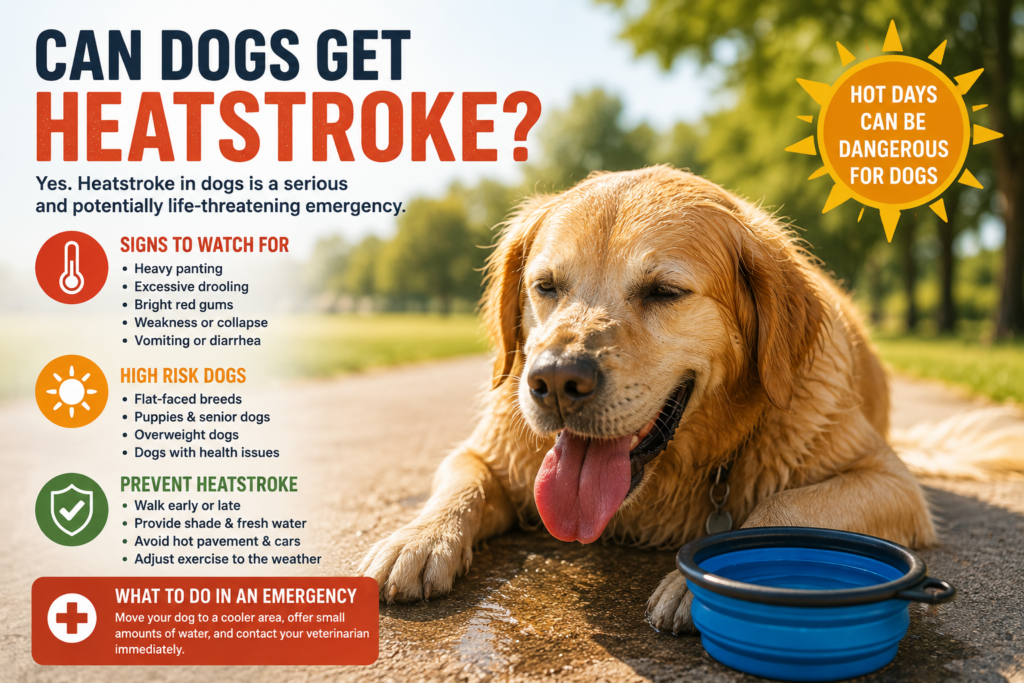
Yes. Heatstroke in dogs is a serious and potentially life-threatening emergency. Knowing the early warning signs and understanding how to prevent overheating can make a huge difference.
What Is Heatstroke in Dogs?
Heatstroke happens when a dog’s body becomes dangerously overheated and can no longer regulate its temperature effectively.
It can happen after intense exercise in hot weather, but dogs don’t necessarily need to be running around to overheat.
Even sitting in a hot environment without enough ventilation, shade, or water can become dangerous.
Some dogs are also much more vulnerable to heat than others.
What Causes Heatstroke in Dogs?
Common situations that can lead to overheating include:
- Walking or exercising during the hottest part of the day
- Spending too much time in direct sunlight
- Being left in a parked car
- Not having access to fresh water
- Staying somewhere with poor ventilation
- Exercising too intensely in warm or humid weather
- Walking on very hot surfaces for extended periods
Humidity can make the situation even worse because panting becomes less effective at cooling the body.
What Are the Signs of Heatstroke in Dogs?
Early signs of overheating may include:
- Heavy or excessive panting
- Excessive drooling
- Restlessness
- Rapid breathing
- Bright red gums or tongue
- Seeking shade or refusing to continue walking
As heatstroke progresses, symptoms can become much more serious.
Watch for:
- Weakness
- Confusion
- Vomiting or diarrhea
- Difficulty standing
- Collapse
- Seizures
- Loss of consciousness
Heatstroke is a veterinary emergency.
If your dog shows severe symptoms or you suspect heatstroke, contact a veterinarian immediately.
Which Dogs Are Most at Risk?
Any dog can develop heatstroke, but some are particularly vulnerable.
Brachycephalic breeds
Flat-faced dogs such as Bulldogs, Pugs, Boston Terriers, and French Bulldogs can have more difficulty cooling themselves through panting.
Puppies and senior dogs
Very young and older dogs may have more difficulty regulating their body temperature.
Overweight dogs
Extra body weight can make it harder for dogs to stay cool.
Dogs with thick coats
Breeds with dense or heavy coats may become uncomfortable more quickly in warm weather.
Dogs with health problems
Heart conditions, respiratory problems, and some other medical conditions can increase the risk of overheating.
Can Dogs Get Heatstroke While Walking?
Absolutely.
A walk that feels comfortable for you may already be too much for your dog.
During hot weather, consider walking your dog early in the morning or later in the evening, when temperatures are lower.
Walk length should also depend on the temperature, your dog’s age, breed, health, and fitness level.
If you’re unsure how much walking your dog normally needs, read our guide How Long Should Dog Walks Be?
And remember: sometimes a shorter walk is the better choice.
Don’t Forget About Hot Pavement
Air temperature isn’t the only concern during summer walks.
Asphalt and pavement exposed to direct sunlight can become extremely hot and may hurt your dog’s paw pads.
Before heading out, check the surface with your hand. If it feels uncomfortably hot to you, choose a cooler route, walk on grass where possible, or wait until later in the day.
How Can You Prevent Heatstroke?
Most heat-related problems can be reduced with a few simple precautions.
Give your dog constant access to fresh water and shade, avoid strenuous activity during the hottest hours, and adjust exercise to the weather.
On particularly hot days, indoor enrichment can sometimes replace part of a long outdoor walk.
Never leave your dog alone in a parked vehicle, even with the windows partially open.
Temperatures inside a vehicle can rise dangerously fast.
What Should You Do If Your Dog Is Overheating?
Move your dog into a cooler or shaded area immediately.
Offer small amounts of cool water if the dog is able to drink.
You can begin gently cooling the dog with cool—not ice-cold—water, particularly around the body and paws, while arranging veterinary care.
Avoid covering the dog with wet towels for prolonged periods, as they can trap heat once they warm up.
If you suspect heatstroke rather than mild overheating, contact a veterinarian immediately rather than waiting to see whether your dog improves.
Can Dogs Get Heatstroke Indoors?
Yes.
Although outdoor activity is a common cause, dogs can also overheat indoors if a room becomes extremely hot or poorly ventilated.
Make sure your dog always has access to a cooler area and fresh water during hot weather.
Final Thoughts
Dogs can get heatstroke surprisingly quickly, especially during hot or humid weather.
Heavy panting, excessive drooling, weakness, confusion, vomiting, or collapse should never be ignored.
The best protection is prevention: choose cooler walking times, provide plenty of water and shade, avoid excessive exercise in the heat, and pay attention to what your dog is telling you.
A missed or shortened walk on an extremely hot day is far safer than pushing your dog beyond what they can comfortably handle.
This article is for informational purposes only and is not a substitute for professional veterinary advice. If you suspect your dog has heatstroke, seek veterinary care immediately.