
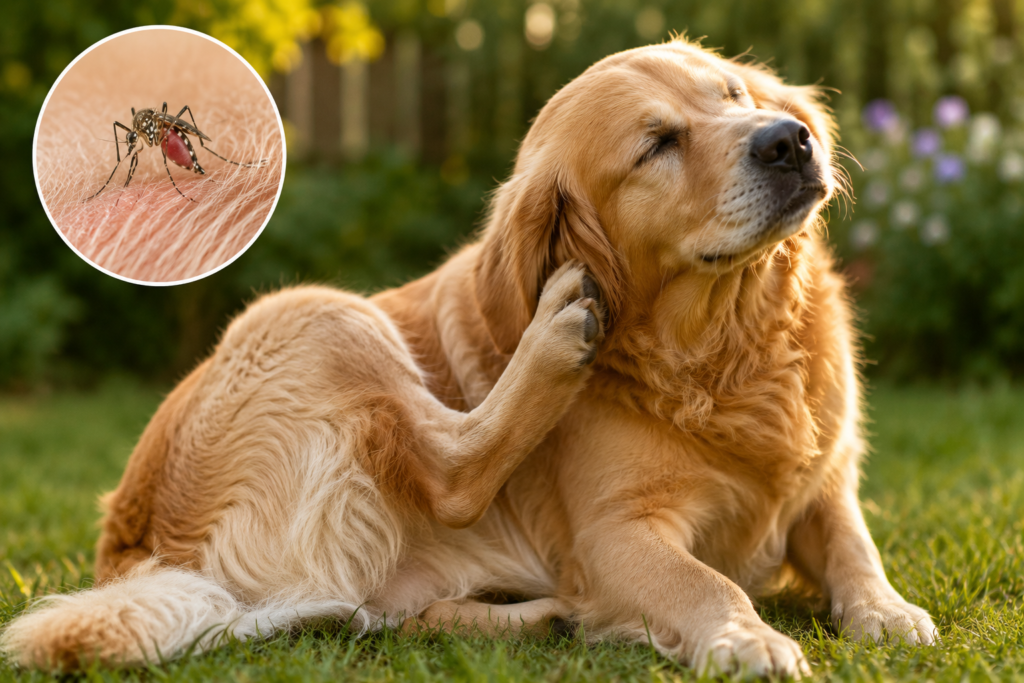
Warm weather means longer walks, evenings outside, open windows—and unfortunately, mosquitoes.
If you’ve ever watched mosquitoes buzzing around you while your dog was lying nearby, you may have wondered whether dogs get bitten too.
The answer is yes. Dogs can get mosquito bites, and while most bites cause nothing more than temporary itching or irritation, mosquitoes can also transmit diseases and parasites to dogs.
Here’s what dog owners should know about mosquito bites, how to recognize them, and how to help protect their dogs.
Can Mosquitoes Bite Dogs Through Their Fur?
A dog’s coat provides some protection, but it doesn’t make them mosquito-proof.
Mosquitoes tend to target areas where the fur is thinner or where skin is easier to reach, including:
- Ears
- Nose and muzzle
- Belly
- Groin
- Around the eyes
- Inside the legs
Dogs with short or thin coats may have more exposed skin than dogs with thick coats.
However, even fluffy dogs can still be bitten.
What Does a Mosquito Bite Look Like on a Dog?
Mosquito bites can be surprisingly difficult to spot, especially under fur.
You may notice a small, raised red bump on an exposed area of skin. Some dogs barely react, while others may become itchy or irritated.
Possible signs include:
- Scratching
- Licking or chewing the area
- Small red bumps
- Mild swelling
- Skin irritation
- Sensitivity when touched
A single mosquito bite usually isn’t a major problem.
The bigger concern is excessive scratching or an unusual reaction to the bite.
Are Mosquito Bites Dangerous for Dogs?
Most individual mosquito bites are irritating rather than dangerous.
However, mosquitoes aren’t only annoying insects. They can transmit parasites and diseases.
For dogs, one of the most important mosquito-related risks is heartworm disease.
Mosquitoes and Heartworm Disease
Heartworm disease is caused by a parasitic worm called Dirofilaria immitis.
Mosquitoes play an essential role in transmitting it.
When a mosquito feeds on an infected animal, it can pick up immature heartworms. After the parasite develops inside the mosquito, the mosquito can transmit infective larvae to another dog through a later bite.
Over time, adult heartworms can live in the dog’s heart, lungs, and associated blood vessels and cause serious damage.
This means that even indoor dogs aren’t completely protected simply because they spend most of their time inside. Mosquitoes can enter homes, and dogs still go outdoors for walks and bathroom breaks.
Talk with your veterinarian about appropriate heartworm prevention based on where you live, your dog’s lifestyle, and local parasite risks.
Can Dogs Be Allergic to Mosquito Bites?
Some dogs are more sensitive to insect bites than others.
A mosquito bite may cause more noticeable redness, swelling, or itching in a sensitive dog.
Seek veterinary advice if the swelling is significant, your dog seems extremely uncomfortable, the affected area continues getting worse, or your dog develops symptoms beyond mild local irritation.
Difficulty breathing, collapse, severe facial swelling, or other signs of a serious allergic reaction require immediate veterinary attention.
Why Is My Dog Scratching After Being Outside?
Mosquitoes are only one possibility.
Outdoor itching can also be related to fleas, ticks, grass, environmental allergies, other insects, or skin irritation.
If your dog keeps scratching long after you’ve come inside—or itching becomes frequent rather than occasional—the problem may not be mosquito bites at all.
Read Why Is My Dog Itching So Much? for other common causes of persistent scratching.
How to Help a Mosquito Bite on a Dog
If your dog has what appears to be a mild mosquito bite and otherwise seems completely normal, you can usually monitor the area.
Try to prevent excessive scratching or chewing because repeated irritation can damage the skin.
A cool compress wrapped in a clean cloth and held gently against the irritated area for a few minutes may help soothe mild swelling or itching.
Avoid applying human anti-itch creams, essential oils, insect repellents, or medications unless your veterinarian confirms they’re safe for your dog.
Some ingredients that are appropriate for people can be unsafe for pets.
How to Protect Your Dog From Mosquitoes
You probably can’t prevent every mosquito from reaching your dog, but you can reduce exposure.
Avoid Peak Mosquito Times
Mosquito activity varies by species and location, but many are particularly active around dawn and dusk.
If mosquitoes are especially bad in your area, consider adjusting longer walks when practical.
Remove Standing Water
Mosquitoes breed in standing water.
Regularly check your yard for water collecting in:
- Buckets
- Plant saucers
- Children’s toys
- Tarps
- Gutters
- Outdoor containers
- Bird baths
Your dog’s outdoor water bowl should contain fresh water and be cleaned regularly rather than being allowed to sit unchanged for long periods.
Use Screens
Window and door screens can help reduce the number of mosquitoes entering your home.
Check for holes or damaged sections, especially during mosquito season.
Ask Your Vet About Prevention
Your veterinarian can recommend parasite prevention appropriate for your dog and geographic area.
This is particularly important when it comes to heartworm prevention.
Can You Use Human Mosquito Repellent on Dogs?
Don’t automatically use your own mosquito spray on your dog.
Human insect repellents may contain ingredients that aren’t intended for pets, and dogs can also lick products applied to their coat or skin.
Products containing DEET, for example, should not be applied to dogs.
Essential oils aren’t automatically safe either. “Natural” doesn’t necessarily mean pet-safe.
Use only mosquito or insect-control products specifically recommended as appropriate for dogs, and follow the product directions carefully.
If you’re unsure, ask your veterinarian before applying anything.
Can Mosquitoes Bite Dogs Indoors?
Yes.
Mosquitoes can enter homes through open doors, windows, damaged screens, and other small openings.
That’s one reason keeping a dog indoors isn’t enough by itself to eliminate mosquito-related disease risk.
Indoor dogs still need parasite prevention when recommended by their veterinarian.
When Should You Call the Vet?
A small mosquito bite that causes mild temporary itching usually isn’t an emergency.
Contact your veterinarian if you notice:
- Significant or increasing swelling
- Severe or persistent itching
- Open sores from scratching
- Signs of skin infection
- Unusual tiredness or weakness
- Persistent coughing
- Difficulty breathing
- Loss of appetite
- Other unexplained symptoms
If your dog develops severe facial swelling, collapses, or has trouble breathing, seek emergency veterinary care immediately.
For more guidance on symptoms that shouldn’t be ignored, see When Should You Take Your Dog to the Vet?
FAQ
Do mosquito bites itch on dogs?
Yes. Mosquito bites can cause itching and mild irritation in dogs, although some dogs react more strongly than others.
Can mosquitoes bite a dog’s nose?
Yes. The nose, muzzle, ears, and other areas with less fur are easier for mosquitoes to reach.
Can mosquitoes bite dogs with thick fur?
They can. Thick fur provides some physical protection, but mosquitoes may still reach areas where the coat is thinner.
Can I put mosquito spray on my dog?
Don’t use human mosquito repellent unless your veterinarian specifically confirms that the product is safe. Use products intended for dogs and follow veterinary or label instructions.
Do dogs need heartworm prevention because of mosquitoes?
Mosquitoes transmit heartworm disease. Whether your dog needs year-round or seasonal prevention can depend on local conditions and veterinary recommendations, so discuss the appropriate prevention plan with your veterinarian.
Final Thoughts
Dogs absolutely can get mosquito bites.
Most bites cause only mild itching or irritation, but mosquitoes can carry parasites—most importantly the parasite responsible for heartworm disease.
Reducing mosquito exposure can help, but prevention is especially important because you can’t realistically stop every mosquito from biting your dog.
Keep standing water around your home to a minimum, avoid using human insect repellents on your dog, and talk with your veterinarian about appropriate parasite prevention.
Disclaimer: This article is for informational purposes only and is not a substitute for professional veterinary advice.