Most dog owners have to leave their dogs home alone sometimes. Whether you’re going to work, running errands, or spending a few hours away from home, it’s normal to wonder how long your dog can comfortably stay by themselves.
There isn’t one perfect number that works for every dog. How long a dog can stay home alone depends on their age, health, personality, bathroom needs, and how comfortable they are with being alone.
Some adult dogs are perfectly content relaxing for several hours, while others become restless or anxious much sooner.
How Long Can an Adult Dog Stay Home Alone?
For many healthy adult dogs, around 4–6 hours alone at a time is a reasonable guideline.
Some well-adjusted adult dogs may occasionally manage longer periods, but regularly leaving a dog alone for 8–10 hours isn’t ideal. Even if they can physically hold their bladder that long, dogs also need movement, interaction, mental stimulation, and opportunities to go outside.
If you regularly work long days, consider arranging a midday break with a family member, neighbor, dog walker, or pet sitter.
Dogs that seem fine alone may simply spend much of that time sleeping. If you’ve ever wondered what’s normal, our guide How Much Sleep Do Dogs Need? explains how much of the day dogs typically spend snoozing.
How Long Can Puppies Be Left Alone?
Puppies generally need much more frequent attention than adult dogs.
Young puppies have small bladders and are still learning where and when they should go to the bathroom. They also need frequent meals, socialization, play, training, and supervision.
As a rough guide:
- Under 3 months: usually only short periods, around 1–2 hours
- 3–4 months: around 2–3 hours
- 5–6 months: around 3–4 hours
- 6+ months: gradually work toward longer periods
These aren’t strict rules. Individual puppies develop at different rates, so bathroom habits and behavior are often better indicators than age alone.
You can also read How Long Can Dogs Hold Their Pee? for a closer look at bladder control at different ages.
What About Senior Dogs?
Senior dogs may need more frequent bathroom breaks even if they were once comfortable staying home alone for much longer.
Older dogs can experience changes in mobility, bladder control, vision, hearing, or cognitive function. Some also become more anxious when separated from their owners.
If your senior dog suddenly struggles with being alone when this was never a problem before, it’s worth discussing the change with your veterinarian.
Does Breed Matter?
Breed can play a role, but personality and routine usually matter more.
Some breeds were developed to work closely alongside people and may naturally seek more human interaction. Others tend to be more independent.
But two dogs of the same breed can behave completely differently when left alone.
Instead of relying only on breed, watch how your dog responds.
Signs Your Dog May Be Alone for Too Long
Dogs can’t tell us they’re struggling, but their behavior often can.
Possible signs include:
- Excessive barking or howling
- Destructive chewing
- Scratching doors or windows
- Bathroom accidents
- Pacing
- Drooling or panting
- Trying to escape
- Becoming extremely excited when you return
- Restlessness or destructive behavior caused by boredom
Not every chewed shoe means separation anxiety. Sometimes a dog simply doesn’t have enough appropriate things to do.
If that’s a possibility, see Signs Your Dog Is Bored for other behaviors to watch for.
How to Make Alone Time Easier for Your Dog
A little preparation can make a big difference.
Exercise Before You Leave
Take your dog for a walk or have a short play session before leaving.
A dog who has had an opportunity to move, sniff, explore, and use the bathroom is more likely to settle down afterward.
Give Them Something to Do
Safe enrichment can help prevent boredom.
Depending on your dog, you might leave a food puzzle, stuffed enrichment toy, lick mat, or another toy you know they can safely use without supervision.
Rotate toys occasionally instead of leaving the same ones available every day.
Create a Comfortable Space
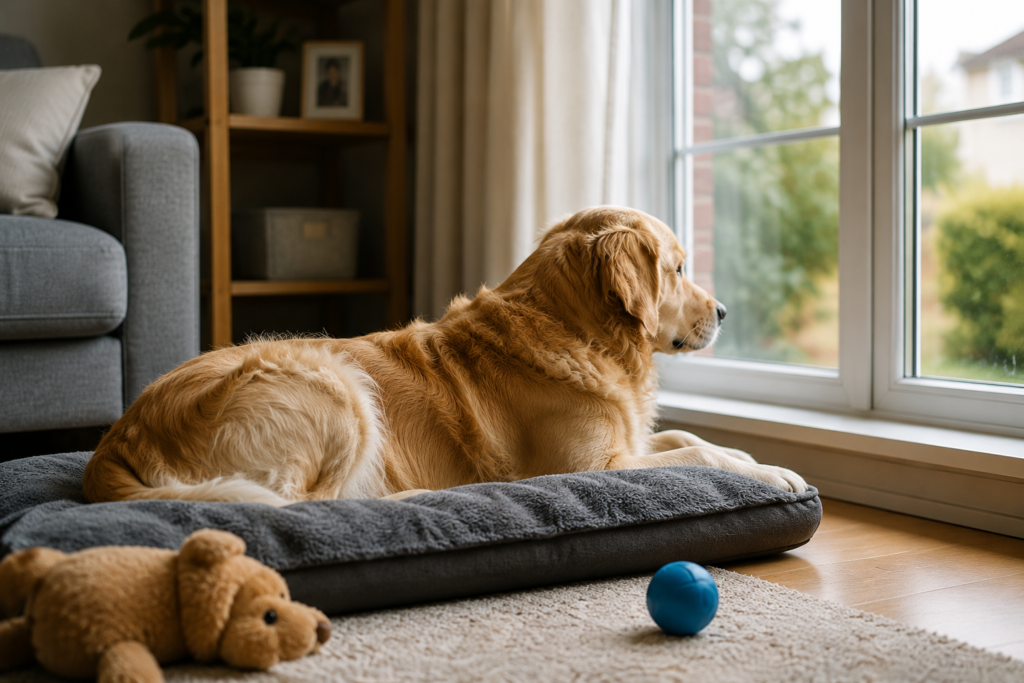
Your dog should have access to a safe, comfortable area with fresh water and somewhere to rest.
Some dogs prefer having access to part of the house, while others feel more secure in a familiar room or designated area.
Keep Departures Calm
You don’t need to turn leaving the house into a big event.
Calm departures and arrivals can help make being alone feel like a normal part of your dog’s routine.
Should You Leave the TV On for Your Dog?
Some owners leave the television, radio, or calming background sounds playing while they’re away.
Whether this helps depends on the dog.
Some dogs seem to enjoy background noise, while others barely notice it. If your dog reacts to animals, doorbells, or other sounds on television, it could actually make them more excited rather than relaxed.
Our guide Can Dogs Watch TV? explains what dogs actually see when they’re looking at a television screen.
Can a Pet Camera Help?
A pet camera can be surprisingly useful because it lets you see what your dog actually does after you leave.
You might discover that your dog sleeps peacefully for most of the afternoon—or that they’re pacing, barking, or showing signs of stress that you weren’t aware of.
A camera can also help you determine when your dog starts becoming restless. That information can be useful when deciding whether they need a midday dog walker or shorter periods alone.
What If You Work 8 Hours a Day?
Working full-time doesn’t automatically mean you can’t have a dog.
The important part is creating a routine that meets your dog’s needs.
For longer workdays, consider arranging:
- A midday dog walker
- A trusted neighbor or family member
- A pet sitter
- Doggy daycare on selected days
- A longer walk before and after work
For many dogs, simply breaking up a long day with one bathroom and exercise break can make a significant difference.
When Being Alone Becomes Separation Anxiety
There’s an important difference between boredom and genuine separation anxiety.
A dog with separation anxiety may become extremely distressed shortly after their owner leaves. They may bark continuously, attempt to escape, destroy doors or windows, drool excessively, pace, or have bathroom accidents despite being house-trained.
Punishment won’t solve separation anxiety.
If your dog shows severe distress whenever they’re left alone, speak with your veterinarian or a qualified canine behavior professional. A gradual behavior plan may be needed.
Final Thoughts
So, how long can dogs stay home alone?
For many healthy adult dogs, about 4–6 hours is a reasonable general guideline, although individual dogs vary considerably. Puppies need much more frequent attention, while senior dogs may need shorter periods alone as they age.
Rather than focusing only on the clock, pay attention to your dog’s behavior.
If they relax, sleep, eat normally, and remain calm when you leave and return, they’re probably handling their routine well. If you’re seeing barking, destruction, accidents, pacing, or other signs of distress, it may be time to shorten their alone time or add a break during the day.
Disclaimer: This article is for informational purposes only and is not a substitute for professional veterinary or behavioral advice.