
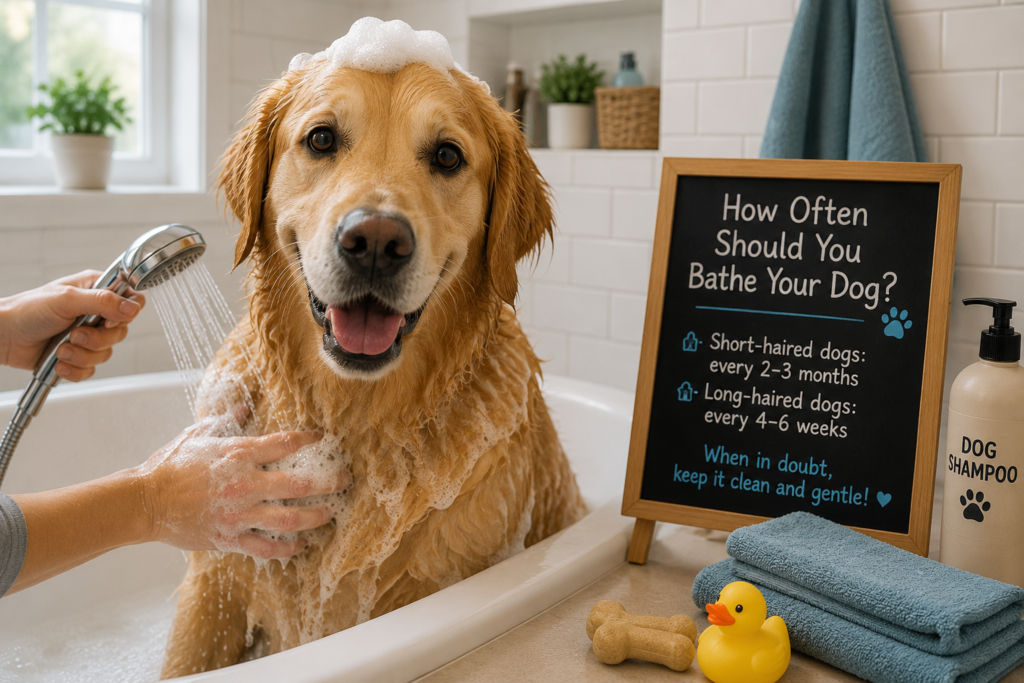
Some dogs seem to find every muddy puddle on a walk, while others can go weeks without looking or smelling dirty. So, how often should you bathe your dog?
There isn’t one bathing schedule that works for every dog. How often your dog needs a bath depends on several factors, including their coat type, skin condition, lifestyle, activity level, and how quickly they get dirty.
For many healthy dogs, bathing every few weeks to every few months may be enough. Others may need baths more frequently, while dogs with certain skin conditions may require a bathing schedule and medicated products recommended by a veterinarian.
The goal isn’t to bathe your dog as often as possible. It’s to keep their skin and coat clean and comfortable without causing unnecessary dryness or irritation.
In this guide, we’ll look at what determines how often a dog should be bathed, signs that it may be time for a bath, whether you can bathe a dog too often, and what you can do to keep your dog clean between baths.
What Determines How Often You Should Bathe Your Dog?
Instead of following a strict calendar, consider your individual dog. Two dogs living in the same household may need completely different grooming routines.
Several factors can affect bathing frequency:
Coat Type
A dog’s coat can make a big difference. Short, smooth coats may be relatively easy to keep clean with regular brushing, while longer, thicker, curly, or double coats may require a more involved grooming routine.
However, having long hair doesn’t automatically mean a dog needs frequent baths. Brushing, coat maintenance, and the dog’s lifestyle matter too.
Lifestyle and Activity Level
A dog that spends most of the day indoors may stay clean much longer than one that regularly hikes, swims, rolls in grass, plays in mud, or spends a lot of time outdoors.
Sometimes the answer is simple: if your dog comes home covered in mud or smelling unpleasant, it may be bath time regardless of when their last bath was.
Skin and Health
Dogs with allergies, infections, or other skin problems may need a specific bathing routine or medicated shampoo. In these cases, bathing frequency should be based on your veterinarian’s recommendations rather than a general schedule.
How Dirty Your Dog Gets
You don’t always need a calendar to tell you when your dog needs a bath. Visible dirt, an unpleasant odor, or something sticky or messy in the coat can all be good reasons for an earlier bath.
How Often Should You Bathe Different Types of Dogs?
There is no universal rule based only on breed or coat length, but your dog’s coat can help you decide how much bathing and grooming they may need.
Short-Haired Dogs
Dogs with short, smooth coats often need relatively little coat maintenance. If they spend most of their time indoors and stay reasonably clean, they may only need an occasional bath when they become dirty or develop a noticeable odor.
Regular brushing can help remove loose hair, dirt, and debris between baths.
Long-Haired Dogs
Long-haired dogs often require more regular grooming because their coats can collect dirt and become tangled or matted.
That doesn’t necessarily mean they need constant bathing. Regular brushing and coat maintenance are just as important, and bathing frequency should still depend on the individual dog’s lifestyle and coat condition.
Double-Coated Dogs
Dogs with double coats, such as Golden Retrievers, German Shepherds, and Huskies, can benefit from thorough brushing to remove loose undercoat and debris.
When they are bathed, it’s especially important to rinse the coat thoroughly and make sure it dries properly. Moisture trapped in a dense coat can contribute to skin irritation.
Curly or Wavy-Coated Dogs
Curly and wavy coats can require more regular grooming to prevent tangles and matting. Some dogs with these coat types are professionally groomed on a regular schedule, which may include bathing as part of the grooming appointment.
The best schedule depends on the individual coat, how quickly it becomes dirty, and how the dog is groomed between baths.
Active and Outdoor Dogs
Dogs that hike, swim, play outdoors, or regularly find mud may need cleaning more often than dogs that spend most of their time indoors.
However, a full shampoo bath isn’t always necessary after every outdoor adventure. Sometimes rinsing muddy paws and legs or brushing dried dirt from the coat is enough.
How Do You Know When Your Dog Needs a Bath?
Instead of bathing your dog according to a strict calendar, pay attention to their coat, skin, smell, and recent activities. Sometimes your dog will make it pretty obvious that bath time has arrived.
Common signs your dog may need a bath include:
- A noticeable unpleasant odor
- Visible dirt or mud in the coat
- A greasy or sticky-feeling coat
- Dirt that brushing alone doesn’t remove
- Something unpleasant or potentially irritating on the fur
- Heavy outdoor activity that leaves the coat dirty
Of course, not every dirty paw requires a full bath. After a muddy walk, rinsing or wiping your dog’s paws and legs may be enough.
Brushing can also remove surprising amounts of loose hair, dried dirt, and debris while helping keep the coat in good condition between baths.
If your dog develops a persistent unusual odor even after bathing, or you notice redness, sores, excessive scratching, hair loss, or changes in the skin or coat, don’t simply increase the number of baths. These signs can have causes that bathing won’t fix, so it’s worth discussing them with your veterinarian.
Can You Bathe a Dog Too Often?
Yes, bathing more often than your individual dog needs can sometimes cause problems, particularly when inappropriate products are used.
A dog’s skin and coat have natural oils that help maintain the skin barrier and coat condition. Frequent shampooing with a product that is too harsh for your dog may contribute to dryness or irritation.
Signs that your dog’s bathing routine or products may not be working well for them can include:
- Dry or flaky skin
- Increased itching after baths
- Redness or irritation
- A dry or dull-looking coat
- Increased sensitivity when the skin is touched
This doesn’t mean that frequent bathing is always harmful. Some dogs with specific skin conditions are intentionally bathed frequently with veterinary-recommended shampoos as part of their treatment.
The important thing is to match the bathing routine and products to the individual dog rather than assuming that more baths automatically mean a healthier dog.
What Shampoo Should You Use on a Dog?
When bathing your dog, use a shampoo specifically formulated for dogs. Human shampoos and other personal-care products are designed for human skin and may contain ingredients or formulations that are not appropriate for regular use on dogs.
Choose a gentle dog shampoo that suits your dog’s coat and skin needs. If your dog has sensitive skin, allergies, recurring itching, or another diagnosed skin condition, ask your veterinarian which type of shampoo is appropriate.
Medicated shampoos should be used according to veterinary instructions. Depending on the product, they may need to stay on the coat for a specific amount of time before rinsing, so always follow the directions carefully.
Whatever shampoo you use, rinse thoroughly. Shampoo residue left in the coat can contribute to irritation, particularly in dogs with thick or dense fur.
Avoid getting shampoo directly into your dog’s eyes, ears, nose, or mouth, and use lukewarm rather than very hot water.
Brushing Is Just as Important as Bathing
Bathing is only one part of maintaining your dog’s coat. Regular brushing helps remove loose hair, dirt, and debris and can help prevent tangles and mats in dogs with longer or more demanding coats.
Brushing also gives you an opportunity to check your dog’s skin for unusual lumps, redness, irritation, ticks, sore areas, or other changes you might otherwise miss.
How often you need to brush depends on the coat. Some short-haired dogs may need only occasional brushing, while long, curly, or thick-coated dogs may need much more frequent grooming.
If you’re building an at-home grooming routine, see our Best Dog Grooming Kits in 2026 guide for grooming tools and complete kit options.
How to Keep Your Dog Clean Between Baths
Not every bit of dirt requires a full bath. A few simple grooming habits can help keep your dog clean and comfortable between shampoo sessions.
Brush Regularly
Brushing removes loose fur, dried dirt, and debris before they build up in the coat. It’s particularly helpful after outdoor walks and for dogs with longer or thicker coats.
Clean Muddy Paws
After wet or muddy walks, rinse or wipe your dog’s paws rather than bathing their entire body. Remember to check between the toes and around the paw pads for trapped dirt or debris.
Wash Bedding Regularly
Sometimes the smell you notice on your dog is coming from their bed, blankets, or other frequently used fabrics. Keeping bedding clean can help your dog stay fresher between baths.
Check the Ears
Look at your dog’s ears regularly, especially after swimming or bathing. If you notice persistent odor, redness, discharge, swelling, or discomfort, contact your veterinarian rather than repeatedly trying to clean the ears yourself.
Keep Up With Dental Care
Not every unpleasant dog smell comes from the coat. Bad breath can sometimes make owners think their entire dog needs a bath when the real issue may be coming from the mouth.
Regular dental care is an important part of your dog’s overall grooming routine. If you’re unsure how frequently dental care should be done at home, read How Often Should You Brush Your Dog’s Teeth?
Looking for products to make the routine easier? See our Best Dog Toothbrushes and Dental Chews in 2026 for toothbrushes, dental chews, and other options for at-home dental care.
Spot Clean When Needed
If only a small area is dirty, cleaning that area may be enough. This can be especially useful after meals, walks, or minor outdoor adventures when the rest of the coat is still clean.
What About Dogs That Swim Frequently?
Dogs that love swimming may need a slightly different grooming routine, particularly if they regularly swim in pools, lakes, rivers, or the ocean.
After swimming, check the coat and skin and rinse your dog with fresh water when appropriate to remove chlorine, salt, sand, or debris. Pay particular attention to dense coats that can hold moisture for a long time.
Dry your dog thoroughly, including areas where moisture can remain trapped. Dogs with recurring ear or skin problems may need individualized advice from their veterinarian about swimming and post-swim care.
How Often Should You Bathe a Puppy?
Puppies don’t usually need frequent full baths unless they get particularly dirty, have an accident, or need bathing for a specific reason.
When a bath is necessary, keep the experience calm and positive. Use lukewarm water and a gentle shampoo formulated for dogs, and make sure your puppy stays warm during and after the bath.
Introducing grooming gradually while your puppy is young can make future baths, brushing, nail care, and other grooming routines much easier. Let them become comfortable with being touched around their paws, ears, legs, and body without turning every grooming experience into a long session.
If your puppy has skin irritation, persistent itching, unusual hair loss, or another skin concern, ask your veterinarian for advice before changing their bathing routine or trying medicated products.
How Often Should You Bathe a Senior Dog?
Senior dogs don’t necessarily need baths more often simply because they are older. Their bathing schedule should still depend on their coat, skin, lifestyle, and individual needs.
However, older dogs may need a little more help staying clean if mobility problems make normal grooming more difficult or if they spend more time lying down.
Make bath time as comfortable and safe as possible. A non-slip surface can help dogs that have difficulty standing, and shorter bathing sessions may be easier for dogs with reduced mobility.
Pay extra attention to changes in the skin and coat. New lumps, sores, persistent odors, hair loss, or skin irritation should be discussed with your veterinarian rather than treated simply by bathing more frequently.
Frequently Asked Questions
How often should you bathe your dog?
There is no single schedule that works for every dog. Bathing frequency depends on coat type, skin condition, lifestyle, activity level, and how dirty your dog gets. Many healthy dogs only need occasional baths, while others may need them more frequently.
Is it okay to bathe a dog once a week?
Some dogs can be bathed weekly when there is a specific reason and an appropriate dog shampoo is used. Dogs with certain skin conditions may even have frequent bathing prescribed by a veterinarian. However, a healthy dog that stays relatively clean may not need weekly baths.
Can I bathe my dog once a month?
For many dogs, a monthly bath can be reasonable, but it isn’t a rule every dog needs to follow. If your dog stays clean and has healthy skin and coat, they may be comfortable going longer between baths.
How do I know if I’m bathing my dog too often?
Dry or flaky skin, increased itching after bathing, redness, irritation, or changes in coat condition may indicate that the bathing routine or products aren’t suitable for your dog. If symptoms persist, consult your veterinarian.
Should I bathe my dog if they smell?
A noticeable dirty-dog odor can be a good reason for a bath, particularly if the coat is also dirty. However, persistent or unusual odors can sometimes come from the skin, ears, mouth, or another health issue. If the smell quickly returns after bathing or is accompanied by other symptoms, contact your veterinarian.
Should I brush my dog before or after a bath?
Brushing before a bath can help remove loose hair, dirt, and tangles. Depending on the coat type, brushing again after the coat is completely dry can also help keep it neat and remove remaining loose fur.
Can I use human shampoo on my dog?
It’s better to use a shampoo specifically formulated for dogs. Human shampoos are designed for human skin and may not be appropriate for your dog’s skin and coat. If your dog has sensitive or problematic skin, ask your veterinarian which product is suitable.
Final Thoughts
So, how often should you bathe your dog? There isn’t one perfect schedule that works for every dog.
Your dog’s coat type, skin, lifestyle, activity level, and overall health all play a role in determining how often a bath is actually necessary. Some dogs stay clean for weeks or even months, while others seem to find every muddy puddle in the neighborhood.
Rather than following a strict calendar, pay attention to your individual dog. Regular brushing, cleaning muddy paws, washing bedding, and keeping up with basic grooming can help keep your dog clean and comfortable between baths.
When bath time does arrive, use products designed for dogs, rinse the coat thoroughly, and make the experience as comfortable as possible. If you notice persistent itching, redness, unusual odors, hair loss, or other changes in your dog’s skin or coat, talk to your veterinarian rather than simply increasing the number of baths.
A good grooming routine isn’t about bathing your dog as often as possible — it’s about finding the routine that keeps their skin healthy, their coat comfortable, and your dog feeling their best.
Disclaimer
This article is for general informational and educational purposes only and is not a substitute for professional veterinary advice, diagnosis, or treatment. Bathing and grooming needs can vary depending on your dog’s health, skin, coat, and individual needs. If your dog has persistent skin irritation, itching, hair loss, unusual odors, or other health concerns, consult your veterinarian.
Pingback: - Signs Your Dog Is Bored | Dog Care Tips