Most dogs wear a collar every day, but many owners wonder if it’s safe to leave it on all the time.
The answer depends on your dog’s lifestyle, the type of collar, and whether the collar fits properly. In many cases, dogs can wear collars throughout the day, but there are situations when removing it is the safer choice.
When It’s Safe for Dogs to Wear a Collar
A properly fitted collar is generally safe for everyday use.
Most dogs can comfortably wear a collar during:
- Walks
- Training sessions
- Travel
- Outdoor activities
- Daily identification purposes
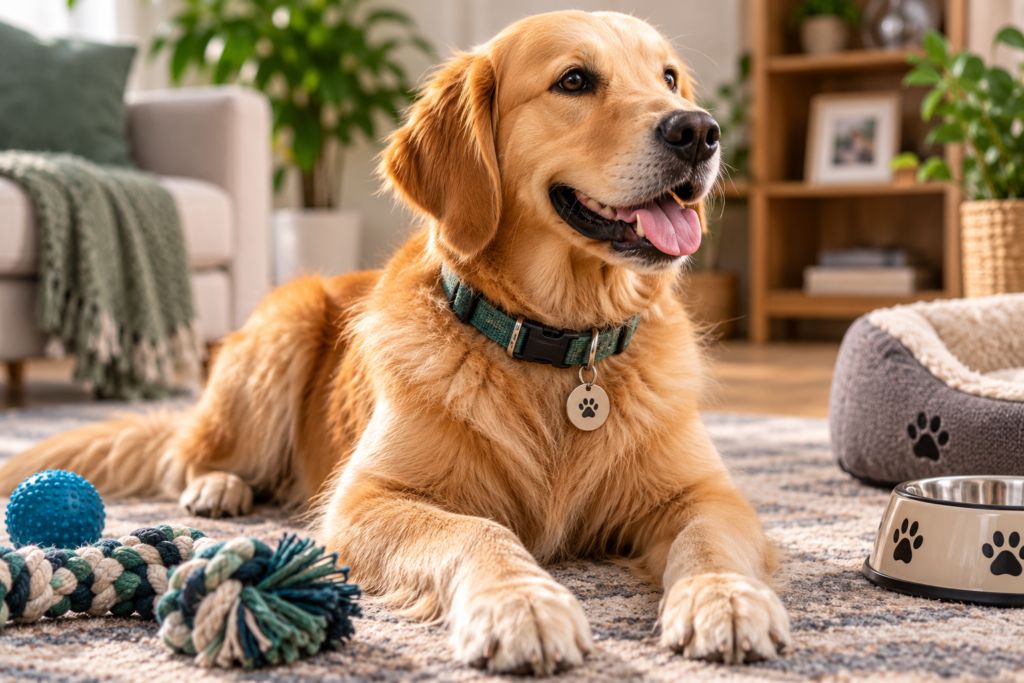
A collar with an ID tag helps people contact you quickly if your dog gets lost.
When You Should Remove Your Dog’s Collar
There are times when removing the collar is recommended.
Examples include:
- Sleeping in a crate
- Unsupervised play with other dogs
- Grooming sessions
- Bath time
- Swimming
Collars can sometimes become caught on furniture, fences, crates, or another dog’s jaw during rough play.
Should Dogs Wear Collars While Sleeping?
Many dogs can sleep comfortably while wearing a properly fitted collar, but that doesn’t mean every dog needs to wear one overnight.
If your dog sleeps in a secure home and there is little risk of them getting outside, removing the collar at night can give the skin and fur around the neck a break. This may be especially helpful for dogs with sensitive skin, thick coats, or irritation around the collar area.
However, some owners prefer to keep a collar and ID tag on their dog at all times in case the dog unexpectedly gets outside. The best choice depends on your home, your dog, and how securely the collar fits.
If you do leave the collar on overnight, check regularly for rubbing, hair loss, redness, or signs of discomfort.
Should Dogs Wear Collars in a Crate?
It is generally safer to remove a dog’s collar when they are left unattended in a crate. Tags, buckles, or parts of the collar can potentially become caught on crate bars or other objects.
The same consideration applies to unsupervised situations where a collar could become snagged.
If your dog spends time in a crate, make putting the collar back on part of your routine before walks or going outside.
Signs a Collar May Not Fit Correctly
Check your dog’s collar regularly.
Watch for:
- Hair loss around the neck
- Skin irritation
- Red marks
- Excessive scratching
- Difficulty slipping two fingers under the collar
A collar should be snug but never tight.
Choosing the Right Collar
Not all collars are designed for all-day wear.
Popular options include:
- Nylon Collar – Great for everyday use and one of the most common choices for dog owners.
- Leather Collar – Durable, comfortable, and suitable for daily wear.
- Waterproof Collar – Ideal for active dogs that enjoy swimming, hiking, or outdoor adventures.
- Personalized Collar – Combines identification with style and can include your dog’s name or phone number.
Should Puppies Wear Collars All Day?
Puppies can wear collars during the day, but they grow quickly.
Check the fit every week and adjust or replace the collar as needed.
Comfort is especially important during the first few months.
How Tight Should a Dog Collar Be?
A dog collar should be secure enough that it cannot easily slip over the dog’s head, but loose enough to remain comfortable.
A commonly used guideline is the two-finger rule: you should generally be able to slide two fingers between the collar and your dog’s neck without forcing them.
Check the fit regularly, especially with puppies, dogs that gain or lose weight, and breeds with thick or changing coats.
A collar that is too tight may cause rubbing, irritation, or hair loss, while one that is too loose may allow the dog to slip out of it.
Even a well-fitting collar eventually wears out, so it’s worth checking it regularly. See our guide on How Often Should You Replace a Dog Collar? for signs that it may be time for a new one.
Quick Checklist
Before leaving a collar on all day, make sure:
✓ It fits properly
✓ The material is comfortable
✓ The ID tag is attached securely
✓ There are no signs of irritation
✓ The collar is not damaged
Need help choosing the right ID tag? Read our guide: What Information Should Be on a Dog ID Tag?
Looking for personalized pet accessories? Browse our Gift Guides for dog lovers.
FAQ
Should dogs wear collars 24/7?
Not necessarily. Many dogs wear collars safely throughout the day, but there are situations when removing them may be preferable, particularly during crate time, grooming, bathing, or certain types of unsupervised play.
Should I take my dog’s collar off at night?
It depends on your dog and home environment. Removing it can give the neck a break, while keeping an ID collar on provides identification if the dog unexpectedly gets outside.
Can a dog collar cause hair loss?
A collar that is too tight, rubs repeatedly, or irritates the skin can contribute to hair loss around the neck. Check the fit and the skin underneath regularly.
How often should I check my dog’s collar?
Check it regularly for fit, worn stitching, damaged hardware, fraying, and skin irritation. Puppies need particularly frequent fit checks because they grow quickly.
Final Thoughts
A collar is an important part of your dog’s daily routine, but it shouldn’t be ignored. Regularly checking the fit, condition, and comfort of the collar can help prevent accidents and keep your dog happy.
While many dogs can safely wear a collar throughout the day, there are times when removing it is the better option. Paying attention to your dog’s needs and choosing the right collar can make a big difference in both safety and comfort.
Disclaimer: This article is for general informational purposes only and is not a substitute for professional veterinary advice. If your dog has skin irritation, hair loss, pain, or another problem around the neck or collar area, consult your veterinarian.