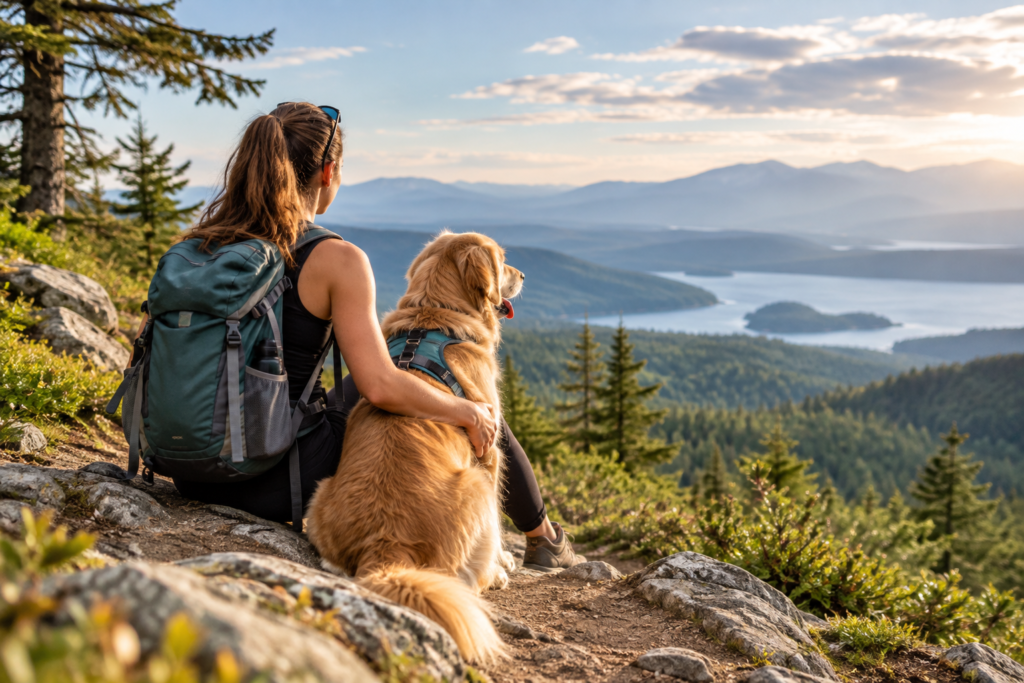
Hiking with your dog can be one of the best ways to spend time together. A quiet trail, plenty of new smells, and a few hours outdoors can turn an ordinary walk into a real adventure.
But before planning a long trail, there’s an important question to ask:
How far can a dog actually hike?
There isn’t one distance that works for every dog. A healthy, well-conditioned adult dog may comfortably handle several miles, while a puppy, senior dog, or dog that normally only takes short neighborhood walks may need a much shorter route.
Age, fitness level, breed, weather, terrain, and overall health all matter.
Here’s how to choose a hiking distance that makes sense for your dog.
How Many Miles Can a Dog Hike?
There is no universal mileage limit for dogs.
Some healthy, active adult dogs that have gradually built up their endurance may be comfortable on hikes of 5–10 miles or more, while dogs that are new to hiking may be better starting with just 1–3 miles.
Rather than focusing only on mileage, consider:
- your dog’s normal activity level
- age
- breed and body type
- overall health
- trail difficulty
- elevation changes
- temperature and humidity
- access to water
- how often your dog gets breaks
A three-mile hike over steep, rocky terrain can be much harder than a five-mile walk on a relatively flat trail.
If your dog currently gets most of their exercise from neighborhood walks, our guide to How Long Should Dog Walks Be? can help you evaluate their usual activity level before increasing the distance.
How Far Can a Puppy Hike?
Puppies may have endless enthusiasm, but that doesn’t mean they are ready for long hikes.
Their bodies are still developing, and repetitive or strenuous exercise can place unnecessary stress on growing joints.
Short walks and opportunities to explore are usually a better choice than trying to cover a specific number of miles.
For a young puppy, focus on:
- short outings
- easy terrain
- plenty of breaks
- allowing the puppy to set the pace
- avoiding long, repetitive climbs
- keeping the experience positive
You can gradually introduce longer adventures as your puppy matures.
Because growth rates vary considerably between breeds, ask your veterinarian when your individual dog is ready for more strenuous hiking.
How Far Can an Adult Dog Hike?
Healthy adult dogs generally have the greatest potential for longer hikes, but conditioning still matters.
A dog that spends most days taking 20-minute walks shouldn’t suddenly be expected to complete an eight-mile mountain trail.
Start with an easy hike similar to the distance your dog already walks comfortably.
If your dog handles it well and appears completely recovered afterward, you can gradually increase the distance over subsequent outings.
For example, you might progress from:
2 miles → 3 miles → 4 miles → longer trails
rather than jumping directly from short neighborhood walks to an all-day hike.
Gradual conditioning helps build endurance while also giving you a chance to learn how your dog responds to different terrain.
What About Senior Dogs?
Older dogs can still enjoy hiking.
In fact, an easy trail can provide exercise, mental stimulation, and plenty of interesting smells.
However, senior dogs may tire faster and can be more sensitive to heat, steep climbs, or uneven terrain.
Choose:
- shorter routes
- flatter trails
- softer surfaces when possible
- frequent rest stops
- cooler parts of the day
Pay particular attention to how your dog moves both during the hike and later that day.
A dog that seems enthusiastic on the trail but becomes unusually stiff or reluctant to move afterward may have done too much.
If your senior dog has arthritis, heart disease, breathing problems, or another medical condition, talk with your veterinarian before increasing their exercise.
Does Breed Affect How Far a Dog Can Hike?
Absolutely.
Breed doesn’t determine hiking ability by itself, but body structure and genetics can influence endurance.
Athletic breeds developed for sustained activity may often adapt well to longer hikes once properly conditioned.
Other dogs may be better suited to shorter adventures.
For example, brachycephalic breeds — dogs with short, flat faces — can have greater difficulty cooling themselves efficiently and may struggle with strenuous exercise, particularly in warm weather.
Very small dogs can be surprisingly capable hikers, but don’t assume that they need to match the mileage of a larger athletic dog.
Your individual dog matters more than trying to reach a particular number.
Fitness Level Matters More Than You Think
One of the biggest mistakes is assuming that an energetic dog is automatically a fit dog.
Excitement and physical conditioning aren’t the same thing.
Your dog may happily sprint toward the trailhead even if their body isn’t prepared for several hours of exercise.
Before attempting longer hikes, gradually increase regular walking distance.
You can also introduce:
- gentle hills
- different walking surfaces
- slightly longer weekend walks
- controlled outdoor exploration
Think of it as training for the hike rather than simply taking the hike.
Terrain Can Completely Change the Difficulty
Distance alone doesn’t tell you how demanding a trail will be.
Consider two five-mile hikes.
One follows a mostly flat woodland path.
The other includes steep climbs, loose rocks, exposed sections, and significant elevation gain.
Those are completely different workouts.
Before choosing a trail, check:
Elevation gain: Steep climbs require considerably more effort.
Surface: Sharp rocks, gravel, hot surfaces, and rough terrain can be hard on paws.
Shade: Exposed trails can become much hotter.
Water access: Never assume streams or lakes will provide safe drinking water.
Escape routes: Know whether you can shorten the hike if your dog becomes tired.
For your first few hikes together, an easy loop with several opportunities to turn back is usually preferable to a remote point-to-point trail.
Watch the Temperature
Heat can turn an otherwise easy hike into a dangerous one.
Dogs don’t regulate body temperature the same way humans do, and strenuous activity increases heat production.
Before heading out, check the forecast and consider how exposed the trail will be.
If you’re unsure whether conditions are appropriate, read When Is It Too Hot to Walk Your Dog? before deciding to go.
During warm weather, choose cooler times of day, seek shaded trails, take frequent breaks, and carry enough water.
Never push your dog to finish a planned distance simply because you want to reach the end of the trail.
How Much Water Does a Dog Need While Hiking?
Always carry water specifically for your dog.
Don’t rely on finding a stream along the way. Natural water sources can contain bacteria, parasites, algae, or other contaminants.
Offer small amounts of fresh water regularly rather than waiting until your dog appears extremely thirsty.
A portable bottle or collapsible bowl can make trail stops much easier.
If you need one, we’ve compared several options in Best Dog Water Bottles for Walks and Travel in 2026.
For longer hikes, bring more water than you expect to need. Unexpected heat, wrong turns, or a slower return trip can easily extend your time outdoors.
Signs Your Dog Has Hiked Too Far
Your dog can’t tell you when they’ve reached their limit, so watch their behavior closely.
Possible signs that your dog needs to stop or rest include:
- slowing down significantly
- repeatedly lying down
- excessive panting
- lagging behind
- refusing to continue
- stumbling or appearing uncoordinated
- repeatedly seeking shade
- limping
- licking or favoring a paw
- appearing unusually tired or distressed
Don’t wait for severe symptoms before turning around.
The goal isn’t to see how far your dog can go. It’s to finish the hike while your dog is still comfortable.
If your dog shows signs of heatstroke, collapse, breathing difficulty, severe weakness, or another emergency, seek veterinary care immediately.
Don’t Forget Your Dog’s Paws
Paw problems can end a hike surprisingly quickly.
Check your dog’s paws before leaving and again during longer hikes.
Look for:
- cuts
- cracks
- abrasions
- thorns
- debris between the toes
- damaged nails
Dogs that mostly walk on grass or smooth sidewalks may need time to adjust to rough trail surfaces.
Again, build difficulty gradually.
Protect Your Dog From Ticks
Wooded and grassy hiking areas can expose dogs to ticks.
Check your dog thoroughly after hiking, particularly around the ears, neck, legs, paws, and other areas where ticks can hide.
Your dog should also be on an appropriate parasite-prevention plan recommended for your area.
We’ve covered additional precautions in How to Protect Dogs From Ticks.
What Should You Bring Hiking With a Dog?
Even for a relatively short hike, a few essentials can make a big difference.
Consider packing:
- fresh water
- collapsible water bowl or dog water bottle
- leash and secure harness
- poop bags
- treats
- basic first-aid supplies
- tick-removal tool
- identification tags
- paw protection when appropriate
For longer or more challenging adventures, having the right gear becomes even more important.
Looking for a secure and comfortable harness for the trail? Check out our guide to the [Best Dog Hiking Harnesses in 2026] for lightweight, reflective, escape-resistant and padded options for different types of hikes.
And if you’re looking specifically for a comfortable way for your dog to carry some lightweight essentials:
👉 Coming next: #13 – our picks for the best dog hiking backpacks in 2026.
How to Build Your Dog Up to Longer Hikes
If you eventually want to tackle longer trails together, don’t measure progress only by miles.
Start with a distance your dog already handles easily.
Then gradually increase either:
distance OR difficulty — not everything at once.
For example, don’t simultaneously double the mileage, choose a steeper trail, and hike on a much hotter day.
After each hike, observe your dog for the rest of the day and the following morning.
If they’re unusually exhausted, stiff, sore, or reluctant to walk, scale the next outing back.
FAQ
Can a dog hike 5 miles?
Many healthy, conditioned adult dogs may be capable of a five-mile hike, but it depends on the individual dog and trail conditions. A dog accustomed only to short walks should build up gradually rather than attempting five miles immediately.
Can a dog hike 10 miles?
Some fit adult dogs can hike 10 miles or more after appropriate conditioning. However, terrain, temperature, elevation, breed, health, and access to water all affect whether that distance is appropriate.
How far can a small dog hike?
Size alone doesn’t determine hiking ability. Some small dogs are energetic and athletic hikers. Focus on your dog’s fitness, health, terrain, and comfort rather than assuming they cannot hike because they’re small.
How do I know if my dog is tired while hiking?
Slowing down, lagging behind, excessive panting, repeatedly stopping or lying down, seeking shade, limping, or refusing to continue are all reasons to stop and assess your dog.
Should dogs eat during a long hike?
For longer outings, small treats can be useful, but feeding a large meal immediately before or during strenuous exercise may not be appropriate. If you’re planning unusually long or demanding hikes, discuss your dog’s feeding and hydration needs with your veterinarian.
Final Thoughts
So, how far can a dog hike?
There isn’t one magic number.
For one dog, two miles may be a perfect adventure. Another conditioned adult dog may comfortably handle much longer trails.
What matters most is matching the hike to your dog’s age, health, fitness level, and the conditions that day.
Start conservatively, build endurance gradually, bring plenty of water, and pay attention to what your dog is telling you through their behavior.
The best hike isn’t necessarily the longest one.
It’s the one where both of you get home happy and ready for the next adventure.
This article is for general informational purposes only and is not a substitute for professional veterinary advice. If you have concerns about your dog’s health, fitness, or ability to exercise, consult your veterinarian.