Snuffle mats have become a popular enrichment tool for dogs, but are they actually good for them?
For many dogs, the answer is yes.
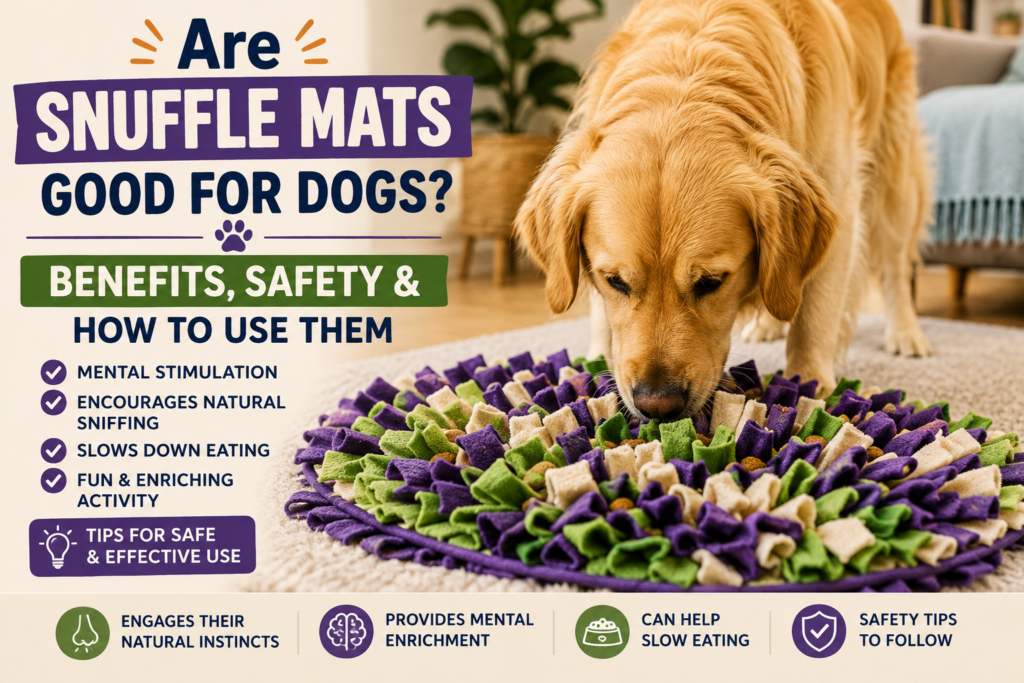
A snuffle mat turns treats or part of a meal into a simple scent-based activity. Instead of eating directly from a bowl, your dog uses their nose to search through strips and folds of fabric to find hidden food.
This type of activity encourages natural foraging behavior and can provide useful mental stimulation, particularly for dogs that need more interesting ways to use their brain during the day.
However, snuffle mats aren’t suitable for every dog or every situation. They need to be introduced correctly, and most should not be treated as toys that can automatically be left with a dog unsupervised.
Here’s what you should know before using one.
What Is a Snuffle Mat?
A snuffle mat is an enrichment mat made with layers, folds, or strips of fabric where you can hide dry dog food or treats.
Once the food is scattered throughout the mat, your dog has to sniff around and move through the material to find it.
Instead of receiving food immediately, your dog gets an opportunity to work for it using one of their strongest senses: smell.
Snuffle mats can be used for:
- Mental enrichment
- Slower feeding
- Encouraging sniffing and foraging
- Adding variety to mealtime
- Giving bored dogs an additional activity
They don’t require complicated training either. Most dogs quickly understand the idea once they smell food hidden inside.
If you’d like to try one with your dog, check out our guide to the Best Snuffle Mats for Dogs in 2026, where we compare six different options for nosework and enrichment.
Are Snuffle Mats Good for Dogs?
For many dogs, snuffle mats can be an excellent enrichment activity.
Their biggest advantage is that they encourage dogs to use their noses.
Dogs naturally explore their environment through scent, and searching for hidden food gives them an opportunity to perform this behavior in a controlled environment.
A snuffle mat can be especially useful on days when your dog needs additional indoor enrichment—for example, during bad weather or when your usual routine changes.
However, a snuffle mat shouldn’t replace walks, exercise, social interaction, or other forms of enrichment.
Think of it as one activity in a varied routine rather than a complete solution to boredom.
If you’re seeing other signs that your dog may need more stimulation, read our guide Signs Your Dog Is Bored.
Benefits of Snuffle Mats for Dogs
1. They Provide Mental Stimulation
Finding dozens of pieces of kibble hidden among fabric strips requires more effort than eating the same food from a bowl.
Your dog has to locate each piece using scent and work out how to reach it.
That makes a snuffle mat a simple way to add mental activity to an ordinary meal.
If you’re looking for other ways to challenge your dog’s brain, see our guide to the Best Dog Enrichment Toys for Mental Stimulation in 2026.
2. They Encourage Natural Sniffing Behavior
Dogs experience much of their world through smell.
A snuffle mat creates a small foraging environment where they can sniff, search, and investigate.
Rather than simply placing treats in front of your dog, you’re giving them an opportunity to find the reward themselves.
3. They Can Slow Down Mealtime
Some dogs seem to inhale their kibble almost immediately.
Scattering part or all of a dog’s dry meal through a snuffle mat can make them search for individual pieces instead.
This naturally makes eating more interactive and may slow down dogs that otherwise finish their food very quickly.
4. They’re Useful for Indoor Enrichment
There will inevitably be days when outdoor activities are limited.
Rain, extreme heat, schedule changes, or other circumstances may mean your dog spends more time indoors than usual.
A short scent-based activity can add something different to the day without requiring a huge amount of space.
5. They Can Add Variety to Your Dog’s Routine
Even good enrichment activities can become less interesting when they’re exactly the same every day.
You can rotate a snuffle mat with other activities such as stuffed toys, food dispensers, scent games, and interactive puzzles.
For more options, take a look at our Best Interactive Puzzle Toys for Dogs in 2026.
Are Snuffle Mats Safe for Dogs?
Snuffle mats can be safe when they’re used appropriately, but they are not indestructible dog toys.
Most are made from fabric or fleece, which means a determined dog may be able to pull pieces off, chew the material, or potentially swallow it.
That’s why supervision is important, particularly when your dog is first learning to use one.
A dog should be sniffing and searching through the mat—not trying to destroy or eat it.
If your dog begins chewing the fabric, pulling pieces off, or attempting to swallow parts of the mat, remove it.
This is particularly important for dogs with a history of destroying and eating fabric toys.
Can You Leave a Dog Alone With a Snuffle Mat?
This is where owners need to be particularly careful.
A snuffle mat may look harmless, but it shouldn’t automatically be considered an unsupervised toy.
Some manufacturers specifically recommend supervised use and advise owners to put the mat away once the enrichment session is finished.
That means a snuffle mat is generally better treated as a structured enrichment activity rather than something you simply leave on the floor all day.
If you’re looking specifically for ideas for times when your dog stays home without you, see our guide Best Toys for Dogs Home Alone in 2026.
Even then, any new product should first be introduced and tested while you’re present.
How to Use a Snuffle Mat
Using one is straightforward.
Start by placing the mat on a flat, non-slip surface.
For your dog’s first session, scatter several pieces of kibble or treats on top of the mat where they’re relatively easy to find.
Let your dog sniff them out.
Once your dog understands the game, gradually hide food deeper between the fabric strips and folds.
You don’t need to make the first session difficult. If your dog can’t find anything, they may simply lose interest.
As they become more experienced, you can make the search more challenging.
What Can You Put in a Snuffle Mat?
Dry foods generally work best because they’re easier to hide and less messy.
You could use:
- Your dog’s regular kibble
- Small dry training treats
- Broken pieces of larger treats
- A combination of kibble and occasional treats
Using part of your dog’s regular meal is an easy way to provide enrichment without automatically adding lots of extra calories.
Avoid foods that are unsafe for dogs, and consider your dog’s individual dietary needs.
How Long Should a Dog Use a Snuffle Mat?
There’s no need for a snuffle mat session to last for hours.
For many dogs, a short enrichment session is enough.
Once your dog has found the food, the activity is essentially finished and the mat can be put away.
Putting it away between sessions may also help keep the activity interesting rather than leaving the mat available all the time.
How Often Can Dogs Use a Snuffle Mat?
A snuffle mat can be incorporated into your dog’s enrichment routine regularly, provided your dog enjoys using it and interacts with it safely.
You could use it for part of breakfast one day and choose a stuffed toy or puzzle feeder another day.
Rotating enrichment activities provides different types of challenges and may help prevent the routine itself from becoming repetitive.
Are Snuffle Mats Good for Puppies?
Snuffle mats can be useful for puppies, but puppies also tend to investigate objects with their mouths.
That makes supervision especially important.
Start with an easy search and watch closely to make sure your puppy is interested in finding food rather than chewing the mat.
If they begin pulling at or eating the material, remove it and try another type of enrichment.
Are Snuffle Mats Good for Senior Dogs?
They can be.
A simple scent-based activity may provide mental enrichment without requiring vigorous physical exercise.
However, the activity should always suit the individual dog.
For senior dogs with mobility, vision, dental, dietary, or other health concerns, adjust enrichment accordingly and speak with your veterinarian if you’re unsure what activities are appropriate.
Snuffle Mat vs. Puzzle Toy: Which Is Better?
Neither is automatically better.
They simply provide different experiences.
A snuffle mat focuses primarily on sniffing and searching, while many puzzle toys require dogs to push, slide, rotate, or manipulate pieces to reveal food.
Some dogs strongly prefer one style over the other.
Using both can provide greater variety: a snuffle mat one day, a food puzzle another day, and a stuffed enrichment toy another.
The best choice is the one your dog enjoys and can use safely.
FAQ
Do snuffle mats mentally stimulate dogs?
Yes. Searching for hidden food requires dogs to use their sense of smell and actively forage rather than simply eating from a bowl.
Can I use my dog’s regular food in a snuffle mat?
Yes. Dry kibble works particularly well and allows you to turn part of your dog’s normal meal into an enrichment activity without necessarily adding extra treats.
Can dogs use snuffle mats every day?
Many dogs can use them regularly if they enjoy the activity and use the mat safely. Rotating different enrichment activities can provide more variety.
Should I leave a snuffle mat out all day?
Generally, it’s better to treat it as an enrichment activity and put it away after the food has been found. This is particularly important if your dog might chew or destroy the fabric.
Are snuffle mats good for dogs with anxiety?
Sniffing activities can be enjoyable and engaging, but a snuffle mat isn’t a treatment for anxiety or separation-related problems. Dogs showing persistent anxiety or distress should be evaluated by a veterinarian or qualified behavior professional.
Do snuffle mats replace walks?
No. Snuffle mats provide mental enrichment but don’t replace appropriate exercise, outdoor exploration, social interaction, or opportunities to sniff during walks.
Final Thoughts
So, are snuffle mats good for dogs?
For many dogs, yes. They’re a simple way to encourage sniffing, turn food into an activity, and add mental stimulation to the daily routine.
But they’re not appropriate for every dog.
If your dog tries to shred or eat fabric, a snuffle mat may not be the best enrichment choice. Introduce it under supervision, watch how your dog interacts with it, and remove it when the session is over.
Used appropriately, a snuffle mat can be another useful tool for making your dog’s day a little more interesting.
This article is for informational purposes only and is not a substitute for professional veterinary or behavioral advice. If you have concerns about your dog’s health or behavior, consult your veterinarian or a qualified canine behavior professional.