Warm, sunny weather can make you want to spend more time outside with your dog. But when temperatures start climbing, a normal daily walk can become uncomfortable — and potentially dangerous — much faster than many owners realize.
Dogs don’t regulate body temperature the same way humans do, and hot pavement can become uncomfortable or burn paws even when the air temperature doesn’t seem extreme.
So, when is it too hot to walk your dog?
There isn’t one temperature that is safe or unsafe for every dog. Air temperature, humidity, direct sunlight, pavement temperature, your dog’s breed, age, health, and even the length and intensity of the walk all matter.
Here’s how to decide whether it’s safe to head outside.
What Temperature Is Too Hot to Walk a Dog?
There isn’t a universal cutoff temperature that applies to every dog.
As temperatures rise into the mid-to-high 20s°C (around 80°F and above), it’s sensible to become increasingly cautious, particularly when humidity is high or the walk will take place in direct sunlight.
Once temperatures reach around 30°C (86°F) or higher, strenuous exercise and long walks can become risky for many dogs.
But don’t rely on air temperature alone.
A sunny 26°C day with high humidity and hot asphalt can sometimes present more risk than a warmer but shaded, dry environment.
Instead of looking for one magic number, consider the entire situation before deciding how much exercise is appropriate.
Why Hot Weather Can Be Dangerous for Dogs
Humans can cool themselves by sweating over much of the body.
Dogs primarily regulate their temperature through panting, with additional heat loss occurring through areas such as their paw pads.
When environmental conditions make it difficult for a dog to release excess body heat, body temperature can rise dangerously.
Exercise creates additional heat, which is why a dog that appears comfortable resting in the shade may struggle during an energetic walk in the same weather.
Humidity can make things even more difficult because panting relies partly on evaporation to help cool the body.
Some Dogs Are More Vulnerable to Heat
Heat tolerance varies considerably between dogs.
Extra caution is particularly important with:
- Brachycephalic breeds such as Bulldogs, Pugs, and French Bulldogs
- Puppies
- Senior dogs
- Overweight dogs
- Dogs with thick or heavy coats
- Dogs with heart or respiratory conditions
- Dogs that aren’t accustomed to warm weather
Short-nosed breeds deserve particular attention because their anatomy can make efficient cooling through panting more difficult.
If your dog has a medical condition that could affect heat tolerance or exercise, ask your veterinarian what level of activity is appropriate during warm weather.
Don’t Forget About Humidity
Temperature isn’t the only number worth checking.
High humidity can increase heat-related risk because it makes evaporative cooling less effective.
That means a humid summer day may be harder on your dog than the thermometer alone suggests.
If the weather feels unusually heavy and uncomfortable to you, don’t assume your dog is coping simply because the temperature isn’t exceptionally high.
Shorten the walk, reduce the intensity, or move exercise to a cooler part of the day.
How Hot Is Too Hot for Dog Paws?
Air temperature and ground temperature can be very different.
Asphalt, concrete, artificial turf, and other surfaces exposed to direct sunlight can become considerably hotter than the surrounding air.
That creates a separate problem from overheating: paw-pad burns.
Before walking your dog across a hot surface, check it yourself.
A commonly used practical check is to place the back of your hand against the pavement for several seconds. If it’s too uncomfortable for you to keep your hand there, don’t make your dog walk on it.
This isn’t a precise scientific measurement, but it can remind you that the pavement may be much hotter than the air.
Whenever possible, choose:
- Grass
- Shaded paths
- Woodland trails
- Cooler natural surfaces
And remember that pavement can remain hot even after the hottest part of the day has passed.
What Time Should You Walk Your Dog in Summer?
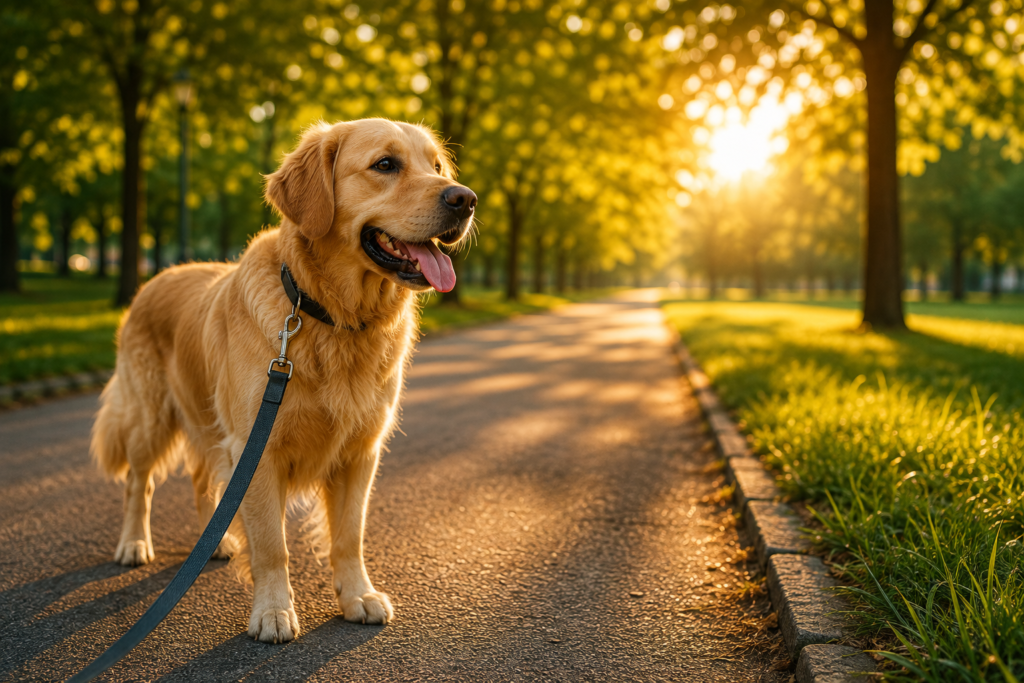
During hot weather, early morning is usually the best option.
Temperatures are generally lower, surfaces have had time to cool overnight, and direct sunlight is less intense.
Late evening can also work, but check the pavement first because roads and sidewalks may retain heat from the day.
Try to avoid long or strenuous walks during the hottest part of the afternoon.
Your normal walking schedule doesn’t need to stay exactly the same throughout the year.
During a heatwave, changing the time, duration, and intensity of exercise is much safer than trying to maintain the dog’s usual routine regardless of conditions.
Signs Your Dog Is Getting Too Hot During a Walk
Pay attention to your dog rather than focusing only on the distance you planned to walk.
Possible signs that your dog is struggling with the heat include:
- Heavy or excessive panting
- Excessive drooling
- Slowing down
- Frequently stopping
- Seeking shade
- Reluctance to continue
- Weakness
- Poor coordination
- Vomiting or diarrhea
- Collapse
- Changes in gum or tongue color
If your dog begins struggling, stop the exercise and move them to a cooler or shaded location.
Heatstroke can be life-threatening and requires urgent veterinary attention.
If you suspect heatstroke or your dog shows severe signs such as collapse, confusion, extreme weakness, breathing difficulty, or other significant symptoms, contact a veterinarian immediately.
Should You Bring Water on Every Summer Walk?
For longer walks and warm conditions, carrying water for your dog is a very good habit.
Dogs can become thirsty faster when they’re exercising in hot weather.
Offer small opportunities to drink during the walk rather than waiting until you’re back home.
We have more information about hydration in:
Why Is My Dog Drinking So Much Water?
And if you regularly walk or travel with your dog, you may also find this useful:
Best Dog Water Bottles for Walks and Travel in 2026
How Long Should You Walk Your Dog When It’s Hot?
There’s no universal summer walk length.
A dog that normally enjoys a 45-minute walk may be better off with several short outings during hot weather.
Consider:
- Temperature
- Humidity
- Sun exposure
- Surface temperature
- Your dog’s fitness
- Breed
- Age
- Health
- Walk intensity
A short toilet break followed by indoor enrichment can sometimes be a much better choice than a long walk.
Missing or shortening one walk because of dangerous weather isn’t going to ruin your dog’s fitness.
Pushing through excessive heat can cause far more serious problems.
For general guidance on exercise routines, see:
How Often Should You Walk Your Dog?
What Can You Do Instead of Walking?
If it’s too hot for a normal walk, your dog can still have an interesting day.
Try indoor activities such as:
- Short training sessions
- Hide-and-seek
- Food puzzles
- Snuffle mats
- Treat-search games
- Gentle indoor play
- Learning a new trick
Mental stimulation can be surprisingly tiring for dogs.
You can also split activity into several short sessions throughout the day instead of relying on one long walk.
If your dog seems restless when walks are shorter, see:
Signs Your Dog Is Bored: What to Look For and How to Help
Can Dogs Wear Boots on Hot Pavement?
Dog boots can provide a physical barrier between paws and hot surfaces when they fit properly and the dog is comfortable wearing them.
However, boots don’t solve the overall problem of exercising in excessive heat.
Your dog’s paws may be protected while the rest of their body is still overheating.
Think of paw protection and heat protection as two related but separate issues.
Should You Shave Your Dog in Summer?
Don’t assume that shaving a dog’s coat will automatically make them safer in hot weather.
Coat type varies significantly between breeds, and a dog’s coat can provide insulation and protection from sunlight.
Some coat types should not be shaved unless there is a specific reason to do so.
Regular grooming and removing loose undercoat may help certain dogs remain more comfortable, but discuss major coat changes with a professional groomer or veterinarian if you’re unsure what’s appropriate for your dog’s breed and coat.
Can Dogs Get Sunburn During Walks?
Yes. Dogs can experience sun damage, particularly on areas with sparse hair or exposed skin.
Dogs with light-colored coats, thin hair, or exposed areas of skin may be particularly vulnerable.
Shade and avoiding intense midday sun can help reduce exposure.
Summer Walking Checklist
Before heading outside, quickly ask yourself:
- How hot is it?
- How humid is it?
- Is the route mostly sunny or shaded?
- How hot is the pavement?
- How long are we planning to walk?
- Is my dog particularly vulnerable to heat?
- Do I have water available?
- Can we shorten the walk if necessary?
If several answers make you uncomfortable, changing the plan is usually the sensible choice.
FAQ
Is 25°C Too Hot to Walk a Dog?
Not necessarily for every dog, but conditions beyond the air temperature matter.
Direct sunlight, humidity, pavement temperature, breed, health, age, and exercise intensity can significantly affect heat risk.
A healthy dog may tolerate a short shaded walk at a temperature that would be inappropriate for a brachycephalic, elderly, overweight, or medically vulnerable dog.
Is 30°C Too Hot to Walk a Dog?
At around 30°C (86°F), you should be very cautious about exercising dogs.
Long or strenuous walks may be inappropriate for many dogs, particularly in direct sunlight or high humidity.
Early-morning toilet walks, shaded areas, and indoor activities are generally safer options during very hot weather.
Is It Better to Walk a Dog in the Morning or Evening During Summer?
Early morning is often preferable because both the air and ground have had time to cool overnight.
Evening can also be suitable, but pavement may retain heat long after the sun begins to set.
Can I Walk My Dog During a Heatwave?
Normal walking routines may need to be significantly reduced during a heatwave.
Short toilet breaks during the coolest periods of the day combined with indoor enrichment may be safer than regular long walks.
How Do I Know if the Pavement Is Too Hot?
Check the surface before allowing your dog to walk on it.
If the pavement feels uncomfortably hot against the back of your hand after several seconds, choose a cooler surface or postpone the walk.
Final Thoughts
There isn’t one exact temperature at which walking suddenly becomes unsafe for every dog.
Instead, think about the combination of temperature, humidity, sunlight, ground temperature, exercise intensity, and your individual dog’s ability to cope with heat.
During very warm weather, walking earlier, choosing shaded routes, carrying water, shortening exercise, and replacing some outdoor activity with indoor enrichment can make a big difference.
Most importantly, watch your dog.
They don’t need to complete a particular distance just because that’s what you normally walk.
On extremely hot days, a shorter walk can be the better walk.
Disclaimer: This article is for informational purposes only and is not a substitute for professional veterinary advice. If you believe your dog may be experiencing heatstroke or another heat-related illness, seek veterinary care immediately.