Water is one of the most important nutrients your dog needs every day. It helps regulate body temperature, supports digestion, transports nutrients, and keeps organs functioning properly.
But how much water should a dog actually drink?
The answer depends on your dog’s weight, diet, activity level, and even the weather. While every dog is different, there are general guidelines that can help you know what’s normal—and when it might be time to call your veterinarian.
How Much Water Does a Dog Need?
A healthy dog generally needs about:
50–70 ml of water per kilogram (kg) of body weight per day.
Here are a few examples:
| Dog Weight | Water Per Day |
|---|---|
| 5 kg (11 lbs) | 250–350 ml |
| 10 kg (22 lbs) | 500–700 ml |
| 20 kg (44 lbs) | 1–1.4 liters |
| 30 kg (66 lbs) | 1.5–2.1 liters |
These amounts include water from both drinking and moisture in food.
What Affects How Much Water a Dog Drinks?
Several factors influence daily water intake.
Diet
Dogs eating canned or fresh food usually drink less because their meals already contain a lot of moisture.
Dogs eating dry kibble often drink significantly more water.
Exercise
Active dogs lose more water through panting and need to replace those fluids after walks, playtime, or training sessions.
Weather
Hot weather naturally increases your dog’s water needs.
Always bring fresh water during summer walks or outdoor adventures.
During hot weather, it’s also important to protect your dog from harmful UV rays. Read our guide on Can Dogs Get Sunburn? to learn how to keep your dog safe in the sun.
Age
Puppies often drink more frequently than adult dogs because they’re growing and have faster metabolisms.
Senior dogs may also drink more, especially if they have age-related medical conditions.
Signs Your Dog May Not Be Drinking Enough
Watch for signs such as:
- dry gums
- sticky saliva
- sunken eyes
- low energy
- loss of appetite
- reduced skin elasticity
Even mild dehydration can affect your dog’s health.
Can Dogs Drink Too Much Water?
Yes.
Drinking much more water than usual can sometimes indicate a medical problem.
Possible causes include:
- diabetes
- kidney disease
- urinary tract infections
- Cushing’s disease
- certain medications
If your dog suddenly becomes unusually thirsty for more than a day or two, schedule a veterinary check-up.
If you’ve noticed a significant increase in your dog’s water intake, read our guide on Why Is My Dog Drinking So Much Water? to learn about common causes and when it’s time to be concerned.
Tips to Keep Your Dog Hydrated
Help your dog stay properly hydrated by:
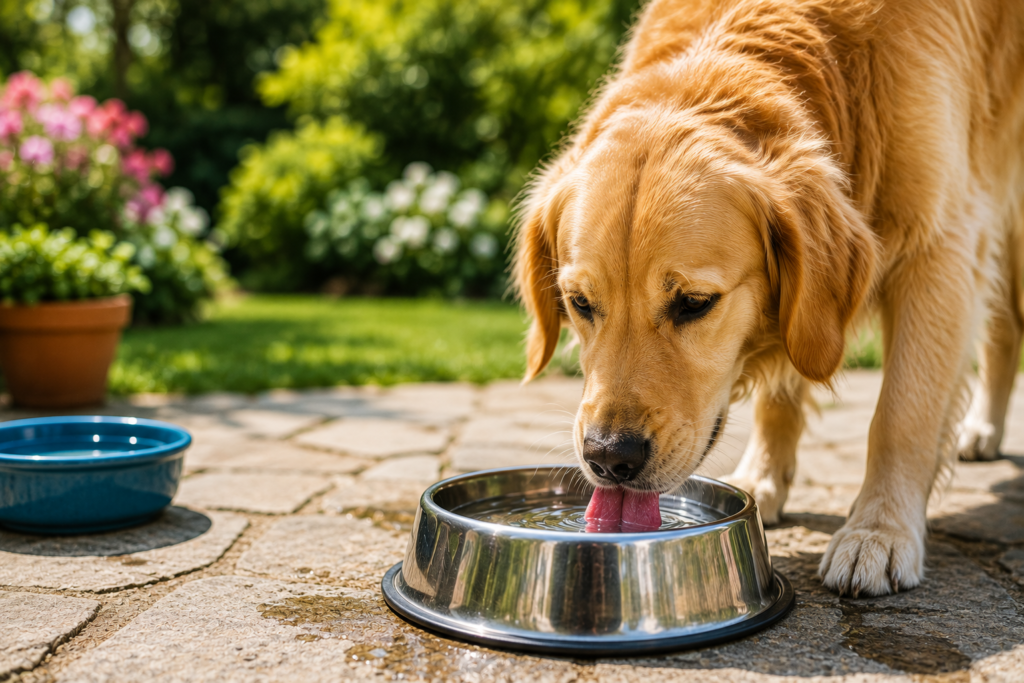
- providing fresh water at all times
- cleaning the water bowl daily
- bringing water on walks and trips
- encouraging drinking after exercise
- offering multiple water bowls around the home if needed
Small habits can make a big difference, especially during hot weather.
Frequently Asked Questions
Can a dog drink too much water in one sitting?
Yes. Drinking extremely large amounts very quickly is uncommon but can contribute to water intoxication, especially after intense play in water. Most healthy dogs naturally regulate their intake.
Is tap water safe for dogs?
In most areas, yes. If your tap water is safe for people, it’s generally safe for dogs as well.
Should dogs always have access to water?
Yes. Healthy dogs should have access to clean, fresh water throughout the day, except in rare situations where your veterinarian advises otherwise.
Keep in mind that dogs who drink more water will naturally need to urinate more often. If you’re wondering how long it’s safe for your dog to wait between bathroom breaks, read our guide on How Long Can Dogs Hold Their Pee?
Final Thoughts
Most healthy dogs need approximately 50 to 70 ml of water per kilogram of body weight each day, but individual needs vary.
Pay attention to changes in your dog’s drinking habits rather than focusing only on exact numbers. Consistent access to fresh water is one of the simplest ways to support your dog’s overall health.
Disclaimer: This article is for informational purposes only and is not a substitute for professional veterinary advice. If your dog suddenly drinks significantly more or less water than usual or shows signs of dehydration or illness, consult your veterinarian.