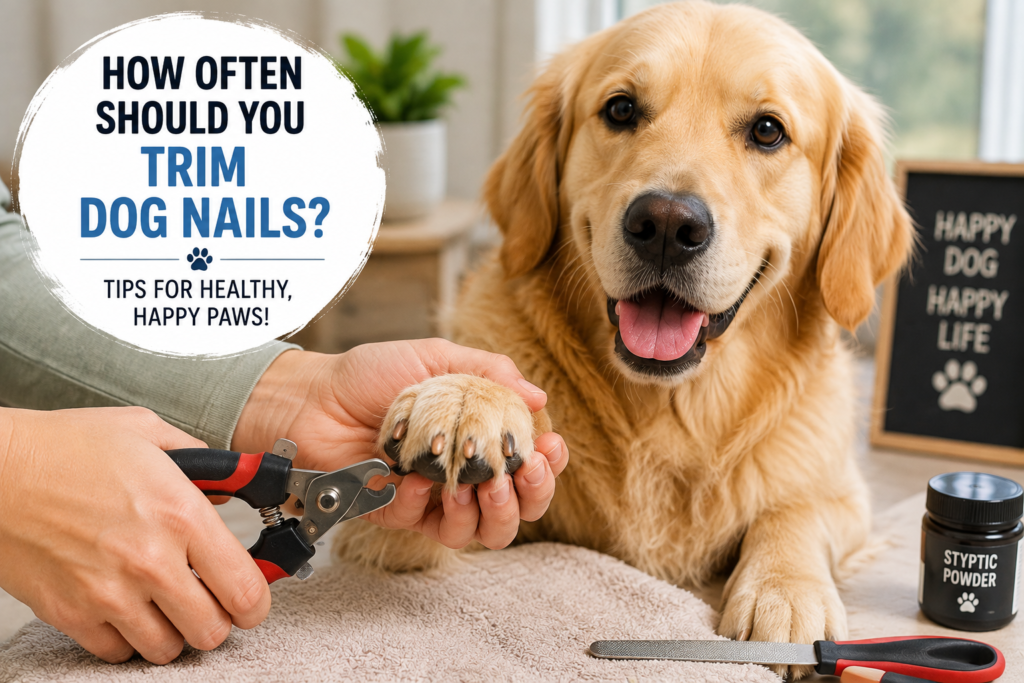
Keeping your dog’s nails trimmed isn’t just about appearance—it’s an important part of their overall health and comfort.
When nails become too long, they can affect the way your dog walks, cause pain, and even lead to joint problems over time.
So, how often should you trim your dog’s nails?
The answer depends on your dog’s activity level, the surfaces they walk on, and how quickly their nails grow. While some dogs naturally wear their nails down, others need regular trimming throughout the year.
How Often Should Dogs Have Their Nails Trimmed?
Most dogs need a nail trim every 3 to 4 weeks.
However, this can vary:
- Very active dogs that walk on pavement may only need trims every 6–8 weeks.
- Dogs that mostly walk on grass or stay indoors may need trimming more often.
- Senior dogs usually need more frequent nail care because they’re less active.
The best schedule depends on your individual dog.
How Do You Know When It’s Time?
A simple rule is to listen while your dog walks.
If you hear your dog’s nails clicking on hard floors, they’re probably too long.
Other signs include:
- nails touching the ground while standing
- difficulty walking comfortably
- slipping on smooth floors
- curved nails
- licking or chewing at the paws
Regularly checking your dog’s paws makes it easier to catch overgrown nails before they become a problem.
Why Long Nails Are a Problem
Overgrown nails can lead to:
- discomfort while walking
- poor posture
- extra pressure on joints
- broken or torn nails
- increased risk of infection
In severe cases, nails may curl into the paw pad, which requires veterinary treatment.
Should You Trim Dewclaws?
Yes.
Unlike the other nails, dewclaws don’t usually touch the ground, so they don’t wear down naturally.
Without regular trimming, they can become overgrown or even grow into the skin.
Always check them whenever you trim the rest of your dog’s nails.
Can You Trim Dog Nails at Home?
Absolutely.
Many owners successfully trim their dog’s nails at home using the right tools and a little patience.
Popular options include:
- nail clippers
- guillotine-style trimmers
- electric nail grinders
Take small amounts off at a time, especially if your dog has dark nails where it’s difficult to see the quick.
What Happens If You Cut the Quick?
The quick is the sensitive part inside the nail that contains blood vessels and nerves.
If you accidentally cut it:
- stay calm
- apply styptic powder if available
- use gentle pressure to stop the bleeding
- reassure your dog
Although it can be alarming, small accidents are common and usually heal quickly.
Tips to Make Nail Trimming Easier
Help your dog feel more comfortable by:
- starting when they’re young
- handling their paws regularly
- rewarding calm behavior with treats
- trimming just one or two nails if needed
- keeping sessions short and positive
Building positive experiences is more important than finishing every nail in one sitting.
Frequently Asked Questions
Is walking enough to wear down dog nails?
Sometimes.
Dogs that regularly walk on sidewalks or pavement naturally wear down their nails more than dogs that mainly walk on grass.
What if my dog hates nail trimming?
Go slowly, use rewards, and practice touching your dog’s paws daily. Some owners also prefer using a nail grinder because it’s less intimidating.
Can long nails hurt dogs?
Yes.
Overgrown nails can cause pain, change the way a dog walks, and eventually contribute to joint and posture problems.
Final Thoughts
Most dogs benefit from having their nails trimmed every three to four weeks, but every dog is different.
Checking your dog’s paws regularly and keeping nails at a comfortable length will help prevent pain, improve mobility, and support long-term joint health.
Disclaimer: This article is for informational purposes only and is not a substitute for professional veterinary advice. If your dog’s nails are severely overgrown, bleeding heavily, or growing into the paw pad, consult your veterinarian or a professional groomer.