Most people know they should protect their own skin from the sun, but many don’t realize that dogs can get sunburn too.
Just like humans, dogs exposed to strong sunlight for too long can develop painful, damaged skin. While some dogs are naturally better protected thanks to thick coats and darker pigmentation, others are much more vulnerable.
Knowing which dogs are at risk—and how to protect them—can help prevent painful burns and long-term skin damage.
Can Dogs Really Get Sunburn?
Yes.
Dogs can develop sunburn after spending too much time in direct sunlight, especially during the hottest hours of the day.
Sunburn is most common on areas with little or no fur, including:
- nose
- ears
- eyelids
- belly
- groin
- around the lips
These areas have less natural protection against harmful UV rays.
Which Dogs Are Most at Risk?
Some dogs are much more likely to get sunburn than others.
Higher-risk dogs include:
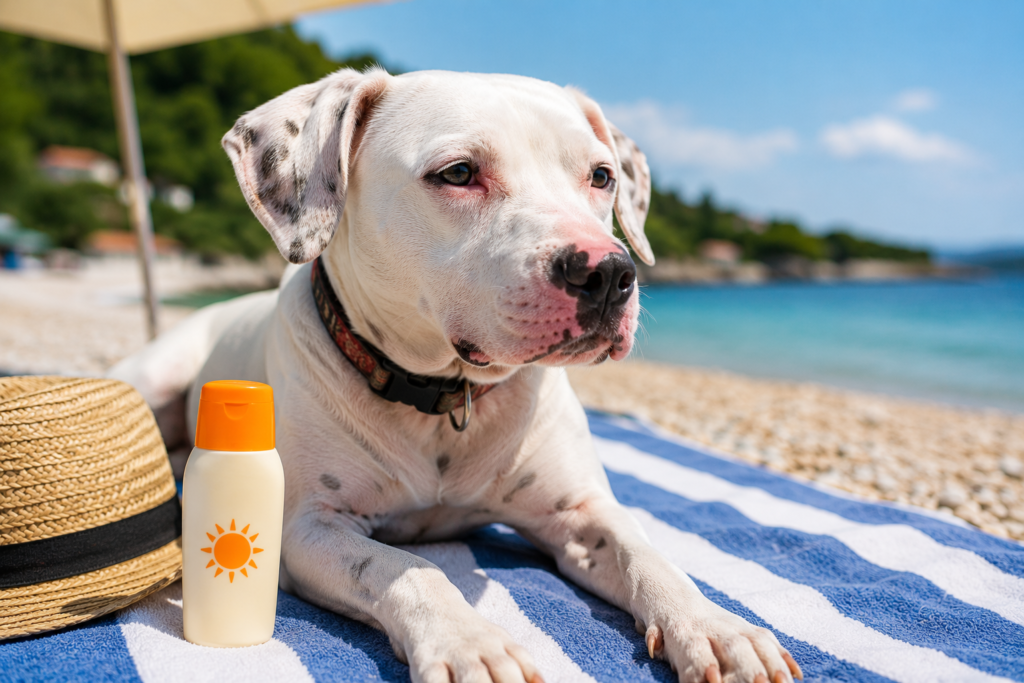
- white or light-colored dogs
- dogs with thin or short coats
- hairless breeds
- recently shaved dogs
- dogs with pink skin
- senior dogs with thinning coats
Even dark-coated dogs can develop sunburn on exposed skin.
Signs of Sunburn in Dogs
Symptoms may include:
- red or pink skin
- warm skin
- tenderness when touched
- dry or peeling skin
- itching
- blisters in severe cases
- your dog avoiding being touched
Signs often appear several hours after sun exposure.
Why Sunburn Is More Serious Than It Seems
Repeated sunburn doesn’t just cause temporary discomfort.
Over time, excessive UV exposure may increase the risk of:
- chronic skin irritation
- skin infections
- premature skin aging
- certain types of skin cancer
That’s why prevention is always the best approach.
How to Protect Your Dog From Sunburn
Keeping your dog safe in sunny weather is easier than you might think.
Walk Early or Late
Try to avoid walks during the hottest part of the day, typically between 10 a.m. and 4 p.m.
Morning and evening walks are usually cooler and expose your dog to less intense UV radiation.
Provide Shade
If your dog spends time outside, always make sure they have access to shade.
Trees, covered patios, or outdoor shelters can provide relief from direct sunlight.
Never Shave Double-Coated Dogs
Many owners believe shaving helps dogs stay cool.
In reality, a double coat provides natural insulation against both heat and sunlight.
Removing it can actually increase the risk of sunburn.
Use Pet-Safe Sunscreen
If your veterinarian recommends it, apply a sunscreen specifically formulated for dogs to exposed skin.
Avoid using human sunscreen unless your veterinarian says it’s safe, as some ingredients can be toxic if licked.
Can Dogs Get Sunburn Through Windows?
Yes.
Ultraviolet rays can pass through many windows.
Dogs that spend hours sunbathing beside large windows may still receive significant UV exposure over time.
What Should You Do If Your Dog Gets Sunburn?
If your dog develops mild redness:
- move them into the shade
- keep them cool
- prevent further sun exposure
- avoid touching the affected area unnecessarily
If you notice blistering, severe pain, swelling, or signs of infection, contact your veterinarian.
Frequently Asked Questions
Can black dogs get sunburn?
Yes. Although they’re generally less likely to burn, exposed areas such as the nose, ears, and belly can still be affected.
Do dogs need sunscreen?
Some dogs benefit from pet-safe sunscreen, particularly those with light-colored skin or thin coats.
Can dogs get skin cancer from the sun?
Long-term UV exposure may increase the risk of certain skin cancers, especially in dogs that experience repeated sunburn.
Final Thoughts
Dogs can absolutely get sunburn, especially if they have light skin, short coats, or spend long periods in direct sunlight.
Simple steps like providing shade, avoiding midday walks, and protecting exposed skin can help keep your dog comfortable and healthy throughout the summer.
Disclaimer: This article is for informational purposes only and is not a substitute for professional veterinary advice. If your dog has severe sunburn, blistering, or signs of infection, seek veterinary care promptly.