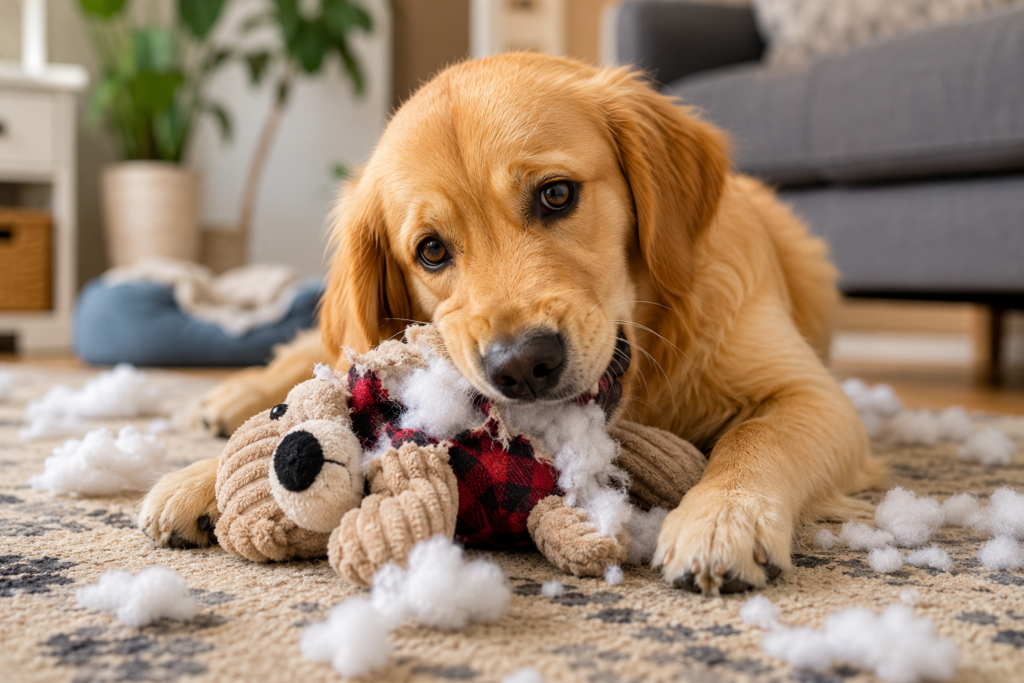
If you’re wondering “why does my dog destroy toys?”, the answer is usually a combination of natural chewing instincts, boredom, excitement, and the type of toy your dog is given. Some dogs carefully carry their toys around for months, while others seem determined to tear them apart within minutes.
In many cases, destroying toys is completely normal dog behavior. However, frequent destructive chewing can sometimes mean your dog needs more mental stimulation, exercise, or simply a more durable toy. Understanding the reason behind the behavior can help you choose safer toys and prevent your dog from swallowing pieces that could become dangerous.
Understanding why your dog destroys toys can help you choose better options and keep playtime both safe and enjoyable.
It’s a Natural Instinct
Dogs are natural chewers.
Their wild ancestors used their teeth to hunt, tear food apart, and explore their environment. Even though our dogs no longer hunt for survival, those instincts are still present.
For many dogs, pulling stuffing out of a plush toy simply feels rewarding.
Your Dog Is a Powerful Chewer
Some breeds naturally have stronger jaws than others.
Breeds often known for powerful chewing include:
- Labrador Retrievers
- German Shepherds
- Pit Bull–type dogs
- Boxers Rottweilers
These dogs may destroy toys much faster than smaller breeds.
Boredom
Dogs that don’t receive enough physical exercise or mental stimulation often create their own entertainment.
Destroying toys can become a way to release energy.
You may also notice:
- excessive barking
- digging
- pacing
- chewing furniture
Keeping your dog mentally engaged is just as important as physical exercise.
Dogs that don’t get enough mental stimulation often develop unwanted behaviors. Learn more in Signs Your Dog Is Bored.
Daily exercise is just as important as mental enrichment. Learn more in our guide, How Often Should You Walk Your Dog?
Puzzle toys and other enrichment activities can also give destructive chewers a more productive way to stay busy. See our Best Interactive Dog Toys in 2026 for ideas.
Puppies Explore With Their Mouths
Puppies investigate almost everything by chewing.
During teething, chewing also helps relieve sore gums.
Providing safe chew toys designed for puppies can reduce unwanted chewing on household items.
Some Toys Simply Aren’t Durable Enough
Not every toy is made for heavy chewers.
Soft plush toys are fun but may only last a few minutes with determined dogs.
If your dog destroys toys regularly, look for products specifically designed for aggressive chewers.
If your dog can destroy a regular toy in minutes, choosing something designed for powerful chewers may help. See our Best Indestructible Dog Toys for Heavy Chewers for more durable options.
Is Destroying Toys Ever a Problem?
Destroying the toy itself isn’t usually dangerous.
The real concern is when dogs swallow pieces of:
- fabric
- rope
- plastic
- rubber
- squeakers
These materials can cause intestinal blockages that may require emergency surgery.
Always supervise your dog when introducing a new toy.
How to Make Toys Last Longer
You can’t completely stop a dog from chewing, but you can make toys last longer by:
- choosing toys made for aggressive chewers
- rotating toys every few days
- removing damaged toys immediately
- matching the toy to your dog’s size
- supervising playtime with new toys
Quality toys often last much longer than inexpensive alternatives.
Rotating toys can also make old toys feel interesting again. For more ideas, see How to Keep a Dog Entertained While Home Alone.
When Should You Call Your Vet?
Contact your veterinarian if your dog:
- swallows part of a toy
- vomits after chewing
- refuses food
- becomes unusually tired
- has abdominal pain
- cannot pass stool normally
These symptoms may indicate an intestinal blockage and require immediate attention.
Frequently Asked Questions
Why does my dog destroy every toy I give him?
Some dogs simply have stronger chewing instincts than others. Boredom, excess energy, excitement, teething, and toys that are too soft for your dog’s chewing style can all contribute to rapid toy destruction.
Is it normal for dogs to destroy their toys?
Yes, tearing and chewing toys can be completely normal dog behavior. The main concern is safety. Dogs that swallow pieces of fabric, rubber, rope, plastic, or stuffing can develop choking or intestinal blockage problems.
How do I stop my dog from destroying toys?
You may not be able to eliminate chewing completely, but you can redirect it toward appropriate toys. Choose toys suited to your dog’s size and chewing strength, rotate toys regularly, provide enough physical exercise and mental stimulation, and supervise your dog with new toys.
Why does my dog destroy toys but not furniture?
Your dog may have learned that toys are appropriate objects to chew. That is generally a good thing. Providing safe chewing options can help satisfy natural chewing instincts without encouraging your dog to chew household items.
Should I take a toy away when my dog starts destroying it?
If pieces are breaking off or your dog may swallow part of the toy, remove it. Damaged toys should be replaced when they can no longer be used safely.
Are indestructible dog toys really indestructible?
No dog toy is completely indestructible. Products marketed for aggressive or powerful chewers may last longer than standard toys, but they should still be inspected regularly and used under appropriate supervision.
Final Thoughts
Wondering why does my dog destroy toys doesn’t necessarily mean something is wrong. For many dogs, ripping, chewing, and pulling toys apart is simply a satisfying way to express natural instincts.
The key is giving your dog toys that match their size and chewing style while also providing enough exercise and mental stimulation. Regularly inspect toys for loose or damaged pieces and remove anything that could become a choking or swallowing hazard.
If destructive chewing suddenly becomes excessive, extends to household objects, or is accompanied by unusual behavior, speak with your veterinarian to rule out an underlying problem.
Disclaimer: This article is intended for informational purposes only and is not a substitute for professional veterinary advice. If your dog swallows part of a toy or develops vomiting, loss of appetite, abdominal discomfort, difficulty passing stool, or other concerning symptoms, contact your veterinarian promptly.