
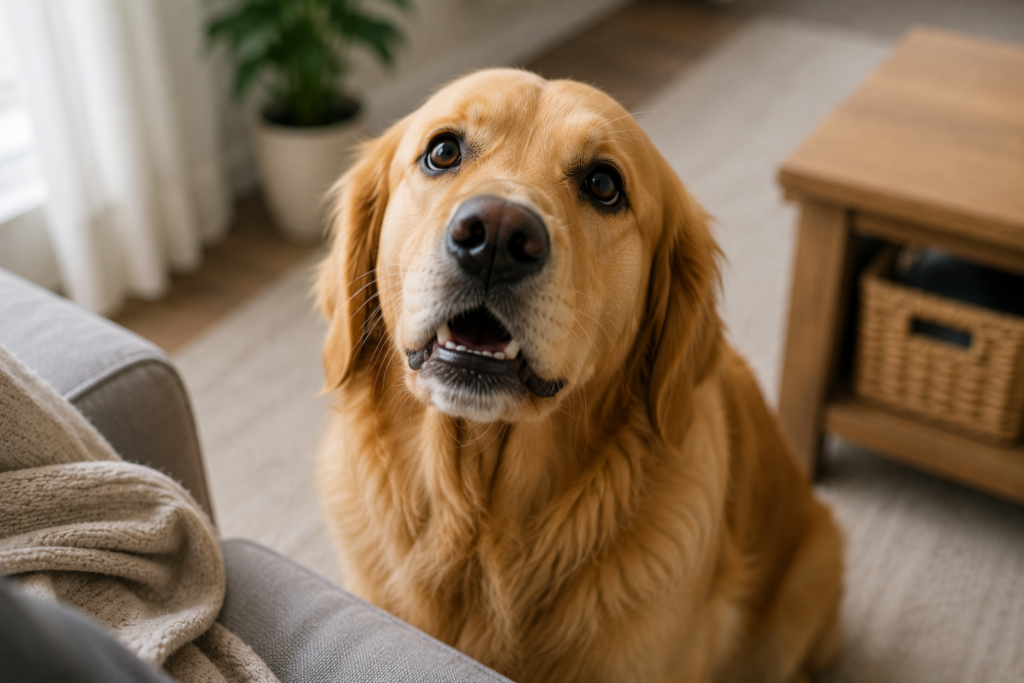
Why does my dog whine? It’s a question many dog owners ask, especially when whining seems to happen for no obvious reason.
The good news is that whining is often a normal form of communication. Understanding the reason behind the behavior can help you meet your dog’s needs and strengthen your relationship.
Your Dog Wants Attention
Many dogs whine because they want attention from their owners.
Your dog may be asking for:
- Petting
- Playtime
- A walk
- Food or treats
- Interaction with family members
If whining has successfully gained your attention in the past, your dog may continue using it as a communication tool.
Dogs use many different behaviors to get their owner’s attention. You may also notice your dog staring at you for long periods. Learn more in Why Does My Dog Stare At Me?
Your Dog Is Excited
Dogs often whine when they are excited about something.
Common examples include:
- Seeing you come home
- Preparing for a walk
- Meeting new people
- Playing with favorite toys
Excited whining is usually accompanied by wagging tails, relaxed body language, and energetic behavior.
Your Dog Feels Anxious
Anxiety is another common cause of whining.
Some dogs whine when they experience:
- Separation anxiety
- Thunderstorms
- Fireworks
- Unfamiliar environments
- Changes in routine
If your dog appears nervous or restless while whining, anxiety may be the underlying cause.
Some anxious dogs also stay unusually close to their owners throughout the day. Read Why Does My Dog Follow Me Everywhere? to better understand this behavior.
Your Dog Needs Something
Whining can be your dog’s way of telling you that a basic need is not being met.
Your dog may need:
- Fresh water
- Food
- A bathroom break
- Exercise
- Mental stimulation
Pay attention to the timing of the whining and any patterns that may help identify the cause.
Your Dog May Be Bored
Dogs that do not receive enough physical or mental stimulation sometimes whine out of boredom.
Bored dogs may also:
- Pace around the house
- Chew inappropriate objects
- Dig excessively
- Seek constant attention
Providing regular exercise, training, and interactive toys can help reduce boredom-related whining.
Lack of mental and physical stimulation can lead to several unwanted behaviors. Check out Signs Your Dog Is Bored to learn how to keep your dog engaged and happy.
Could Your Dog Be in Pain?
Sometimes whining may indicate discomfort or pain.
Watch for additional signs such as:
- Limping
- Changes in appetite
- Difficulty standing or walking
- Excessive licking of a specific area
- Unusual behavior
If your dog’s whining suddenly increases or is accompanied by other symptoms, contact your veterinarian.
How Can You Reduce Excessive Whining?
The best solution depends on the cause.
Helpful strategies include:
- Providing enough exercise
- Creating a consistent routine
- Offering mental enrichment activities
- Ignoring attention-seeking whining when appropriate
- Rewarding calm behavior
Avoid unintentionally reinforcing whining by immediately giving treats or attention every time it occurs.
Frequently Asked Questions
Why does my dog whine for no reason?
It may seem like your dog is whining for no reason, but there is usually a trigger. Your dog may want attention, need to go outside, feel bored or anxious, or be reacting to something you have not noticed.
Why does my dog whine when I pet him?
Some dogs whine during petting because they are excited or enjoying the interaction. However, if your dog pulls away, seems tense, or reacts when a particular area is touched, discomfort or pain could be involved.
Why does my dog whine at night?
Nighttime whining can happen because a dog needs a bathroom break, feels anxious, hears unfamiliar sounds, or has difficulty settling down. A sudden change in nighttime behavior, particularly in an older dog, is worth discussing with your veterinarian.
Why does my dog whine when I leave?
Some dogs whine because they are uncomfortable being left alone. Mild whining may stop once the dog settles, but persistent whining combined with pacing, destructive behavior, excessive barking, or attempts to escape may indicate separation-related distress.
Should I ignore my dog when he whines?
Not automatically. First make sure your dog does not need food, water, a bathroom break, exercise, or medical attention. If you are confident the whining is simply attention-seeking, rewarding calm behavior instead of the whining can help.
Final Thoughts
Dogs whine for many different reasons, including excitement, attention, anxiety, boredom, and physical needs. In most cases, whining is simply a form of communication.
By observing your dog’s body language and daily habits, you can better understand what they are trying to tell you and respond in a way that supports their well-being.
Disclaimer: This article is for general informational purposes only and is not a substitute for professional veterinary or behavioral advice. If your dog suddenly starts whining excessively or the behavior is accompanied by pain, changes in appetite, mobility problems, or other unusual symptoms, contact your veterinarian.