If you’ve ever wondered why do dogs lick your face, there isn’t just one explanation. Your dog may be showing affection, asking for attention, exploring an interesting smell or taste, or simply repeating a behavior that has become part of your daily routine.
But why do dogs lick your face?
Face licking can mean several things. Your dog may be showing affection, asking for attention, exploring an interesting smell or taste, or simply repeating a behavior that has become part of your daily routine.
Understanding when and why your dog does it can tell you a little more about what they are trying to communicate.
1. Your Dog May Be Showing Affection
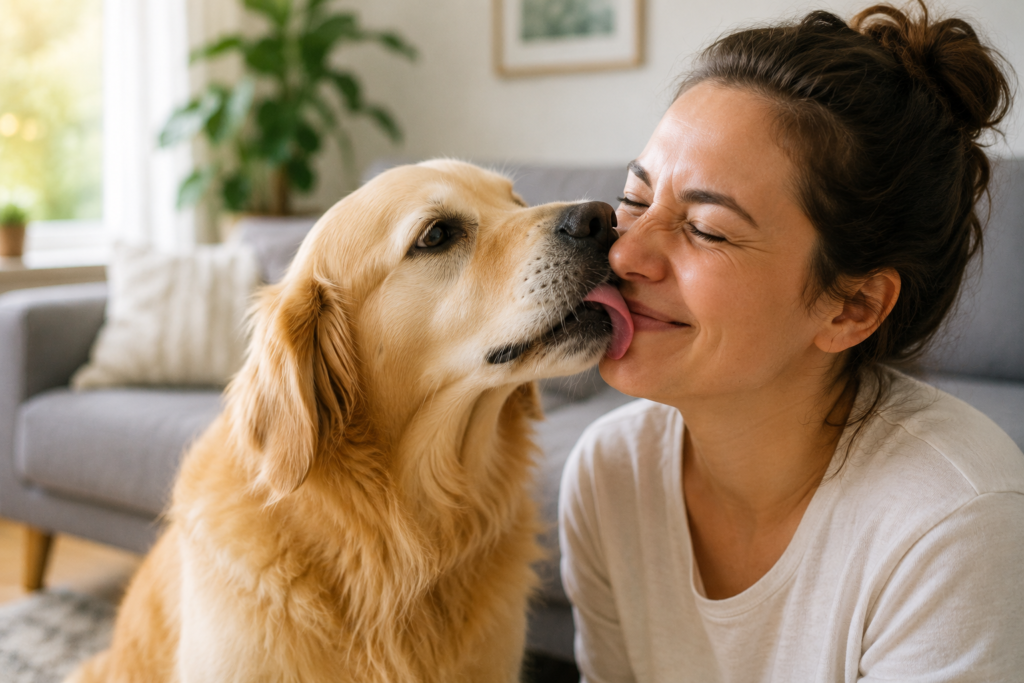
For many dogs, licking is part of social interaction with the people they trust.
Your dog may lick your face when you come home, while you are relaxing together, or during a cuddle session. When it happens alongside relaxed body language, a wagging tail, and a generally happy demeanor, it is often simply part of a friendly greeting.
Dogs have different ways of staying close to their favorite people. Some lean against you, some bring toys, and others follow you from room to room.
If your dog seems to be your constant shadow, you may also enjoy reading Why Does My Dog Follow Me Everywhere?
2. They Want Your Attention
Dogs quickly learn which behaviors get a response from us.
If licking your face makes you laugh, talk to your dog, pet them, or even tell them to stop, your dog has successfully gained your attention.
Over time, they may learn:
“If I lick my human, something happens.”
That can make face licking a very effective attention-seeking strategy.
If you would rather discourage the behavior, avoid turning it into an exciting interaction. Calmly move away and reward your dog when they settle or choose another appropriate behavior.
3. You Taste or Smell Interesting
Sometimes the explanation is surprisingly simple: your face smells interesting.
Dogs have an extraordinary sense of smell, and your skin can carry traces of food, sweat, lotions, or other scents they want to investigate.
After eating, exercising, or spending time outside, you may suddenly become much more interesting to your dog.
In this situation, licking may have less to do with affection and more to do with curiosity.
4. Licking Is a Natural Dog Behavior
Licking begins early in a dog’s life.
Mother dogs lick their puppies as part of normal care, and puppies also use licking during social interactions. As dogs grow older, licking can remain part of the way they explore their environment and communicate.
That does not mean every lick has a deep emotional meaning. Sometimes licking is simply normal canine behavior.
Dogs use many small gestures to communicate with us. Even something as simple as a head tilt can have several possible explanations — see Why Do Dogs Tilt Their Heads? for another interesting example.
5. Your Dog May Be Trying to Calm the Situation
Licking can occasionally appear when a dog feels uncertain, excited, or slightly stressed.
Pay attention to the rest of your dog’s body language.
Possible signs of discomfort can include:
- ears pulled back
- avoiding eye contact
- yawning
- lip licking
- lowered body posture
- pacing or restlessness
A few affectionate licks from a relaxed dog are very different from repetitive licking accompanied by other signs of stress.
Context matters.
6. It Has Become a Habit
Dogs are excellent at learning routines.
If your dog has licked your face for years and you usually respond positively, the behavior may simply have become part of the way the two of you interact.
Some dogs even develop little greeting rituals with their owners — bringing a toy, jumping onto the couch, leaning against your legs, or giving a quick lick.
As long as the behavior is comfortable for both of you and does not become excessive, it usually does not need to be changed.
Is It Safe to Let Your Dog Lick Your Face?
For many healthy adults, an occasional lick on intact skin may not cause a problem. However, a dog’s mouth contains bacteria, so it is sensible to use basic hygiene.
Avoid letting your dog lick:
- open cuts or wounds
- irritated or broken skin
- your eyes
- inside your mouth
Wash your face afterward if needed, and be especially cautious with young children or anyone with a weakened immune system.
You do not have to let your dog lick your face to have a strong bond with them. Petting, playing, training, walking, and simply spending time together are all great ways to show affection.
Why Does My Dog Lick My Face in the Morning?
Morning face licking may simply be your dog’s way of saying that it is time to wake up.
Your dog may have learned that licking gets you moving — which could mean breakfast, a walk, attention, or a trip outside.
If it works every morning, there is little reason from your dog’s perspective to stop doing it.
Why Does My Dog Lick My Face When I Cry?
Some dogs become more attentive when their owner is upset.
They may move closer, lean against you, paw at you, or lick your face. Dogs can respond to changes in your voice, posture, facial expressions, and behavior.
Rather than assuming your dog understands sadness exactly as a human would, it is more accurate to say that they may notice something has changed and respond by seeking contact with you.
When Can Face Licking Become a Problem?
Occasional licking is usually very different from persistent or compulsive licking.
Talk to your veterinarian if licking suddenly becomes excessive or is accompanied by other unusual behaviors or physical symptoms.
You should pay particular attention if your dog:
- seems unable to stop licking
- suddenly starts licking much more than usual
- appears anxious or distressed
- repeatedly licks people, objects, or themselves
- has changes in appetite, energy, or behavior
- develops vomiting, diarrhea, itching, or other symptoms
A sudden behavioral change can sometimes have an underlying medical or behavioral cause.
How to Stop Your Dog From Licking Your Face
If you do not enjoy dog kisses, you can teach your dog another way to greet you.
When your dog approaches your face, calmly turn away or create a little distance. Once they stop trying to lick, reward calm behavior with attention, praise, or a treat.
You can also ask for an alternative behavior such as sit before giving attention.
Try not to punish your dog for licking. Consistent redirection is usually clearer and less stressful.
Mental stimulation can also help dogs that constantly seek attention because they have little else to do. If that sounds familiar, read Signs Your Dog Is Bored for other behaviors to watch for.
Frequently Asked Questions
Why does my dog lick my face so much?
Your dog may enjoy the interaction, want attention, like the taste or smell of your skin, or simply have developed a habit. Look at when the licking occurs and your dog’s overall body language for clues.
Does a dog licking your face mean they love you?
It can be part of affectionate social behavior, but licking does not always mean affection. Dogs also lick because of curiosity, attention seeking, habit, or stress.
Why does my dog lick me but not other people?
Your dog may have learned that licking you produces a particular response, or they may simply interact differently with different people.
Should I stop my dog from licking my face?
That is largely a personal choice, although you should avoid allowing licking around your eyes, mouth, wounds, or broken skin. You can calmly redirect your dog if you prefer not to be licked.
Why has my dog suddenly started licking me more?
Changes in routine, attention, stress, interesting smells, or learned behavior may all contribute. If the change is sudden and persistent or comes with other symptoms, speak with your veterinarian.
Final Thoughts
So, why do dogs lick your face?
There is no single explanation. Your dog may be showing affection, looking for attention, investigating an interesting smell, responding to your emotions, or simply repeating a behavior that has become part of your relationship.
The best clue is always context. Look at what happened immediately before the licking and pay attention to the rest of your dog’s body language.
A few enthusiastic dog kisses are usually just one of the many quirky ways dogs interact with the humans in their lives.
Disclaimer: This article is for general informational purposes only and is not a substitute for professional veterinary or behavioral advice. If your dog develops sudden, excessive, or unusual licking behavior, consult your veterinarian.