Walking a reactive dog can turn an ordinary trip around the block into a stressful experience. Another dog appears across the street, a cyclist passes too closely, or a stranger suddenly approaches—and your previously calm dog starts barking, lunging, pulling, or desperately trying to create distance.
If this sounds familiar, you are far from alone.
Reactive behavior does not automatically mean that a dog is aggressive. Reactive dogs may become overwhelmed or highly aroused by specific triggers, and fear is often involved. Cornell University College of Veterinary Medicine notes that reactive dogs may bark, growl, lunge, and become so focused on a trigger that it becomes difficult for their owner to redirect them.
The right equipment will not “fix” reactivity on its own. However, thoughtfully chosen training tools can make everyday management easier, give you better control during walks, help create more distance from triggers, and support reward-based training.
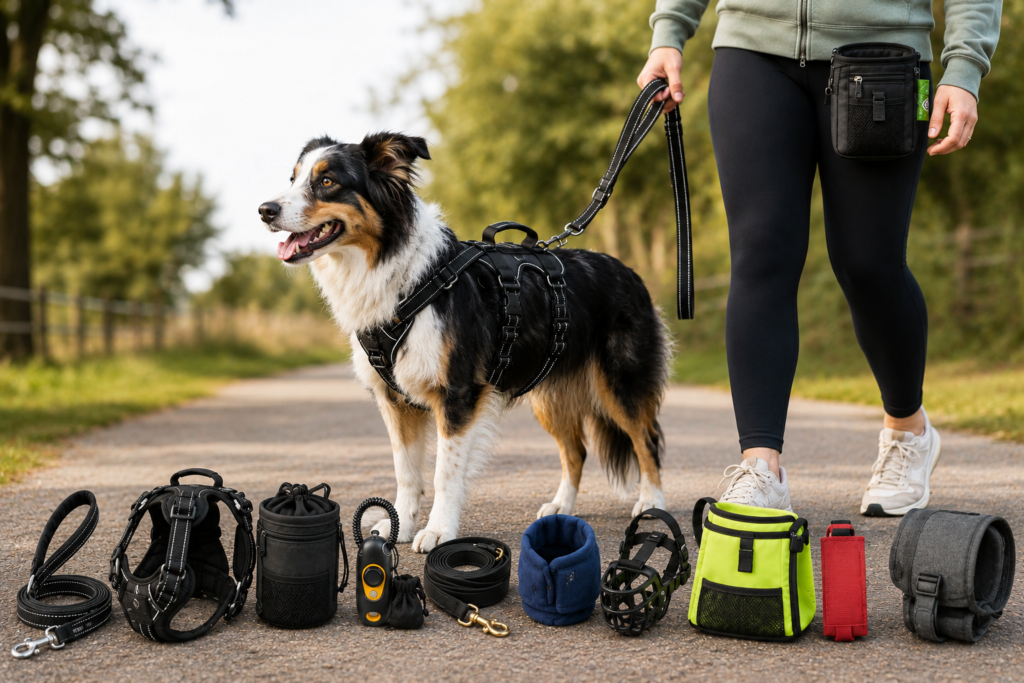
Below are 10 useful training tools for reactive dogs in 2026, ranging from secure harnesses and training leashes to treat pouches, safety equipment, and calming wear.
Affiliate disclosure: This post contains affiliate links. As an Amazon Associate, I earn from qualifying purchases at no additional cost to you.
Quick Picks: Best Training Tools for Reactive Dogs
If you want the short version, these are the types of products worth considering:
- Best leash for close control: Fida Heavy Duty Dog Leash
- Best escape-resistant option: Huntboo Escape Proof Dog Harness
- Best training accessory: Mighty Paw Dog Training Treat Pouch
- Best clicker training kit: Left&Right Dog Clicker Training Kit
- Best long line: NTR 30 FT Dog Training Leash
- Best calming head wrap: Happy Hoodie
- Best safety muzzle: BARKLESS Basket Muzzle
- Best visible warning gear: CENWA Nervous Rescue Jacket
- Best calming vest: ThunderShirt for Dogs
- Best additional walking/training tool: the walking-control product selected below
Let’s look at why each type of tool can be useful.
1. Fida Heavy Duty Dog Leash – Best for Better Control on Walks
A reliable leash is one of the most important pieces of equipment when walking a reactive dog.
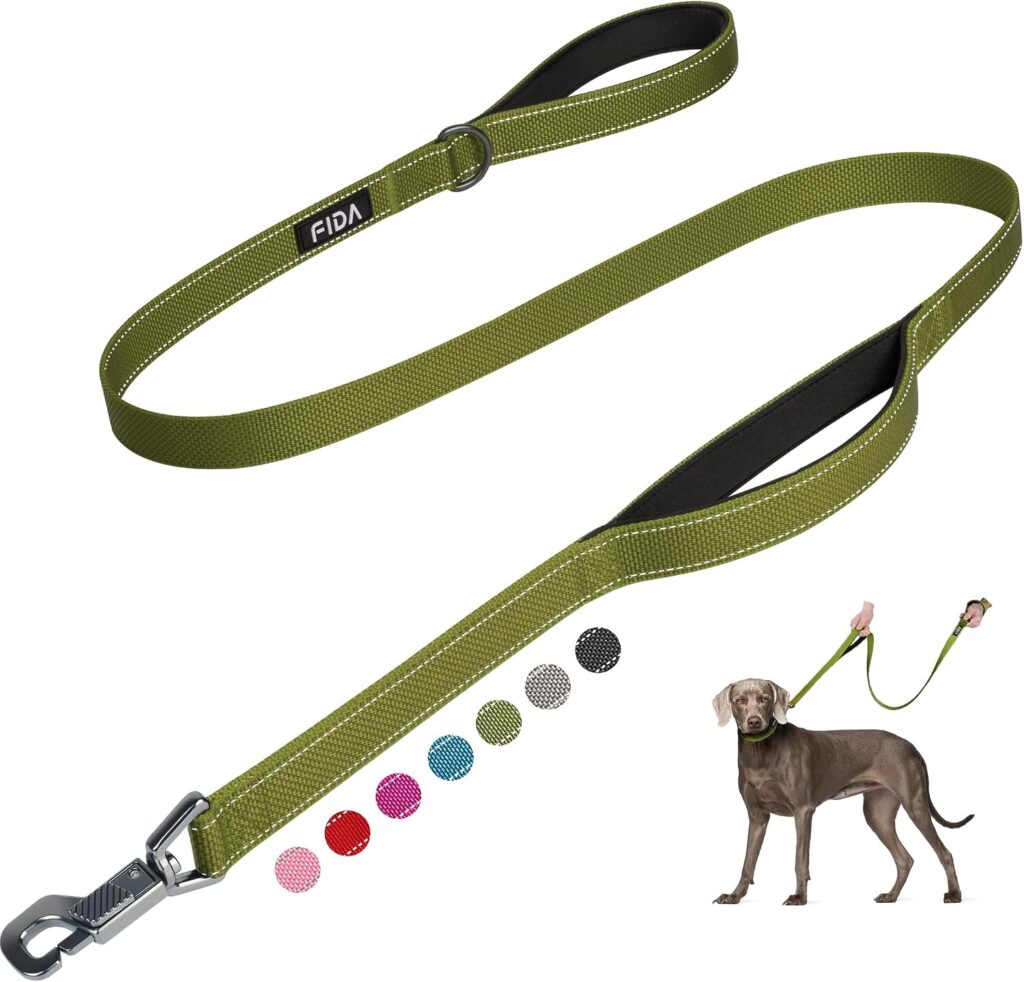
The Fida Heavy Duty Dog Leash has a standard handle plus an additional traffic handle positioned closer to the dog. That second grip can be particularly useful when you suddenly need more control—for example, when another dog unexpectedly appears around a corner.
Instead of wrapping a long leash around your hand or pulling your dog toward you, you can quickly switch to the closer handle.
The leash also includes reflective detailing, which is useful for early-morning and evening walks.
Why it can help
A traffic handle gives you the option of shortening the effective leash length quickly when necessary. That can be helpful when crossing streets, moving through narrow areas, or creating space from another dog or pedestrian.
However, the goal should not be to keep a reactive dog permanently restrained on an extremely short leash. Whenever the environment is safe, giving your dog enough room to move naturally and disengage from triggers is important.
Best for: everyday walks, stronger dogs and situations where additional close control may occasionally be needed.
If you’re comparing different leash styles for everyday walks and training, you may also want to explore our guide to the [Best Dog Leashes in 2026].
2. Huntboo Escape Proof Dog Harness – Best for Dogs That Back Out of Harnesses
Some reactive or frightened dogs do more than pull toward a trigger—they try to escape from it.
That makes secure equipment especially important.
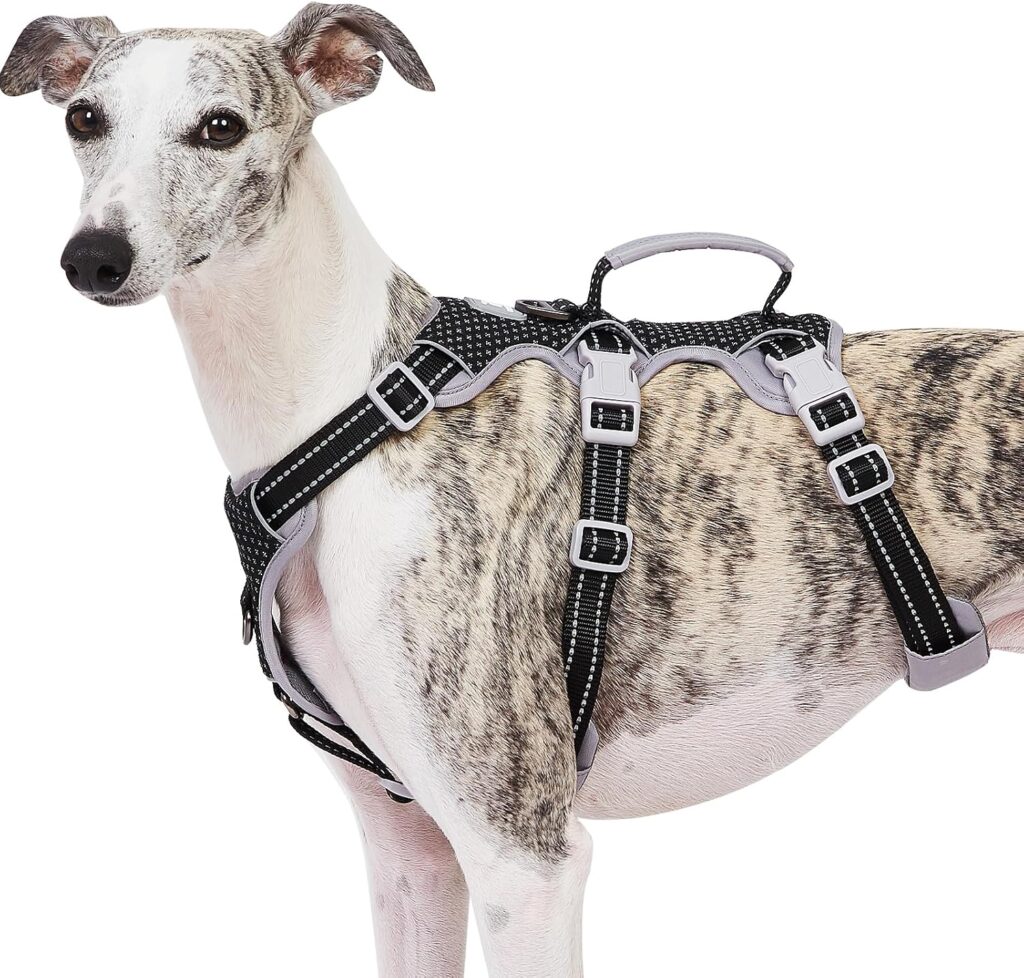
The Huntboo Escape Proof Dog Harness has a multi-strap design intended to make backing out of the harness more difficult. It also includes a handle on the back, which may provide another point of control when necessary.
For dogs that panic, twist, reverse direction or attempt to slip out of ordinary harnesses, an escape-resistant design can provide an additional layer of security.
Why it can help
Reactive behavior is not always about moving toward something. A frightened dog may desperately try to move away.
A properly fitted harness can therefore be an important management tool.
Check the fit regularly. You should also inspect straps, buckles and attachment points for wear, particularly if your dog pulls hard.
Best for: fearful dogs, escape artists and dogs that have previously backed out of conventional harnesses.
3. Mighty Paw Dog Training Treat Pouch – Best for Reward-Based Training
For reactive-dog training, treats should be easy to reach.
If another dog appears and you spend ten seconds searching your pocket for a reward, you may miss the moment when your dog looks at the trigger and then chooses to look back at you.
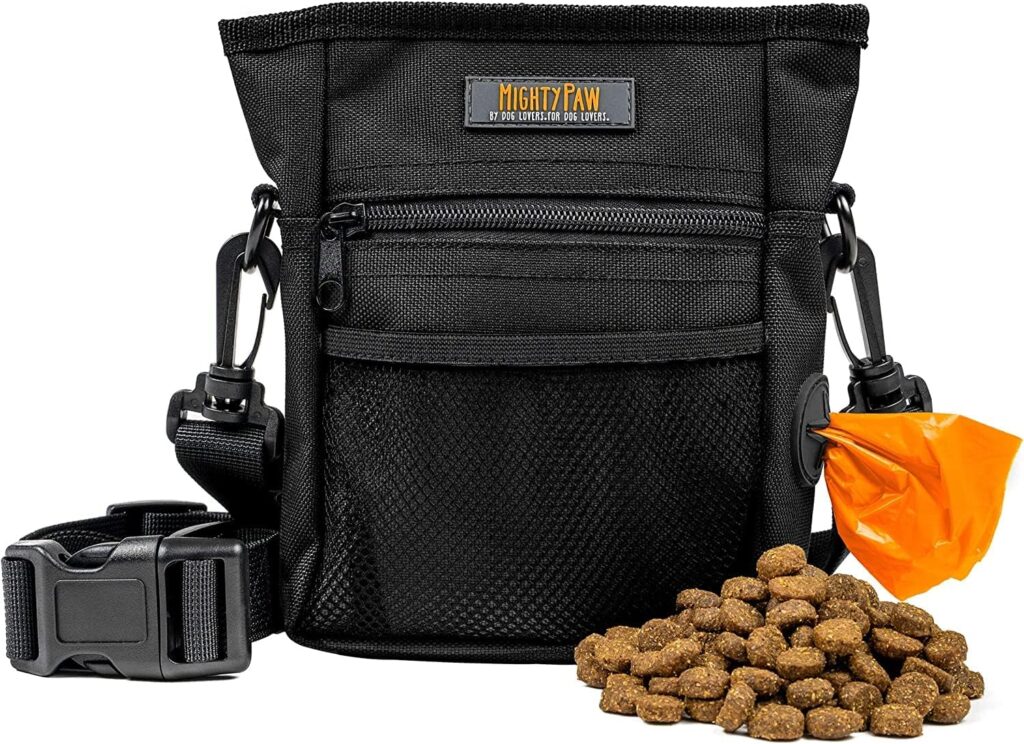
The Mighty Paw Dog Training Treat Pouch gives you a dedicated place for treats while keeping your hands available for handling the leash.
The version we selected also provides additional storage, which is useful for carrying small walking essentials.
Why it can help
Reward-based training is particularly important when working with behavioral issues.
The American Veterinary Society of Animal Behavior recommends reward-based methods for dog training and behavior modification and advises against aversive approaches.
With a reactive dog, you may use high-value food to reward behaviors such as:
looking back at you after noticing a trigger, walking away with you, responding to a cue, remaining calm at a safe distance, or voluntarily disengaging from another dog.
Having rewards immediately available makes that much easier.
Best for: daily training walks, counter-conditioning and owners who use food rewards frequently.
4. Left&Right Dog Clicker Training Kit – Best Clicker and Treat Pouch Combination
Some owners prefer using a clicker to mark the exact moment their dog performs a desired behavior.
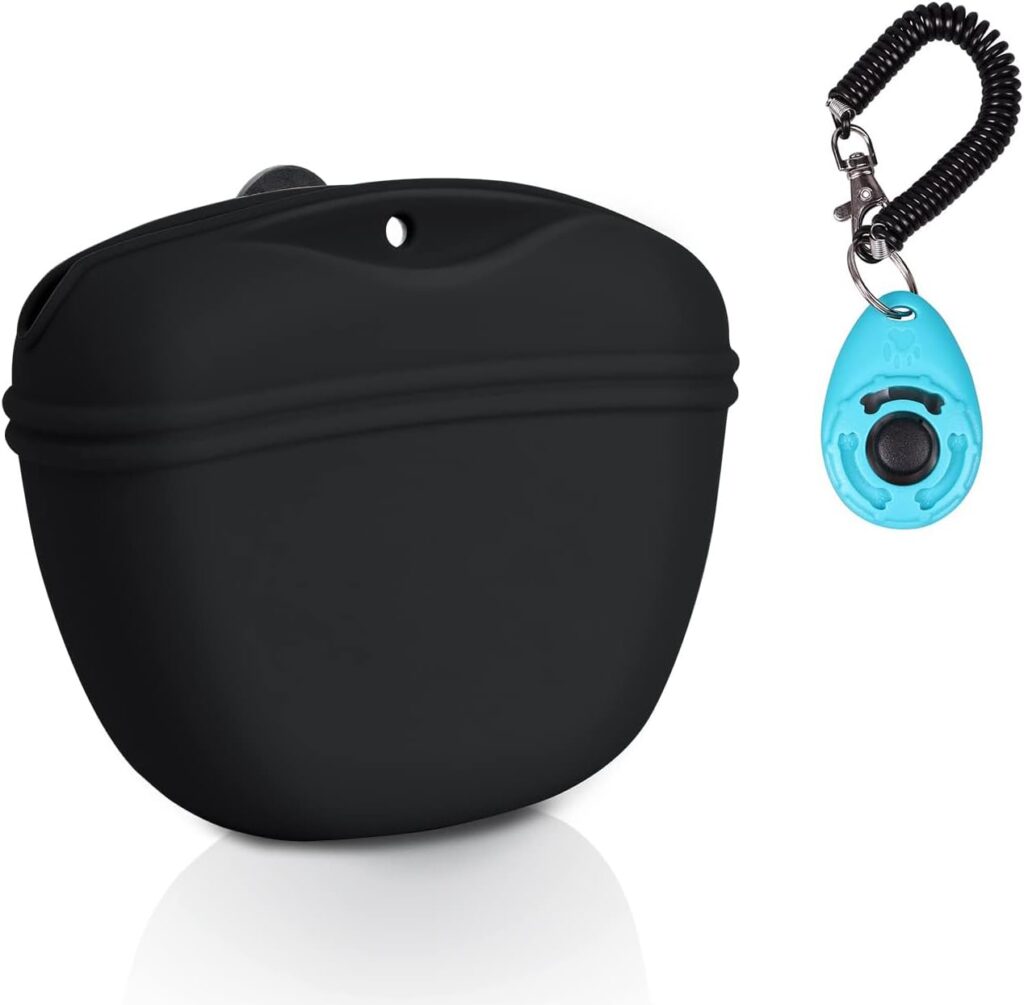
The Left&Right Dog Clicker Training Kit combines a silicone treat pouch with a training clicker.
This can be particularly convenient if you are beginning structured reward-based training and want both tools together.
How a clicker can help a reactive dog
A clicker is a marker—it tells your dog precisely which behavior earned the reward.
AVSAB defines a marker as a signal that identifies the exact moment a desired behavior occurs; a clicker or a verbal marker such as “yes” can serve this purpose.
For example, your dog sees another dog at a safe distance.
Your dog looks at the dog without exploding into barking.
Click. Treat.
Eventually, you may mark your dog for voluntarily looking back toward you.
The click itself is not what changes the dog’s emotional response. It simply helps communicate clearly which behavior you are rewarding.
Best for: owners practicing structured positive-reinforcement training.
5. NTR 30 FT Dog Training Leash – Best Long Line for Recall and Distance Training
A reactive dog does not need every training session to happen on a busy sidewalk.
In fact, quieter environments can be much better places to practice foundational skills.
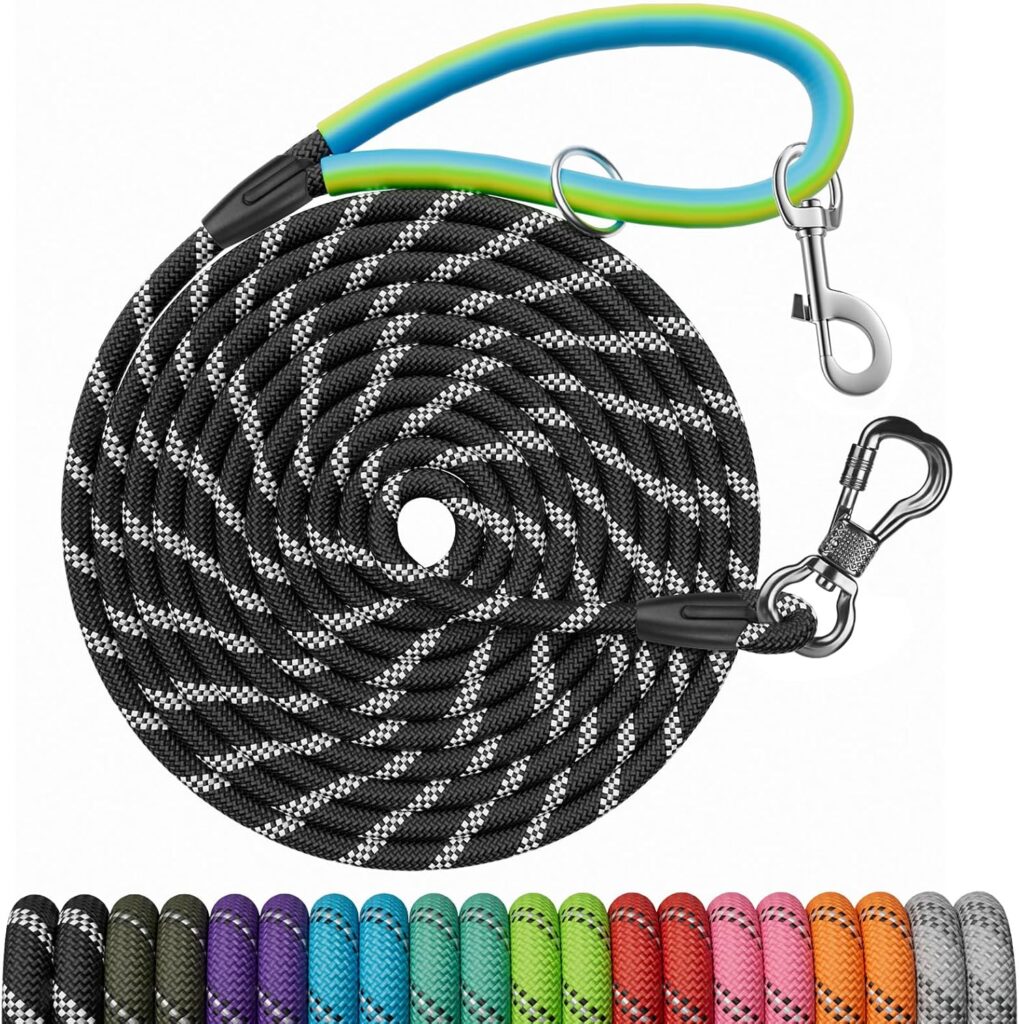
The NTR 30 FT Dog Training Leash provides substantially more freedom than a standard walking leash while keeping the dog physically connected to you.
Long lines can be useful for practicing recall, check-ins and engagement in open spaces where off-leash training would not be appropriate.
Why distance matters
One of the most important concepts in reactive-dog training is working at a distance where the dog can notice a trigger without becoming overwhelmed.
VCA explains that desensitization begins with exposure at a sufficiently low intensity that the animal does not experience significant fear or stress. The intensity is then increased gradually.
For some dogs, that may mean starting very far away from another dog.
A long line can give you more flexibility in appropriate environments.
Important: A long line is a training tool, not a substitute for a regular short leash in busy streets or crowded areas. Avoid wrapping it around your hands, and use it only where there is enough open space to manage it safely.
Best for: recall practice, engagement exercises and training in spacious outdoor environments.
A long line can also be useful when practicing recall in a controlled environment. If you’re working on this skill, read our step-by-step guide on [How to Teach Your Dog to Come When Called].
6. Happy Hoodie – Best for Noise-Sensitive Dogs
Not every reactive dog reacts primarily to other dogs.
Noise can also be a major source of stress.
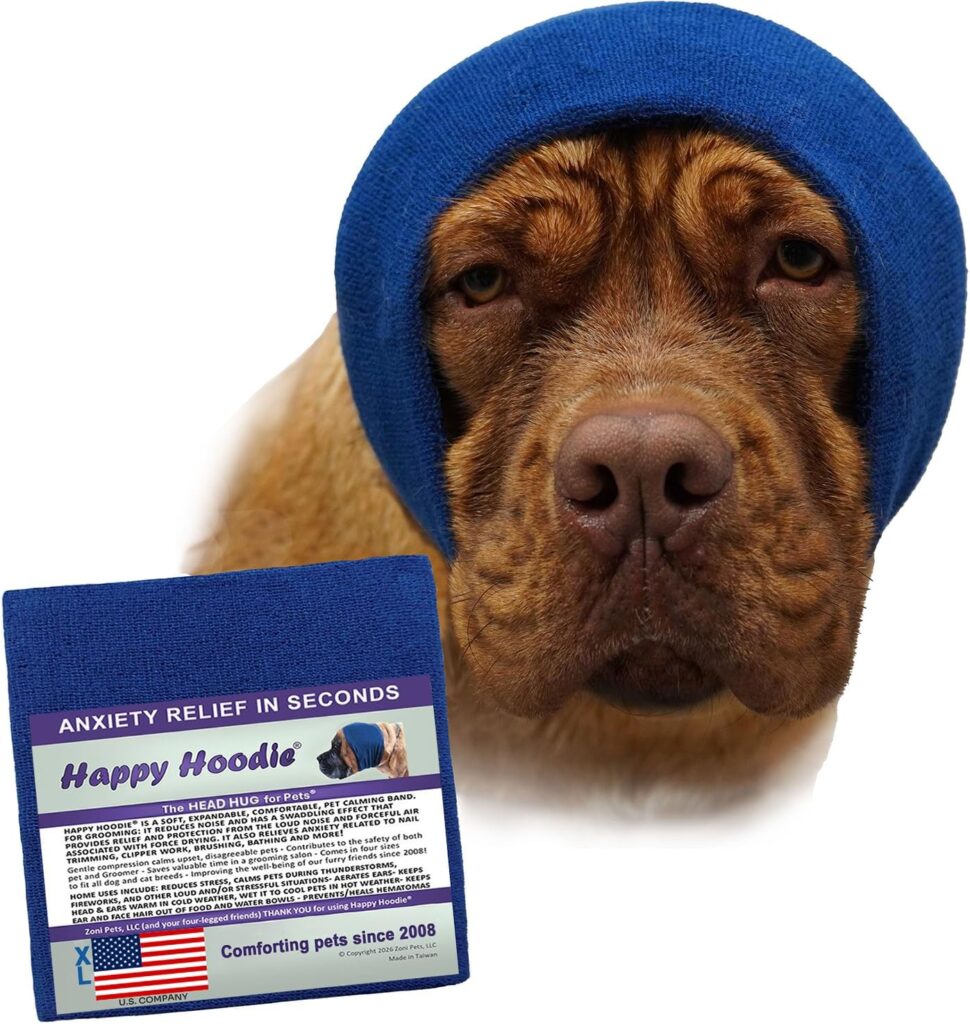
The Happy Hoodie is a soft head wrap designed to cover the ears and provide gentle compression. It is commonly marketed for situations involving stressful noise, including grooming and other loud environments.
For dogs whose reactivity or anxiety is strongly connected to sound, a product like this may be worth trying in appropriate situations.
What to remember
A calming wrap should never be forced onto a frightened dog.
Introduce wearable products gradually and pair them with positive experiences. If your dog freezes, repeatedly tries to remove the item, becomes distressed or appears more uncomfortable while wearing it, stop using it.
It is also important not to expect a calming product to replace behavior modification.
Best for: dogs sensitive to grooming noise, storms, fireworks or other loud sounds.
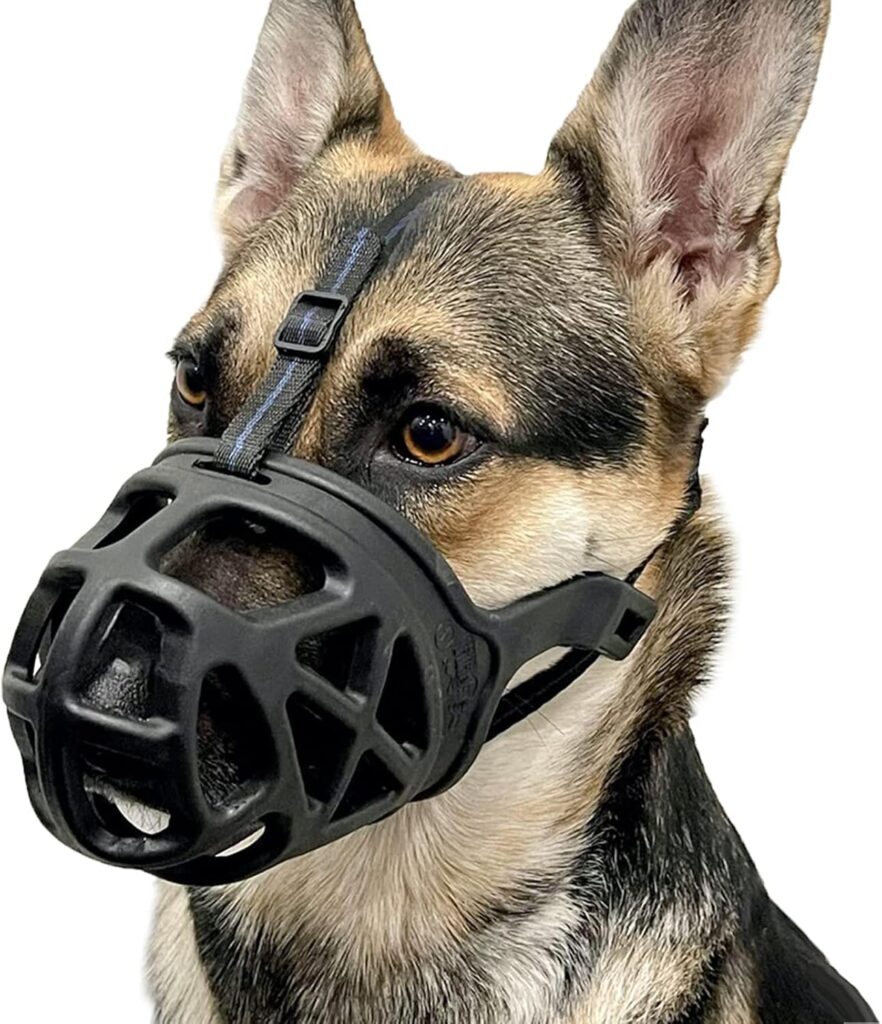
7. BARKLESS Basket Muzzle – Best Safety Tool for Dogs That May Bite
Muzzles are often misunderstood.
A properly introduced basket muzzle is not a punishment. For a dog with a bite history or a realistic risk of biting, it can be an important safety tool.
The BARKLESS Basket Muzzle we selected has an open basket-style design rather than a tightly closed fabric design.
Why basket-style muzzles can be useful
For training and longer wear, the dog needs an appropriately fitted muzzle that provides sufficient room for normal functions required during use.
Most importantly, a muzzle should never simply be strapped onto a frightened dog immediately before entering a stressful situation.
Muzzle training should be gradual and positive.
You might begin by allowing the dog to investigate the muzzle voluntarily, rewarding interaction with it, and slowly building toward placing the nose inside and eventually fastening it.
AVSAB includes appropriately conditioned muzzle use among humane management strategies when it is introduced using non-punitive, non-frightening techniques.
A muzzle does NOT mean you can ignore your dog’s boundaries
Even when a dog is wearing a muzzle, you should still maintain appropriate distance from triggers.
The muzzle is a safety layer—not permission to place the dog in situations it cannot handle.
Best for: dogs with a bite history or dogs for whom a qualified professional recommends muzzle training.
8. CENWA Nervous Rescue Jacket – Best Visual Warning for Other People
One frustrating part of walking a nervous or reactive dog is dealing with strangers who approach without asking.
Some people see a dog and immediately reach toward it. Others allow their own dog to run directly toward yours while saying, “Don’t worry, he’s friendly!”
Your dog may not want that interaction.
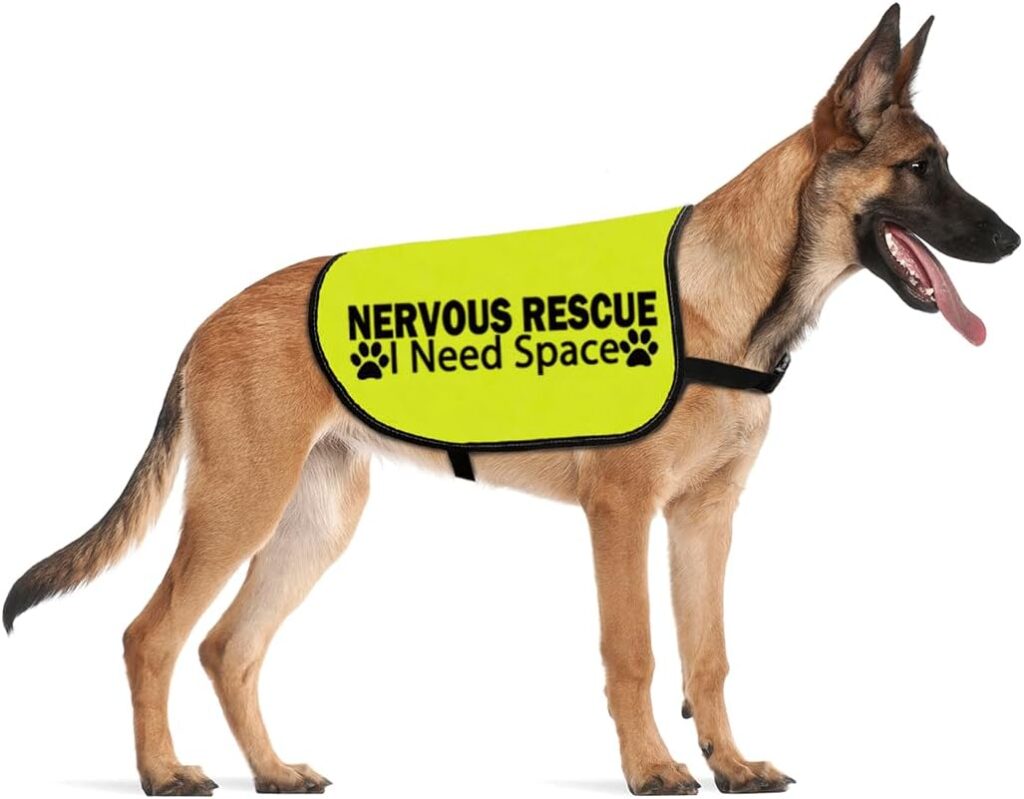
The CENWA Nervous Rescue Jacket provides a highly visible message indicating that the dog is nervous and needs space.
Why this can be surprisingly useful
A warning vest cannot guarantee that everyone will respect your dog’s space.
But making the message obvious may reduce unwanted approaches.
Cornell specifically emphasizes advocating for a reactive dog’s personal space and notes that owners may need to tell approaching people that their dog is shy, working or in training.
A visible vest does part of that communication before a stranger gets close.
Best for: nervous dogs, dogs uncomfortable around strangers and owners who frequently deal with unwanted approaches.
9. “Nervous – Please Give Me Space” Leash Sleeve – Best Simple Warning Accessory
If you do not want your dog to wear a full warning vest, a leash sleeve is a simpler alternative.
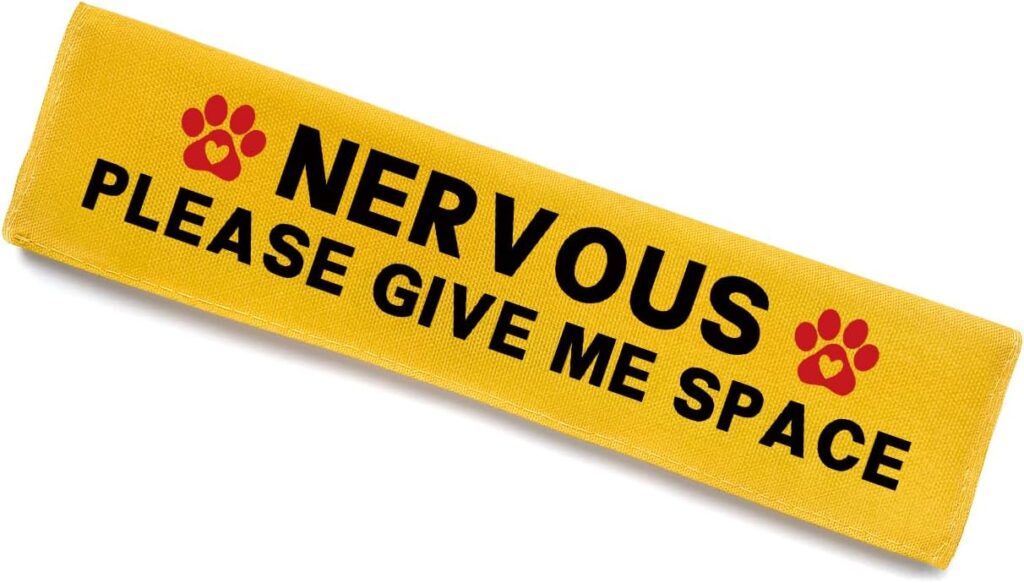
A bright “Nervous – Please Give Me Space” warning sleeve attaches directly to the leash and communicates an important message to people approaching you.
This type of accessory is inexpensive, lightweight and easy to transfer between leashes.
Why we like this idea
Management is an important part of living with a reactive dog.
You cannot control every trigger in the environment, but you can make it easier for other people to understand that your dog should not be approached.
This can be particularly helpful in places where strangers frequently try to pet dogs without asking first.
Best for: dogs needing extra personal space and owners wanting a simple visual warning.
10. ThunderShirt for Dogs – Best Calming Vest
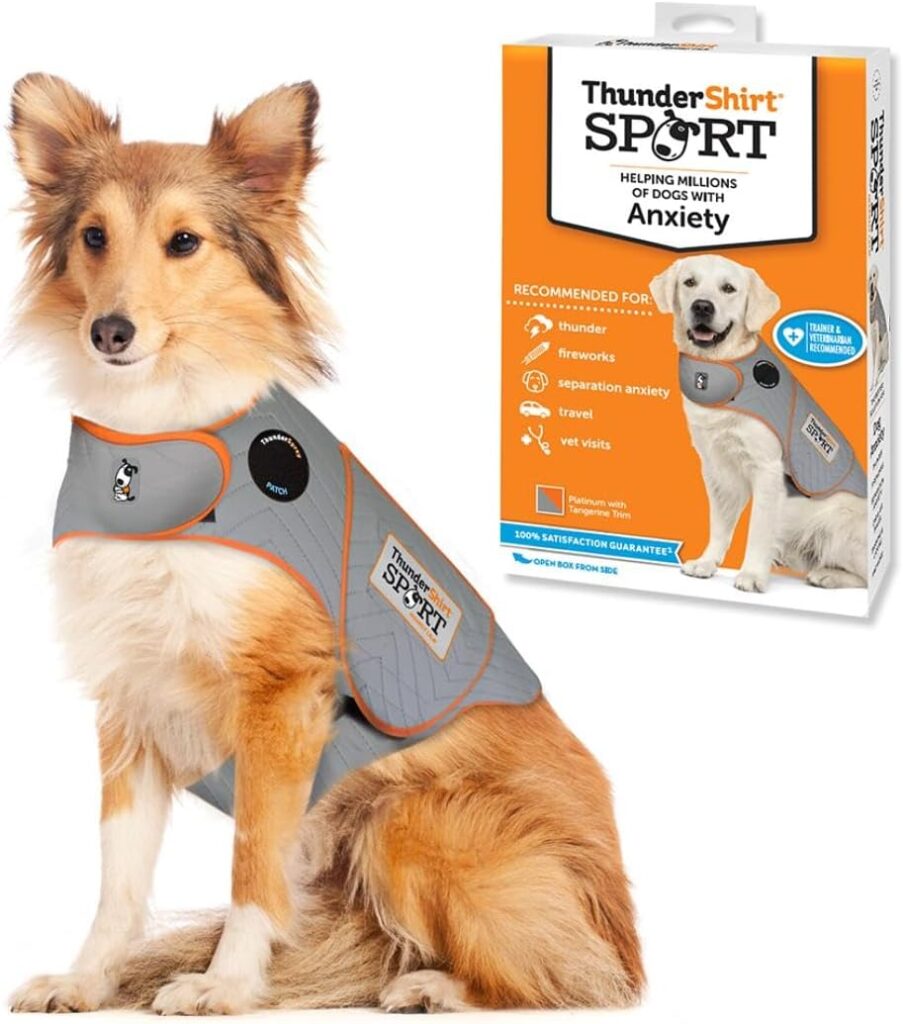
The final product on our list is one of the better-known calming wearables: the ThunderShirt for Dogs Calming Anxiety Vest.
ThunderShirt is designed to provide gentle, constant pressure around the dog’s torso.
The product may be worth considering for dogs whose reactivity is accompanied by general anxiety or for dogs that become stressed by particular situations such as storms, fireworks or travel.
Can a calming vest fix reactivity?
No.
That distinction is important.
Reactivity is complex, and no vest, supplement, leash or harness should be presented as a cure.
Think of calming wear as a possible supportive tool.
If your dog appears more comfortable while wearing it, you may choose to use it alongside environmental management and behavior modification.
If it makes no difference, that does not mean you are doing anything wrong. Dogs respond differently to calming products.
Best for: anxious dogs and dogs that benefit from gentle compression.
If anxiety is a broader issue for your dog, you can also explore our guide to the [Best Calming Products for Anxious Dogs in 2026] for additional options.
What Is a Reactive Dog?
The term “reactive dog” is commonly used to describe a dog that responds disproportionately strongly to certain triggers.
Common triggers include:
other dogs, unfamiliar people, bicycles, cars, runners, children, loud noises, visitors, wildlife or unfamiliar environments.
The reaction may include barking, lunging, whining, growling, pulling, freezing or desperately trying to move away.
Importantly, reactivity and aggression are not identical.
Cornell notes that reactive dogs are not necessarily aggressive, although unmanaged reactivity can escalate and should therefore be taken seriously.
The emotional reason behind the behavior matters.
A dog might bark because it is frightened.
Another may become frustrated because the leash prevents it from approaching.
Another may have learned that barking makes scary things move away.
This is why simply trying to “stop the barking” does not necessarily address the underlying problem.
What Is the Best Way to Train a Reactive Dog?
There is no single training plan appropriate for every reactive dog.
However, one of the most important principles is surprisingly simple:
Stop putting the dog so close to triggers that it cannot cope.
Imagine your dog can calmly notice another dog from 100 feet away.
At 70 feet, your dog becomes alert but still accepts treats.
At 40 feet, your dog stiffens and stares.
At 20 feet, your dog lunges and barks.
Starting every training session at 20 feet is unlikely to teach calm behavior.
Instead, begin at a distance where your dog can notice the trigger while remaining able to eat, think and respond to you.
Then you can pair the appearance of the trigger with something positive.
This combines desensitization and counter-conditioning.
VCA describes desensitization as controlled, gradual exposure to a trigger at an intensity low enough to avoid provoking fear, while counter-conditioning pairs that trigger with something that produces a positive emotional response.
Over time, the goal is not simply:
“My dog isn’t allowed to bark.”
A much more useful goal is:
“My dog sees the trigger and feels safe enough to respond differently.”
Why Punishment Can Make Reactivity Worse
When a dog explodes at another dog, correcting the behavior can feel intuitive.
But consider what the dog may learn.
The dog sees another dog.
Then something unpleasant happens—perhaps a leash correction, yelling or another aversive consequence.
The dog may begin associating the appearance of other dogs with even more discomfort.
That is the opposite of what we want when fear or anxiety contributes to the reaction.
AVSAB’s current position recommends reward-based training methods for all dog training, including behavior problems, and states that aversive methods should not be used.
Instead of punishing the reaction, focus on managing the environment and reinforcing behaviors you want to see.
How to Choose Training Equipment for a Reactive Dog
Before buying anything, consider what problem you are actually trying to solve.
A dog that slips out of harnesses needs different equipment from a dog that is primarily noise-sensitive.
A strong dog that lunges may benefit from a secure harness and sturdy leash.
A fearful dog may benefit from visible “give me space” equipment.
A dog learning counter-conditioning may benefit most from something as simple as an easily accessible treat pouch.
And a dog with a bite history may need professionally guided basket-muzzle training.
In many cases, the best setup is not one product but a combination of management and training tools.
For example:
secure harness + sturdy leash + treat pouch + warning sleeve
can be far more useful than searching for one magical product that promises to stop reactivity.
What to Carry on Walks With a Reactive Dog
Preparation can make walks much easier.
High-value treats are particularly useful. Choose something your dog genuinely loves and reserve especially valuable rewards for difficult environments.
A treat pouch lets you reward quickly.
You should also have secure walking equipment and enough awareness of your surroundings to change direction before your dog becomes overwhelmed.
One of the most useful skills you can teach is a simple U-turn.
Practice it at home first.
Say your cue, turn around, encourage your dog to follow and reward.
Repeat until turning with you becomes easy.
Then, when you unexpectedly see a trigger ahead, you have a practiced behavior available instead of trying to physically drag your already-aroused dog away.
When Should You Get Professional Help?
Some reactivity can be managed successfully with thoughtful environmental management and reward-based training.
Other cases require professional support.
Seek qualified help if your dog has bitten someone, attempts to bite, redirects aggression toward you or another animal, is becoming progressively more reactive, cannot recover after seeing triggers, or if you no longer feel able to walk or manage the dog safely.
A veterinary examination can also be important when behavior changes suddenly. Pain or medical problems can affect behavior.
For more serious fear, anxiety or aggression, AVSAB notes that treatment may involve environmental management, behavior modification and, in some cases, medication under appropriate veterinary supervision.
Choose professionals who can clearly explain their methods and who use evidence-based, reward-focused behavior modification rather than relying on fear, pain or intimidation.
Frequently Asked Questions
Can a reactive dog become calm?
Many reactive dogs can make substantial progress with appropriate management and training.
The goal does not necessarily need to be creating a dog that happily greets every person and dog.
A much more realistic goal may be a dog that can notice a trigger, remain under control and move away calmly.
Progress may take weeks or months and is rarely perfectly linear.
Is a harness better than a collar for a reactive dog?
A secure, properly fitted harness can provide useful control and may be particularly important for dogs that pull strongly or attempt to escape.
However, the best equipment depends on the individual dog.
Whatever you choose should fit correctly and should not cause pain or restrict normal movement unnecessarily.
Should reactive dogs meet other dogs on leash?
Not necessarily.
A reactive dog does not need to greet every dog it encounters.
For many dogs, deliberately creating space and practicing calm neutrality is more productive than forcing interactions.
Cornell specifically notes that dogs do not need to be friends with every dog or every person.
Are treats just distracting a reactive dog?
Treats can certainly be used to redirect attention, but reward-based behavior modification goes beyond simple distraction.
Food can reinforce desired behavior and can also be used during counter-conditioning to help change the dog’s emotional association with a trigger.
Should I let my reactive dog bark at other dogs?
The goal is not to deliberately allow repeated barking episodes.
Ideally, you manage distance so your dog remains below the point at which it loses the ability to respond.
If your dog is already barking, lunging and unable to take food, the situation is probably too difficult for productive training at that moment.
Create distance and try again under easier conditions.
Can you socialize an adult reactive dog?
Adult dogs can learn new responses and become more comfortable around triggers.
However, “socialization” should not mean forcing the dog into close contact with people or animals it fears.
Controlled exposure at a manageable intensity is much safer than overwhelming exposure.
Do calming vests work for reactive dogs?
Some owners find compression garments useful for dogs experiencing anxiety, while others notice little difference.
A calming vest should therefore be viewed as a supportive tool rather than a treatment for reactivity.
If your dog is severely anxious or aggressive, speak with a veterinarian or qualified behavior professional rather than relying solely on calming products.
Final Thoughts
Living with a reactive dog can make everyday activities feel complicated, but the goal is not to force your dog to tolerate everything.
Often, one of the most helpful changes is simply learning to recognize what your dog can handle.
Create distance when necessary.
Reward calm choices.
Practice useful skills in easy environments before expecting them to work in difficult ones.
Advocate for your dog’s personal space.
And choose equipment that makes those things easier.
A sturdy leash, escape-resistant harness, long line, treat pouch, clicker, warning vest or basket muzzle can all serve useful purposes—but the equipment supports the training; it does not replace it.
For many dogs, progress comes from hundreds of small successful experiences rather than one dramatic breakthrough.
And sometimes the best walk with a reactive dog isn’t the walk where they passed ten dogs without barking.
It’s the walk where you spotted one trigger early, calmly crossed the street, rewarded your dog for checking in with you, and both went home feeling successful.
Disclaimer: This article is for informational purposes only and is not a substitute for professional veterinary or behavioral advice. Dogs showing severe fear, aggression, biting behavior or sudden behavioral changes should be evaluated by a veterinarian and/or qualified canine behavior professional.