Dogs need more than physical exercise to stay happy and engaged. Walks, playtime, and outdoor adventures are important, but their brains need something to do too.
That’s where enrichment toys can help.
Snuffle toys encourage dogs to use their sense of smell, puzzle toys turn treats into a problem to solve, and interactive feeders can make an ordinary meal much more interesting. Puzzle toys can provide both physical and mental engagement by requiring dogs to work to reach food or treats.
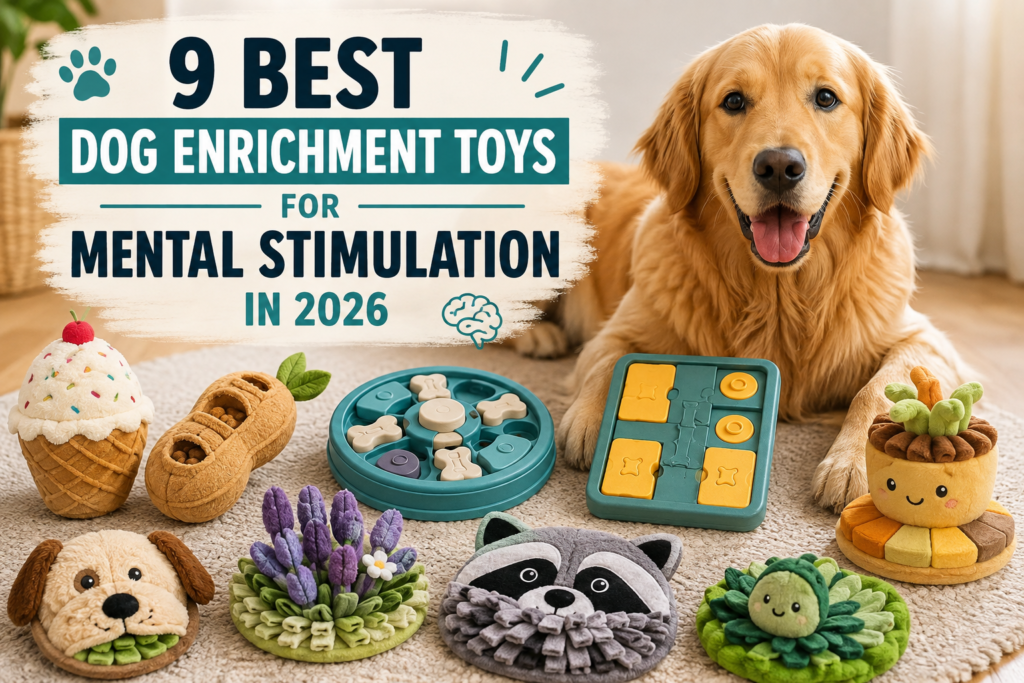
We found 9 dog enrichment toys from Pupper Crust that offer different types of mental stimulation—from beginner-friendly nosework to more challenging puzzles and feeding games.
Whether you have a curious puppy, a clever adult dog, or a senior who could use some gentle mental activity, there’s something here worth considering.
This post contains affiliate links. If you purchase through one of these links, we may earn a commission at no additional cost to you.
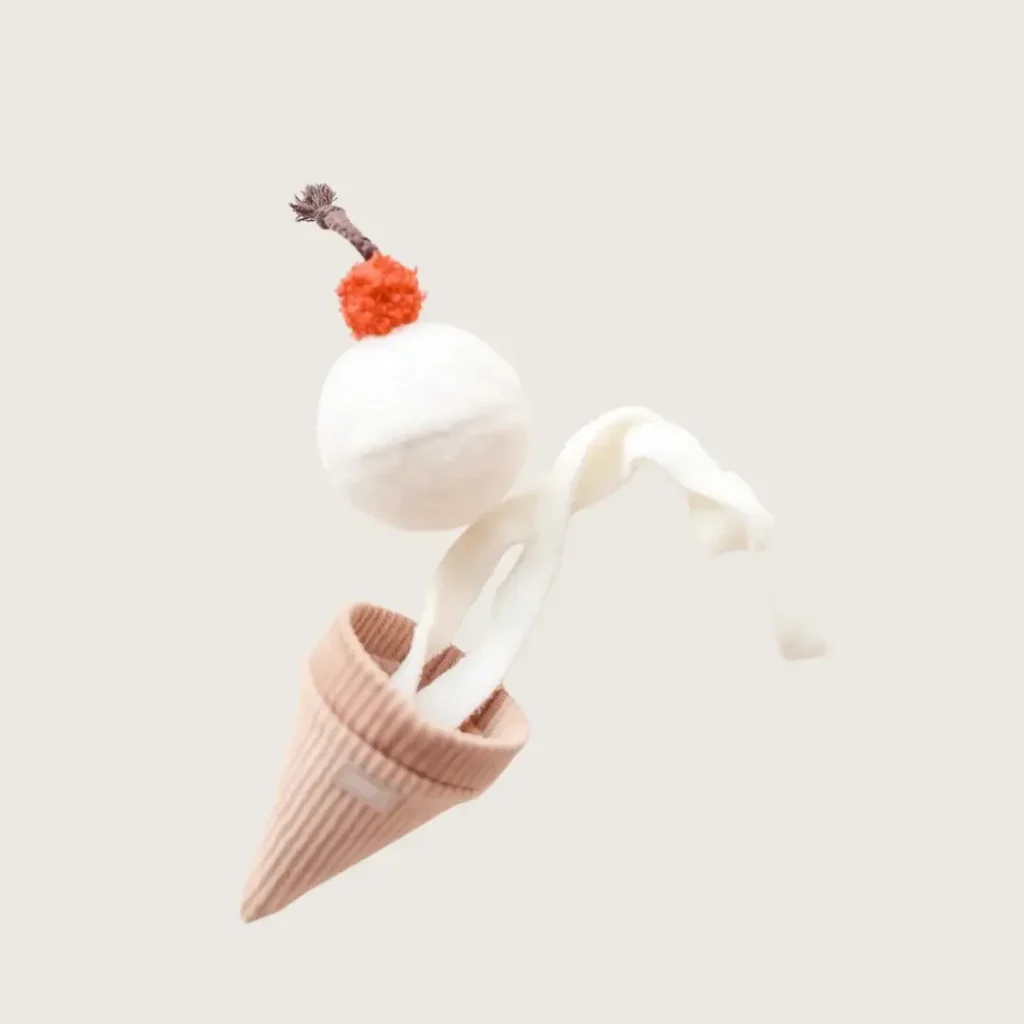
1. Ice Cream Snuffle Toy
Best Overall Snuffle Toy
The Ice Cream Snuffle Toy turns treat hunting into a fun nosework game.
Hide small treats or pieces of kibble throughout the toy and let your dog use their nose to find them. This type of play encourages natural sniffing and foraging behavior while giving your dog something more mentally engaging to do than simply eating treats from your hand.
It’s a fun option for dogs that enjoy sniffing and treat-hunting games, and it can be brought out repeatedly for short enrichment sessions.
Best for: Dogs that love sniffing and searching for treats
Why we like it:
- Encourages nosework
- Turns treats into an activity
- Good introduction to enrichment play
- Fun design
- Can be reused with different treats
Keep in mind: Snuffle toys aren’t intended to replace chew toys. Supervise play, particularly if your dog tends to tear apart soft toys.
2. Peanut Nosework Toy
Best for Beginner Nosework
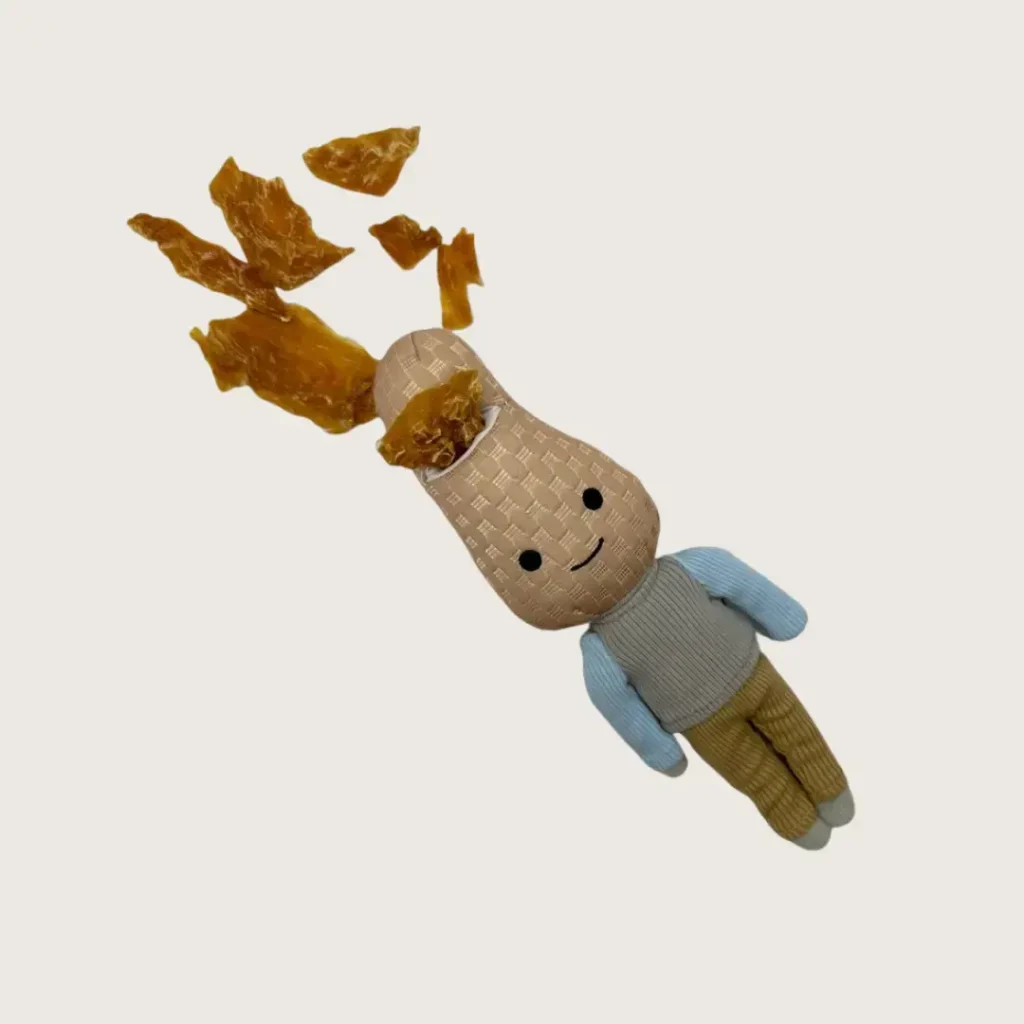
If your dog is new to enrichment toys, the Peanut Nosework Toy is a nice place to start.
Instead of presenting treats immediately, it encourages your dog to sniff, investigate, and work out where the rewards are hidden.
That makes it particularly useful for dogs that need something mentally interesting to do indoors without introducing an overly complicated puzzle right away.
Its compact design also makes it easy to bring out for a quick enrichment session and put away afterward.
Best for: Dogs trying nosework toys for the first time
Why we like it:
- Beginner-friendly
- Encourages sniffing
- Compact design
- Easy to incorporate into short enrichment sessions
- Simple treat-hiding concept
Keep in mind: Start with treats that are easy to find so your dog learns how the game works before making it more difficult.
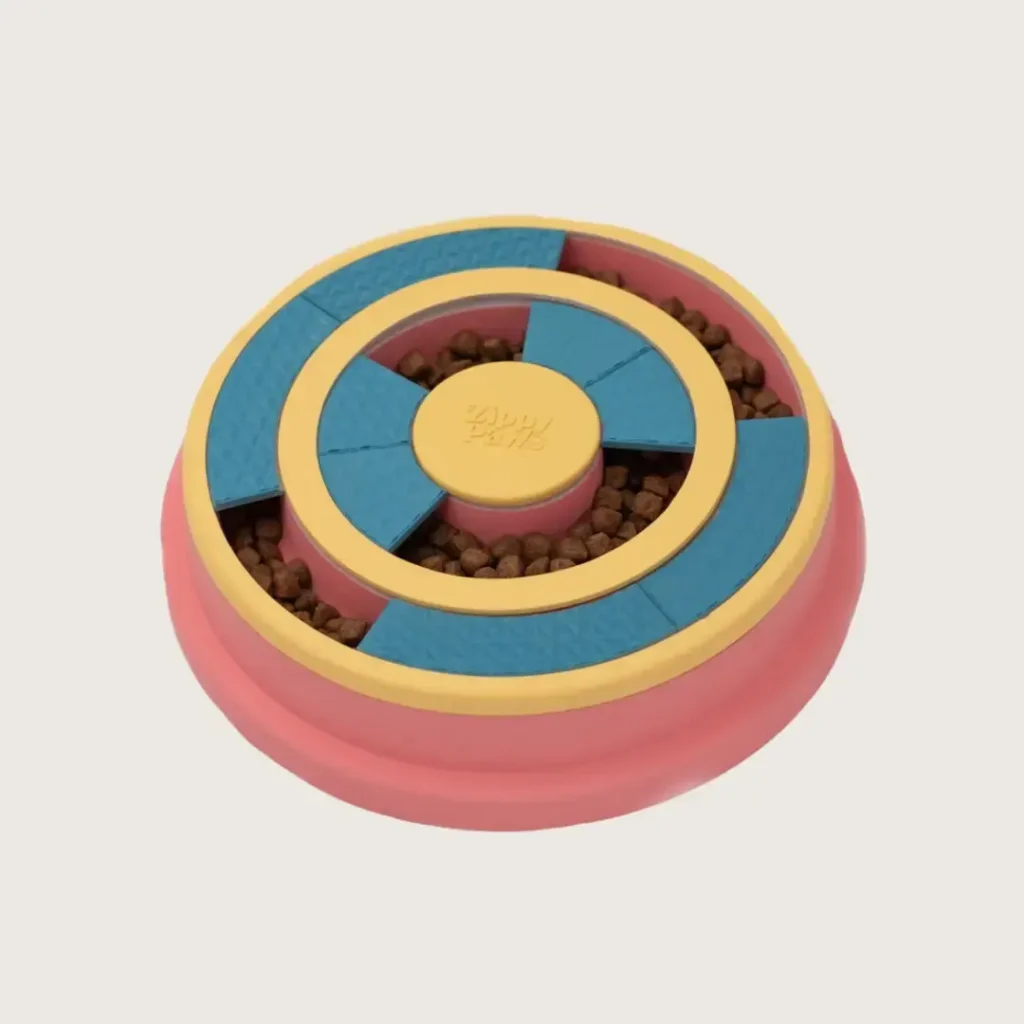
3. Puzzle Feeder Bowl
Best for Mealtime Enrichment
Why serve every meal in a regular bowl when breakfast itself can become an activity?
The Puzzle Feeder Bowl combines feeding with problem-solving. Rather than simply eating from an open bowl, your dog has to interact with the feeder to reach their kibble or treats.
That makes this one particularly interesting because you don’t necessarily need additional treats to create enrichment—you can use part of your dog’s normal meal.
For food-motivated dogs, it can be an easy way to add mental stimulation to an activity that’s already part of their daily routine.
Best for: Dogs that eat quickly or enjoy food-based puzzles
Why we like it:
- Combines feeding and enrichment
- Can be used with kibble or treats
- Encourages problem-solving
- Can make mealtime more engaging
- Useful for food-motivated dogs
Keep in mind: Choose feeding toys appropriate for your dog’s size and eating habits, and supervise your dog until you know how they interact with the product.
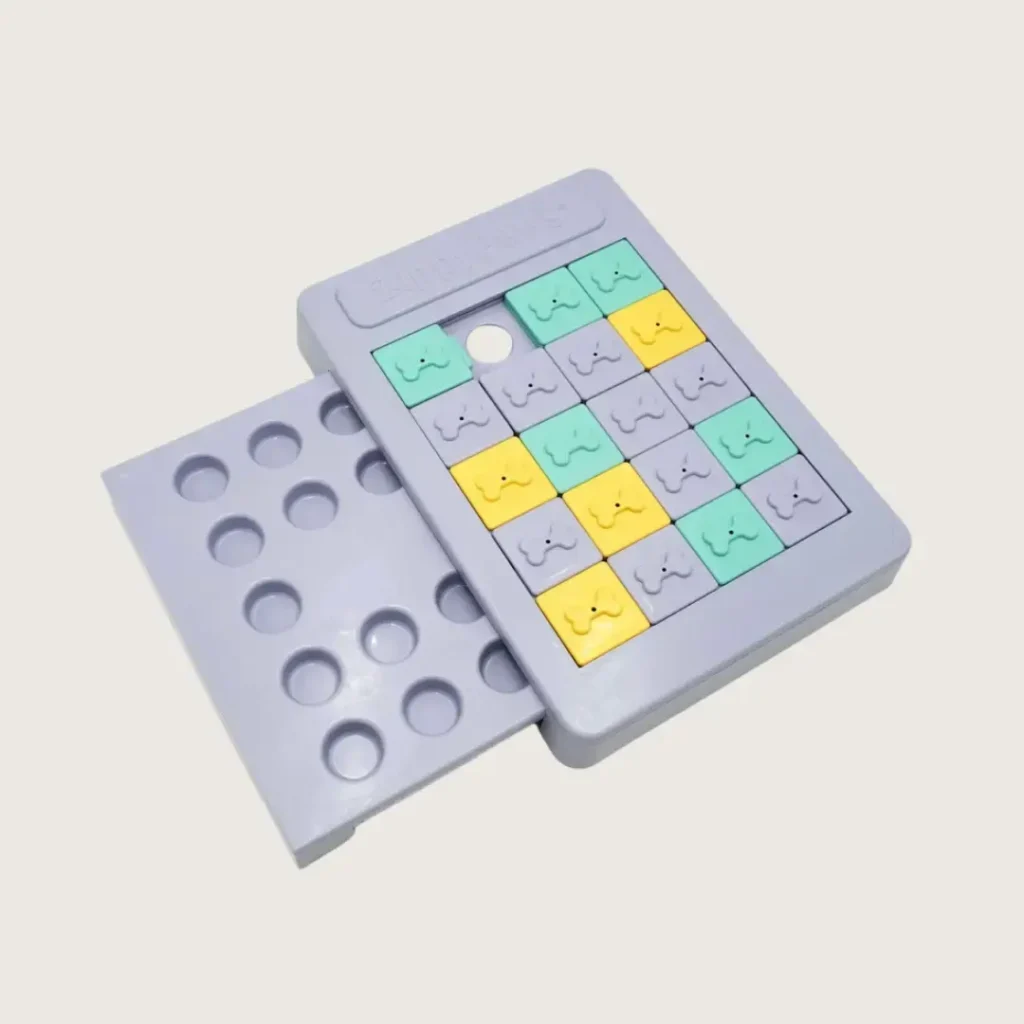
4. Panel Slider Puzzle Toy
Best Puzzle Toy
For dogs that enjoy figuring things out, the Panel Slider Puzzle Toy adds a more traditional puzzle challenge.
Treats or kibble can be hidden inside, and your dog has to interact with the different components to uncover the reward.
It’s a good step up from simply hiding treats inside a soft nosework toy and may be especially appealing to dogs that quickly understand simpler enrichment games.
Best for: Curious dogs that already understand basic food puzzles
Why we like it:
- Encourages problem-solving
- Uses food as motivation
- More interactive than a standard feeding bowl
- Reusable
- Suitable for short indoor enrichment sessions
Keep in mind: Puzzle toys should be challenging without becoming frustrating. Show your dog how the toy works if they’re struggling.
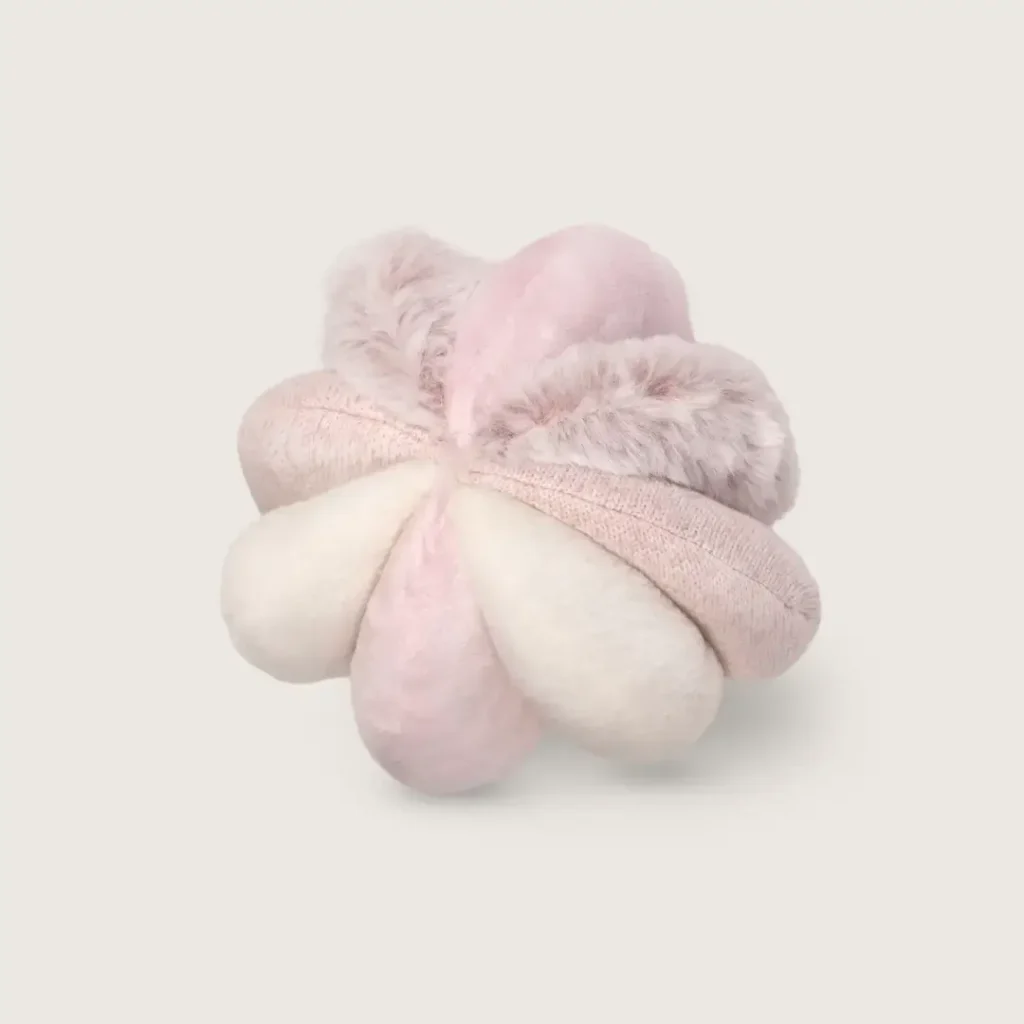
5. Toto Nosework Toy
Best Interactive Nosework Toy
The Toto Nosework Toy combines soft-toy play with scent-based enrichment.
Instead of simply giving your dog a plush toy, you can use treats to encourage sniffing, searching, and exploration.
This makes it an interesting option for dogs that enjoy soft toys but could benefit from something more interactive than a traditional plush.
Best for: Dogs that enjoy soft toys and treat-hunting games
Why we like it:
- Combines play and nosework
- Encourages natural sniffing behavior
- Interesting alternative to plastic puzzles
- Useful for indoor enrichment
- Makes treat time more interactive
Keep in mind: Soft enrichment toys may not be appropriate for aggressive chewers.
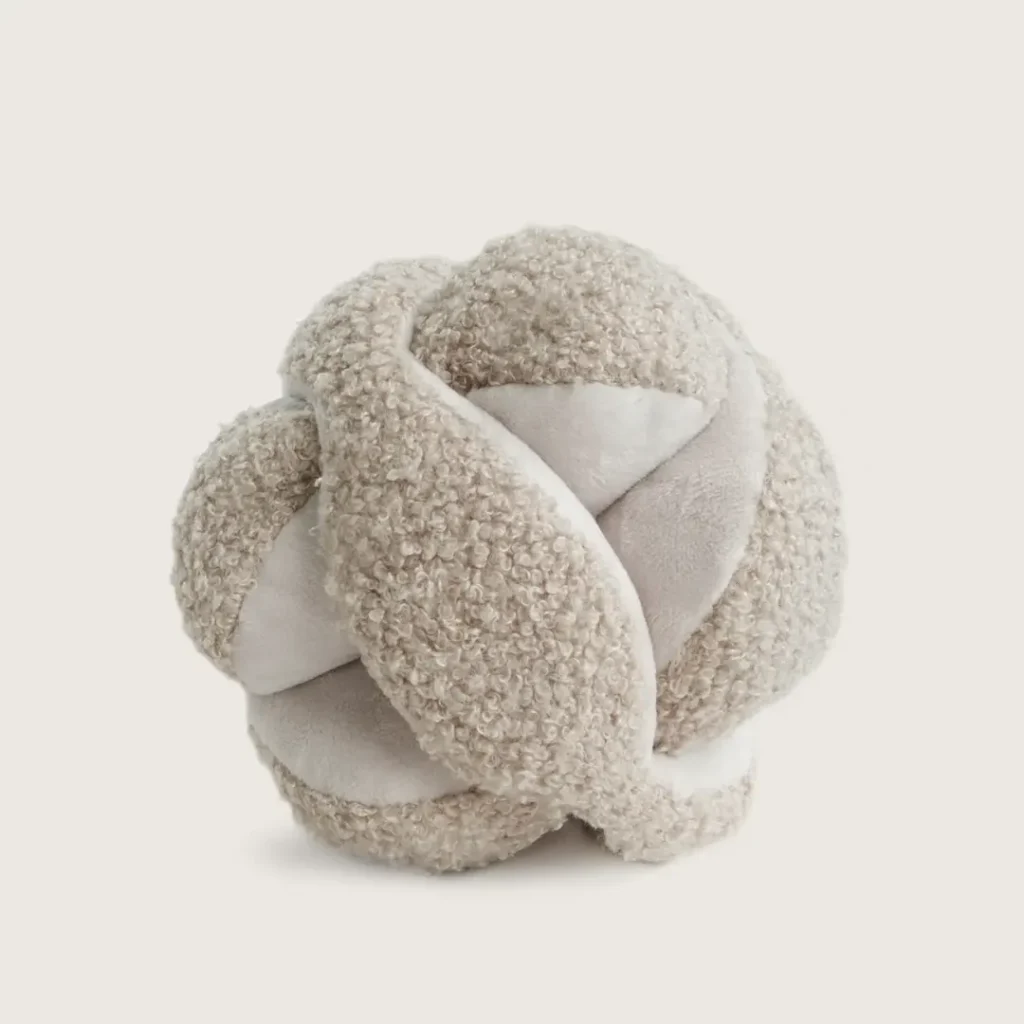
6. Monti Nosework Toy
Best for Treat-Hiding Games
The Monti Nosework Toy gives you another way to turn a few treats into a longer activity.
Rather than handing your dog a reward, hide treats throughout the toy and let them investigate and work out how to reach them.
This can be particularly useful on rainy days, during quiet afternoons at home, or whenever your dog needs something interesting to do indoors.
Best for: Food-motivated dogs that enjoy searching games
Why we like it:
- Encourages sniffing and exploration
- Reusable treat-hiding activity
- Suitable for short enrichment sessions
- Can make treat time more interesting
- Soft alternative to hard puzzle boards
Keep in mind: Mental enrichment complements physical exercise—it doesn’t replace regular walks and appropriate daily activity.
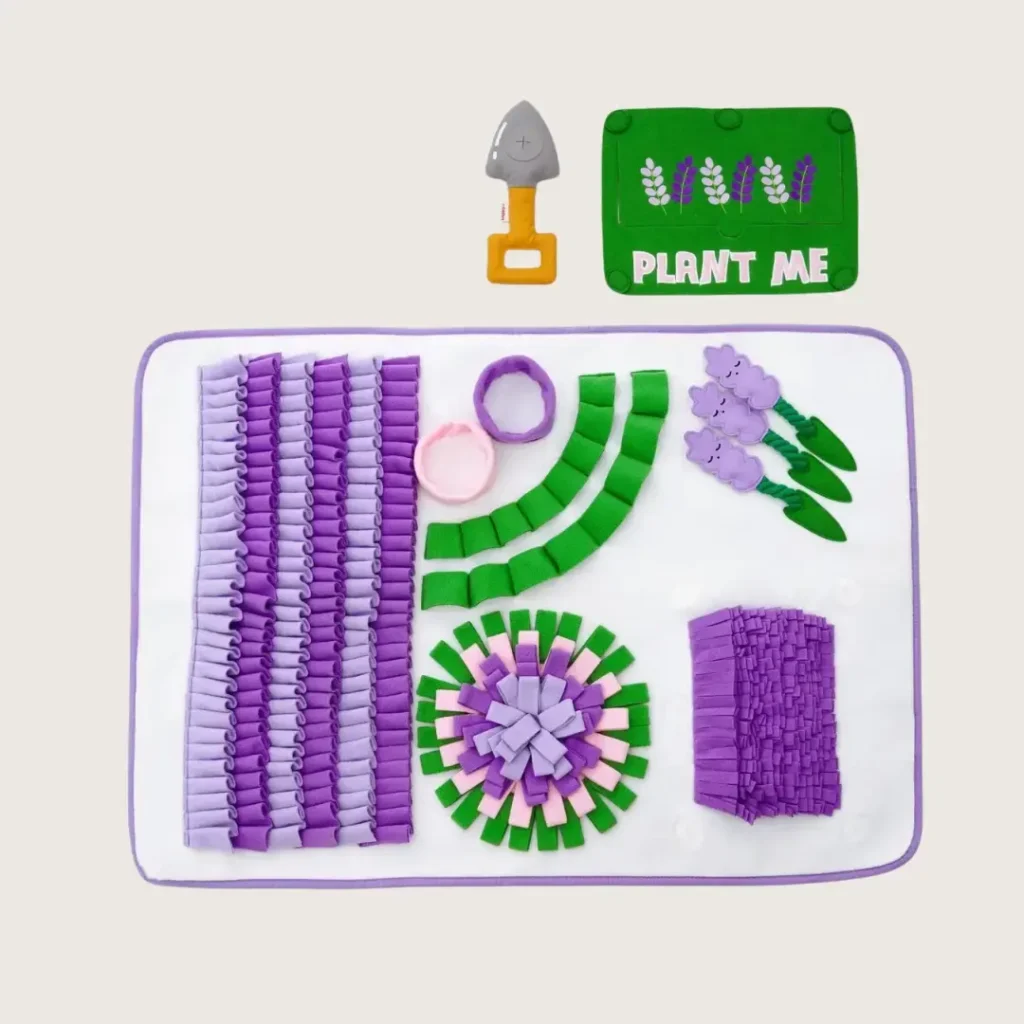
7. Lavender Garden
Best Premium Enrichment Toy
Lavender Garden is our premium pick and one of the more elaborate enrichment options in this guide.
Its design is better suited to someone who already knows their dog enjoys sniffing, searching, and interactive enrichment games and wants something more substantial than a simple starter toy.
It could also make an interesting gift for a dog owner who already seems to own every ordinary ball, rope, and squeaky toy imaginable.
Best for: Dogs that already love enrichment and nosework
Why we like it:
- More elaborate enrichment design
- Encourages sniffing and searching
- Visually interesting
- Suitable for experienced enrichment-loving dogs
- Makes a fun dog gift
Keep in mind: Because this is one of the more elaborate options, I wouldn’t necessarily choose it as your dog’s very first enrichment toy. Start simple if you don’t yet know whether your dog enjoys nosework games.
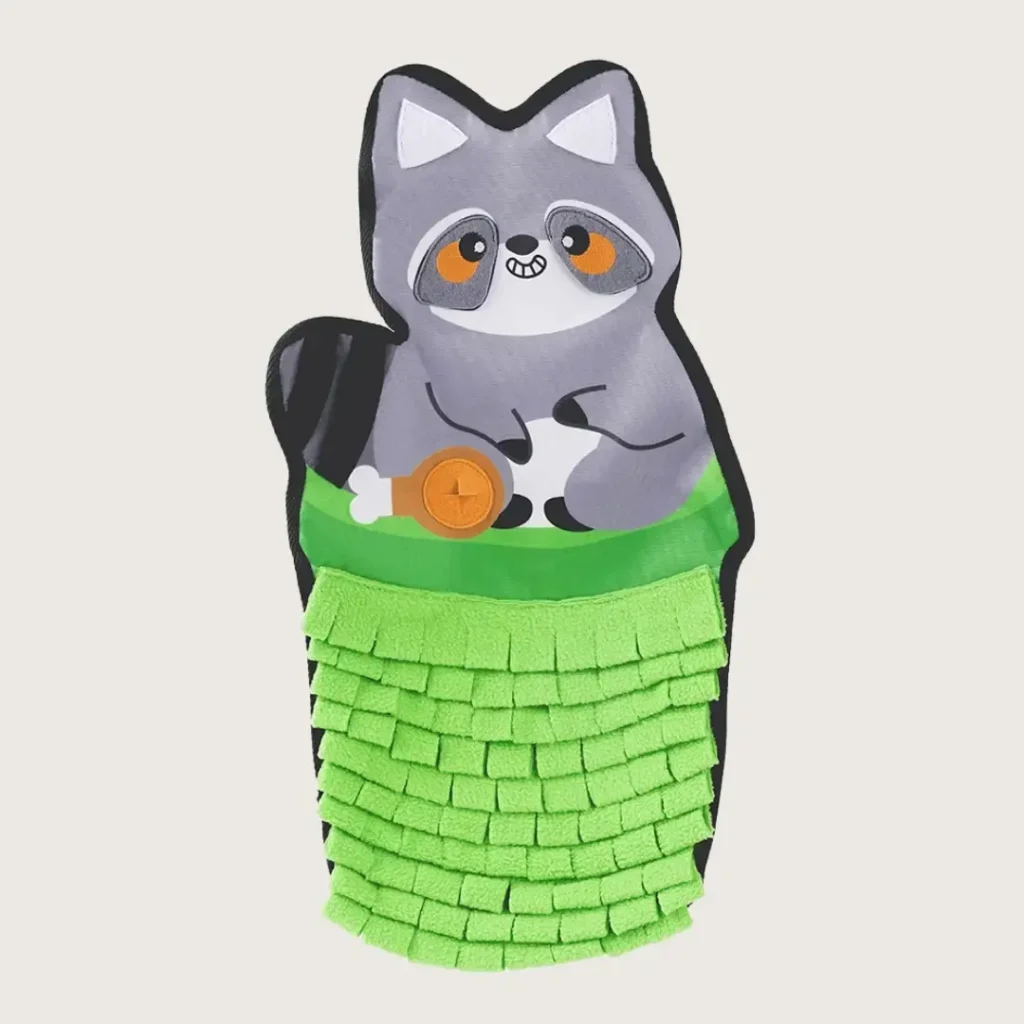
8. Raccoon Snuffle Mat
Best Snuffle Mat
A snuffle mat is one of the simplest ways to turn treats or kibble into a sniffing game.
Scatter or hide food throughout the fabric areas and allow your dog to search for each piece.
This type of enrichment doesn’t require your dog to understand complicated mechanisms, which makes a snuffle mat an approachable option for many dogs.
You can also use part of your dog’s normal kibble rather than constantly adding extra treats.
Best for: Everyday sniffing enrichment
Why we like it:
- Simple concept
- Encourages natural foraging
- Can be used with kibble
- Easy way to introduce enrichment
- Suitable for short indoor activities
Keep in mind: Don’t leave a dog that likes shredding fabric unattended with a snuffle mat.
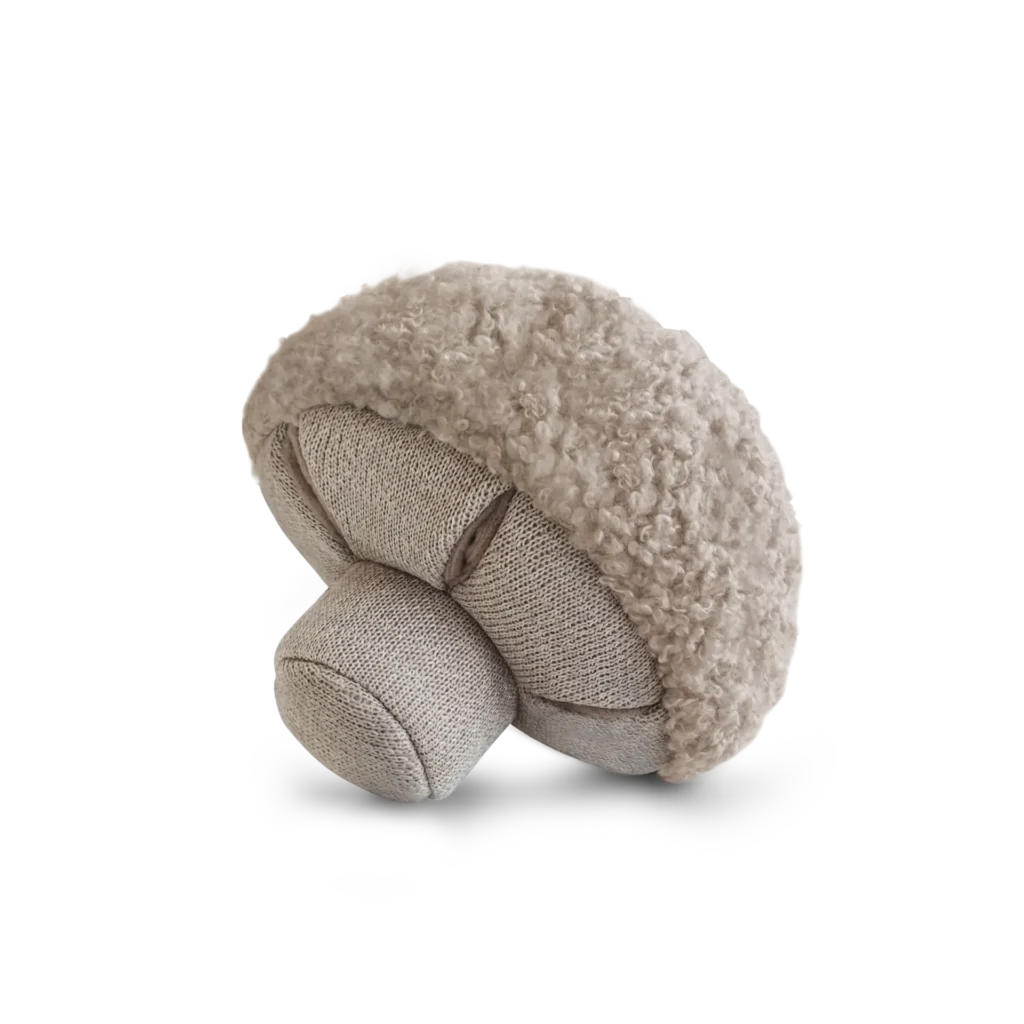
9. Guu Nosework Toy
Best Compact Nosework Toy
The Guu Nosework Toy is another good option if you want enrichment without a large puzzle taking up floor space.
Its compact format makes it easy to bring out for a quick sniffing session and then put away when playtime is finished.
Hide treats inside and let your dog investigate rather than simply handing over the reward.
Best for: Smaller dogs and homes with limited space
Why we like it:
- Compact
- Encourages sniffing
- Treat-based enrichment
- Easy to store
- Good for short enrichment sessions
Keep in mind: As with all enrichment toys, choose a product appropriate for your dog’s size and chewing style.
Which Dog Enrichment Toy Should You Choose?
There isn’t one enrichment toy that’s best for every dog.
If your dog has never used an enrichment toy, I’d start with something simple like the Peanut Nosework Toy or Raccoon Snuffle Mat.
For a very food-motivated dog, the Puzzle Feeder Bowl is particularly useful because enrichment can become part of a normal meal.
Dogs that already understand food puzzles may enjoy the Panel Slider Puzzle Toy, while dogs that naturally love sniffing may prefer one of the nosework options.
And if you already know your dog loves more elaborate enrichment activities, Lavender Garden is our premium pick.
Why Mental Stimulation Matters for Dogs
Physical exercise is only one part of keeping a dog occupied.
Dogs also benefit from opportunities to sniff, search, solve simple problems, and interact with their environment. Food puzzles, nosework games, and other enrichment activities can provide something interesting for dogs to do, especially during indoor time.
If your dog frequently seems restless or struggles to entertain themselves, read our guide Signs Your Dog Is Bored.
You can also check our Best Dog Toys for Bored Dogs in 2026 for more toy ideas beyond nosework and enrichment products.
Are Enrichment Toys Good for Puppies?
They can be, provided the toy is appropriate for the puppy’s age, size, and chewing behavior.
Simple food puzzles and nosework activities can introduce puppies to problem-solving and exploration.
Start easy. The goal isn’t to make your puppy frustrated—it’s to teach them that interacting with the toy leads to a reward.
Keep early sessions short and supervise your puppy closely, especially with soft toys or products containing removable parts.
Are Enrichment Toys Good for Senior Dogs?
Yes. Mental stimulation can remain valuable even when an older dog isn’t able to exercise as intensely as they once did.
Gentler puzzles and sniffing activities can provide engagement without requiring strenuous physical activity.
For senior dogs, choose an appropriate difficulty level and consider any dental, mobility, vision, or other health limitations when selecting toys.
How Often Should Dogs Use Enrichment Toys?
There’s no single schedule that works for every dog.
Short enrichment sessions can be incorporated throughout the week, and rotating different activities may help keep them interesting.
You don’t need to give your dog every enrichment toy at once. Putting some toys away and bringing them back later can make familiar activities feel interesting again.
Can You Leave a Dog Alone With an Enrichment Toy?
It depends on the toy and the dog.
Don’t assume that every enrichment toy is designed for unsupervised use. Some puzzle, snuffle, and treat-hiding toys are intended for interactive or supervised sessions rather than chewing.
Supervise your dog when introducing any new toy. If your dog tears pieces off, tries to swallow parts, or uses the toy in a way it wasn’t designed for, remove it.
Final Thoughts
The best dog enrichment toy isn’t necessarily the most complicated one.
For some dogs, searching through a snuffle mat is incredibly engaging. Others would rather push, slide, sniff, and investigate until they find every last piece of kibble.
Start with your dog’s natural interests.
If they love sniffing, try a nosework or snuffle toy. If they’re obsessed with food, a puzzle feeder may be more motivating. And if they solve simple enrichment activities in seconds, gradually introduce something more challenging.
The goal is simple: give your dog something enjoyable to think about.
This post contains affiliate links. If you purchase through one of these links, we may earn a commission at no additional cost to you.
This article is for informational purposes only and is not a substitute for professional veterinary or behavioral advice. Always supervise your dog with new toys and choose products appropriate for their size, age, and chewing habits.