Bringing home a new dog is exciting, but the first few weeks can also feel overwhelming. You’re trying to figure out feeding, walks, training, sleep, grooming, toys, and dozens of other little things — often while your new dog is still adjusting to an unfamiliar home.
Most new dog owners make a few mistakes along the way, and that’s completely normal. The important part is recognizing the habits that can make the adjustment harder for you or your dog and knowing what to do instead.
Here are some of the most common mistakes new dog owners make and simple ways to avoid them.
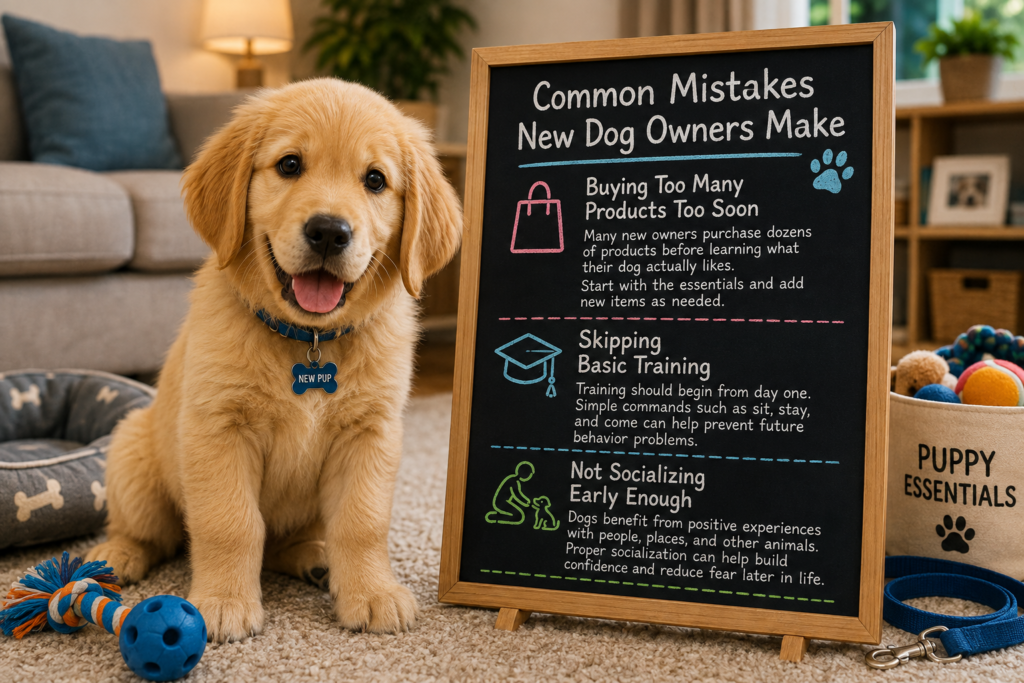
Buying Too Many Products Too Soon
It’s tempting to buy everything before your new dog arrives, but you probably don’t know yet what your dog will actually use or enjoy.
A bed that looks perfect online may not match your dog’s preferred sleeping style. Some dogs ignore expensive toys but become obsessed with a simple ball or chew toy. Even bowls, collars, harnesses, and grooming tools may need to be changed once you learn more about your dog’s size, habits, and preferences.
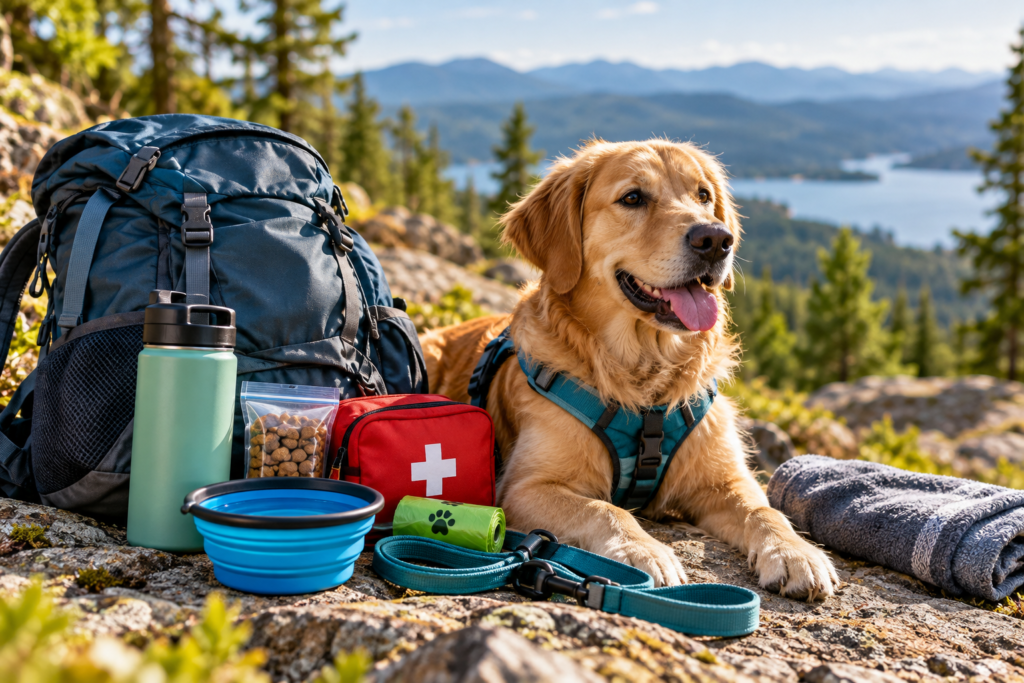
Start with the basics: food and water bowls, an appropriate food, a comfortable place to sleep, a properly fitted collar and ID tag, a reliable leash, a few safe toys, and basic grooming supplies.
Once you get to know your dog, you can add other products based on what they actually need rather than filling your home with things they may never use.Not sure where to start? Our Essential Items Every New Dog Owner Needs guide covers the basics to have ready before bringing your dog home.
Skipping Basic Training
Training doesn’t have to mean long, complicated sessions. In fact, short and consistent training sessions are often easier to fit into everyday life and can help your new dog understand what you expect from them.
Start with simple skills such as:
- Responding to their name
- Sit
- Stay or wait
- Come when called
- Walking calmly on a leash
- Leave it
- Settling calmly when asked
Use rewards your dog values, such as small treats, praise, or play, and keep early sessions short. Five minutes of focused practice several times throughout the day can be more manageable than one long training session.
Consistency matters too. If jumping on people is allowed one day but discouraged the next, your dog may have difficulty understanding the rule. Try to make sure everyone in the household responds to common behaviors in a similar way.
For dogs that struggle with barking, lunging, pulling, or reacting strongly to other dogs and people during walks, appropriate equipment can also make training easier to manage. See our Best Training Tools for Reactive Dogs in 2026 for useful options for safer, calmer walks.
Not Socializing Early Enough
Socialization is about helping your dog become comfortable with the people, places, sounds, surfaces, animals, and everyday situations they may encounter throughout life.
A common mistake is assuming socialization simply means letting your dog meet as many people and dogs as possible. Quality matters more than quantity. New experiences should be introduced gradually and in a way that allows your dog to remain comfortable.
Useful experiences may include:
- Meeting different types of people
- Seeing other dogs from a comfortable distance
- Walking in different environments
- Hearing traffic, household appliances, and other everyday sounds
- Riding in the car
- Visiting pet-friendly places
- Becoming comfortable with gentle handling of paws, ears, and mouth
Watch your dog’s body language and avoid forcing interactions when they appear frightened or overwhelmed. Giving your dog space and allowing them to observe something from a comfortable distance can be more helpful than pushing them closer.
Puppies have an especially important early socialization period, but socialization and confidence-building should continue throughout a dog’s life. If you have a young puppy, ask your veterinarian how to balance safe socialization with their vaccination schedule.
Using the Wrong Collar or Leash
A collar and leash may seem like simple purchases, but the wrong size or style can make everyday walks uncomfortable and, in some situations, less safe.
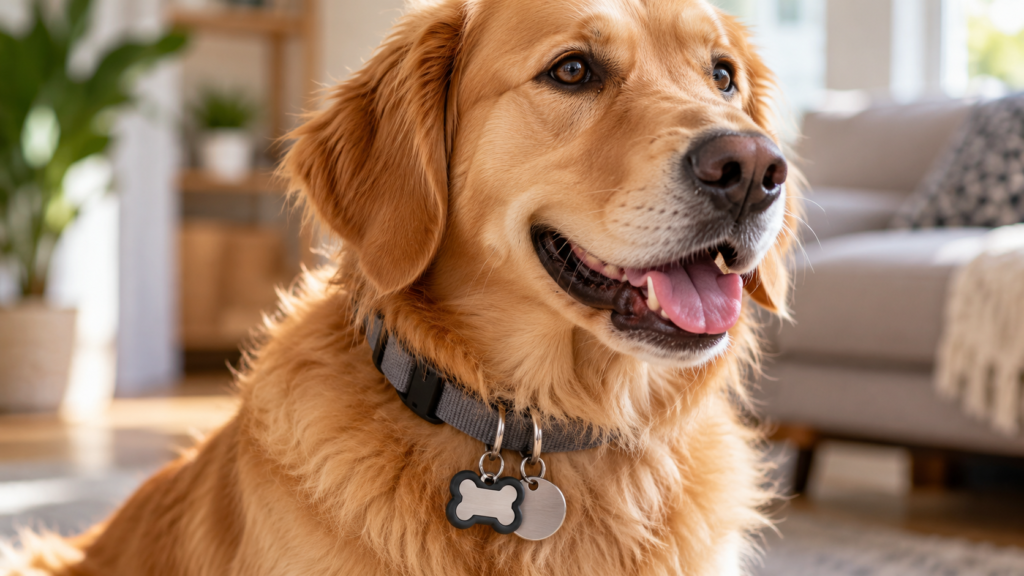
Your dog’s collar should fit snugly without being tight. A common guideline is that you should be able to comfortably slide two fingers between the collar and your dog’s neck. Check the fit regularly, especially with puppies that can grow surprisingly quickly.
Also inspect the collar for worn stitching, damaged buckles, frayed material, or other signs of wear. If you’re unsure when it’s time for a new one, see How Often Should You Replace a Dog Collar?
The leash should match your dog’s size, strength, and the way you plan to use it. A standard fixed-length leash works well for many everyday walks, while long training leads, hands-free leashes, and other styles can be useful for specific activities.
Not sure which type would work best? Our 9 Best Dog Leashes in 2026 guide compares options for everyday walks, training, running, and other situations.
And remember that a collar doesn’t necessarily need to stay on 24/7. There are situations when removing it may be safer, particularly during unsupervised crate time or when there is a risk of it becoming caught. Read Can Dogs Wear Collars All The Time? for more details.
Inconsistent Rules
Dogs learn through repetition and consistency, so changing the rules from one day to the next can make training unnecessarily confusing.
If your dog is allowed on the sofa sometimes but gets told off for jumping up at other times, they may struggle to understand what you actually expect. The same applies to jumping on visitors, begging at the table, pulling on the leash, sleeping on the bed, or going through doors ahead of you.
Before bringing a new dog home, it helps to decide on a few basic household rules and make sure everyone follows them consistently.
For example:
- Is the dog allowed on furniture?
- Where will they sleep?
- Are they allowed in every room?
- How should family members respond to jumping or begging?
- Which words will you use for basic commands?
- Who is responsible for feeding, walks, and training?
You don’t need dozens of strict rules. A few clear and predictable expectations are much easier for both your dog and your household to follow.
If several people care for the dog, try to use the same cues and reward the same behaviors. Consistency makes it easier for your dog to understand what works and what doesn’t.
Not Providing Enough Mental Stimulation
Physical exercise is important, but walks alone may not provide all the stimulation a dog needs. Dogs also benefit from activities that encourage them to sniff, explore, solve problems, and use their natural instincts.
Without enough mental stimulation, some dogs may become bored and look for their own entertainment — which can mean chewing furniture, destroying toys, barking, digging, or getting into things they shouldn’t.
Simple ways to add more mental stimulation include:
- Puzzle toys and treat-dispensing toys
- Snuffle mats and scent games
- Short training sessions
- Hiding treats around the home for your dog to find
- Rotating toys instead of leaving every toy available all the time
- Letting your dog spend time sniffing during walks
- Interactive games with you
You don’t need to keep your dog entertained every minute of the day. The goal is to provide a healthy mix of physical activity, mental challenges, play, training, and plenty of time to rest.
If you’re looking for easy ways to add more enrichment, see our Best Dog Enrichment Toys in 2026 and Best Interactive Puzzle Toys in 2026 guides.
Snuffle mats are another simple option for turning treats or part of a meal into a sniffing activity. If you’re not sure whether they’re worthwhile, read Are Snuffle Mats Good for Dogs?
And if boredom seems to be turning into destructive chewing, our guide Why Does My Dog Chew Everything? explains some of the common reasons dogs chew and what you can do about it.
Overfeeding Treats
Treats are useful for training, rewarding good behavior, and building positive associations, but it’s surprisingly easy to give too many throughout the day.
A few treats during training, another after a walk, one when you leave the house, and a few more from other family members can quickly add up. Treats still contribute to your dog’s daily calorie intake, even when they are small.
Try to use small training treats or break larger treats into smaller pieces. Your dog usually cares more about receiving the reward than about the size of each piece.
It also helps to make sure everyone in the household knows how many treats the dog is getting. If several people are handing them out independently, it can be difficult to keep track.
Treats should complement a balanced diet rather than replace regular meals. If you’re unsure how much food or how many treats are appropriate for your dog, especially if their weight is changing, ask your veterinarian for guidance.
Maintaining a healthy weight is just as important as choosing the right food. If you’re concerned that extra treats may be adding up, read our Is My Dog Overweight? Signs, Causes, and What to Do guide for practical tips on recognizing and managing excess weight.
Treats should complement a balanced diet rather than replace regular meals. If you’re unsure how much food or how many treats are appropriate for your dog, especially if their weight is changing, ask your veterinarian for guidance.
Ignoring Regular Health Checks
Regular veterinary care is an important part of keeping your dog healthy, even when they appear perfectly fine. Routine checkups give your veterinarian an opportunity to monitor your dog’s overall health and discuss vaccinations, parasite prevention, weight, dental care, and any changes you may have noticed at home.
Between veterinary visits, pay attention to changes in your dog’s appetite, thirst, energy level, bathroom habits, skin, coat, teeth, or behavior. Small changes don’t always mean something is wrong, but persistent or unusual symptoms are worth discussing with your veterinarian.
Basic grooming is also part of regular care. Checking your dog’s ears, teeth, nails, paws, skin, and coat can help you notice potential problems earlier while also keeping your dog comfortable.
How often a dog needs veterinary visits or specific preventive treatments can vary depending on age, lifestyle, health history, and individual needs. Your veterinarian can recommend an appropriate routine for your dog.
Quick Checklist
✓ Start with essential supplies and add more as you learn what your dog needs
✓ Begin basic training from the first days at home
✓ Use positive reinforcement and keep household rules consistent
✓ Introduce new people, places, sounds, and experiences gradually
✓ Check your dog’s collar fit and walking equipment regularly
✓ Provide both physical exercise and mental stimulation
✓ Keep treats in moderation and include them in your dog’s daily food intake
✓ Schedule regular veterinary checkups
✓ Keep up with grooming and dental care
✓ Make sure your dog’s ID tag information is accurate and up to date
New dog owner? Read our guide: Essential Items Every New Dog Owner Needs.
Make sure your dog’s ID tag contains the right information by reading our ID tag guide.
Frequently Asked Questions
What is the most common mistake new dog owners make?
One of the most common mistakes is trying to do too much too quickly. New dogs need time to adjust to their home, routine, and family. Start with basic supplies, simple training, consistent rules, and plenty of time for your dog to settle in.
How long does it take a new dog to adjust to a new home?
Every dog is different. Some dogs become comfortable within days, while others may need several weeks or longer. Age, previous experiences, personality, and the home environment can all affect how quickly a dog adjusts. Keeping the first weeks calm and predictable can make the transition easier.
Should I start training my dog immediately?
You can begin simple, reward-based training from the first days at home. Start with short sessions focusing on skills such as responding to their name, coming when called, sitting, and calmly following everyday routines.
How much exercise does a new dog need?
Exercise needs vary depending on your dog’s age, breed, size, health, and energy level. Rather than immediately introducing long or intense exercise, gradually learn what is appropriate for your individual dog and include opportunities for sniffing, play, and mental stimulation.
How can I prevent my new dog from getting bored?
Combine physical activity with mental enrichment. Training sessions, sniffing walks, puzzle toys, food-dispensing toys, snuffle mats, and interactive games can all provide variety and help keep your dog engaged.
What should I buy before bringing a new dog home?
Start with the basics rather than buying everything at once. Food and water bowls, appropriate food, a bed or safe sleeping area, collar and ID tag, leash, a few toys, and basic grooming supplies are a good starting point. See our Essential Items Every New Dog Owner Needs guide for the complete checklist.
Final Thoughts
Nobody becomes a perfect dog owner overnight. Bringing home a new dog means learning their personality, preferences, habits, and needs while they are also learning how life works in their new home.
Most mistakes can be corrected with patience, consistency, and a willingness to adjust. Focus on building a predictable routine, providing appropriate exercise and mental stimulation, using positive reinforcement, and paying attention to your dog’s individual needs.
You don’t need to buy every product, master every training skill, or get everything right from the first day. Start with the basics, learn as you go, and give both yourself and your dog time to adjust.
With a little preparation and plenty of patience, avoiding these common mistakes new dog owners make can help make those first weeks together calmer and set the foundation for a strong relationship for years to come.
Disclaimer: This article is for general informational and educational purposes only and is not a substitute for professional veterinary advice, diagnosis, or treatment. Every dog is different, so always consult your veterinarian if you have questions or concerns about your dog’s health, diet, behavior, or individual needs.