A dog collar is something most owners use every single day, but it’s easy to forget that collars don’t last forever. Even if a collar still looks fine at first glance, everyday wear, moisture, dirt, pulling, and repeated use can gradually weaken the material, buckle, or stitching.
Many dog owners wonder how often should you replace a dog collar and whether collars have a specific lifespan.
There isn’t one exact replacement schedule for every dog. Many collars can last for years, while others may need replacing much sooner. Instead of relying only on age, regularly check the collar for wear, damage, fit, and changes in your dog’s size.
Here’s what to look for and when it may be time for a new one.
If your dog wears a collar for most of the day, regular checks become even more important. Not sure whether your dog should keep it on throughout the day or take breaks from wearing it? Read our guide: Can Dogs Wear Collars All the Time?
Signs It’s Time for a New Collar
The condition of the collar is usually more important than how old it is.
Replace your dog’s collar if you notice:
- Cracks, tears, or thinning material
- Frayed or damaged edges
- Loose or broken stitching
- Rust or corrosion on metal parts
- A buckle that doesn’t close securely
- A damaged or weakened D-ring
- A collar that frequently loosens on its own
- Faded or unreadable identification information
- A collar that has become too tight or too loose
Pay particular attention to the buckle and the area where the leash attaches. These parts can experience considerable stress, especially if your dog pulls during walks.
If you’re unsure whether a damaged collar is still safe, replacing it is usually better than waiting for it to fail.
How Long Do Dog Collars Usually Last?
There’s no universal lifespan for a dog collar because durability depends on the material, construction, your dog’s activity level, and how often the collar gets wet or dirty.
As a general guide:
- Nylon collars can often last several years but should be replaced when the webbing becomes frayed, thin, or damaged.
- Leather collars can last for years when properly maintained, although cracked, stiff, or weakened leather should be replaced.
- Waterproof or coated collars can be durable for active dogs, but the buckle, hardware, and coating still need regular inspection.
- Personalized collars vary widely depending on the material and how the name or contact information is applied.
A dog that spends most of the day indoors may keep the same collar much longer than a dog that regularly swims, hikes, rolls in mud, or plays outdoors.
That’s why checking the collar regularly is more useful than automatically replacing it after a certain number of months.
How Often Should You Check Your Dog’s Collar?
A quick collar check every few weeks takes only a minute.
Run your fingers along the collar and look for fraying, cracks, loose threads, or areas that feel thinner than the rest. Open and close the buckle several times and make sure it locks securely.
Also inspect the D-ring used to attach the leash and ID tags. It shouldn’t be bent, loose, cracked, or heavily rusted.
For dogs that swim frequently or spend a lot of time outdoors, it’s worth checking the collar more often.
Check the Fit Regularly
Even a collar in perfect condition may need replacing if it no longer fits correctly.
As a general rule, you should usually be able to fit two fingers comfortably between the collar and your dog’s neck. The collar should be secure without being overly tight.
Check the fit regularly if your dog is:
- A growing puppy
- Gaining or losing weight
- Growing a thicker seasonal coat
- Recently groomed
- Changing body condition with age
Puppies can outgrow collars surprisingly quickly, so their collar fit should be checked much more frequently than an adult dog’s.
If your dog’s current collar can no longer be adjusted to provide a comfortable, secure fit, it’s time for a new size.
Puppies May Need New Collars More Often
Puppies are a special case because they grow so quickly.
A collar that fits perfectly today may become too tight within weeks. During periods of rapid growth, check the fit frequently rather than waiting until the collar looks obviously small.
You may need to replace a puppy’s collar several times before they reach their adult size.
Choosing an adjustable collar can help it last longer, but it still needs to fit correctly at every stage of growth.
What If the Collar Still Looks Good?
Age alone doesn’t necessarily mean a collar needs to be thrown away.
If the material remains strong, the stitching is secure, the hardware works properly, and the collar fits comfortably, there may be no reason to replace it simply because you’ve owned it for a certain amount of time.
However, some damage isn’t immediately obvious.
A collar that has been repeatedly soaked, exposed to sun, chewed, or heavily pulled against may weaken over time. Inspect high-stress areas carefully rather than judging the collar only by its overall appearance.
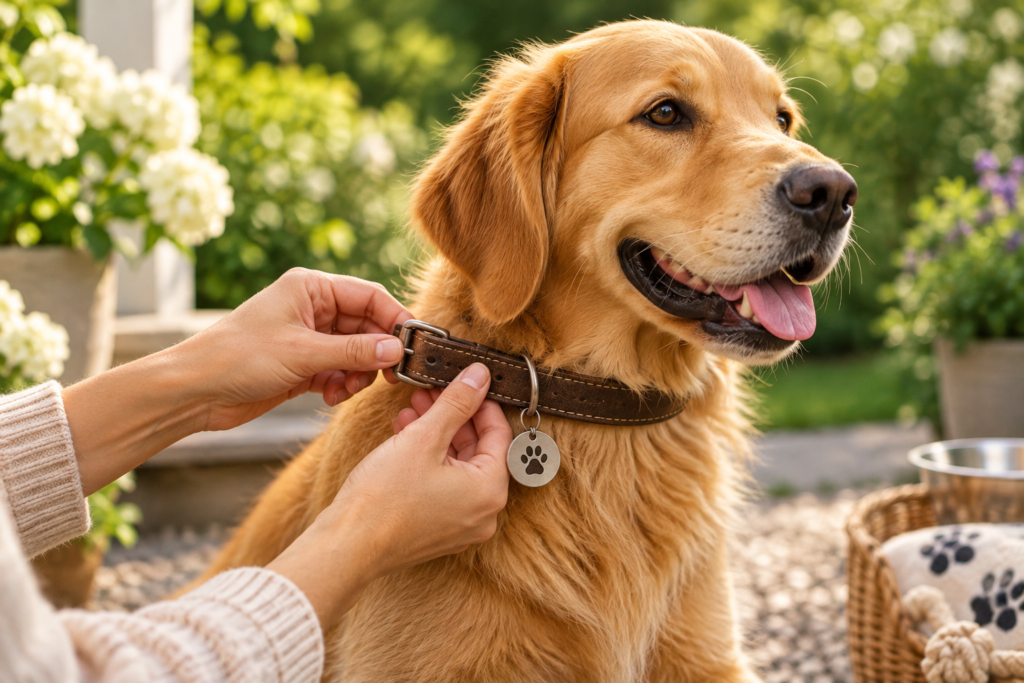
Don’t Forget the ID Tag
A safe collar isn’t very helpful for identification if the information attached to it can’t be read.
Regularly check that:
- Your phone number is current
- Engraving is still readable
- The tag isn’t badly worn
- The tag is securely attached
If your contact details change, replace or update the tag as soon as possible.
Need help deciding what information to include? Read our guide: What Information Should Be on a Dog ID Tag?
Should You Have More Than One Dog Collar?
Keeping a spare collar can be useful, particularly if your dog’s regular collar gets wet or dirty frequently.
For example, you might keep:
- One everyday collar
- One backup collar
A spare also gives you something safe to use while the main collar is being washed or if you suddenly discover a damaged buckle or torn section.
If you enjoy choosing accessories for your dog or are looking for something more personal, browse our gift guides for dog lovers for more ideas
How to Make a Dog Collar Last Longer
A little maintenance can help keep a good-quality collar in better condition.
Follow the manufacturer’s cleaning instructions and allow wet collars to dry thoroughly. Dirt, salt water, mud, and moisture can affect some materials and hardware over time.
Try to prevent your dog from chewing the collar, and check it after rough outdoor activities.
Most importantly, don’t ignore small signs of damage. A loose thread or slightly damaged buckle may seem insignificant at first but can become worse with continued use.
Frequently Asked Questions
How often should a dog collar be replaced?
There is no fixed schedule that works for every dog. Replace the collar when it becomes damaged, weakened, difficult to fasten securely, or no longer fits correctly.
How often should I check my dog’s collar?
Checking it every few weeks is a good habit. Active dogs, growing puppies, and dogs that frequently swim or play outdoors may need more frequent checks.
How do I know if my dog’s collar is too tight?
You should generally be able to fit two fingers comfortably between the collar and your dog’s neck. Check regularly because weight changes, growth, grooming, and seasonal coats can affect the fit.
Should I replace a collar if the buckle is damaged?
Yes. A buckle that is cracked, loose, difficult to close, or no longer locks securely can make the collar unreliable.
Can I keep using an old collar if it still looks good?
Possibly. If the collar remains strong, fits correctly, and all hardware and stitching are secure, age alone doesn’t necessarily mean it needs replacing. Inspect it carefully for hidden wear.
Final Thoughts
There’s no need to replace a perfectly good dog collar simply because a certain amount of time has passed. Condition and fit matter more than the calendar.
Check your dog’s collar regularly for fraying, weakened material, damaged hardware, loose stitching, and changes in fit. Puppies and highly active dogs may need replacements more often, while a well-maintained collar on an adult dog may last considerably longer.
A quick inspection every few weeks can help you spot problems before the collar becomes uncomfortable or unreliable.
Disclaimer: This article is for general informational purposes only. If a collar causes irritation, hair loss, skin problems, or discomfort, remove it and consult your veterinarian if needed.